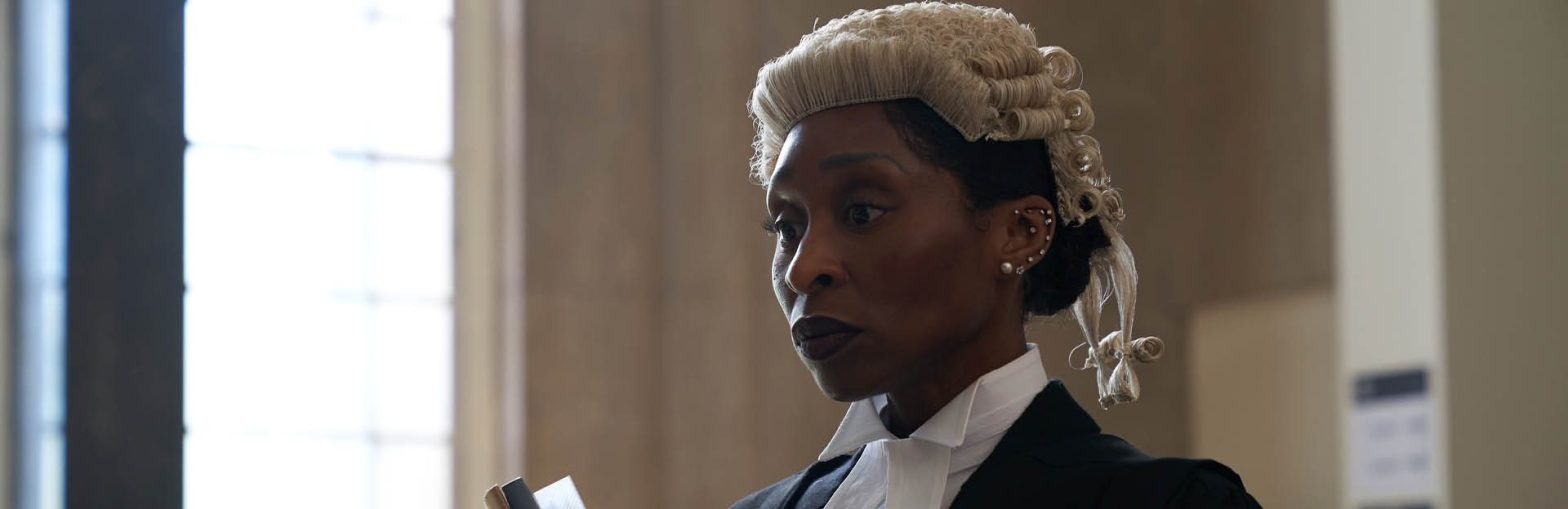
Cert – 15, Run-time – 1 hour 49 minutes, Director – Susanna White
A rising star defence lawyer (Cynthia Erivo) specialising in sexual assault cases finds herself battling the law and justice system when she’s raped by a colleague (Daniel Ings).
A one-woman play such as Prima Facie likely needs a strong performance to truly sell itself. While I haven’t seen the play from the sounds of it Jodie Comer’s multi-award winning turn wherever she travelled with the production was a generational one. Comer doesn’t return for the feature adaptation, written by playwright Suzie Miller, who also worked on a novelisation of that production, and while she may be synonymous for many aware of the play, whether they’ve seen it or not, others have stepped into the role before and after her around the world.
Much like the play, the film version rests on the shoulders of the lead performance, and thankfully Cynthia Erivo is electric as she steps into the shoes of rising star defence lawyer Tessa. Nominated for a major junior barrister award and holding more cases than she’s perhaps able to cover, whilst others in her chambers struggle after a series of losses, she specialises in sexual assault cases. Trials are a game to her, like analysing a chess match with table-tennis precision and rapidness occasionally we hear her internal monologue dissecting her next move, and where witnesses have messed up. The same eventually comes, although more panicked, when she finds herself testifying after prosecuting her colleague Julian (Daniel Ings) for raping her.
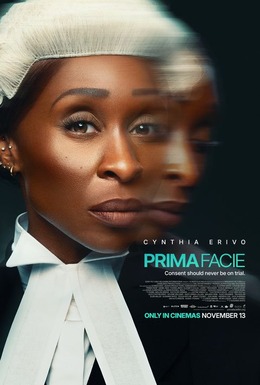
Tessa’s confidence shifts throughout the film in line with what she’s facing, and who she’s speaking to. There’s a strong focus to Erivo’s performance, she’s impassioned and sells a fierce monologue to the court late in the film. She’s the film’s core and she ensures a genuine humanity in Tessa, something that’s taken away from her during the hard-to-watch tragedy and her performance reminds us of that from there. The loss held in her stance and gaze, yet still holding a defiance as she finds herself facing against the system that she has worked in and loved for so long.
While there are some aspects that feel as if they could have more done with them, such as Tessa’s working class background, which is briefly glimpsed in a couple of scenes with her family, and the career that she has built for herself from this, the details for the fight for justice are well-handled and established through the relationship that we see developing between Tessa and Julian before the eventual attack. While there still remain details that could be expanded upon or have more done with them to bring further effect, and even possibly a sense of heat and anger, to the trial and proceedings surrounding it. There’s an emotional engagement, and much of it lies with Erivo’s strong performance rather than the wider points that the film is trying to make, although the final interaction does have some impact, although perhaps that’s down to the basis of what’s being said rather than the film itself.
Without such a strong performance at the heart of the film there’s every chance that flaws may have shown even more and brought the film down, it’s certainly proved to have had a somewhat dampened reception. But, Erivo powers forward with force and defiance that helps to sell the film and bring out a number of the emotional beats for and from her character, carrying Prima Facie and bringing us in to the layers and near-gameplay of the law.
Prima Facie rests on the shoulders of Cynthia Erivo and she carries the film with a blazingly determined performance. Without her the more underdeveloped details would likely show more. What’s here isn’t quite heated, but there is an emotional engagement with the central character.

