
Cert – 18, Run-time – 1 hour 48 minutes, Director – James Watkins
Rising Hollywood star Matt Hagen (Tom Rhys Harries) is attacked after getting on the wrong side of a Gotham City mob boss, an experimental facial reconstruction process could save him, or bring out a monstrous identity.
Superhero films have plenty of room to make for solid body horror flicks. With so many of them revolving around mutations or strange powers that cause, or stem from, changes in the body they’re prime territory. It’s something I commend in the Amazing Spider-Man films, for all their flaws and naysayers, that if not clamped in the confines of an early-2010’s PG-13 rating they could have had some effectively dark sequences in this vein as the titular hero, or Dane DeHaan’s Green Goblin, for example, transform and discover their powers.
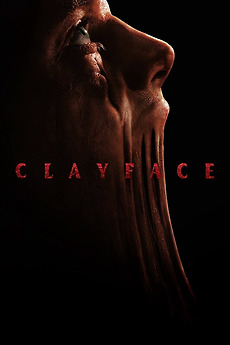
Focusing on one of DC’s Batman villains, Clayface is a comic-book adaptation that isn’t just tinged with body horror, it simply is a body horror. Rightfully given an 18 rating by the BBFC it’s bloody, gory and successfully suspenseful as actor Matt Hagen (Tom Rhys Harries) finds his face melting, and then mouldable, after receiving a special reconstruction therapy courtesy of Naomi Ackie’s scientist Caitlyn Corr. A rising star, fresh off an Oscar nomination, Matt returns to Gotham City – the closest we get to any mention of Batman – to celebrate. However, after sleeping with the girlfriend (Joana Ribiero) of a major mob boss (David Dencik), Matt’s attacked and has his face cut and disfigured.
The sequence is early on, with much of the build-up contained to the opening 15-minutes. What comes before this moment is fast and swift, the attack itself feels held on, a sign of what’s to come. And what’s to come mixes both feelings. It allows the horror to be lingered on, waiting for the audience to peak from behind their fingers, while zipping along through the narrative.
Matt’s anger at the world around him grows, and Harries carries that effectively in a performance that makes the transition between actor fearing a lost career to something more monstrous; particularly when he discovers the ability to mould his face to look like other people. This thread brings out some of the darker aspects of the film beyond the up-close, squirm-inducing sequences of facial reconstruction. Matt becomes consumed with jealousy and he becomes led and consumed by his newly discovered powers. Through this Mike Flanagan (whose pitch to DC Studios co-head James Gunn was so strong that he greenlit the film in his and Peter Safran’s early-days DCU) and co-writer Hossein Amini form their narrative, bringing that shifting personality out alongside Harries’ performance.
He’s eventually contrasted, and always complimented, by Ackie’s equally strong performance as the man walking around using her experiment grows more out-of-control. The pair help to bring out the character beats in the screenplay and film as a whole, allowing for a film that’s not purely about the effective body horror. Particularly fusing character and horror together in the second half when a mixture of personas start to come through and revenge becomes the main item on Matt’s, or whoever he decides to impersonate, agenda. Even when wearing his own face he becomes an unsettling and threatening figure, as much as when using a pair of scissors uncomfortably close to an eyeball. For all the well-handled body horror, which doesn’t shy away and lets you forget this is a comic book movie, character isn’t forgotten in Clayface and that’s eventually what truly pushes the suspense and drive of the film.
Unsettling and suspenseful body horror mixes with the growing jealousy and anger of Tom Rhys Harries’ central character in Clayface to make for a fast-paced, squeam-inducing character-led comic book flick that makes you forget its origins.

