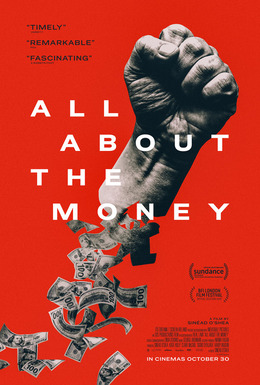
Release Date – 30th October 2026, Cert – 15, Run-time – 1 hour 35 minutes, Director – Sinéad O’Shea
Heir to a billionaire family, Fergie Chambers puts his money into funding a revolutionary communist community to fight back against capitalism.
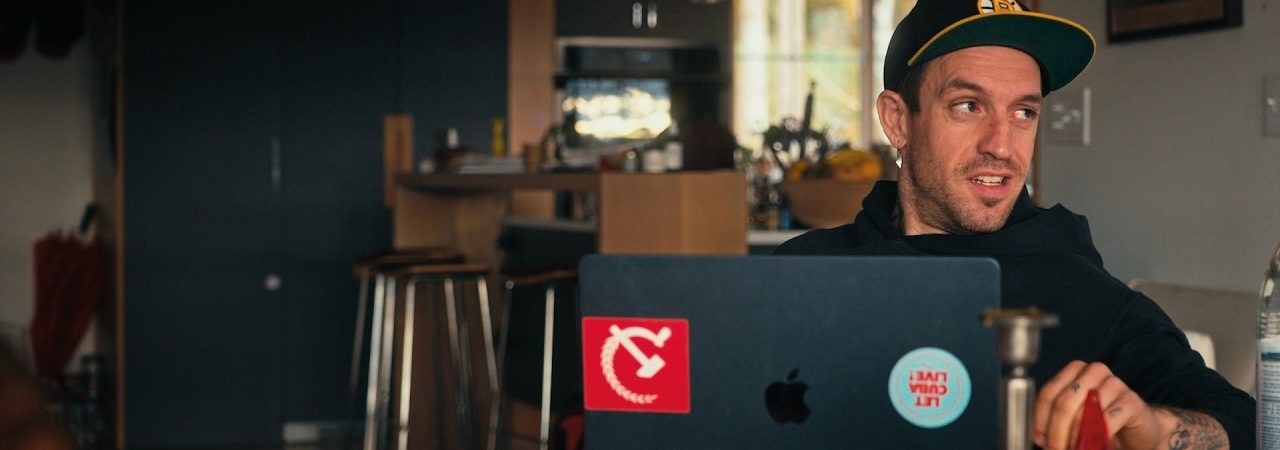
“We have been the wealthiest family in the state for over 100 years” explains Fergie Chambers about the past he’s trying to steer away from. Turning his back on capitalism the member of the 0.1% puts his money instead towards revolutionary causes, or as one person living in the community that he funds puts it “this rich guy bought up a bunch of land and wants communists to live there for free.”
Sinéad O’Shea’s documentary in part observes the actions that Chambers funds, and occasionally takes part in, and the gap in consequences for someone of his wealth compared to those around him. It suggests asking the question of if it’s possible to be an ethical billionaire, but often finds itself skimming the question and never fully asking it. When sitting down with the subject, particularly in the later stages where he finds himself at something of a distance with the world he’s funding, I wished that more pointed questions were asked, that the film was simply more challenging and less observant. Part way through it feels as if whether watching the Super Bowl is contradictory to being a Marxist is challenged more than anything else we’ve seen thus far.
Particularly as things almost starts to repeat themselves, pushing the feeling of not being sure what the film is bringing that’s new when it properly starts to look at the idea of ethics and what Fergie does with his money outside of the village in rural Massachusetts – neighbouring one of the wealthiest towns in the state. There are interesting beats, and Fergie himself brings a handful of them whilst becoming an inevitably conflicting figure, but they themselves feel at odds with the almost nodding along of the film and what it shows.
Perhaps the intention is less to ask the question about moral and ethical wealth and more to simply show Fergie and his lifestyle, what he’s trying to do. And maybe I went into this expecting a slightly different film from the festival logline, but the underlying question still exists and appears to form a key part of the film. Particularly as the contrast between him and the single-digit members of the commune grows after protests and struggles in personal lives. The responses are different and have an effect, even if they’re somewhat to be expected at times.
There may not be a full connection with anyone we see on screen for a prominent amount of time, but there is with the wider subject matter and how that plays into the class differences and communities shown throughout. Actions taken, consequences (or lack of them) faced and the directions that varying levels of wealth take people, their decisions and behaviour in. It might not all be new, and most of it largely observed than challenged or delved into but there’s still some effect to be had, and interest in Fergie as he tries to take a stand against capitalism and his family’s wealth whilst still living amongst it.
While holding interesting points, they often feel left behind amongst the nodding and observing of All About The Money, which brings little new to the table by not challenging or asking more pointed questions.

