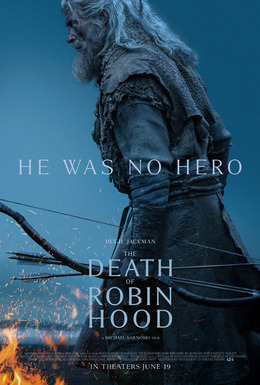
Cert – 15, Run-time – 2 hours 3 minutes Director – Michael Sarnoski
After being injured in an attack aged outlaw Robin Hood (Hugh Jackman) confronts his legend and past whilst recovering in a priory, where his recent battles catch-up with him.
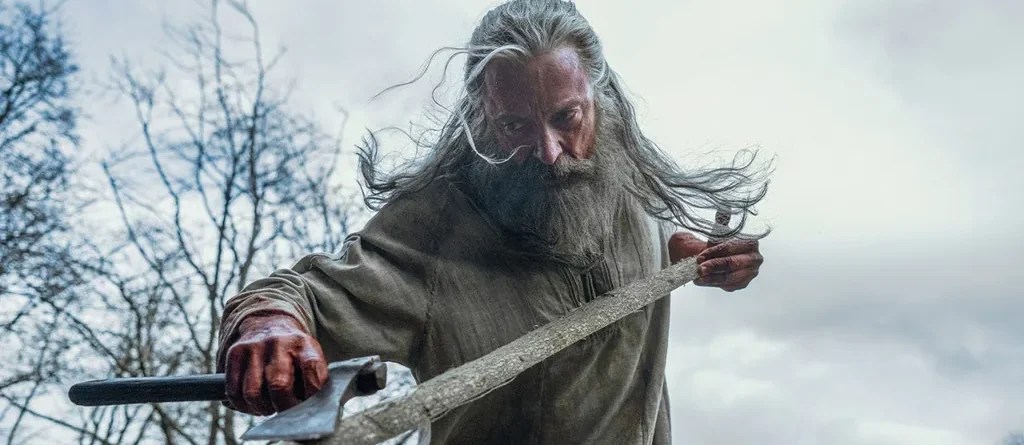
On a recent edition of Kermode And Mayo’s Take I heard The Death Of Robin Hood referred to as Logan Hood. One of those reworked titles that made me kick myself wishing I had come up with it. It’s a fitting description as Hugh Jackman brings back some of the gruff, haggard and battle-worn nature of his aged Wolverine, this time battling with the legend that people have turned him into. A life of crime has isolated his Robin Hood in foggy hills and caves, most strangers who come across him end up meeting grisly deaths. Much like the thick coat around him, he carries the heavy weight of stories contrasting with his life and crimes.
After a brutal attack to assist Little John (Bill Skarsgård) in retaking his farm from the family who own the land, Robin is left injured, mysteriously left in a priory on an island to heal whilst it seems John and his family either fled or were killed. Here, as daylight streams in through the window writer-director Michael Sarnoski dramatically switches up the tone. Robin’s life of bloodshed and violent slaughter, which we see on full display during night-time fights, is shown in a bloodless, meditative reflection. Balancing his life, actions and legend, and realising that there may still be time to do good – especially when surrounded by the dedicated kindness of those looking after him, led by Jodie Comer’s Sister Brigid.
When familiar faces from Robin’s latest, and at one point seemingly last, battle crop up on the island his defensive side emerges. Jackman gives a strong performance conveying the tug-of-war between the character’s two sides, his constant alertness but want for peace in his life, in whichever form that comes. How accepting he is of death, depending on how it comes, appears to vary; especially as it shifts from begrudged fate and release to a quiet, disruptive threat and back. Playing this out in tune with Sarnoski’s quieter tone, akin to his Nic Cage starrer Pig, Jackman shows a dramatic internal battle in the central character, with the idea of an end hanging over in different shades.
Shades that work quietly and effectively, seen prominently in the relationships that Robin begins to build, particularly with Katie Breen’s young Margaret who appears to start to warmly view him as something of a father-figure. It’s also present in the choices that he commits to making – one boat ride in the later stages where anger and mistrust still bubble is particularly tense. Regret, life and legacy are at the core of The Death Of Robin Hood, Sarnoski finds a tonal balance between them whilst Jackman bears their weight with a strong central performance which captures a conflict as strong as the loud violence in much of the first act. Shrouded in mist, or a darkening wood, there’s an engaging, unexpected, soul-searching drama here revolving around the inner and outer battles of a legend and the man who wants nothing to do with them.
A meditative drama that captures violence in grisly battles and personal conflict, balanced by Jackman’s weighty lead performance and Sarnoski’s handling of the tonal shifts, The Death Of Robin Hood is a grisled look at legend and legacy.

