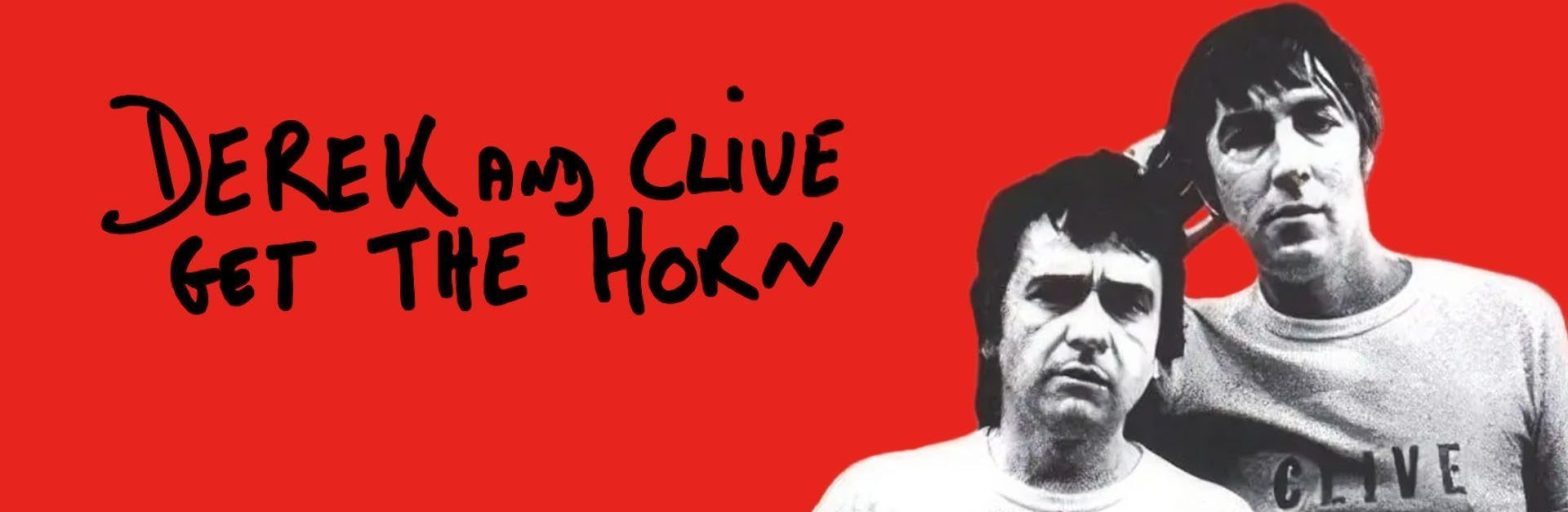
I don’t often go back and properly read or listen to the work I’ve done in the past unless I’m maybe putting it on this website or on socials – as is somewhat the case here. I tend to let it exist as it is and think about the general idea of the feature, interview or moment and that it happened rather than looking for longer at specifics. Sometimes, however, that’s not such a bad thing.
Looking back at this feature I wrote for Film Stories, published in their 48th issue in January 2024, I’m really proud of it, and what I managed to get into it as I told the story of how Peter Cook and Dudley Moore’s documentary Derek And Clive Get The Horn sank a studio after facing the British censors. You can read the full feature in the magazine, for just £6.99, which you can find more about here. However, I’ve put a short excerpt from it below. Thinking about it, this might be one of my favourite things that I’ve written, particularly having long had a fascination with film censorship and its history.
‘“Enough of this vulgarity, let’s get on to some drawing room comedy” Dudley Moore insists, briefly breaking character from Derek, just before comedy partner Peter Cook’s Clive describes how TV coverage of Pope John Paul I lying in state gave him “the horn”. We’re just 13 minutes in to documentary Derek and Clive Get the Horn, following the two stars recording their final major project together, and the titular lavatory attendants still have much to be turned on by – except for their wives and Jesus. What unfolds is an almost accidental portrait of a fractious relationship, and one which would contribute to the downfall of the studios behind it.
1978’s Derek and Clive Ad Nauseam would be the third and final outing for Moore and Cook’s foul-mouthed alter-egos. First created as a way for the pair to relax via sweary ad-libs whilst performing in New York, the recordings eventually became bootleg hits. The success continued when the records were properly released, a strong following in the growing cult comedy scene of the late-70s brought two albums to the top 20 in the Official Albums Chart.
The characters had been controversial since their conception, even more so when finally unleashed on the public. In response to their debut, 1976’s Derek and Clive (Live), multiple police forces across the UK wrote to the Director of Public Prosecutions concerned about the content of the album. Or rather, concerned about the fact that an advert for it had appeared in NME which could have encouraged teenagers buying the magazine to want to buy the album. The record went unbanned, the same going for yearly follow-ups Come Again and Ad Nauseam. Yet, the film which followed the creation of the latter would face struggles more tumultuous than the relationship it observes…’

