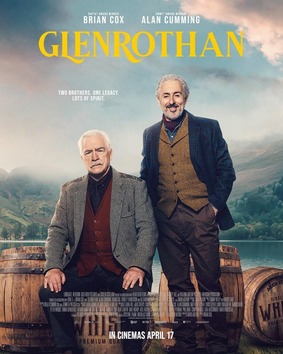
Cert -12, Run-time – 1 hour 39 minutes, Director – Brian Cox
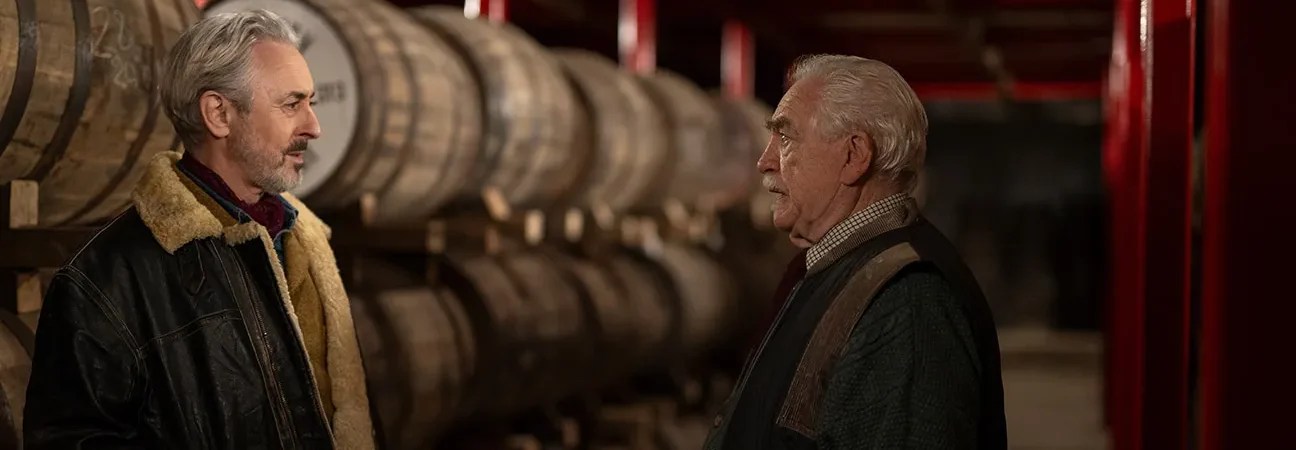
Donal (Alan Cumming) left Scotland 40 years ago, returning when he hears that his brother’s (Brian Cox) health is in question. However, tensions between the pair throw the future of the family whiskey distillery into uncertainty.
Brian Cox has played a great number of sinister, dark and angry figures throughout his career. Of late he’s become almost synonymous with his sweary character of Logan Roy in Succession. For his directorial debut, given to him by co-writer David Ashton who has written Radio 4 series McLevy which Cox stars in, the actor plays a much lighter, at times cuddly, figure in a film that itself borders on whimsical.
The plot beats have been seen plenty of times before as estranged Donal (Alan Cumming) returns home to the village of Glenrothan, Scotland after hearing of his older brother Sandy’s (Cox) possibly declining health. However, the village, and the family whiskey distillery, now 200 years old, bring back bad memories of the life Donal left behind, and re-establish familial rifts between the siblings. Whilst his daughter (Alexandra Shipp) and granddaughter (Alexandra Wilkie) relax and spend time with their uncle, Donal traipses around the streets and woodland, smoking whilst engaging in unwanted reflection as old faces – largely Shirley Henderson’s master distiller Jess – start to lead him to confront his relationship with Sandy.
There’s a light humour cropping up every now and then which brings in a couple of good chuckles that help to see things through. It’s part of the overall likable nature of things as they pass by with generally little trouble. We’ve seen the outline of the film plenty of times before, but there’s enough within Glenrothan to hold it up for just over 90-minutes. Musical sequences, Donal owned a jazz bar in Chicago before it burned down, may feel like slight tangents aside from everything else, even if they’re ways of CUmmings’ character connecting with his homeland and those around him. Still, there’s an air to them that allows for this to be forgiven as they can be enjoyed in the moment before moving back to the rest of the film.
Glenrothan is a rather sweet, sometimes a little too much, film that’s almost wholly on the surface. And there’s not necessarily anything wrong with that, and for the most part, while there might be some noticeable issues (the film appears to be largely shot in the brightest of daylight, even during the evening sometimes, to highlight the beauty of the Scottish landscapes, even when in a back garden or dining room). It’s one where you can likely tell the plot from a brief synopsis over the first 15-20 minutes. Yes, it may hinder things somewhat, but there’s enough present that’s presented with enough likability, and pride in Scotland, to see things through.
We may have seen Glenrothan plenty of times before, and it might sometimes get a bit saccharine, but there’s enough likability in the love for Scotland and light humour on display that the sweetness generally lands the right effect.

