Cert – 15, Run-time – 1 hour 51 minutes, Director – Jim Jarmusch
Three separate families try to cope and connect through varying degrees of distance and estrangement.
The performances of Father Mother Sister Brother are a key part of its success, the most important factor of them is how they work hand-in-hand with Jim Jarmusch’s observation. His camera looks on, and sometimes over, at three interactions between different families all trying to cope with distance, estrangement and loss. Words are struggled for, whether through grief, awkwardness or regret. The silences hang thick, the attempts to find something to say wish for it to be brought back. It’s a film of gentle, natural sorrow at the familial situations on display, yet one that avoids downbeat drudgery.
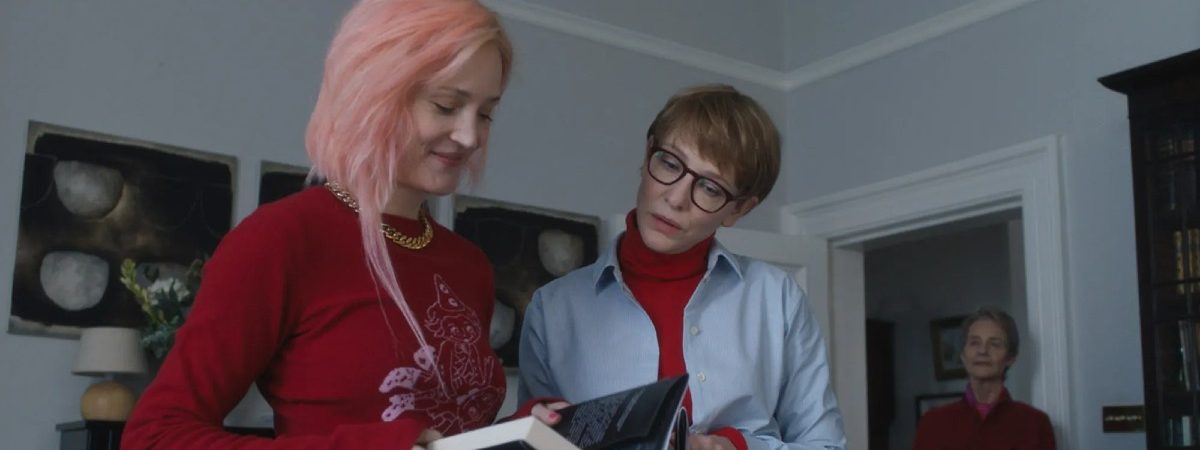
The three segments feel almost perfectly ordered to become more compelling and affecting than the last. Brother and sister Jeff (Adam Driver) and Emily (Mayim Bialik) visit their elderly father (a fantastic Tom Waits) in his shabby home, making various toasts as their check in becomes a reluctant reconnection while questioning how well he is these days. Mother (as Charlotte Rampling’s credit simply reads) prepares an annual afternoon tea for her two daughters Lilith (Vicky Krieps) and Timothea (Cate Blanchett), the conversation is kept to pleasantries about how good the tea tastes and somewhat forced interest in the goings on of each other as at least one daughter is looking for an easy escape. There’s a very wry humour to some of the reaching attempts at conversation. Unease sits in the room with the three as they silently acknowledge a tradition that has almost always been like this.
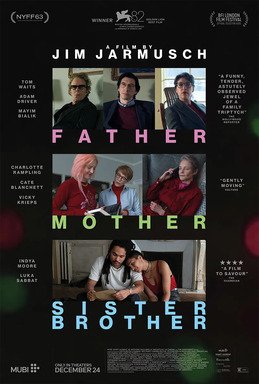
Then, siblings Skye (Indya Moore) and Billy (Luka Sabbat) roam Paris talking about memories of their parents who passed in a plane crash, before going over old photos and possessions. Their segment closes the film with tenderness and care. It’s an open dialogue that grows over the roughly half-an-hour we’re in the presence of their characters, almost revelatory compared to the lack of proper discussion that’s come from the characters in the previous two interactions. The actions and moments themselves have said a good deal, but the characters at least verbally not so much until this point.
Yet, Jarmusch continues to remain observant as director. So much of his latest set of vignettes is about what isn’t said, whether through not being allowed or simply not being able to, rather than what is. The cast wear so much behind their faces, in their eyes and pauses that speaks volumes and makes for an engaging and interesting drama about estranged families all looking for different forms of connection. The pacing is slow, only really impacting the first story which certainly feels more like set-up the more things go on, including call-backs to beats and dialogue in the pair that follow.
Feeling the emotions of the characters may not be the case, it might not be intended to be, but there’s still something to be felt in both the interaction and lack of it throughout the film. One that, even with the slow pacing, passes by rather easily thanks to the engagement with the situations at hand. As each is examined without the feeling of an intense dive, the moments are allowed to naturally exist and play out as they are. Making for awkwardness and comfort to feel even more the case. All calmly and empathetically observed by Jarmusch and the audience.
An observant, empathetic look at estranged familial relationships, from the distant to the healing there’s a lot said in what isn’t said here, with help from a set of fine performances the segments grow and get better as the film goes on.

