2020 is a year that many will likely agree can only be described with itself as the adjective. With fallouts between cinemas and distributors, lockdowns leading to the close of cinemas for a large portion of the year and a limited amount of releases thanks to multiple delays, it may come as a surprise to some that there were even ten films released this year.
However, despite everything that’s happened, we’ve still managed to see a number of great films. At the very start of the year we saw awards hit Jojo Rabbit and Guy Ritchie’s gangster movie return The Gentlemen. While at the end of the year we still managed to see the cinema release of Wonder Woman 1984, Warner Bros also making a pandemic gamble in the summer by releasing Tenet to the world. Meanwhile Bill and Ted once again taught us to be excellent to each other, Parasite became the first ever foreign language film to win the Best Picture Oscar and Borat made an unexpected return.
Streaming services saw an even more rapid rise compared to the one they were already having in previous years. Netflix released awards hopefuls I’m Thinking Of Ending Things, The Trial Of The Chicago 7, Uncut Gems and Da 5 Bloods. Disney made the most of Disney+ by releasing big films such as Mulan and Soul, and PVOD saw some smaller films, such as Days Of The Bagnold Summer, Clemency and Farewell Amor.
Alongside all of this in a year that was already scary enough audiences turned to a number of top horror releases. Social horrors such as The Invisible Man, His House and Relic received great deals of praise, alongside inventive pieces like Host and Possessor. And, let’s not forget isolation horrors Vivarium and The Lighthouse.
Despite everything that happened throughout it 2020 still managed to be a great year for films. Whether available to stream, rent through PVOD or on the big screen there were very few films that I personally considered weak or bad. It was still difficult to whittle everything down to a top ten. But, finally, here are what I believe to be the top ten films released in the UK in 2020.
10. A Beautiful Day In The Neighbourhood
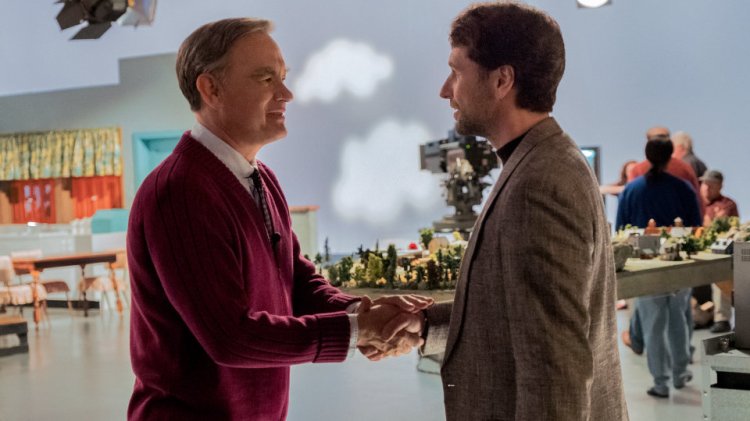
Tom Hanks absolutely shines as Fred Rogers. He might not look like him or sound like him and yet he perfectly captures the pure kind essence of the US TV icon. While this isn’t a film about Rogers, it follows Matthew Rhys’ cynical journalist Lloyd Vogel, it perfectly gets across his messages of care to the viewer. As Hanks walks in at the start of the film smiling and singing, asking the viewer “won’t you be my neighbour?” it’s impossible not to feel a sense of warmth and welcoming, even if you aren’t aware of Mr Rogers’ Neighborhood.
As Rhys’ magazine writer finds himself struggling with his relationship with his father (Chris Cooper) and trying to look after his newborn son with his wife, Andrea (Susan Kelechi Watson) there’s a rather genuine tale of someone turning their life and attitudes around. While being released at the start of the year in the UK throughout the year this film has still managed to provide a feeling of warmth throughout the year.
There’s a traditional feeling to Marielle Heller’s direction and Micah Fitzerman-Blue and Noah Harpster’s screenplay. Yet the film avoids an overall feeling of cliché and tiredness because of how invested you become in the characters. Heller and the cast treat them with respect and a true sense of heart and control. It never pokes fun at them or their situations while managing to avoid a feeling of it being overly-sweetened. The film simply feels like a well-constructed tale of people coming together and simply learning to be better – while teaching us along the way that “anything mentionable is manageable” and truly capturing the warmth, charm and kind spirit of Mr Rogers.
9. On The Rocks
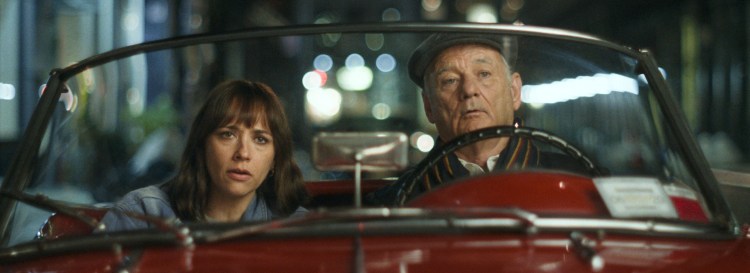
Bill Murray truly does shine when he works with Sofia Coppola. He’s excellent in her latest finely tuned venture, exploring a father-daughter relationship between Murray and Rashida Jones – also on fantastic form. The two have a brilliant chemistry that feels genuine and allows for the natural humour of most scenes to effortlessly drift through, and a bond between viewer and characters to be easily formed. When paired with Coppola’s fine screenplay there’s a lot to enjoy about the central figures as they roam the streets and restaurants of New York trying to work out whether the husband of Jones’ character (played by a wonderfully restrained Marlon Wayans) is having an affair.
Such elements push forward the point that this is a film about humans simply being humans. Admittedly very wealthy humans that personally know the concierges of the best hotels in London, still somehow managing to avoid the feeling of exaggeration. Nevertheless the film gently looks into their worries and stresses, their fears and desires, and most of all their behaviour.
On The Rocks might look at humanity, although certainly with a light touch, yet it’s a piece of true escapism. It’s hard not to be caught up within the various scenery’s that lines the piece. bright city lights as Jones and Murray cruise around in a small red car that shines in the New York City nightlife. It all springboards from Coppola’s screenplay, brought to life by two award worthy central performances that shine as bright as the small red car in the bright lights of the New York City nightlife that Jones and Murray cruise around in. It’s a pure joy to watch. The 96 minute run-time breezes past quickly and effectively, barely dropping or missing a beat. Simply creating a joyful, entertaining and finely tuned piece of work that clicks because of the light conversation of humanity that it so fluidly demonstrates.
8. Host
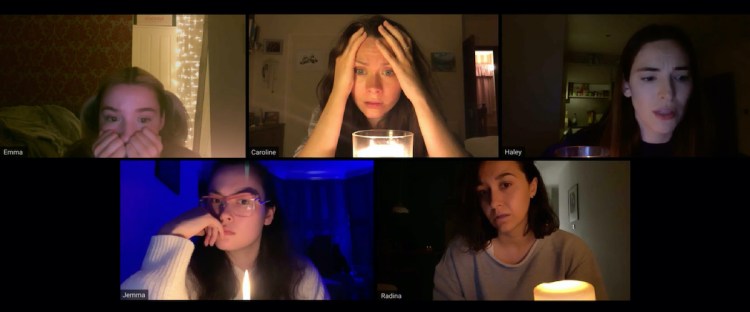
One of the first films to be produced and released during lockdown, Host was such a big hit on streaming service Shudder that it found itself with a cinema release later in the year. It also happens to be one of, if not the, scariest films of the year. It’s hard to believe that this is director Rob Savage’s feature debut, this feels like a masterclass in terrifying timing. As a Zoom séance leads to angered attacks from spirits the assaults become increasingly frequent, not to mention brutal.
The onslaught that occurs over the course of 56 relentlessly shocking minutes is perfectly staged and timed. Much like the people in the online call you feel helpless and unable to do anything, stuck on the other side of a screen, not in the same room and simply forced to watch it all unfold. Each moment made more effective by the fact that the effects were set up by the cast in their own homes, due to this being thought of and submitted in just 12 weeks.
Very rarely do I hide behind something in fear, and Host had me doing just that as the demonic attacks simply get worse for you and the characters. I found myself wincing, squinting through my hands and simply wanting to leap behind the seat I was glued to in pure fear at what was happening on-screen. Never taking delight in its lightly bloody details the film sparingly uses blood for full effect when it comes to the highest point of brutality, just to emphasise to the viewer the true amount of torture and pain that the on-screen figures are going through. It’s expertly timed and once the build-up of the first 20 minutes is out the way Host is nothing but fear and terror; even the credits have an air of tension about them.
7. The Trial Of The Chicago 7
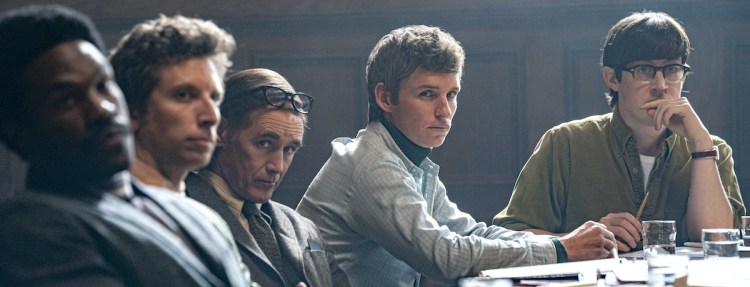
If stories about humans being themselves is something I’m into then I’m definitely a real sucker for a courtroom drama, and with a screenplay by Aaron Sorkin of course The Trial Of The Chicago 7, which he also directs, makes my top ten of the year. Sorkin’s film, while pushing some figures aside, manages to capture the personalities of its characters well as they are put on trial for riots outside the 1968 Democratic National Convention. Each figure is brought to life by a wonderful ensemble cast, including; Eddie Redmayne, Mark Rylance, Frank Langella, Yahya Abdul-Mateen II, Sacha Baron-Cohen and Joseph Gordon-Levitt just to name a few. All give great dramatic performances to truly capture the scale of this seemingly never-ending courtroom drama. One which questions whether the trial in question is political or not.
There’s a clash of views not just in the scenes set in the courtroom but amongst the defendants themselves. All have strongly held, passionate views that they want to argue and get across, however often these get in the way of the people they are fighting for justice with. Something which isn’t helped when there’s clearly prejudice from the judge from the very start.
Sorkin is known for his fast-paced ‘walk and talk’ film style and screenplays. And yet, courtroom dramas are often gradual and slightly slower in pace. Yet, he manages to blend the two rather well, packing detail into every scene, making the most of montages – the opening ten minutes is fantastically set up with a fast pace and high level of energy as all characters are introduced and their motives easily established, boosted by Daniel Pemberton’s racing score. It simply draws you in, connects you with the characters and prepares you for the punches and force of the rest of the film. You’re strapped in for shock – especially when it comes to the treatment of Abdul-Mateen’s Black Panther co-founder Bobby Seale.
As usual Sorkin’s screenplay is carefully sculpted and filled to the brim with detail to make for an interesting and engaging courtroom drama that also works as an ensemble character piece. One with fantastic performances throughout to truly capture the drama and the clash of views in and out of the centre stage that forms of the titular trial. Certainly something different from the writer-director, yet the various montages and flashbacks help to push forward his style, alongside the general tone of the film. It all comes together to be something truly engaging and not without its true sense of shock and fighting drama.
6. The Lighthouse
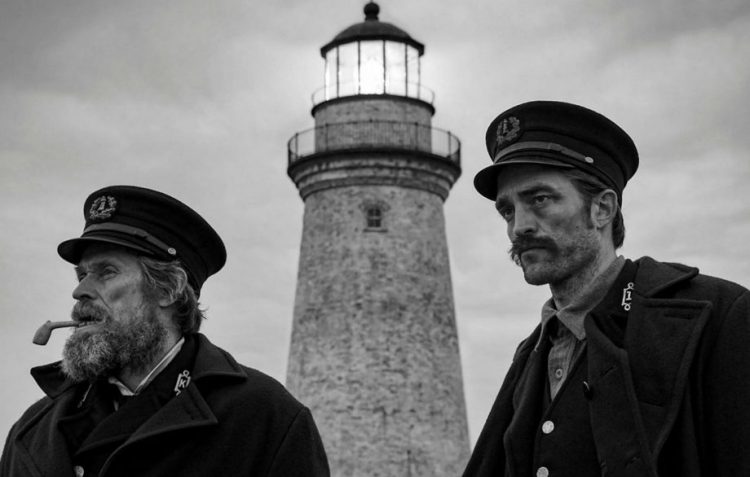
Perhaps it was foreshadowing that back in January a film about two men going mad while being stranded on a rock for a continuously extended amount of time was released. Whether it was or not The Lighthouse – Robert Eggers’ superb follow-up to his brilliant horror debut The Witch – is undeniably a truly great atmospheric psychological horror. You can’t help but feel the biting cold wind and have your nostrils infected with salt and brine as Robert Pattinson and Willem Dafoe (both sporting some smashing facial hair) are kept on a small island, maintaining a lighthouse for more than the initial four weeks they were meant to be there for due to harsh weather conditions preventing boats from making it to the island.
As the pair’s time on the island is lengthened their sanity begins to slip – particular for Pattinson’s newbie, Ephraim Winslow, who has traded trees for sea. Visions haunt him of demon mermaids, unsettling seagulls and more as his fascination with the forbidden light of the building is always kept from out of his reach. The giant bulb is treated as a person in itself. A mysterious, controlling, alien force that tries to consume and take over those who look into it. Simply adding to the fear factor and mystery of this unique isolation feature. Various questions are asked throughout. Is this all real? Is this all in the minds of the characters, or even just one of them? Is it the harsh conditions? Is it the island itself? Perhaps it’s the drunken state of the pair – Dafoe’s Thomas Wake is himself a commanding booze-hound. The longer the pair spend together the more their personal feelings of rage, upset, boredom and even sexual frustration turn to demons on the outside.
Enhanced by the decision to shoot the film in a cramped box-like aspect ratio and in black and white the feeling of the 1890’s, but more importantly the severity of the environment and its surroundings. When you add in Jarin Blaschke’s stunning, highly cinematic, cinematography the full intensity of this mostly two man piece is released. Eggers use of frequent close-ups shows the terrified nature of the two, particularly Ephraim, as the constant stream of madness almost begins to feel like The Shining but with a more sea-salt drenched narrative.
5. Vivarium
Yet another film about people trapped somewhere for what seems like an endless amount of time – although this time released at the very start of the first lockdown – Vivarium may be the film that’s stayed with me the longest out of everything from 2020. Each time I’ve seen it it made me feel as if I needed to go and sit in a dark room to properly think about what I’d just seen. I’ve known that I’ve really liked it and that I’d gladly watch it again, yet I feel that no matter how many times I view this film I’ll need to have time to properly process it after.
Jesse Eisenberg and Imogen Poots find themselves trapped in what seems like an extended episode of Inside No. 9. Trapped in an infinite estate of identical houses, after being abandoned by a mysterious, almost robotic, estate agent. After being forced to raise a rapidly growing baby in the hope of freedom the two gradually find themselves losing hope and going mad in fading desperation for escape. There’s a consistently unsettling and creepy sense to every action and event that happens over the course of the narrative. Never dropping such feelings the film consistently travels along its course delving the two central figures – wonderfully performed by Eisenberg and Poots – into further hopeless depths over the course of the slow-burn narrative, which somehow makes it all the more effective as the viewer is dropped into the same new lifestyle structure.
Director Lorcan Finnegan almost never misses a beat as he knows just when to add new details and elements to keep the viewer intrigued and in near suspense and tension as they too are trapped in a repetitive maze of green houses – but mostly within number 9, potentially an intentional choice?
When it comes to films that are possibly going to be future cult classics I would list Vivarium as one of them. It’s a fantastically unsettling acid-trip of mind-warping trickery, especially in the final stages – truly the points that push you over the edge to needing a dark room to sit in afterwards. Just as effective on re-watched and bound to stay with you, it stayed with me for many months after first seeing it in October 2019, this is a great piece of slow-burn isolated entrapment horror.
4. Les Misérables
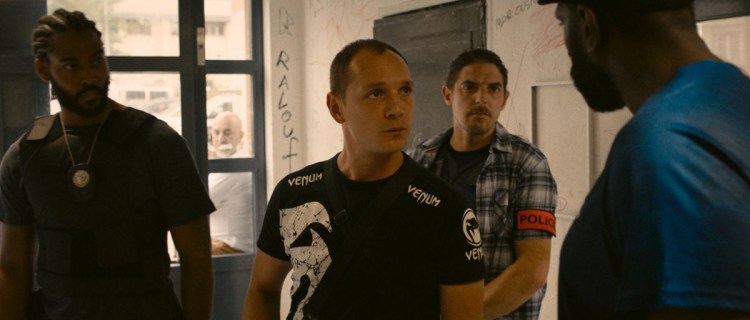
Little to do with the musical or novel, Les Misérables is a close look into the abuse of police power and gang-related tensions. Director Ladj Ly uses his documentary past to capture the true chaos of this piece. Initially showing the peace and harmony of the joy in the streets as France celebrates a World Cup victory. However, this is all shattered when the police become involved in the case of a missing lion cub from a travelling circus that has arrived in the streets of Montfermeil. The group of police in question being new-to-the-force Stéphane Ruiz (Damien Bonnard), Brigadier Gwada (Djebril Zonga) and squad leader Chris (a superb Alexis Manenti). It’s Chris’ workstyle and seeming lack of boundaries and ethics that make him a dangerous force on the streets, frequently not following the rules – on one occasion seemingly doing so just to make the girl he’s searching at a bus stop feel uncomfortable.
Thus when brought into an already tense situation involving various gangs things quickly get out of order, with those who are meant to uphold the law coming off worst of all. During scenes of angered outbursts and potential street brawls Ly was inspired by 2008 Parisian riots – his various edits and shots truly capture the chaos and panic of such instances and throw the viewer directly into the confusion by not following one specific character. Throughout the narrative there are various key figures who come into play, although the trio of officers remain the central focus, each one adding to not just the films layers and potential directions but the risks that could be faced by other characters along the way. Each one easy to keep track of because of the well-structured course that the narrative takes place over.
As we meet new people and the various public fights, slurs and chases unfold the levels of tension are ramped up. Things become increasingly dangerous and they develop and get more worrying for the police as Chris’ actions, and Gwada’s acceptance of them, lead to further trouble. It all comes together to create a really well-told, finely flowing story. One that while feeling rather timely is , for 104 minutes, a blood-pumping, tension-filled piece of reflection. Yet, an admirable piece of reflection that never feels drab, bleak or as if it’s lecturing the viewer or talking down to them. A finely crafted non-documentary mirror of character, intrigue, action and tension
3. An American Pickle
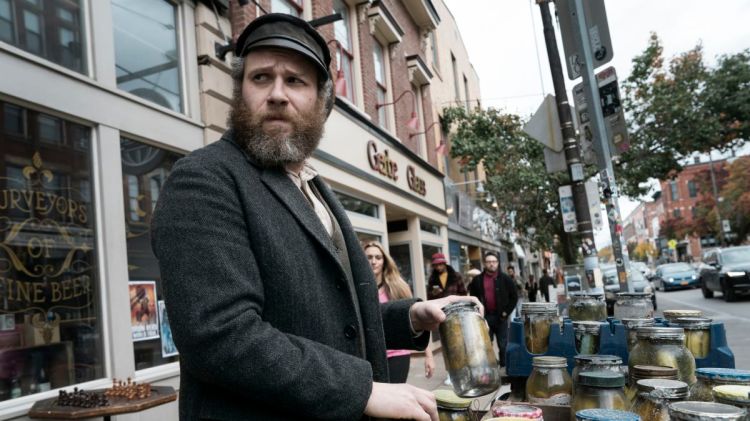
Perhaps, for me, one of the biggest surprises of 2020 is that a Seth Rogen film has made my top ten best films of the year, the top five in fact – it’s a mild surprise that one was considered. Especially one about a man who wakes up in modern day America after being perfectly preserved in pickle brine for 100 years. This isn’t to say that I don’t like Seth Rogen, he’s made and starred in a number of films that I’ve enjoyed and An American Pickle is certainly one of them. In many ways it came at the right time. Just after the first lockdown as cinemas were starting to re-open with little new releases. Rogen’s film was a light, entertaining, uplifting and very funny and reintroduction to the big screen.
The film might have its moments of silliness that perfectly match the very basic gist of the plot. But ,in many ways that’s what brings the laugh out loud funny humour that runs throughout, main character Herschel Greenbaum (Seth Rogen in one half of his brilliantly performed duel role) voices many olde-age views that are now considered offensive. Yet, amongst all the humour that the film holds there’s plenty of more serious moments. Herschel’s great-grandson Ben worries about disappointing his deceased parents, not having as strong of a Jewish faith as they, or his other ancestors, may have had. There’s a layer of sorrow to such moments and to an extent you can feel this as a personal piece for Rogen and all involved in this clearly collaborative effort, the directorial debut of frequent Rogen collaborator Brandon Trost.
When everything is combined An American Pickle feels like a collaboration between Mel Brooks and Taika Waititi. It feels cared for and impassioned as the heart that’s gone into the film helps to form the hilarious nature of the piece, helping to form an effortlessly charming tale. There are highly observed performances, writing and direction that simply help to form one of the most accessible and entertaining, not to mention pleasantly surprising, films of the year. It simply makes me happy, even on re-watches, but part of that may very well be the fact that it happened to come at the right time, and just so happens to be rather great.
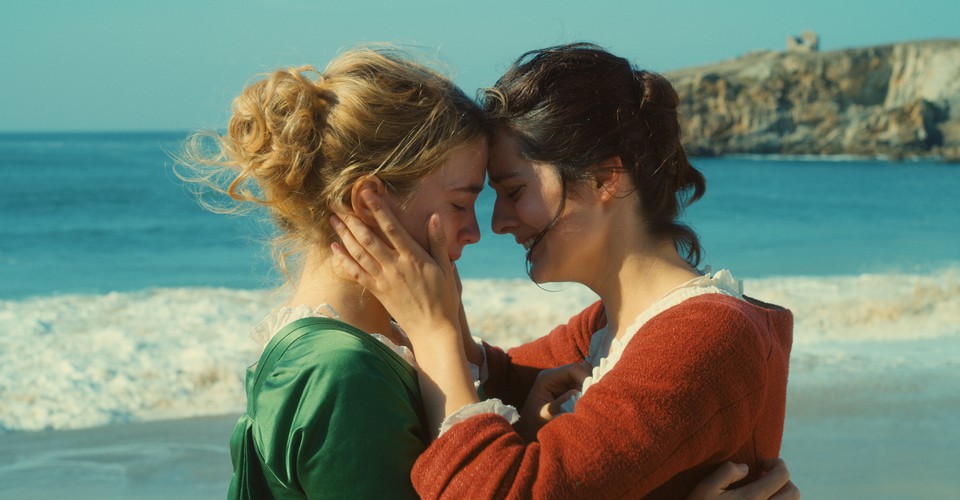
2. Portrait Of A Lady On Fire
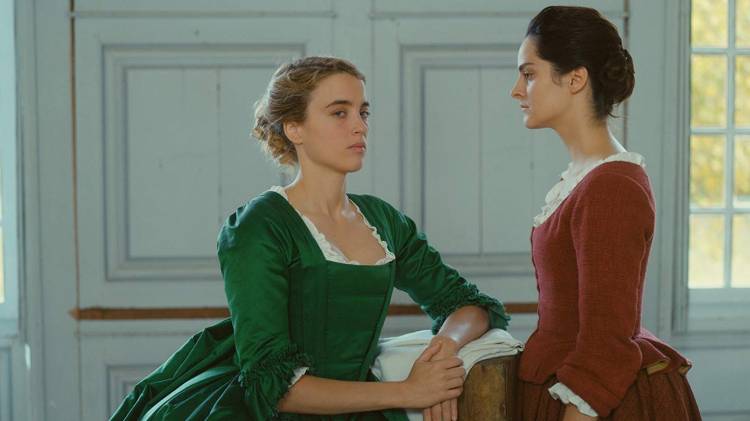
One of the best things about Céline Sciamma’s expertly handled love story is that it never asks ‘will they, won’t they?’ it simply asks ‘when will they?’. It’s clear from the very beginning as the two central lovers meet that something is going to happen between them, however, much like them, the viewer has no idea when or how it will happen. As painter Marianne (Noémie Merlant) and Héloïse (Adèle Haenel), the woman she’s secretly painting a portrait of for her upcoming marriage, bond more their relationship doesn’t get closer, instead it opens up. It’s a unique view of a relationship and writer-director Sciamma portrays it with great precision, pushed further by her two leads.
Love and passion burn bright throughout the entirety of this highly artistic and stunningly framed piece of cinema. The relationship and the actions within and around it feel genuine and heartfelt, simply drawing the viewer further into it, emotionally willing it on and wanting it to be explored. There’s something deeply poetic about the whole thing – if there’s a film that sums up the idea of something being ‘poetic’ it’s very likely this. Many of the key conversations and moments of the film are birthed through some form of art, whether it be paintings, theatre, writing and storytelling. All allowing for both parties to increase their adoration and expressions of love for each other.
Even the character’s longing gazes and the lingering shots of the wonderfully captured landscapes – thanks to the stunning cinematography – manage to keep the viewer in awe throughout the entire film. There’s an honest delicacy that lies throughout the entire piece when it comes to Sciamma’s direction. What brings this honesty is the fact that this is clearly a film told entirely from the female gaze – almost every single figure who appears in the film is female. They understand what the film is aiming for, what Sciamma wants to achieve with the finished piece and the collaborative effort shines. Forming a stunning feature that captivates the viewer from the the very start to the very end. It would be very easy to spend many more hours with these two characters, in fact even just in the world of the film through the gaze that events are seen through.
This truly is one of the most stunning and effective expressions of love seen on-screen in recent years. It’s an emotionally invested pouring of adoration and passionate embraces. A truly fantastic effort from all involved; the wonderful performances, the precise direction, the specific, if little, dialogue in the screenplay and so, so much more, simply pushes this even further to create a unique and brilliant piece of cinematic storytelling.
1. Jojo Rabbit
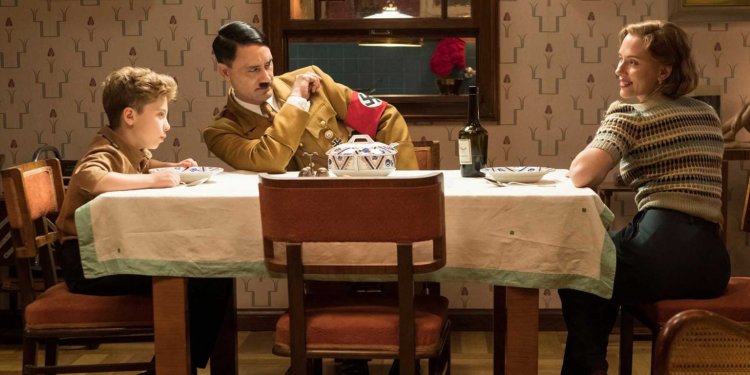
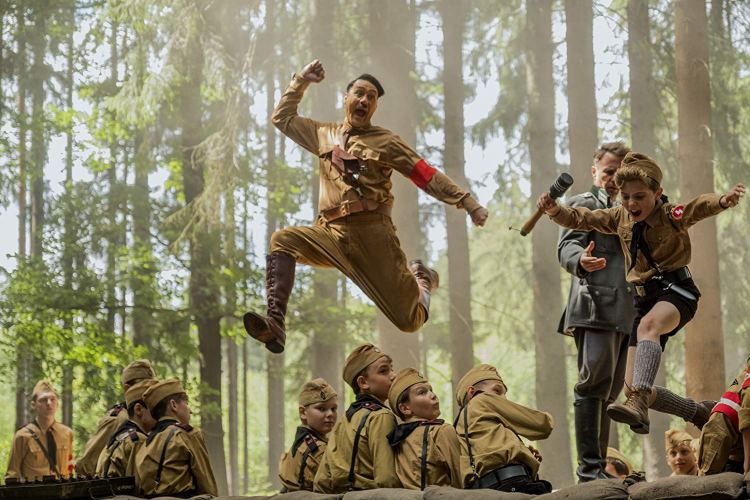
When going into Taika Waititi’s adaptation of Christine Leunens’ novel Caging Skies a number of people may have been expecting a biting, scathing satire. However, what they got was another bittersweet Taika Waititi gem. This is more than just a film about a young boy whose imaginary friend is Hitler (a hilarious performance from Waititi who did no reasearch for the role “because the guy is a f*cking c*nt”). It’s about the boy who discovers a Jewish girl in the walls of his house and gradually forms of a bond with her, despite it being against what he’s being taught.
The film tackles the idea of people being easily indoctrinated into something through easy persuasion, want or simply following the crowd. In one of the opening scenes footage of people swarming and cheering at the presence of Hitler, compared to Beatlemania as the German version of I Wanna Hold Your Hand is played. And yet, amongst all such serious themes, and a fair deal of emotion, there is the usual brand of laugh out loud funny humour in a style and tone that only Taika Waititi seems to be able to capture.
Released at the very start of the year and after a number of re-watches Jojo Rabbit has managed to remain my personal best film of 2020 for its entire run. While there have been a number of other great releases that I’ve loved this is the one that I’ve most enjoyed. Perfectly balancing comedy and tragedy, packing both a humorous and emotional punch – managing to instantly change tone in a split second and never feeling like an idea is out of place. It’s far from a satire ripping modern day figures to pieces, it’s a warm, sweet, perfectly balanced, occasionally tragic and consistently hilarious Taika Waititi feature about two people developing, bonding and growing together as the walled off world outside attempts to spread a thin veil of hate and unacceptance. It’s just wonderful. And it also happens to be what I believe is the best film of 2020.












 Just A Little Bit Random