Synchronic – Review

Cert – 15, Run-time – 1 hour 42 minutes, Director – Justin Benson, Aaron Moorhead

A paramedic’s (Jamie Dornan) daughter (Ally Ioannides) goes missing after seemingly taking a drug linked to multiple deaths in the area, meanwhile his co-worker (Anthony Mackie) discovers the pill’s time travel abilities.

Don’t let the Doctor Who style chaos of Synchronic’s opening sequence turn you away. While it may start with an unexplained attack as plants appear to grow in a woman’s bedroom before being attacked by a mysterious figure, and another unsuspecting victim in a malfunctioning lift there’s a fair deal of originality to this blend of sci-fi, thriller and drama with potential hints of horror and cult influence. Co-directors Justin Benson (who also servers as writer) and Aaron Moorhead create an almost dystopian modern day world from the beginning of this genre mixture. They throw their two protagonists, paramedics Steve (Anthony Mackie) and Dennis (Jamie Dornan) into a dark world of mysterious and gruesome deaths. While some seem like drug overdoses others are marked by deep wounds, petrified expressions and strange objects that appear to be from another world or age. The one thing that appears to link each death is that the victim took a new drug known as Synchronic just before dying.

However, after the film builds up various connections between character’s and shows us once or twice more just how bad these mysterious deaths – or murders? – are, the pair attend a call where Dennis’ daughter, Brianna (Ally Ioannides), was known to be. However, instead of being found dead she’s completely disappeared, presumed missing by the friends she was with. While Dornan’s worried father frantically searches for her, putting pleas all across town and on social media – the tragedy taking a toll on his marriage – his co-worker frantically buys all remaining Synchronic pills in heated anger. After an interaction with the drug’s creator (Ramiz Monsef) Steve discovers that the pill briefly transports people back in time, often nearby to someone or something that tries to attack and kill the magically appearing figure.

Mackie easily becomes the core focus of the film as he investigates and experiments with the drug, putting himself at risk as he tries to learn more about it. It’s during such scenes that the pace truly picks up and the originality of the film shines. With a limited amount of pills, yet still enough to test going back in time a handful of times, he learns that Brianna is trapped at some unknown point in the past, having been unable to return, and must find her and understand how the rules of time-travel work. One thing’s for sure, it’s certainly not like Back To The Future he agitatedly points out at a bar TV, after a bad experience he claims the only good thing about the past was the music. However, as he uncovers more things certainly don’t get any easier. His life is put further at risk and he realises the true risks and consequences of trying to get his friend’s daughter back. All while Dornan finds himself losing hope, and, like Mackie’s character already has, slowly turning to drink – something that is only really glimpsed at.

Throughout the rules and ideas that Benson’s screenplay comes up with prove to be highly inventive, truly showing its influence from a number of cult sci-fi films. They lead to further engagement, and during some scenes a mild amount of tension, from the viewer within the world that has been created. While things do initially start off slowly things certainly become more engaging as they go on, and once you know how the film itself works this could very likely be something that works better with re-watches. However, for the first viewing while it might take some time to get going with one or two repeated elements there’s enough inventiveness and originality to make Synchronic worthwhile. Using a number of elements from its influences to its advantages this might not be a complete trip, but it’s certainly a strong enough mixture to provide some interest and entertainment for just under two hours.

Using its inventiveness and influences to its advantage put aside the repetition during the first half and Synchronic is an enjoyable, and at times slightly tense, blend of genres, the type we don’t often see nowadays.

Rating: 4 out of 5.

The Dig – Review

Cert – 12, Run-time – 1 hour 51 minutes, Director – Simon Stone

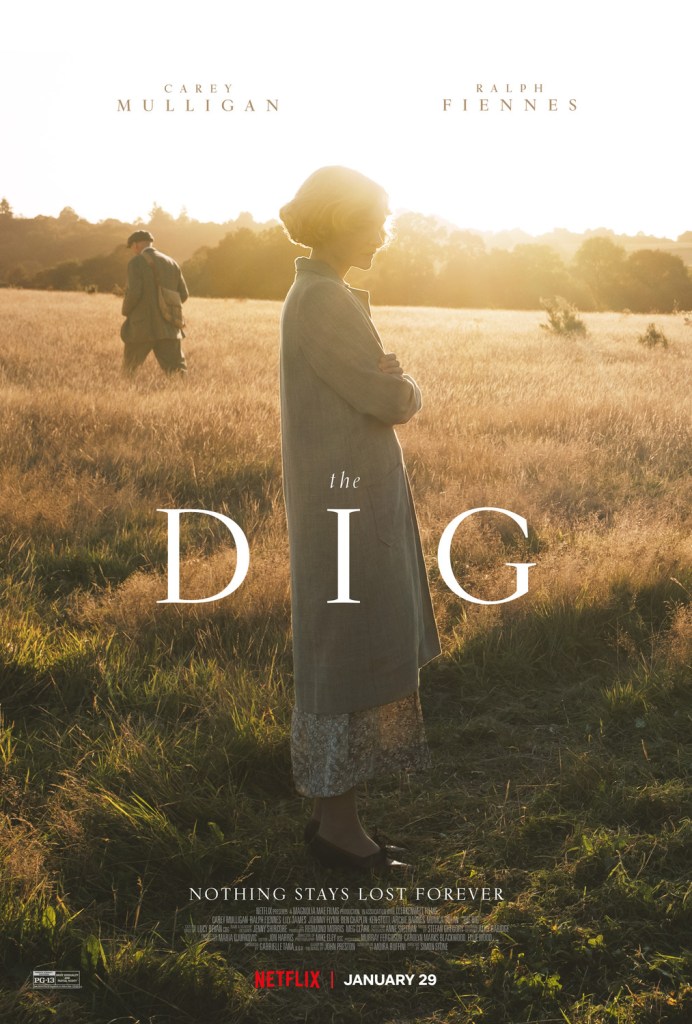
As World War II looms Edith Pretty (Carey Mulligan) employs archaeologist Basil Brown (Ralph Fiennes) to uncover potential treasures that may lie beneath the mounds on her Sutton Hoo estate.

Sometimes the simplest things in life can bring us the purest of joys. The Dig isn’t a film that revels in big budget CGI and is mostly void of action or threat, in fact for the first half the film is largely concerned with one thing. Ralph Fiennes digging into a giant mound. Fiennes plays Basil Brown, an archaeologist employed by Edith Pretty (Carey Mulligan) to uncover potential treasures that may lie beneath her. The initial search is calm and simplistic, a three man job with only one or two small items uncovered. Director Simon Stone’s slow-panning shots as he reveals the dig site and the various unearthed pieces of history, mixed with the wonderful cinematography of Mike Eley, bringing you into the peace of the events.

It’s this technique that allows for the discovery of a burial ship – which could date back as early as the Anglo-Saxon era – to truly have an impact on the viewer. This large scale finding also has an impact on a number of people interested in the project. Soon the British Museum (led by Ken Stott) takes charge of the titular dig, and a number of new figures are brought in – including married couple Stuart (Ben Chaplin) and Peggy Piggott (Lily James). As the site becomes busier so does the film, as more elements of drama are introduced. There’s a battle for ownership of the burial, still not fully uncovered, Peggy is feeling distanced from her husband; developing a relationship with Edith’s cousin Rory (Johnny Flynn). Meanwhile, Edith herself is experiencing her own personal health problems which she tries to keep secret from those excavating her land by hand, leading her to worry about what the future may be like for her young son, Robert (Archie Barnes).

With such introductions and elements of drama brought in, amongst the backdrop of the looming Second World War – planes are seen frequently flying over the field – the film does lose its quaint sense of intimacy. Such character details and exchanges are mostly introduced in the second half and only have that space of time to be started, developed and finished, all while the main dig is still happening. For a while the dig itself looses some steam as it seems to be pushed aside. The space grows along with the amount of people involved and, again, that once personal connection and feeling is removed. Even Fiennes’ excellent central performance, thick Suffolk accent and pipe, seems to be pushed aside. His serious, and occasionally crotchety, attitude towards his line of work and discussions with Mulligan’s owner who, like her son, is fascinated by the discoveries of what lies beneath her property.

Yet, with all this in mind the film does still hold some form of grip on the viewer. They may not be as entranced by the dig as in the first half of the film, but there’s still something in the remaining details; even if they make the film feel a bit busy, that makes enough to keep things from feeling overly bland. Events might become somewhat generic and lose a sense of spark and flare, but they’re still watchable for the most part, and the majority of the archaeological expedition certainly has a way of keeping you invested – particularly within the first half. In fact such moments are possibly the biggest surprise of the film, the strength of which is perhaps only outdone by Fiennes Suffolk accent.

The second half may be a bit too busy but, The Dig certainly doesn’t feel generic when looking at the calm and effective archaeological trance, matched only by Fiennes understated central performance.

Rating: 3 out of 5.

Twist – Review

Cert – 12, Run-time – 1 hour 30 minutes, Director – Martin Owen

A young graffiti artist (Raff Law) is welcomed into a group of fellow orphans, planning a high-profit art heist.

As we’re thrown into a parkour speed-run of modern-day London setting of Twist the audience is promised a tale with no singing and dancing. This is very much a different, and inevitable, loose take on Charles Dickens’ much adapted novel. Martin Owen’s film is filled with such moments as his central figure jumps, charges and escapes through the streets of the capital. While the seemingly Kingsman inspired moments do gain a sense of repetition as the narrative develops they still manage to hold an entertaining style, similarly held in a number of the montages and heist sequences that take place throughout.

Throughout the film we follow Oliver (Raff Law), going by the name of Twist. Left orphaned from a young age, after his Mum passed away, as an adult he mostly sleeps under the benches of art museums while spray painting what he views as art throughout the city. After falling in with Dodge (a miscast Rita Ora) and Batesy (Franz Drameh) Twist finds himself quickly becoming part of a family of orphaned thieves – led by Michael Caine’s Fagin – growing especially close to Sophie Simnett’s Red. Together they are planning a major art heist from under the nose of a key artworld figure, and former rival of Fagin, Losberne (David Walliams).

Cue multiple heist scenarios, sequences and montages set to some form of catchy pop-rock track to quickly move the plot along. The storyline itself may be flimsy and slightly tacked together, however the entertainment factor is still there. Even Michael Caine donning a thick scrubbing-brush moustache and faux Russian accent (sounding much like he’s doing a bad impression of himself) provides moments of amusement and one or two chuckles. The 12-rated tone and nature of some of the action and events does feel somewhat off-key, an f-bomb in particular definitely feels unnecessary. For what mostly comes across as a family film the not-quite-gritty nature of things does seem slightly odd on a number of occasions.

Yet, the film still holds an entertainment factor. Lena Headey as a gender-swapped Sikes is certainly having a good time relishing her villainous role and brings about an extra element of light thrills to the piece – which just about avoids the feeling of a Guy Ritchie inspired family film. This may not be the most perfect film in the world, and certainly isn’t overly along the lines of other Oliver Twist adaptations. However, throughout the handful of parkour sequences and heist play-throughs there’s plenty of amusement, amongst the misshapen plot and a number of clunky elements, to be found within this twist on Twist.

The 12-rated tone may at times feel as messy as some of the plot elements there’s certainly enough within the various, if sometimes repetitive, parkour chases and heists of Twist to keep things moving for most of the run-time.

Rating: 3 out of 5.

The White Tiger – Review

Cert – 15, Run-time – 2 hours 5 minutes, Director – Ramin Bahrani

A young man (Adrash Gourav) works his way through India’s social divide by becoming the driver for a wealthy, if dubious, family.

“I’m going to Delhi in an air conditioned car!” Balram (Adrash Gourav) gleefully exclaims out of the window of an almost otherwise silent, pristine, latest-model car with the best gadgets spread throughout it as he glides past a dirty, overflowing bus in the dusty roads impacted by the heat of the Indian sun. While for his employers going to the city, even the rest of the world, is almost a regular occurrence Balram has stayed put in his village for nearly his entire life. After excelling at school he was told from a young age that he would be a white tiger – a rare, once in a generation person – he’s still waiting for his shining fortune to arrive. However, after his father passes away, owing money to the landlord who owns the village, school is abandoned so that Balram can work to pay his father’s debts, alongside keeping the rest of his family going.

On getting a job driving for the family, acting more as a servant than a driver – partly down to the family’s first driver – Balram’s life gradually begins to change. While he lives a life of servitude he’s earning far more money than he initially did work in a tea room, and the luxurious environment consistently surprises him. Yet, despite all the joys and wonders that he experiences the class divide creates a number of struggles for him. Balram is tested, and occasionally abused, by his employers – he is viewed as lesser because of his alleged lower-caste. The only two people who seem to treat him as a human are son Ashok (Rajkummar Rao) and his wife Pinky (Priyanka Chopra) – both back from the lavish heights of American cities.

Ashok insists that he is called by his name instead of constantly hearing “sir” or “master”, Balram begins to feel like an equal amongst him, despite still residing in the bare underground surroundings of servant quarters, away from the hotel suites where his employers work. The conversation in such areas is very different to that of the dubious actions of the, some of whom will gladly resort to bribery to keep their wealth and status. Similarly, as he becomes increasingly mistreated Gourav’s central figure becomes even more angered by the abuse of social power that he is first-hand experiencing. Writer-director Ramin Bahrani’s screenplay – adapted from Aravind Adiga’s award winning novel of the same name – becomes much more personal for his central figure as the language becomes much more violent. Tension begins to build-up within this dramatic satire as darker elements are brought in and Balram begins to question his own personal thoughts and feelings. It’s not until this second half when you truly realise just how good Gourav’s performance is, how much emotion and impact he stores within the piece and how he allows those around him to shine too.

He, alongside the film, begins to ask “do we loathe our masters behind a façade of love, or do we love them behind a façade of loathing?” As such themes come further into play the film becomes an even better pairing with last year’s Parasite. The tension is boosted by Danny Bensi and Saunday Jurrians’ layered score, alongside the film’s soundtrack, which finds itself embracing the culture and locations of the film, truly boosting the mood and tone of the piece. Everything combines to create a detailed character arc revolving around a rise through the Indian class system. Not without its humour, and certainly hitting hard on the satire side, this is certainly a personal story for the main character. One that comes across in his convincing rage that builds across the narrative and forms an interesting and engaging look into his behaviours and conversations with people of different social standings in the country, as he himself evolves through their dark undercurrents.

A finely scripted satirical drama that’s certainly not without its tensions, The White Tiger is a layered piece of filmmaking led by a strong performance from Gourav whose increasing anger commands almost every scene.

Rating: 4 out of 5.

Baby Done – Review

Cert – 15, Run-time – 1 hour 31 minutes, Director – Curtis Vowell

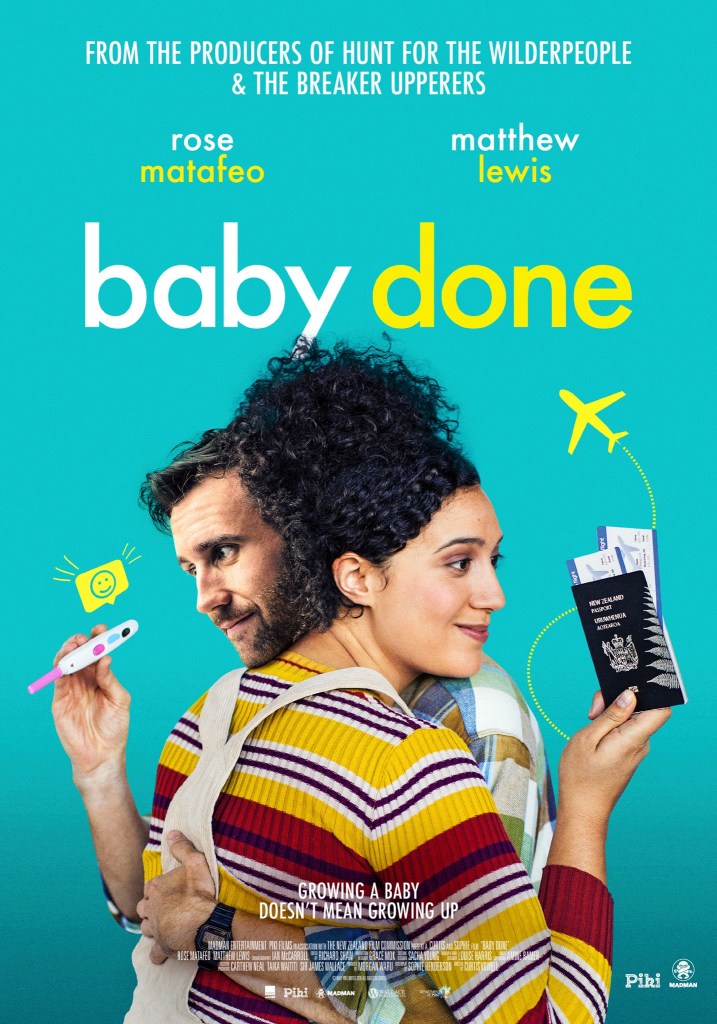
On learning that she’s pregnant Zoe’s (Rose Matafeo) plans fall around her as she rushes to achieve her dreams, meanwhile her long-term boyfriend Tim (Matthew Lewis) stresses about the birth and fatherhood.

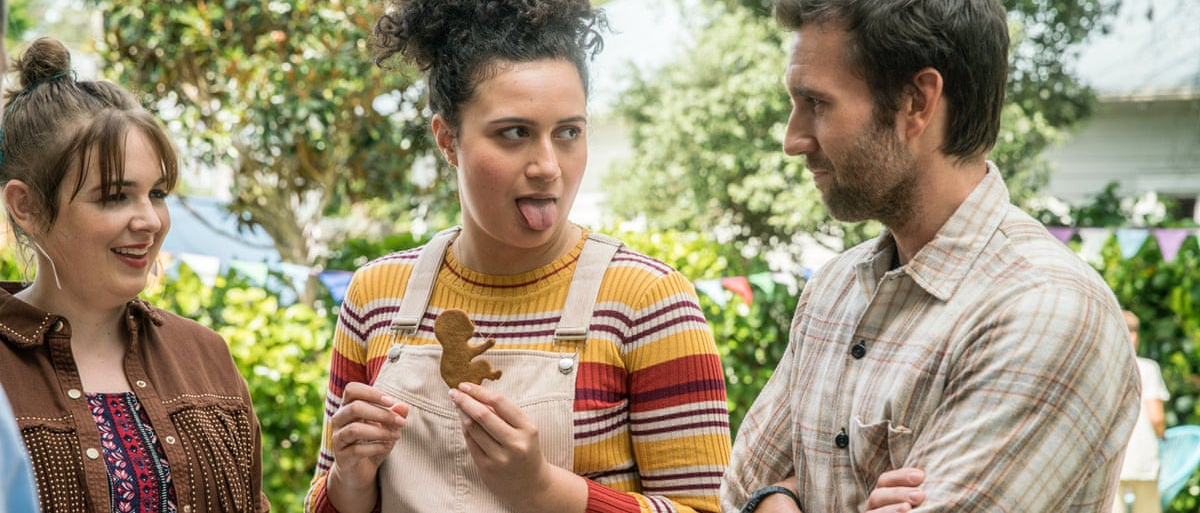
Rose Matafeo has easily established herself as one of the most in-demand recent stars of stand-up here in the UK. Now, back on home territory, she firmly establishes her acting chops with a show-stealing performance as mother-to-be Zoe. Zoe’s pregnancy comes as a shock to both her and her long-term boyfriend Tim (Matthew Lewis). The couple, who are perfectly happy not married – or engaged – and hold confused contempt for the likes of baby showers and events to reveal a baby’s sex, both worry about the prospect of becoming parents; just in different areas of their lives.

Zoe fears that a baby will prevent her from achieving her dreams. An accomplished tree surgeon her aims of attending world championships in Canada are scuppered by her pregnancy. While initially she tries to deny it claiming that “tapeworm can cause positive tests” panic soon sets in. Having seen many of her friends become distanced from her by achieving the alleged three goals of life – “marriage, house, baby, done” – she rushes to get everything done before it’s too late. Meanwhile Tim’s mind melts while rushing with hundreds of panicked thoughts about how good he’ll be as a father. He watches endless videos of people giving birth in any scenario to prepare himself for what may happen whenever the baby arrives – whether the pair are ready or not. With such differing views the couple begin to argue, a rift forms in their relationship, as the thought of looming parenthood brings their lives to a near halt.

The central pairing both deliver fine performances, however as the core focus of the film, who we seemingly spend the most time with, Matafeo is the true comedic force who steals the show. The frankness and yet light humour of her character go a long way in this mostly light-hearted New Zealand comedy. Far from holding a mean streak, the growing divide in the relationship is dealt with with enough sense of drama that the film never strays into the realms of farce or conventional rom-com. The duo – even as the final half hour begins and things become somewhat tangential for a brief amount of time – have good chemistry and work well together on screen. The sense of humour that they bring about together makes them an entertaining couple, definitely with their imperfections but this simply heightens the impact of their drifting apart as they worry about how they will change with a baby in their lives. And yet you stick with them throughout the pregnancy because of the humour carried throughout and the good-willed nature that the film holds for most of its short, if not always direct, run time.

Rose Matafeo truly steals the show with a light-hearted performance to match the tone of Baby Done. Lewis also gives a good turn that shows opposite worries for the pair in the relationship of two people fearing different things for when a baby they didn’t expect arrives through the well-divided comedy and drama.

Rating: 3 out of 5.

LFF 2020: Bloody Nose, Empty Pockets – Review

Release Date – 1st January 2021, Cert – 15, Run-time – 1 hour 38 minutes, Director – Bill Ross IV, Turner Ross

The regular patrons of a Las Vegas bar meet throughout the day and night to drink up and say goodbye to their beloved meeting place on its final day

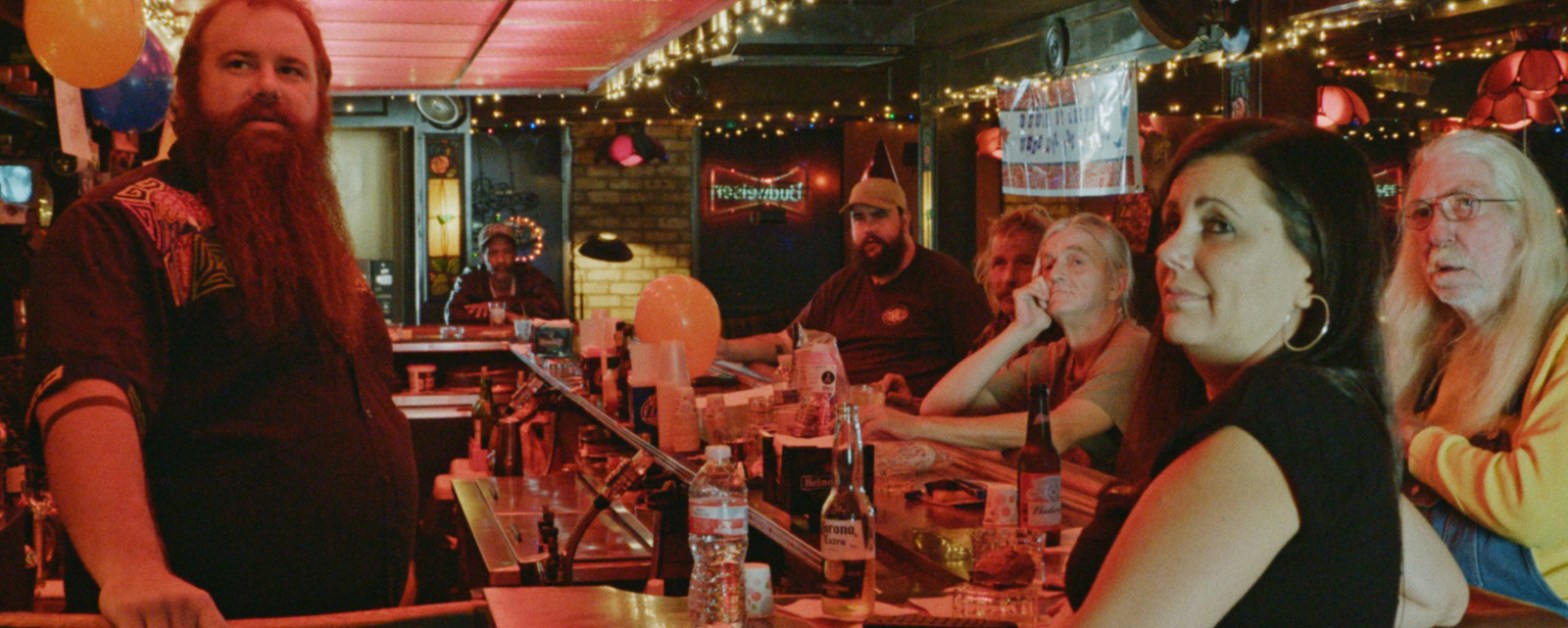
Bloody Nose, Empty Pockets is an interesting experiment. Part-documentary, part-fiction the film takes a fly-on-the-wall view at the final day of a Las Vegas bar, The Roaring 20s, and the regular patrons that come to drown their sorrows at this event in the booze that it sells. However, The Roaring 20s is still a very much open bar in New Orleans, and while the conversations are improvised they are held by street-cast actors aware of the fact that they are being filmed. From the very start ’til the very end of the day the booze flows and the various characters get increasingly intoxicated throughout, allowing for some more open, although deeply slurred, conversations.

This is a film that shows that a bar truly is where everybody knows your name. It’s a place where people go for friendship, escape and companionship. Where they both leave their cares and worries and feel free to release them in emotional conversations. People openly give back advice, honest words such as “I am somebody you hang out with at a bar, I am not your family!” And yet, most of all, this is a film about a group of people getting absolutely smashed. In each frame you can practically smell the alcohol washing throughout the characters and the bar they live in for the day. The setting is illuminated by cheap neon and LED lights of all different colours. Flooding the room with a reddish, purple hue. Even the exterior scenes in the car park outside the main building seem to be soaked in the same style.

Yet, the most enjoyable moments of the film aren’t those dwelling on the personal stories and discussions that you overhear. It’s the moments where everyone seems to have come together around the simplest of things just to have a good time. In the opening half hour as the day has just started and the early-morning drinkers and sentimentalists wander in they rejoice in choruses, led by the barman on guitar – “he’s almost as good as the jukebox” someone claims – of Kenny Rogers’ The Gambler (a song which echoes throughout the film as a plaintive reminder as to why everyone has gathered). The crowd innocently gazing at a small box-TV screen displaying a slightly static picture of Jeopardy and occasionally shouting out the answers also serves as a highlight. The film feels honest and the conversations certainly don’t feel improvised, they feel genuine.

While some moments do seem to be somewhat repetitive. As the night arrives and the early morning hours loom the film, much like the drunken figures it shows, begins to stagger and slow down as it has more hours still to show and seems to want to show every detail of the closing moments of the bar that it shows. The customers may not quite have time to sober up to properly say goodbye to their favourite drinking place but there’s plenty of time for the viewers to do so with the slightly drawn out ending. The feeling does set in eventually that this may have potentially worked better as a 45 minute short film. However, for what the film does offer there’s enough cheer and interesting observed conversations to keep things, aside from the alcohol, flowing.

Bloody Nose, Empty Pockets is absolutely soaked in booze. It comes with plenty of engaging observations within the improvised dialogue but a struggle to sober up does lead to some staggering and repetition.

Rating: 3 out of 5.

Stardust – Review

Cert – 15, Run-time – 1 hour 49 minutes, Director – Gabriel Range

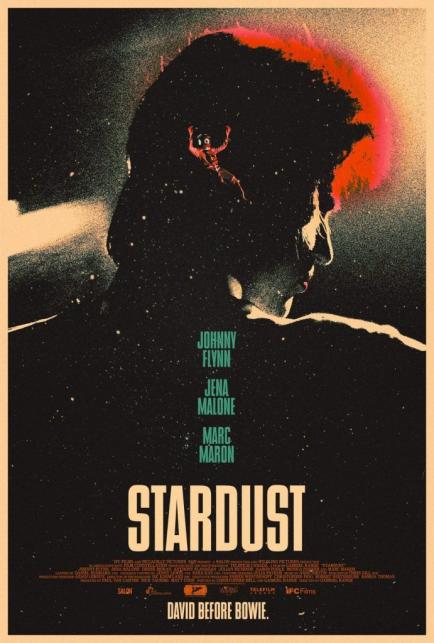
David Bowie (Johnny Flynn) embarks on a US tour in the hope of promoting the seemingly unsellable The Man Who Sold The World.

“What follows is (mostly) fiction” runs the opening title-card for Ziggy Stardust origin story Stardust. Unlike 2019’s Rocketman which took musical numbers in its stride to create fantasy sequences within its true life story or Bohemian Rhapsody which was filled with the music of Queen, there’s very little music within this snapshot of David Bowie’s life. This is down to the fact that Bowie’s estate and family didn’t give permission for the film to use the late artist’s music. Instead we get various covers that he may have sung at some of his gigs at the time.

Over the course of the film we see Bowie (Johnny Flynn) travelling across America with the one man who believes he has something, record promoter Rob Oberman (Marc Maron). The two make their away across the States in his messy, green-tinged family car, the amount of clutter in there makes it seem as if he lives on the vehicle – although initially the pair stay at his Mum’s house for the first few nights. The hierarchy between singer and representative is made clear from the start as Bowie makes his home across the back seat while Rob acts as his personal driver – who also happens to arrange his gigs.

There’s little interest in the act from anyone. Bowie performs to quiet vacuum cleaner conventions or small, cramped bars with no response to his covers. Interviewer’s sneer and poke fun at his behaviour and dresses – his bursts into mime don’t always help – they claim “I know a boring British import when I see one”. During the same interview there are various references to a mask that Bowie uses, as he lies down in a way that seems clearly set up to look like the UK album cover of The Man Who Sold The World – an album which seems impossible to promote. Bowie’s behaviour and habits don’t always help, when talking to one writer a number of his lines sound like something that could have been said by Nigel Tufnel of Spinal Tap.

His pregnant wife (Jena Malone) at home calls wishing that her husband was at home for support instead of parading round America. Meanwhile, flashbacks of his brother Terry (Derek Moran) make him worry that he too may be experiencing schizophrenia. However, such elements are rarely touched upon, only brought in for ineffective moments of personal drama and explanation as to the birth of Ziggy Stardust.

As each gig and conversation between the unlikely touring duo goes by the film feels more and more like a by-the-numbers road trip instead of a proper biopic. The issue isn’t that Bowie’s music isn’t present – the score certainly has hints of the likes of Space Oddity, one of the most frequently mentioned songs in the film, next to The Laughing Gnome, although stopping before anything properly distinguishable is heard, likely to avoid legal issues. It’s more that the film feels very un-Bowie. You could replace the name of the central character with anyone and it would likely have the same impact and feeling of a generic road-trip film. Very conventional and decreasing in personality and entertainment value as it goes along. This isn’t down to Flynn’s performance, he gives a good turn, and there’s no denying that he can sing, it’s more down to the scripting and narrative of the film. What starts off as something decent enough and bearable soon becomes something bland and void of imagination – which Bowie was, of course, far from.

In fact, the film almost seems as if it goes out of its way to not reference the iconic mind and music of the central figure – although at times it almost feels as if Rob is the focus of the film. A radio interview goes wrong and so the presenter decides to play another artist instead of the one right in-front of him. Instead of a moment of drama or an insertion of humour such moments simply take away from the piece and make it feel even more generic. The more it occurs the more tiresome the trip becomes. By the time you get to the big concert finale the moment lacks energy and, more importantly, Bowie.

Stardust’s biggest issue isn’t the fact that it lacks the music of its subject matter, it’s the fact that it feels like it’s not about David Bowie at all. This is a deeply generic, and eventually bland, road trip that begins to focus on everything around the central figure, who could go by any name.

Rating: 2 out of 5.

LFF 2020: 180 Degree Rule – Review

Release Date – TBC, Cert – TBC, Run-time – 1 hour 23 minutes, Director – Farnoosh Samadi

When she attends a family wedding against her husband’s (Pejman Jamshidi) will, Sara (Sahar Dolatshahi) experiences a tragic loss which leads to a succession of lies, secrets and spiralling worries.

Sara (Sahar Dolatshahi) is a school teacher who is trying to be as independent as possible. She helps her students along with the lightly progressive attitudes that she has in her own life – all with a dash of generosity and kindness. However, her independence leads her to severe trouble when she goes against her husband’s (Pejman Jamshidi) wishes that she does not attend a family wedding. While the initial plan is for the couple, and daughter Raha, to go outside of Tehran for a family wedding Hemad finds himself called on a work trip. With this being the case he tells his wife not to go to the wedding, however defying the conventions of a society where men and husbands have the final word Sara travels outside of the Iranian capital for the wedding.

However, tragedy strikes when the morning after the ceremony the love, harmony and celebrations are broken when Raha is found dead. The devastation hits hard. You find yourself grieving alongside the family as the tone of the film matches the cold, greyness of the surroundings. After a slightly uneven first 20 minutes things begin to come into themselves and the film starts to pave its course.

The family’s grief is rushed and held within as they travel back home, unable to actually give the reason as to how the young girl died so that Hamed doesn’t find out. Still devastated by the event and not properly able to speak about it, simply making her pain worse, Sara finds herself lying to her husband. The events begin to spiral and cause further worry and panic as questions are asked, fake steps are retraced and the lies become increasingly tense. Dolatshahi and Jamshidi create genuine tension as Hamed becomes increasingly threatening and angered about the death of his daughter, restlessly researching so he can get to the bottom of things and find some form of resolution.

The winding road of what some may see as karma is seemingly never-ending and full of tangents for both Sara and the audience. Just before the hour mark the film does begin to diverge into further worry, however as this happens things, of course, become even more complicated. Events spin faster and faster and with everything that’s going on, and one or two of the repeating ideas, the film does begin to stumble as it tries to keep up with its own story. The story might just be able to keep track of, however as it strays in a number of different directions it almost becomes lost within itself and feels uneven, much like the case of the first 20 minutes. There are some good ideas throughout the film, when they aren’t developed to a point where the film begins to feel uneven, especially when dealing with themes of worry and grief to create tension that turn the drama into something close to a mild thriller.

Sometimes uneven due to developing themes too much, the performances, especially of Dolatshahi and Jamshidi, within 180° Rule are strong and help to push the tensions of grief and worry over the course of the winding narrative.

Rating: 3 out of 5.

Pieces Of A Woman – Review

Cert – 15, Run-time – 2 hours 2 minutes, Director – Kornél Mundruczó

A young mother (Vanessa Kirby) struggles to come to terms with the death of her newborn child, as the months go on her relationships with her partner (Shia LaBeouf) and mother (Ellen Burstyn) become tense.

Pieces Of A Woman has rightfully been praised for the 23 minutes one-shot birth scene that acts as one of its opening scenes. As Vanessa Kirby’s Martha groans, cries and belches in pain as her child is being born everything feels natural and real. It’s not over and done with in a minute or two with a happy, healthy successful birth and little worry. The lack of score pushes the realism of the scene and the emotions that the three characters present – including Martha’s partner Sean (Shia LaBeouf) and midwife Eva (Molly Parker) – are rushing through as the situation becomes worse. However, less than a minute after the birth the worst possible tragedy occurs, the baby turns blue and is quickly lost. It’s the devastating finishing punch of what is already an emotional, and technically impressive, opening.

As the autumnal and winter months follow – pushing the feeling of the cold and isolation in the lives of the central characters – tensions rise in Martha’s relationships. The film focuses on the depressions that the characters fall into, and the responses that each figure has to this. Martha becomes quiet and reclusive, a lost soul floating through an uncertain world of loss, made worse by the changes in her relationship with Sean. He becomes abusive, increasingly angry when he believes he can’t get any proper responses from his partner – when she begins to take down items in the room that was meant for he lashes out at the dead-pan response of “because we don’t have a kid”. Meanwhile, Martha’s mother, Elizabeth (Ellen Burstyn), experiences a much more expressional form of emotional response. She delivers emotional monologues and tries to get her daughter to display something that resembles an outer sadness.

While director Kornél Mundruczó – making his English language feature debut – truly leaves a mark with the opening scenes once the film’s remaining 90 minutes arrive things don’t quite have as much of an impact. Kata Wéber’s screenplay looks into the separate personal reactions and behaviours of various characters instead of keeping the focus on Martha. We see Sean’s affair with her cousin. Meanwhile, Elizabeth’s attempt to sue midwife Eva for killing her grandchild – original midwife Barbara was unavailable when the birth was happening, and so sent trusted Eva in her place – goes against her daughter’s wishes. The film might fall in the mid-section, however when it comes to the courtroom scenes things are brought back up and the drama of the conversations throughout the film is truly felt.

When looking into such elements the mother-daughter scenes truly stick out. The two great performances that show the truthful developments of the characters emotions simply raise something all the more investing during such scenes. Kirby and Burstyn show two very different forms of depression, both of which can’t understand the other and simply causes further upset and frustrations. Such moments, are what keep the core interest in the film and stop things from completely falling apart. The film might still feel busy overall, however such moments help to give it a sense of pace and development that you can get more invested in than others. For much of the piece its the performances that truly bring about the drama and emotion that is held in a number of scenes. While there might be points where the film dips as the film comes back to focus on Kirby, who delivers a consistently brilliant performance of inner-emotions and depression, there’s true power end effect in play. The film itself might not be consistent, but Kirby certainly is.

After the impressive one-shot birth scene there’s a fluctuating style to Pieces Of A Woman. It works best when focusing on the power of Kirby’s performance, and the responses to different kinds of depression, is enough to bring you back in after the slight dips of other, wavering focuses.

Rating: 3 out of 5.

Blithe Spirit – Review

Cert – 12, Run-time – 1 hour 36 minutes, Director – Edward Hall

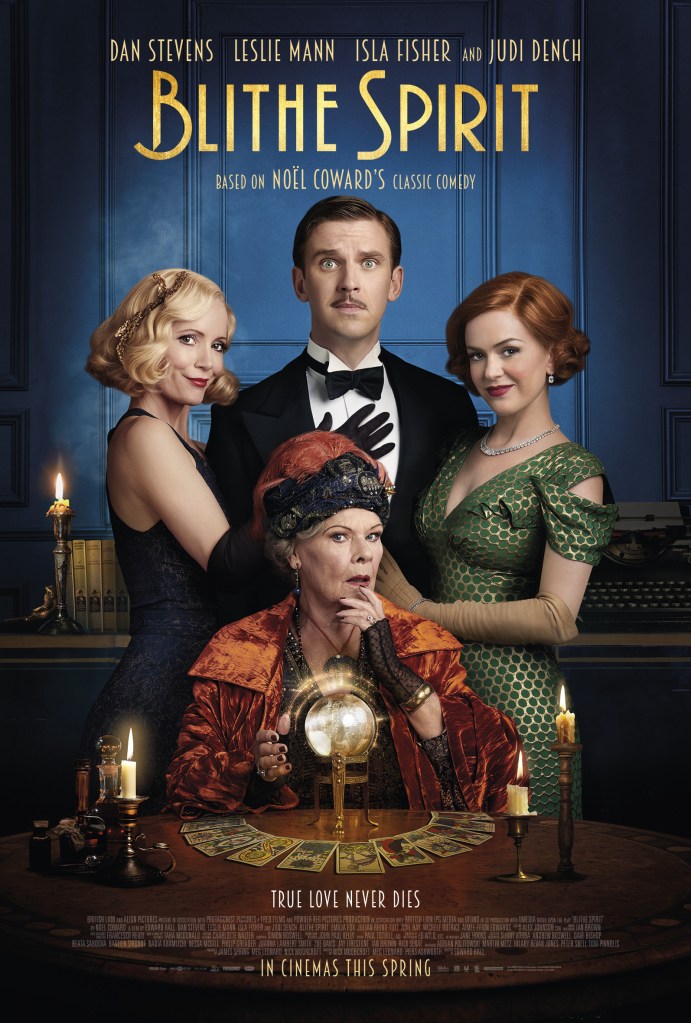
A struggling writer (Dan Stevens) begins to experience troubles in his second marriage when the ghost of his first wife (Leslie Manville) reappears after a séance.

‘Jolly good, what a splendidly smashing show, old chap!’ were unlikely the words that Noel Coward first thought when looking at the finished script for his 1941 play Blithe Spirit. It’s also unlikely that such terms or phrases were ever in this script. However, it’s exactly the type of stereotypical, dated British posh-talk that this newest film-take on the play is littered with. As characters get more and more infuriated they blurt out terms such as “hussy” and “harlot”, and dare they exclaim “bally”? There’s almost surprise in the eyes of the big-name actors as they find themselves reading off such lines.

The story follows Dan Steven’s Charles Condomine, a struggling 1930’s writer who has been given the opportunity to adapt one of his successful mystery novels into a feature film. However, for weeks he has suffered from writer’s block, with no clue as to what he should put on the page, his wife Ruth (Isla Fisher) at this point struggling to offer any more support than a simple ‘get on with it’. However, after getting some inspiration for his script Charles invites a medium (Judi Dench) to his lavish, seemingly modern design, home for a séance. While initially there are no effects, not even further inspiration, it’s not long until Charles is able to see the ghost of his deceased first wife, Elvira (Leslie Mann). However, it’s only him who can see her.

Cue routines about how nobody else can see Elvira and so get the wrong message when Charles is talking to her and a complicated marriage spawning from there. Despite Ruth objecting against such intrusions in her husband’s life things develop well for the screenplay with his dead first wife back on the scene. Elvira essentially writes the script for Charles, as she did his books when she was alive. While she doesn’t actually write herself, she tells him what words he should put on the page. Ghostly powers certainly fluctuate throughout the film. One minute ghosts can walk through walls and simply go through people, the next they can pick up objects, control them and even manipulate multiple items from a distance.

Throughout the tone is that of a garish ‘wacky’ comedy. Characters blithering around – the opening lines of the film are Stevens’ character calling himself a “blithering idiot” – through the same repeated jokes over and over. To pick things up the score, with a tone that highlights just how zany and kooky things have become, kicks in. However, none of this distracts from the fact that the film as a whole is void of wit and charm, in fact everything seems to be rather overdone. Every scene – even the ones where the lights are turned off or events are set at night – is garishly lit, full-on bright light flooding the entire frame; simply highlighting the watered down florescent colours.

Everything becomes a mesh of a comedy that almost seems as if it’s screenplay is trying to poke fun at itself when it comes to certain instances and lines. There are times when you almost expect the set to fall apart and the cast of Mischief Theatre to run on, forget their lines and turn this into The Séance That Goes Wrong – it would certainly be far more entertaining. Unfortunately, what we’re left with is a very long, very bland, 96 minutes that truly shows its length towards the end as various pieces of string are picked up, some which weren’t there in the first place, and tied together to create some form of ending. Yet, throughout, aside from the repetitious jokes, the recurring theme is a simple pun. Ghost-writer.

Taking a stereotypical, dated view of 1930’s posh-Britain this take on Noel Coward’s Blithe Spirit simply lacks any form of charm to properly highlight humour. The living characters have as much life as the ghost, and to think of it the film itself.

Rating: 2 out of 5.