Orphan: First Kill – Review

Cert – 15, Run-time – 1 hour 38 minutes, Director – William Brent Bell

The story of how ‘Esther’ (Isabelle Fuhrman) escaped from an Estonian psychological hospital and ended up committing killing sprees in America.

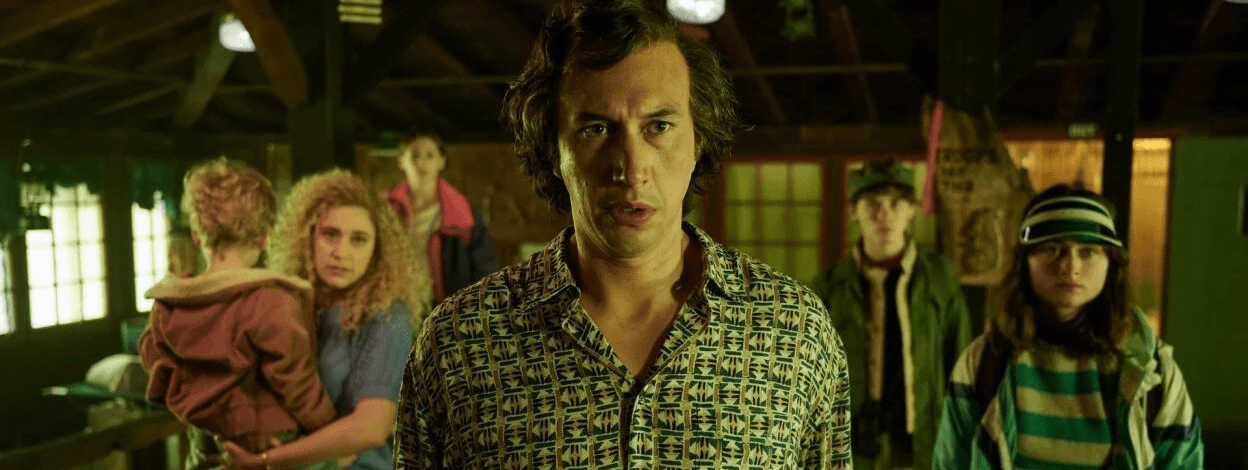
The twist of 2009’s Orphan almost seems enough alone to have provided reason for the horror having become a much referred to modern classic. It’s this twist which new prequel Orphan: First Kill plays with throughout most of its run-time as we’re aware of the true state of psych-hospital escapee Lena (a returning Isabelle Fuhrman) as she escapes from Estonia and manages to travel to America under the guise of missing child Esther.

Much like the first film there’s a fair deal of the dramatic lining the run-time of this prequel, allowing the horror to linger in the background in shades of darkness. While initially planning on running away from the wealthy family who welcome her ‘back’ into their home she decides to stay after starting to form a connection with artist father Allen (Rossif Sutherland). However, the longer she stays the more tensions arise between her, mother Tricia (Julia Stiles) and son Gunnar (Matthew Finlan); this especially occurring when a trusted family child psychologist (Samantha Walkes) seems to notice inconsistencies in Esther after returning from being missing for so many years, and being found in Russia of all places.


The film rattles along its course fairly well, not really being disturbed by anything and generally makes for good viewing, although nothing overly challenging. It certainly plays with certain elements to build up from the original film – which this justifies being a sequel to rather well – although does occasionally risk being something of the same thing. Where things truly turn around is past the halfway point, just as we begin to enter the third act, and a real twist comes in, truly picking things up and creating a new stride for the narrative. It forms an intriguing blend that plays with not quite new elements, but certainly changes key and forms something slightly different and more engaging. You stop noticing some of the initial issues – there’s some clear camera trickery to hide the fact that the mid-20s Fuhrman is no longer a child which you stop to notice as you become more engaged in the film, although during some close-up fight scenes you can’t quite tell who’s who due to Esther’s height being taken into account.

Things play out more as a reverse-mystery piecing themselves together with a handful of dark revelations and intentions, particularly regarding the prying eyes of local detective Donnan (Hiro Kanagawa) – who has been working on the disappearance case of the real Esther since she first went missing – playing against each other in close proximity. While different to what comes beforehand in the film there still feels a sense of tonal consistency meaning you don’t need to re-engage with the film at all. There’s simply a new layer of interest formed which keeps you in place throughout the remainder of the run-time – even if the final few minutes do feel rushed, especially in comparison to what we’ve seen in the build-up of the rest of the narrative.

But, what comes beforehand – and indeed runs throughout Orphan: First Kill – is a prequel which justifies itself as just that. Working as a darkly dramatic mystery winding in the elements of horror every now and then to work into Esther’s murderous actions and intentions. The film plays with our knowledge of what she’s like without building up masses of tension or presumptions of how things are going to turn out. It’s interesting viewing that’s held up by its third act developments and twists which work in favour of the narrative and the characters within it. Holding interest and engagement throughout and simply increasing that overtime thanks to the developments made.

While starting off as a likable horror prequel Orphan: First Kill gradually develops its elements of dark drama, playing with both its narrative and characters for greater interest and engagement from the audience.

Rating: 3 out of 5.

Fisherman’s Friends: One And All – Review

Cert – 12, Run-time – 1 hour 52 minutes, Directors – Meg Leonard, Nick Moorcroft

As the success of their debut album and national tour settles in, and a new member being welcomed in, the shanty-singing Fisherman’s Friends find tensions rising within their group and personal lives.

2019’s Fisherman’s Friends was very much a conventional silver-cinema-leaning feature which likely used a “feel good” pull quote in large letters on the poster. It certainly wasn’t for everyone, myself included to some extent, but it clearly worked for a large enough audience to become a hit and warrant a, rather unexpected, sequel. We almost pick up where we left off with the sea shanty-singing group enjoying the success of their top-ten charting debut album and a national tour. However, on returning to the quiet life of Port Isaac, Cornwall tensions begin to rise. Not just within the group, but also in their personal lives.

Primarily we follow leader Jim (James Purefoy) still grieving the loss of his father (David Hayman appearing in visions and flashbacks) and turning to drink to cope. His habits create a distance with the rest of the group, especially in the wake of his tensions with new member Morgan (Richard Harrington) – a Welshman whose own profession goes against Jim’s working-the-water ways. Public outbursts begin to make their way into the tabloids, causing the record label to consider dropping the group due to their bad images – which it seems not even media training can properly tackle, caused by Dave John’s Leadville, who appears to get a bit more to do this time around, after a misunderstanding with a journalist. Even the youngest member of the group, Rowan (Sam Swainsbury) is having difficulties with wife Becky (Libby Walker) after receiving unwanted, and revealing, texts from a hen party member from the recent tour.


Throw in Imelda May as 90s star Aubrey Flynn, falling in with Jim whilst looking for a quiet life in Cornwall away from the cameras and tabloid pressure and you’ve assembled a rather familiar set of elements, characters and narrative devices. Even being “based on a true story” you can generally recognise the film and tell where it’s going to go with its various elements. It slightly matches the gags which run throughout the film and don’t overly manage to muster up a chuckle, some simply don’t quite click in the context of the film being set in 2011, the closest is to a briefly seen – to the point where it’s likely an unintentional gag – acronym for the Port Isaac Shuttle Service.

Yet, there’s no denying that there’s still a watchable nature to the film. Yes, it might knock itself down every now and then by slipping into its more conventional roots. Certainly it manages to stir something during the various musical performances which pop up now and then – even if some are tinted with a layer of cheese and sentimentalism, with a dash of ‘come to Cornwall!’ scenery. The familiarity may still be present, and you can feel it, but there’s something about the film which generally carries itself through and allows it to work and avoid becoming frustrating. Perhaps it’s the feeling that it’s not trying to be anything brilliant and instead is just trying to make something that’ll please the audience for the time that it’s on – which it generally appeared to do and will likely continue to do so. It’s this overall style and feeling of good-intentions which helps to carry things through and keep you interested in the film as it pans along through the rises and falls of its central characters – and indeed the film itself.

While the laughs might not quite come through there’s something about the general style of Fisherman’s Friends: One And All which allows for you to watch without feeling frustrated by the occasional dips into convention. It’s good-natured feeling comes through and kind of works.

Rating: 3 out of 5.

Dragon Ball Super: Super Hero – Review

Cert – 12, Run-time – 1 hour 40 minutes, Director – Tetsuro Kodama

When the Red Ribbon Army shows signs of creating a new artificial superpowered weapon, alien Piccolo (Toshio Furukawa) assembles a team to stop them from attempting to destroy the world again.

It should be said before properly diving into this film that I’m a complete outsider to the Dragon Ball franchise and universe. Going into this film I was aware of its existence, but outside of that knew almost nothing. However, unlike last year’s Demon Slayer The Movie: Mugen Train – which I considered to be one of the best films of the year having gone in knowing nothing, not even that it acted as the bridge between the first and second series of the hit anime Demon Slayer – perhaps some prior knowledge, and investment in the original anime and manga would help to bring out more within this particular adaptation – of course, a different kettle of fish entirely from Demon Slayer.

Telling its own isolated story there’s enough to engage with and follow within Dragon Ball as we see alien Piccolo (Toshio Furukawa) assemble a team of skilled fighters – each with their own special powers and abilities – to take down the Red Ribbon Army, who are creating their own overpowered artificial being in the hope of taking over, and potentially destroying, the world. The weapon is being created by Dr. Hedo (Miyu Irino) – a short figure with a worrying Oreo addiction – who organisation head Magenta (Volcano Ota) has recruited shortly after the doctor, with a fascination of just what he can make with the right funding, is released from prison.


Much of this is delved into within the early set-up, after a brief prologue and general conversational explanations and ideas of who characters are, what they’re doing, etc. These may crop up every now and then, but luckily the film doesn’t feel bogged down in catch-up for outside viewers. With so many characters – there’s a brief scene or two tangent to a separate group training on a different planet, leading to a point which could likely be explained in a line of dialogue or two instead of a couple of scenes – the film still manages to get through its narrative with a fair level of ease. Some of this may come down to the fact that the plot is fairly stripped back and down-to-basics – both a blessing and a curse for various reasons, while it, again, works for outsiders it does sometimes feel a bit thin.

It’s perhaps why some of the action and fight sequences feel slightly drawn out – particularly the final fight filled with screaming and flashes of various coloured lights. That being said as a whole the film fits its 100 minute run-time rather well, going by rather quickly and certainly not feeling as long as it is. Despite the occasional issues which pop up now and then there’s generally an enjoyable time to be had with plenty of amusement thrown in here and there to keep things moving along and the audience engaged. Yes, it might lack tension on some occasions due to certain elements, such as the final boss, not quite being built up very much, but there’s still enough throughout that works and keeps you engaged to make for worthwhile viewing.

Perhaps this will work better for those more invested and engaged in the Dragon Ball franchise as a whole, knowing the lore and workings of various elements and characters. However, for those who are coming to this fresh, or knowing fairly little, there’s enough enough given to bring you in without the film being bogged down by context and backstory. There’s a good time to be had within this and the various fantastical elements and powers that it has on display throughout its well-flowing run-time.

While the more basic nature of the plot is both a blessing and a curse there’s enough within Dragon Ball Super: Super Hero to engage franchise outsiders. While some stylistic elements and tangents may work better for already-existing fans what’s provided overall is enjoyable, if occasionally wobbly, viewing.

Rating: 3 out of 5.

Nope – Review

Cert – 15, Run-time – 2 hours 10 minutes, Director – Jordan Peele

After believing they’ve sighted an alien spaceship siblings Emerald (Keke Palmer) and OJ (Daniel Kaluuya) become fixated with trying to capture recorded proof.

The third act of Jordan Peele’s Nope may just be one of the most spectacular things I’ve seen in a long time. It seems fitting for a film all about our obsession with spectacle. It’s a tense hybrid of action and horror as everything has built up to this point. A barrelling sequence which continues to expand and grip you within the unpredictable course which it takes. One thing naturally moving on from the last before moving to the next in what feels like an effortless flow, culminating in a grand spectacle piece of filmmaking that fits right in with the major summer blockbusters.

To some extent it’s just what siblings Emerald (an Oscar-worthy Keke Palmer) and OJ (Daniel Kaluuya) have been looking for in trying to catch recorded proof that there is an alien spaceship lurking in the clouds above their ranch – where they raise horses for use in films, surrounded by the “smell of horse sh!t and fresh air” . However, it’s a task which is much easier said than done as the job becomes more and more dangerous with various attacks from the ship on the pair and their home ranch. Yet, they power through with funds currently tight – OJ has been selling horses, which he hopes to eventually get back, to local wild-west-themed amusement park owner, and former child actor, ‘Jupe’ (Steven Yeun) – and the hope of raising potential thousands of dollars with real footage of an alien encounter., and perhaps the chance of an interview with Oprah.


As they buy new cameras and attempt to find ways of capturing footage, with the help of tech store worker Angel (Brandon Perea), the stakes continuously raise alongside the tension. Initially Peele’s subtlety brings early anxiety as you’re already worried with little having been shown at these early stages. But, as things progress and Peele utilises both night and day – scenes of clear horror set at night manage to avoid feeling like they hold the cliché of being set in the dark/ at night – the fear factor grows allowing for more tension to be brought into the mix, alongside some genuine scares and terror in one particularly loud and claustrophobic extended moment. All while never forgetting the occasional mild chuckle here and there, pushing a more natural feel to events and the characters.

There’s clear attention to detail throughout. Not just when it comes to the spectacle and interactions with the UFO but in the quieter moments of build-up too. Strong efforts have been put into the look – the cinematography throughout is excellent – sound and general design of the piece. Bringing you into the dusty plains early on and keeping you in place for the fast-paced ride (the film certainly feels nowhere near it’s 130 minute run-time). Peele doesn’t create mystery around the giant craft, we know it’s there as much as the characters do, yet there’s a sinister mysticism to his direction here – the strongest of his three films so far. When you add in the strong leading cast, particularly the excellent Palmer and Kaluuya – both of whom are on top form – there’s an ease of engagement with the film as you’re kept in place throughout and simply allowed to take part in the fear, action, thrills and growing spectacle. All culminating in a stunning third act which finely blends a selection of the genres on display throughout the film and will surely be one of the greatest sequences and efforts put on the big screen all year.

Jordan Peele brings his best directorial game so far for the brilliantly crafted growing spectacle of Nope. Finely blending growing action and fear it builds up for an excellent third act which commands the screen as much as the fantastic performances of Palmer and Kaluuya.

Rating: 4 out of 5.

Prey – Review

Cert – Recommended for ages 16+, Run-time – 1 hour 40 minutes, Director – Dan Trachtenberg

Comanche hunter Naru (Amber Midthunder) finds herself defending her tribe against an advanced alien predator (Dane DiLiegro) designed to kill the strongest opponent it can find.

Following on from 2016’s 10 Cloverfield Lane director Dan Trachtenberg returns to bring another perspective spin to a franchise. The original 1987 Predator is a classic piece of tension building about being hunted and preventing the attacker from winning. For the first half of Prey – taking the story to 1719 and following Comanche hunter Naru (Amber Midthunder) – Trachtenberg, who came up with the story alongside screenwriter Patrick Aison, focuses on the central figure hunting for an unseen figure. She’s uncertain of what waits for her in the nearby wilderness, but knows for sure that the recent roar of a ‘thunderbird’ and strange attacks and sightings are of something unfamiliar. Perhaps a predator stronger than any she, or anyone in her tribe, has seen before. Attempting to track it down she takes it upon herself to take the being down before it attacks the rest of her tribe.

Throughout this search, where we still see brief shots and moments with the initially invisible Predator (Dane DiLiegro) attacking the likes of nearby wolves and snakes, Trachtenberg makes the most of highlighting the wide open space which surrounds Naru. There are plenty of engaging shots of the landscapes to help establish Naru’s hunt, yet reinforcing the idea that the Predator – which she is yet to see – could be anywhere; again leaning away from the original film which manages to highlight the exterior environment while keeping a feeling of entrapment amongst the trees and crowded growth of the area in which Arnold Schwarzenegger feels trapped in.


However, while we commonly think of Schwarzenegger facing the advanced, both in terms of fighting skills and weaponry, alone, Midthunder spends much of the time with fellow Comanche fighters. Trying to prove both herself as a warrior capable of fighting just as well as the men in her tribe – including brother Taabe (Dakota Beavers) – but also the existence of the alien threat. While on the one hand this helps add to the handful of action sequences where the bow-and-arrow and tomahawk-equipped humans take on the precision-dart-firing alien it also slightly detracts from perhaps the highlight moments of seeing Midthunder’s character both explore the world around her and also take part in the action. She certainly gets her moments, but it’s more a case of wishing that there were more of them throughout the film due to the highlights that they serve as.

As the hunting tone of the first half switches to a more hunted feel in the second there’s, as you might expect, an increase in the amount of interactions with the Predator. There’s a level of suspense to be found in each one while keeping them fairly restrained and unshowy – bringing about a style which would perhaps come across with more spectacle on the big screen. While brief these moments are certainly enjoyable, and slightly differ from the build-up and initial search and hunt that we see Midthunder’s character go on. The film as a whole doesn’t seem to change tone or style, more just a slight shift in focus as the search turns into planning and adapting on how to escape and defeat the kitted-out otherworldly creature. It makes for good, certainly gory – the film is sparing but effective with its bursts, splatters and gushings of dark crimson and neon green – entertainment for the time that it’s on, with certain shots and moments likely to stay in the mind a little while afterwards.

It’s certainly interesting to see things pan out, with the idea of a Predator arriving 300 years ago and doing battle with basic handmade weapons of the time avoiding feeling like a novelty. It’s a properly formulate idea which is developed by the characters, particularly Naru, and the hunts and battles that make up the film – particularly allowing the central figure to prove herself on multiple fronts early on so that that doesn’t become the core focus of the film. It’s her vs the Predator and we know that. The film makes it clear. Simply bringing the historical spin to things while still playing with familiar elements of the franchise there’s an enjoyable time to be had with Prey – which has fun with its title and the different angles from which it can be seen throughout the film.

While you might wish the see more of Amber Midthunder going it alone, or up against the Predator, Prey still provides a solid piece of entertaining action, with effective build-up and shots of the open landscape before the hunter becomes the hunted.

Rating: 3 out of 5.

Thirteen Lives – Review

Cert – 12, Run-time – 2 hours 27 minutes, Director – Ron Howard

Retelling of the 2018 Tham Luang rescue of twelve Thai children and their football coach from a rapidly flooding cave.

Much like the actual rescue itself Ron Howard’s retelling of the 2018 Tham Luang cave rescue feels quite gradual. It’s not so much that it shows various different perspectives – it just about manages to avoid jumping about between various perspectives as we largely follow British cave divers John (Colin Farrell) and Rick (Viggo Mortensen) – more that it details many of the setbacks faced amongst the heavy rainfall in the are, which leads to rising flooding in the cave where twelve Thai boys and their football coach are trapped. Yet, this gradual feeling generally avoids losing your interest in the piece, particularly once it begins to focus more on the efforts of John, Rick and their various colleagues, and those around them who have answered the call for help from all around the world.

However, this build-up and depicting of adversities and delays does eventually have its impact when the film as a whole starts to feel a bit on the long side. At almost two and a half hours, with the final hour dedicated to the core rescue effort itself, the run-time certainly begins to be felt at various points throughout the film. There’s a level of interest to be found within the rescue, even if initially it’s described and discussed so much that it initially starts off somewhat slowly, and the way in which it is executed, but a feeling still remains that the film is pushing its run-time beyond a more comfortable level. It causes the eventual rescue to feel drawn out – perhaps as we’re focusing mostly on the rescuers instead of also seeing as many occasional points from politicians and others who are involved in trying to free the titular thirteen figures trapped below.


While the gradual pacing is still present it almost feels different to what comes beforehand, perhaps more down to the fact that we’re seeing a few hours condensed into one instead of almost three weeks condensed into 90 minutes. It’s not a major issue, and again doesn’t detach you from the film, but does perhaps serve as another reason as to why the rescue, and eventually run-time, feel drawn out. Luckily, there’s consistency in Howard’s direction and the way in which he captures the events. At times it feels like he’s keeping things naturalistic, sometimes attempting to come through in the dialogue of William Nicholson’s screenplay, to push a near-documentary style – having made a handful of documentaries in recent years. It works on some levels, particularly when it comes to the up-close nature of the rescue sequence, and a number of key discussions between various parties involved in the early stages of the rescue in regards to just what should be done and who should do it.

Such stylings help to bring you in to the story that’s being told, more focusing on the rescuers rather than those being rescued. With that the light documentary-like touches help to connect you and further engage you in the events as they gradually unfold – the thought processes of the characters, particularly Farrell and Mortensen’s divers, coming across in the lingering shots and moments as things develop slowly for them. Such stylings may change slightly in the final hour as the actual rescue pans out, but there’s still a generally interesting nature which keeps you in place as the rescue takes place, detracting from the slightly overlong run-time.

There’s a fair deal of interest to be found within the gradual pacing of Thirteen Lives, getting across the feelings of the central rescuers, but it leads to the run-time feeling pushed, particularly in the slight shift of the final-hour rescue.

Rating: 3 out of 5.

Bullet Train – Review

Cert – 15, Run-time – 2 hours 6 minutes, Director – David Leitch

A group of strangers, all with links to crime organisations, find themselves looking for a briefcase holding $10,000,000 whilst on a bullet train.

Perhaps one of the things least expected from Bullet Train, the latest action flick from director David Leitch, is a running gag about Brian Tyree Henry’s character’s – codenamed Lemon – fascination with Thomas The Tank Engine. He carries around a set of stickers and will gladly list the names and personalities of each of the trains from the children’s TV series, to the confusion of those around him. He claims that the show has taught him about friendship and kindness, alongside helping him to read people and understand their true motives. It certainly seems to have helped as he tries to decode the various assassins and criminal minds around him on a bullet train where multiple figures are after a briefcase holding $10,000,000, each for different reasons which somehow link back to those who are also trying to obtain the case.

These various figures are led by Brad Pitt’s Ladybug. A figure who believes he is cursed with bad luck and is looking to gently get back into the crime game with a nice, easy ‘smash and grab’ – perhaps even avoiding the ‘smash’ – led by his commander Maria (the voice of Sandra Bullock). However, what starts off as a fairly easy job soon spirals into chaos as Ladybug is trapped on the train defending himself against knives, guns – which he refuses to use himself – bottles, a giant mascot and an irritated conductor amongst other things. Despite much of the action taking place on the train the film manages to avoid feeling restricted by its one-location multi-carriage setting and moves along through its compartments fairly well.


The action itself is rather stylish, carrying a standard Leitch vibe perhaps more in line with Deadpool 2 and eventually Fast And Furious: Hobbs And Shaw than the likes of John Wick and Atomic Blonde. This partly comes through in the comedic tones that are dashed throughout. The opening stages are played out more for comedy than anything else, an attempted joke inserted into most instances – the running Thomas The Tank Engine gag seems funnier to the creatives than anyone else. It’s a shame that the humour never quite takes off throughout the film. There are a couple of mild chuckles and exhales of amusement here and there, but nothing proper in terms of actual laughs. It causes the earlier sequences, where we’re still being introduced to the characters – getting through various flashbacks and recollections and lengthy not-quite-montages which intercut conversations between characters happening at the same time to construct one long scene/ sequence – to feel overshadowed by the comedic attempts, leaking into covering up the action.

Once out of the way of the various introductions and build-up of relationships and motivations things begin to move along a bit more smoothly. It certainly takes a bit of time for things to pick up speed, but eventually there’s enjoyable viewing to be found as characters begin to share more scenes together, and there are less separations in general meaning less jumping from carriage to carriage with each new scene or moment. It also allows for things to generally move along with more ease, and therefore the action to take a bit more of a centre stage as it appears to quietly become a bit more pivotal, and generally more enjoyable. While this does start to lead it to a rather messy third act where various ideas are thrown into the mix at once until things, almost literally, come off the rails there’s still an enjoyable enough nature to things as the end nears that you can just about excuse things, even if one or two narrative decisions would be better off having not been made. It may take some time to get going, and the final destination might be a bit messy, but eventually there’s an enjoyable enough film within Bullet Train to warrant watching once the stylish, fairly light yet undeniably bloody, action begins to play a more key role in the proceedings.

Once the characters begin to come together and the action becomes more prominent over the comedic attempts there’s decent enough viewing within Bullet Train. It might start to get messy in the third act, but thanks to the style it’s just about excusable.

Rating: 3 out of 5.

Not Okay – Review

Cert – Recommended for ages 16+, Run-time – 1 hour 40 minutes, Director – Quinn Shephard

Aspiring writer Danni (Zoey Deutch) is thrown into the influencer sphere after creating a narrative that she survived a recent terrorist attack in Paris, whilst at her New York home.

In the case of writer-director Quinn Shephard’s Not Okay being placed by Disney, under the Searchlight Pictures label, directly onto Disney+ there are a number of positives to this decision. One prominent plus being that of the pause button. There’s no denying the difficult watch that pans out over the 100 minute run-time as Shephard consistently increases the levels of discomfort we experience in each scene, as the actions of central figure Danni (Zoey Deuth) – who we’re warned about before the studio logos even roll as being “an unlikable female protagonist” – lead her to spiral into further depths of cringe and wince inducing lies.

Alongside being an endurance test, although worthwhile watching without using the pause button, home viewing is perhaps a fine option for those more prone to audible reactions. On numerous occasions I found myself gasping, groaning and blurting, urging the central figure to just stop talking! Amongst exasperated sighs of simply “oh no” and “stop”.

During one key scene we see Danni attend a survivors group. Her story is that she has survived a terrorist bombing in Paris whilst attending a writers retreat, hoping to develop her skills to make it from photo editor to writer for the online publication she works for, Depravity. However, Danni was in fact still in New York, simply Photoshopping picture to make it seem as if she was in Paris in the build-up to the attack. The only reason she’s gone to group therapy is in the hope of getting information for a realistic sounding article she plans on writing. It’s a painfully uncomfortable scene in the context of why she’s really there, especially in regards to how naturally the rest of the group – including shooting and bombing survivors – seem to open up and discuss their experiences with trauma and how it’s stayed with them. All expertly handled by Shephard’s excellent direction which subtly manages to build up the levels of cringe-related tension and discomfort throughout the film as Danni begins to trend on various social media platforms and live the life of a famous influencer – the one she’s long-dreamed of.


Part of Danni’s fame comes from her growing friendship with young school shooting survivor Rowan Alred (Mia Isaac), a passionate activist calling for gun control and more response from politicians. We see her delivering occasional speeches and spoken word performances which strike an emotional chord as she angrily blasts her words into the microphone and through the speakers around her. Whilst not making eye contact with the camera you can feel a fiery connection to what she’s saying and experiencing, the panic that instantly hits her eyes as a lockdown drill alarm begins in her school, a set of passionate points which command the screen whenever the call is being declared.

Yet, it’s a call which simply further fuels Deutch’s character’s lies and sprawling narrative of what it was like for her to survive a tragic event which she was not a part of. Yet, amongst the drama and tragedy that Danni digs herself into personally there are still occasional scatterings of humour here and there. Rarely seem to be directed from her, apart from in the early stages before the string of lies begins, but more from those around her – and indeed their reactions to her. Such points are well blended into their respective scenes and manage to not disrupt the flow which is formed, while also in some ways increasing the overall tone and style of the film as it tracks Danni as she stops considering whether she should stop as she sees how she’s benefitting from her false narrative.

As we pass the hour mark things do begin to lean away from the discomfort and more into a clearly visible direct line to the ending. Her actions are less focused and frequent as the expected developments – which are teased at the very start of the film as she sits in front of her laptop watching death threats and abuse hurl towards her in a rapidly doomscrolling Twitter feed – come into play, crashing into her growing web. This certainly doesn’t stop the overall quality of the film from faltering. It’s still well handled and engaging, and certainly allows for a bit more light to be shone upon Isaac and her performance, just on a slightly calmer plain. Perhaps the biggest success of the final 40 minutes, however, is the fact that sympathy isn’t really created towards Danni. It’s more in regards to those around her, even in confrontational scenes. While there may be some as the internet pile on begins and we see the abuse that she’s subjected to it’s certainly not delivered en masse in an instant – showing the restraint and effectiveness within both Shephards screenplay and direction.

There’s a strong film within Not Okay. One which certainly makes for a tough watch due to the intense levels of increasing discomfort brought about by the actions of the central character. However, that discomfort feels intentional and is undeniably effective in keeping you engaged in the film, while also at a distance from the central figure who you can’t help but loudly urge to stop her actions on many occasions. It’s an engaging, if fittingly trialling, piece of work which pulls its elements together well for an effective, sometimes enjoyable amongst the drama and tragedies, time.

With a plot which only really properly becomes familiar as things start to calm down, Not Okay is an excellently pitched endurance test in almost painful discomfort from the subtleties of Quinn Shephard and her cast and crew.

Rating: 4 out of 5.

Joyride – Review

Cert – 15, Run-time – 1 hour 34 minutes, Director – Emer Reynolds

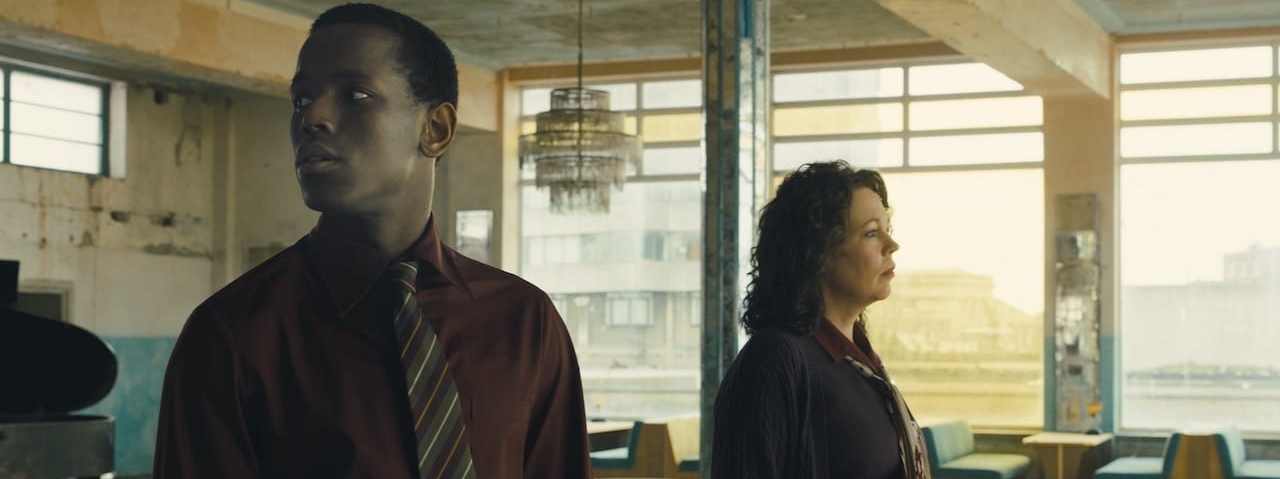
After running away from his dad (Lochlann O’Mearáin), 12-year-old Mully (Charlie Reid) finds himself on the run in a stolen taxi, not just with a wedge of cash but also new mother Joy (Olivia Colman) and her baby, who she plans on taking to a friend to care for.

Within the first five minutes of writer Ailbhe Keoghan and director Emer Reynolds’ Joyride we see 12-year-old Mully (Emer Reynolds) steal a large sum of charity money from his father, steal a taxi – which he seems to be able to drive perfectly – and engage in a confrontation with the still-half-asleep woman in the back of it. Yet, perhaps the most surprising thing that happens before any of this is the fact that he confidently performs a rendition of Minnie The Moocher in front of a pub full of people. It’s at an event to raise money for a charity which heled his mother as she was battling cancer. However, Mully’s dad (Lochlann O’Mearáin) intends on keeping the donations for himself, it’s hinted that he owes money to other people – plans which go out the window as soon as his son snatches the wad of cash out of his hand outside the pub.

Initially Mully’s aims are to travel to his aunt’s house, however as the woman he has kidnapped, who we soon learn to be called Joy (Olivia Colman), takes over the wheel with her own determination the route changes to her friend’s home, a fair few more miles away, where she intends to drop off her newborn baby, also in tow, somewhere where she will be cared for and properly looked after. Then, it’s off to Lanzarote. Wherever they end up going there’s certainly plenty for the polar-opposite pair of very sweary – the film certainly earns its 15 rating for the frequent dropping the f-bomb alone, although it does die down as things go on – figures to bicker about along the long country backroads of Ireland. There’s an enjoyable nature to the duo who manage to pull off an authentic feel to the bond that begins to grow between them. These are two central performances which largely helps to carry the film and bring you in.


Humour is what fuels the first half of the piece. Yes, there may be some familiar jokes but they’re pulled off well enough by Colman and Reid who both deliver fine performances – it feels odd, and perhaps obvious, to say, but Reid himself genuinely feels as if he is playing a 12-year-old. You believe that this is a child conversing with Colman’s new-mother, even amongst the confidence and experience that he displays, after having largely looked after his own niece growing up. It perhaps adds to the chuckles along the way and your general connection to the film.

Of course, there are dashes of seriousness and drama here and there, and for the most part they’re dealt with rather well. It’s when they become to central focus in the second half where you have to properly resettle into things. Not as they begin, but once you realise that this is not the prominent tone which the film is going for and that the more comedic leanings have been put aside for now. Then, once your settled in to this new tone things begin to alternate within the closing stages and form a tonally conflicting finale; again, the performances manage to hold the film up. There are certainly quieter moments dropped in here and there which manage to blend in well – there’s a really lovely set of scenes involving a brief appearance from Tommy Tiernan – but as the tone almost solely becomes dramatic things begin to slightly slip off the road.

Luckily, at only 94 minutes long; and filling that run-time fairly well, there’s a largely enjoyable, and fairly breezy, nature to Joyride – at least when it comes to the more comedic elements and conversations between the finely-performed central pairing as they travel across the Irish country. The drama may sometimes cause some disruption and clash as it alternates with the more familiar elements of comedy, or begins to dominate as the overall tone and focus, but there’s still decent enough viewing to be had. Largely thanks to the performances which lead the piece which keep you engaged and interested in the way things are going to pan out for the characters – after one particular moment early on, perhaps unconsciously, leads you to think a tense convention may be ticked before going the other way. It may have its conflictions, like the two main characters, but generally Joyride manages to come together to create an enjoyable piece of viewing.

While the drama and comedy may conflict when alternating, or overtaking as the predominant tone, there’s a generally enjoyable nature to Joyride thanks to the two engaging central performances from Reid and Colman.

Rating: 3 out of 5.

DC League Of Super Pets – Review

Cert – PG, Run-time – 1 hour 45 minutes, Directors – Jared Stern, Sam Levine

When Superman (John Krasinski) and the rest of the Justice League are kidnapped by a vengeful guinea pig (Kate McKinnon) his dog, Krypto (Dwayne Johnson), assembles a team of superpowered pets to save them.

There’s an undeniably starry cast leading the latest Warner Brothers animation within the DC sphere. Keanu Reeves even makes a brief set of appearances as Batman, something which some fans have been lightly anticipating since the casting was announced. However, in this case while there may be big names popping up here and there to lend their voices to various iconic superheroes the focus is very much on their pets, namely Superman’s (John Krasinski) loyal hound Krypto (Dwayne Johnson). When his owner, alongside the rest of the Justice League, is kidnapped by a revenge-seeking guinea pig (Kate McKinnon) Krypto takes it upon himself to lead a team of recently escape, and newly superpowered, shelter pets in order to save both the Justice League and perhaps the world.

Amongst the grouping, who even with their powers are initially more intent on reaching the much-discussed ‘farm upstate’, are fellow invulnerable dog Ace (Kevin Hart), size-shifting super-fan pig PB (Vanessa Bayer), scared electric squirrel Chip (Diego Luna) and speedy, sweary – although censored it still feels somewhat odd and out of place to hear amongst the rest of the film – Merton (Natasha Lyonne). It’s up to them to take down McKinnon’s Lulu, especially after Krypto’s powers are taken away, and her band of mutated classroom guinea pigs – who themselves discuss tactics and how fire powers will work with ice in one of the more amusing moments of the film.


There’s potential for a number of good jokes here and there through League Of Super Pets, and they do begin to show their head at times, however it feels as if the film is more focused on leaning into its voice cast than anything else. The emphasis on the starry names who have signed on to voice various characters removes some of the potential humour, and also seems to make way for more display of a lack of originality within the film. From the opening scenes you can pretty much tell exactly where the film is going to go and how things are going to develop and turn out. All within the first ten or so minutes, after which things truly begin to dip as the boxes are ticked and your boredom increases. Even moments that could have comedic potential and seem like good ideas gain little response due to what they’ve been surrounded by; and the general focus of the film.

If the film were to focus solely more on the pets then there may be something slightly more enjoyable, especially with certain jokes being cracked lightly jabbing at comic book movies – Ace tells Krypto at one point “if you want to be alone why don’t you go some place uglier?” when he escapes to ‘the best view in the city’. It’s not quite Teen Titans Go! To The Movies – one of the best and funniest animated, and superhero, films in recent years, gloriously sending up the genre from all angles – but it certainly has potential to be mildly amusing. Yet, with various points jumping back to the trapped Justice League members, an imprisoned Lex Luthor (Marc Maron) and Lulu – McKinnon’s character, stealing the show thanks to her vocal performance, seemingly getting more screen-time than a number of recent MCU villains – the titular League Of Super Pets just about avoids feeling like communal, or rather ensemble, support in their own film.

By the time the token seriousness is brought in as part of a flashback sequence the tone that’s attempted to be struck just feels disingenuous and falls before it even has time to properly start. It simply feels present to add to the conventional arc that the film follows. Ticking another box along the way. Further proving the point that you can tell where things are going to go from around the ten minute mark when we’re still being introduced to the central characters. It pushes the thought that plot, character and even jokes aren’t the overall focus of the film as it simply seems to try and push its big name voice cast more than anything else, as if that forms its most appealing feature. There may be some good ideas here and there and signs of potential, however much of it gains little response due to the rather bland and tiresome surroundings.

DC League Of Super Pets hints at the film it might be early on and proceeds to tick pretty much every box of expectation afterwards. Pushing its starry voice cast over anything else there’s few laughs to be found within this rather tiresome team-up.

Rating: 2 out of 5.