LFF 2021: Inexorable – Review

Release date – TBC, Cert – N/A, Run-time – 1 hour 38 minutes, Director – Fabrice du Welz

A writer (Benoît Poelvoorde), alongside his wife (Mélanie Doutey) and daughter (Janaina Halloy), retreats to a lavish mansion to write the follow-up to his highly successful novel, however he finds himself distracted by mysterious housemaid (Alba Gaïa Bellugi).

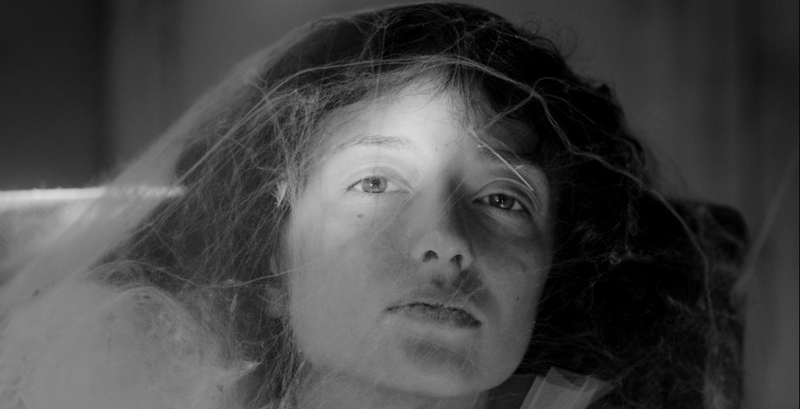
Its clear that co-writer (alongside Joséphine Darcy Hopkins and Aurélien Molas) and director Fabrice du Welz’s Inexorable is trying to be something of a throwback to the long-dormant erotic thriller of years ago. One of darkness, flashbacks, scheming and temptation. It comes across in the various stylistic choices that run throughout the 98 minute run-time. There’s a grainy quality to the piece that’s prominent in the various long shots and close ups that establish both the settings and the largely rushing thoughts of central figure Marcel. He’s retreated, alongside his wife, Jeanne (Mélanie Doutey), and young daughter, Lucie (Janaina Halloy), to a quiet mansion where he can write the follow-up to his hit novel Inexorable. However, amongst struggles to create something just as good he finds himself distracted by the presence of newly-recruited housemaid, and stranger to the family, Gloria (Alba Gaïa Bellugi).

It’s the introduction of Gloria that brings about much of the evidence of the tone and style of erotic thriller that this particular film is trying to capture. It’s safe to say that this film doesn’t shy away from its inclusion and depiction of sex. However, when it does make an appearance the act feels so forced and in your face that it almost appears to lose much point aside from simply being included just because sex. Such moments lie amongst a rather by-the-books narrative looking into the various relationships of Marcel, particularly those with his wife and the growing fascination and mystery around Gloria. A potentially threatening, certainly tempting, figure who demonstrates a light and innocent persona to the rest of the family, particularly Lucie who she begins to form something of a bond and friendship with.


While it’s generally clear to see where the film is going from the early stages, particularly thanks to the conventional nature which it holds throughout, there’s still enough happening to keep you relatively interested in the unfolding events. Even in the third act there’s still a slight sense of tension and mystery about the characters and how things are going to pan out, even if the final few minutes do feel as if they’re lacking some elements. The traditional thriller feel of the third act is heightened by the grainy quality of the picture and the lighting. Both helping to bring you into the world and appreciate what the film is aiming to do. You may not be entirely involved, but there’s still enough to keep your engagement and interest; as has largely been the case with much of what has come beforehand, for the time it takes for things to unfold.

While the actual elements of sex might feel somewhat forced and in-your-face, the stylistic elements that help form the tension and tone of a thriller within Inexorable are rather well done. They help to keep you engaged with the piece and manage to have some effect amongst the generally by-the-books nature of the narrative. A set of good performances from the small central cast help to further get across the tone and style and keep things afloat. While this may be acting as a throwback to erotic thrillers of years gone by it occasionally feels as if it’s stuck amongst them in terms of plotting and structure. Yet, there’s still enough present within Inexorable for the elements to gel together well enough to create a decent and interesting enough piece of work for the time it plays out for.

The sex might feel a bit much at times, yet the other stylistic elements within Inexorable create a level of interest within the viewer that puts aside the conventions on display from early-on and manage to still create some tension and darkness, especially within the third act.

Rating: 3 out of 5.

Cyrano – Review

Cert – 12, Run-time – 2 hours 3 minutes, Director – Joe Wright

Guard captain Cyrano (Peter Dinklage) discovers that the woman he has had romantic feelings for since childhood (Haley Bennett) is in love with one of his soldiers (Kelvin Harrison Jr.), who he begins to assist in writing love letters.

When it comes to musicals perhaps we tend to focus more on the songs rather than the dialogue around them, after all it’s the songs that make it a musical. However, within Cyrano there’s something about the dialogue that grabs you and brings you in. Not even around the love letters being written and exchanged throughout, but simply within the conversations and patter between characters. The style is established early on as the titular Cyrano (Peter Dinklage) deprecatingly confesses himself to be “living proof that God has a sick sense of humour”, in contrast to the light and breezy way in which his childhood friend, and unknowing love interest, Roxanne (Haley Bennett – who appears to slightly jump between a British and American accent throughout the film) describes herself as “enigmatically distant and fashionably late” in the opening stages.

Opening stages which are fast-paced with rapid dialogue and movement as if rushing to build up to the first song. A song which appears to come from nowhere and be placed as close to the opening second as possible just to make clear that this is a musical. However, after this each song that comes along feels well placed and built up to. Each helping to convey a fine emotional tone that wraps you up in the moment, and the film as a whole. When assisted by the highly detailed visual look of the piece – the costume and production design are excellent! – it’s easy to fall into the world and the emotional journey that unfolds across it. There’s a theatricality to some of the staging, and indeed the screenplay. Seemingly, knowingly so. It’s perhaps intentional that a key opening scene is set in a theatre. Yet, everything is caught in a highly cinematic nature, working well with the theatrical elements to make it feel as if you are in a world that’s playing out right in front of you, as if you also have a stake in the drama.


Such dramas, alongside occasional slight moments of natural humour, are brilliantly conveyed by the cast. Each of the leading figures gives a strong performance, particularly Dinklage who provides one of the best performances of his career. Even Ben Mendelsohn as villainous Duke De Guiche manages to make an impact, with generally scattered screen-time. When it comes time for his own musical number, which screams villain song from the opening notes, he appears to be relishing the opportunity to chew up the scenery to create a delicious number of imposing threat and darkness.

Everything gels together well with a fine sense of flow from scene to scene, tone to tone. All carrying the idea of Cyrano’s almost crippling self-deprecation and the love letters that give him hope, as he writes for Kelvin Harrison Jr.’s Christian, a soldier in his corps, who, despite having never properly met, it turns out Roxanne has feelings for. Of course, we see many of the events through his eyes, but still manage to get hints and glimpses of what other characters are feeling in each moment – particularly during sequences focusing on Christian and Roxanne’s believed-relationship, emphasising Cyrano’s own feelings which he has anchored and kept to himself for many years. All form into one during a mesmerising balcony scene equipped with humour, heart, romanticism, pain and a song to further encapsulate such feelings. It’s what’s in Cyrano’s mind at the time, and in part the two young romantics. Such points are carried throughout the film, finely portrayed in the performances which further bring to life the screenplay, amongst the visual detail, and all caught by Joe Wright’s direction.

Once it all comes together there’s a true cinematic sense of theatricality and scope to Cyrano. While the musical numbers work and help, alongside the effective editing, to continue the flow of the film – never seeming to try to be an outstanding pop number or earworm (although leading song Someone To Say – featured throughout the trailers – does begin to rotate round the mind), instead simply working as a part of the film to move the narrative and character arcs alone – it’s often the dialogue and spoken character interactions which steal the show. Although, there are a number of engaging battles and interactions through song, especially in the earlier stages of the piece. It all blends together to create an excellent piece of work that makes the most of the big screen and unashamedly lets its story tell itself and be itself. Making for an even more triumphant feel that simply draws you in and wraps you within it. Much like the effect that Cyrano’s own finely-tuned letters and poems have on those around him.

A fine cast, led by a stellar Peter Dinklage, bring to life the excellent screenplay of Cyrano. The words bring you in and, alongside the musical numbers, wrap you up in the world and narrative, heightened by the strong visual style and detail which simply helps push the emotions which run throughout.

Rating: 4 out of 5.

The Duke – Review

Cert – 12, Run-time – 1 hour 35 minutes, Director – Roger Michell

Amongst a string of late-life activism, in-and-out of work Kempton Bunton (Jim Broadbent) is put on trial for stealing Goya’s portrait of the Duke of Wellington, in the hope of gaining free TV licenses for OAPs.

From the rotation of trailers The Duke has been largely pitched as a charming British farcical comedy. However, amongst the humour brought about via the idea of Jim Broadbent trying to hide the fact he’s in possession of artwork worth nearly £150,000 there’s an undeniable strand of drama attempting to emerge throughout. It’s what stops Helen Mirren’s Dorothy, wife to Broadbent’s Kempton, from being entirely sidelined throughout. As the occasional humour of the central narrative is shifted for conversations concerning grief, or rather the lack of conversation about it, between the central pair who have apparently spoken little about the death of their daughter Marian since it happened thirteen years before.

Instead, Kempton – charming from the opening stages – is resigned to writing about it, alongside a number of slightly more far-fetched ideas – titles include ‘The Adventures Of Susan Christ’ – sending off scripts to the BBC for Play For Today, to no response. While his wife cleans houses for people a fair deal wealthier than them (Anna Maxwell Martin plays employer Mrs. Gowling), we see the central sixty-year-old bounce from job to job, after almost always getting kicked out for reasons relating to his string of activism. The thing he’s largely concerned with is getting Free TV For The OAP. Why should veterans and the elderly have to pay to not be lonely in the comfort of their own home? Bunton, often equipped with an excellently sported pipe, removes the ability to be able to watch the BBC on his own set, meaning that he doesn’t have to pay the license fee just for advertiser-paid ITV. When he comes into possession of Goya’s portrait of the Duke of Wellington, newly missing from the National Gallery after he makes a trip to London, he plans to use the money to put his hopes and plans into action.


It’s made clear that Kempton is a passionate figure about equality and people working together for “the greater good”, it’s part of what gets him kicked out of multiple jobs. Broadbent is wonderful in the role and allows moments more based in commentary to not be too bogged down by the subject and discussion, and still have an air of charm about them. He’s a likable figure and it proves for a number of chuckles during courtroom sequences when Kempton’s answering questions in the dock. However, the humour still contrasts to unspoken reflections to his and his wife’s past. The loss of their daughter which they don’t talk about, pointed out by son Jackie (Fionn Whitehead). The drama clashes with the lighter, more comedic content, particularly when cut together and unfolding at exactly the same time the tonal imbalance is very clear.

Throughout the film there are patches where it’s clear that multiple ideas and elements are being juggled at the same time. Whether it comes to aims of the various characters at the heart of the piece, or simply the relationships that they have with each other and the conversations which they have to progress the narrative. While the various elements might work well enough by themselves it’s not always the case that they glue together to help with the overall flow of the film. There’s still a hint of charm, helped by the strong lead of Broadbent and Mirren’s fine supporting performance – particularly with the fluctuating amount that she gets to do – and generally the piece passes by well enough. The theft and hiding of the titular painting is largely kept as the central focus over the course of the short 95 minutes and while other strands and elements may poke their head around and create the occasional clash it all still builds up to a court trial where we’re allowed to see the true humour and generosity of Kempton Bunton.

It may have some dramatic clashes, and not every element quite glues together, but The Duke is held up by its charm, humour and strong performances from both Mirren and Broadbent.

Rating: 3 out of 5.

Dog – Review

Cert – 12, Run-time – 1 hour 41 minutes, Directors – Reid Carolin, Channing Tatum

In the hope of being readmitted to the army, despite initial warnings from doctors, Army Ranger Jackson Briggs (Channing Tatum) is tasked with travelling across the Pacific Coast to take veteran dog Lulu to the funeral of a fellow Ranger.

To give you an idea of just what kind of film Dog is, there’s a sequence part way through in which we see Channing Tatum as Army Ranger Jackson Briggs travelling along the Pacific Coast with Belgian Shepherd Lulu while Kenny Rogers’ The Gamble plays. The two (or rather Tatum) appear to have set aside their (Tatum’s) differences and settled in for a calm remainder of their journey. Both have seen and felt the impact of the terrors of war, and while Lulu suffers from anxiety and is known to be sensitive and easily agitated, Jackson is eager to get back into the field, despite doctors notices that he’s suffering from a permanent brain injury. Claiming to have a clean bill of health from a recent inspection Jackson asks his commanding officer what it will take for him to be allowed into the next rotation with all his Army Ranger friends, or rather family as the opening scrapbook-style credits show.

His mission is to deliver Lulu to the funeral of her handler of multiple tours, a few days trip down the Pacific Coast, before taking her to barracks where she will be put down due to not being of use in the field anymore. It seems easy enough to Jackson and so he and the initially caged and aggressive dog set off in his truck to the location of his fellow soldier’s funeral. It’s a fairly direct and conventional route that the film travels, we see the various sequences and elements that slightly set the pair off-track, and allow for their connection to go stronger; although in this case it’s absolutely about Tatum growing to like the dog rather than a true ‘buddy comedy’ sort of nature where there’s plenty of humour to be found within the dog’s antics.


In fact, there’s little humour in this regard throughout the film’s relatively well-paced 101 minute run-time. Yes, there are a couple of opportunities for chuckles here and there and the film itself is relatively light, however it doesn’t set itself out as a full-on, out-and-out comedy. It simply follows Jackson and Lulu as the former begins to somehow depend upon the latter to help him get by. It comes as he too experiences anxiety attacks and PTSD in the middle of the night. It’s a point that’s perhaps dealt with in a somewhat heavy-handed way, in the rare glimpses when it does actually make an appearance on screen, but generally feels a staple of this kind of feature, allowing for the convention to come through that bit more.

Over the narrative we see various moments sequences, some fitting in to the piece a bit better than others, as Lulu leads Jackson to meeting various different figures to help him along the way, for better or worse – or sometimes one into the other. The feeling of a set of sequences is felt and the blocks of the film do begin to clearly show, however the sequences themselves aren’t of a low quality and pass by well enough with little fuss to still create and engaging piece of work for the time that each one lasts, while not being too ‘obvious’ to create a stop-start feel to the film from setting to setting. Yet, the run-time is filled rather well and passes by fairly quickly with some nice beats and elements dotted here and there throughout.

Dog certainly has its moments where its conventions show within its generally direct nature. You kind of know what you’re getting from the opening 20 minutes or so. But, what you get is a rather engaging not-quite-buddy-flick that while a bit heavy-handed with its more dramatic elements produces enough enjoyable content and moments to pass the rest of the run-time well enough. It’s a simple tale of the growing bond between man and dog, and it’s a well-executed telling of it that doesn’t go for big laughs when it so easily could, twisting its tone to lean away from them and make a more dramatic point. It adds to the general nature and viewer involvement of the piece and, much like Lulu to Tatum’s Jackson, helps it through that little bit more.

While the conventions may show within Dog’s direct and occasionally sequential nature there’s still an enjoyable time to be had in the generally quick 101 minute run-time when it leans away from its rare, more forceful dramas.

Rating: 3 out of 5.

Texas Chainsaw Massacre – Review

Cert – 18, Run-time – 1 hour 22 minutes, Director – David Blue Garcia

A group of young entrepreneurs looking to revive an abandoned, small Texan town encounter an angered and lingering, chainsaw-wielding Leatherface (Mark Burnham).

“This is a chance for people to start over fresh, away from the madness and the violence” words spoken all too soon, with something of a knowing wink to the audience, as we know we’re about to meet the crazy locals still living within the small, otherwise abandoned, Texan town of Harlow. It’s the base for a group of young entrepreneurs hoping to transform the area into a tourist hotspot with plenty of dining outlets and attractions, bringing the area into the modern day while still keeping its traditional aesthetic. It’s something that this latest take on the titular Texas Chainsaw Massacre somewhat tries to do itself in its legacy to the original film, which it acts as a legacy sequel towards. There are certainly some traditional feeling elements to it as a whole, particularly the general simplicity of the narrative and slasher elements, and yet one or two more modern leanings and twists; to, of course, bring in newer audiences. It’s the kind of thing that the latest Scream film picked apart so well.

As the newly arrived quartet (Elsie Fisher, Sarah Yarkin, Jacob Latimore, Nell Hudson) arrive they discover an old woman (Alice Krige) living in the town’s orphanage. While disputing that she still has a right to live in the property she collapses, leading to an ambulance being called to tend to the woman – alongside her lurching son. It’s here that we begin to see the resurgence of Leatherface (Mark Burnham). The chainsaw-wielding villain of the franchise, back once again to create some truly gory kills. If there’s one thing that sets this film apart from the original it’s undeniably the levels of blood and gore throughout. The initial introduction of such elements truly has an impact and stays with you to create a sense of tension as figures try to hide from an increasingly enraged Leatherface.


The tension is used well as Leatherface makes his way back to the town to his unsuspecting, and panicked, victims. As they try to hide we see sustained scenarios instead of lots of running away and screaming. It still manages to fit in well to the very short 82 minute run-time that the piece holds and such feelings are largely held by the presence of the core antagonist. When not quite focusing on him being nearby and the threat that he poses certain sequences do feel slightly more drawn out then they perhaps should be, especially an extended idea involving Yarkin’s Melody watching his attacks from under a bed. Yet, perhaps the most impact comes in the running and the screaming of the final 20-25 minutes, where things do feel too drawn out and generally repetitive.

It’s perhaps an effect of the ‘legacy’ nature of this sequel. Bringing in Olwen Fouéré as a vengeful Sally Hardesty – the soul survivor of the events from the first film almost 50 years ago. She’s very much in 2018 Laurie Strode mode, however with a fair deal less impact and screen-time. Things feel slightly off-balance and out of place when dealing with her character due to the little amount that she has to do, and indeed only seems to be present for something close to fan service and to make the connection to the original 1974 Tobe Hooper flick. Such brief moments just simply don’t fit in as well as they perhaps hope to do. Yet, within the short nature of the film overall it’s not long until we’re back in the sustained world of Harlow. A town which seems inescapable to those trapped there with an almost faceless, murderous giant. There are plenty of effectively gory kills which, while one moment feels as if it goes a bit overboard, help to boost the tension for the characters as you wait to see if they are indeed next. It may dip as it goes along, however there’s still an enjoyable legacy sequel here to enjoy, even if the legacy elements don’t quite strike the right note of familiarity.

While the legacy elements of this legacy sequel don’t quite work there’s a nice level of tension, and undeniable gore, within Texas Chainsaw Massacre to make it an enjoyable enough slasher flick before it begins to decline and repeat itself.

Rating: 3 out of 5.

Uncharted – Review

Cert – 12, Run-time – 1 hour 56 minutes, Director – Ruben Fliescher

Bartender Nathan Drake (Tom Holland) finds himself recruited by Victor “Sully” Sullivan (Mark Wahlberg) as the perfect candidate to help track down 500 year old hidden pirate treasure.

It’s been a long journey for the Uncharted movie to come to the big screen. At one point Mark Wahlberg was on board to play central character Nathan Drake, now he plays older mentor Sully. Instead the shoes of the young explorer belong to Tom Holland. However, now on the big screen the journey itself perhaps doesn’t feel so long, even amongst all the globe-trotting that occurs throughout it. The reason for the various changes in landscape throughout the just under two hour run-time is the search for 500 year old pirate treasure. Deciphering clues and solving puzzles, occasionally with the help of Sophia Ali’s sometimes quickly sidelined for duo convenience Chloe Frazer, the pair certainly go on a fair share of set-piece adventures throughout the film, to find the gold that Nathan grew up hoping to find with his long-lost brother Sam (Rudy Pankow in an early flashback).

In the first act build-up to the actual adventure nature of the piece we move through events fairly quickly. While there’s still a dash of action and discovery it feels as if the film is certainly eager to travel the globe, while never overly rushing the process beforehand. We meet Antonio Banderas’ Santiago Moncada, who believes that the treasure, and the valuable crosses that will lead him to it, are rightfully his by birth; despite disagreement from his elderly father (Manuel de Blas) who dismisses his sons attempts and want to find the gold, and the ships which hold it, worth billions. Despite being pitched as the core villain of the piece Banderas gets little screen-time, and barely a true villain moment or speech. The film is certainly more concerned with Holland and Wahlberg’s conflicting views on teamwork, and indeed Moncada’s henchmen who do most of his work for him – particularly Tati Gabrielle’s Braddock and Steven Waddington simply credited as The Scotsman, the name pretty much tells you everything you need to know about the character in this context; and his dialogue shows this.


It certainly doesn’t feel as if Uncharted is trying to be an Indiana Jones tribute or knock off of any sorts. The general feel throughout is a standard adventure flick with a handful of tricks, traps, riddles and puzzles to run into along the way. Action certainly comes more into play in the second half, not to mention the rather silly third act fight although there’s no denying it’s enjoyability, and it’s here where there’s a slight character change for Holland. Going from his, potentially slightly typecast, bartender Nate going along for the adventure and not always knowing what to do, to a more battle-ready, tactical version of the character. The feeling isn’t that he’s been miscast, more that there’s a noticeable, almost instant after one particular event around halfway through, shift in the character that makes him feel like quite a different person. Such a feeling is perhaps more prominent when it comes to Nathan’s (or, as he goes by, Nate) relationship with Sully. Not so much a mentor, but more a buddy relationship between a slight newbie and a more experienced adventurer, Wahlberg doing a decent job of capturing this (although not as aged or experienced as the Sully in the games apparently is – which I have to confess to not having played much of).

Yet, despite some character shifts and changes throughout the film, not just from Holland’s central figure, there’s still a fair deal to enjoy and get lightly caught up in when it comes to the general adventure nature of the film. The set-pieces go by relatively quickly and while not always the most complex in execution the film seems to not be striving to be anything expansive and grand in terms of its narrative. However, this does begin to create a more standard feel to the piece. One not quite wanting to push itself or go a full distance in worry of spilling over, particularly in more action-based scenes, aside from the finale; the ridiculousness of which is almost worth the price to get in alone. But, for what Uncharted does provide, there’s a quick and still engaging adventure flick that might not be anything groundbreaking, but still provides plenty of amusement for the time that it’s on to make it an enjoyable enough globetrotting watch.

Despite some big character shifts in the second half of the film there’s still an enjoyable nature to Uncharted as its key draws lie within its puzzles and adventure rather than its more narrative or action based scenes, where it never quite pushes itself beyond a relatively standard feel.

Rating: 3 out of 5.

Marry Me – Review

Cert – 12, Run-time – 1 hour 52 minutes, Director – Kat Coiro

On finding out that her fiancé (Maluma) has been cheating on her, moments before getting married on stage before millions of people, pop singer Kat Valdez (Jennifer Lopez) decides to marry maths teacher Charlie (Owen Wilson), a stranger in the crowd.

It’s been stated already by many people that the combination of Jennifer Lopez and Owen Wilson is perhaps a slightly odd one within a rom-com. However, Marry Me understands that and runs with it as part of its narrative. Lopez plays pop superstar Kat Valdez. Currently on tour with her fiancé, Bastian (Maluma), the final date is booked in to hold the couple’s marriage, live on stage in front of millions of viewers around the world. Their song Marry Me has been a smash hit, and the point of which the tour has revolved around. However, when Kat discovers that Bastian has been cheating on her moments before their about to exchange vows she calls the wedding off, or at least that one. In the crowd she spots maths teacher Charlie (Wilson) holding a Marry Me sign and on the spot agrees to do so. Cue media storm as the newlyweds are hounded by the press; fascinated at this random marriage between one of the most recognisable pop stars on the planet and a man with a passion for maths who has never heard of her before, only taking his daughter (Chloe Coleman) along to the concert when invited by a work-friend (Sarah Silverman).

As the film travels along its course it makes it clear that it’s not trying to be consistently laugh-out-loud funny. There are certainly a handful of chuckles throughout, particularly from Silverman as the guidance councillor at Wilson’s school, but there’s perhaps a more rom leaning nature to this rom-com than anything else. You’re kept in place throughout by the rather likable nature of everything. Wilson and Lopez do muster up a fair bit of chemistry and create an enjoyable set of figures gradually getting to know each other throughout the film. It gets to the point where a big grin spreads across your face as you simply sit back and embrace Lopez walking into Wilson’s math club, preparing for an upcoming major competition, and teaching the class about dealing with fear in the moment via the medium of dance maths.


It’s during such moments that a handful of pop songs begin to appear, after all the film does revolve around a pop star. And while in many films like this pop songs will feel rather tacky or slightly forced in tone those within Marry Me actually feel as if they could be something you hear in the charts (although I couldn’t tell you anything that’s currently in the charts myself…). It overall adds to the general nature of the film, makes the relationship that bit more believable and keeps you engaged and in place for the just under two hour run-time. The occasional chuckles add to your engagement with the piece and simply add another layer to the film that makes it a rather nice surprise, in the end bringing it above the line of a middle-of-the-road rom-com thanks to its general energy alone. This alongside the performances of the central cast, and supporting faces such as Silverman, John Bradley (after bringing a number of laughs to Moonfall just a couple of weeks ago) and Coleman (carrying on from 2020’s pleasant surprise My Spy, although sometimes pushed aside for the sake of the narrative in this case).

Even as the third act slightly begins to make a slight dip into more distracting conventionality a quick song and montage make a turnaround of this and continue the consistent tone that came beforehand. Yes, there may be convention and familiar lines, but does it really matter when you’re engaged within the entertaining wraps of the film? You don’t overly notice or make a point of it because of the nature of Marry Me as a whole. Yes, there may be those cynical about it, not just because it’s a rom-com. But, it’s easily established early on and the central performances simply continue the likable trend throughout. Forming a chemistry that you can get behind and accept, much like the core base of the narrative itself.

Yes, there may be conventions and recognisable elements within Marry Me, but it’s nothing to be overly pointed out thanks to the highly likable nature of the film, thanks to the central relationship between Lopez and Wilson and the well-handled sprinklings of humour.

Rating: 4 out of 5.

LFF 2021: She Will – Review

Release date – 22nd July 2022, Cert – 15, Run-time – 1 hour 35 minutes, Director – Charlotte Colbert

After a double mastectomy an aging actress (Alice Krige) finds herself confronting past and present traumas in an isolated Scottish wellbeing retreat.

There’s a large selection of ideas at play within Charlotte Colbert’s horror feature debut She Will. It pushes the feeling of a selection of genres also at play. Jumping between drama, horror and mystery for ambiguity when it comes to the central figure of aging actress Veronica (Alice Krige). After a double mastectomy she’s checked in to a quiet, forest-located health retreat in Scotland where while attempting to relax and recover she finds herself facing traumas of her past, particularly relating to affects on her career. Her relationships are tense with both the other, perhaps more outgoing, faces at the retreat and the young woman looking after her, Desi (Kota Eberhardt). However, as Veronica begins to recuperate and face the major events and traumas of her life shadows are cast on those around her, and particularly those who may have claimed to have forgotten her.

This particularly comes in the form of Malcolm McDowell as celebrated director Eric Hathbourne, who caused much of a teenage Veronica’s early trauma. Each time McDowell appears on screen there’s something of a surprise due to the fact that within the short 95 minute run-time he’s on screen for what feels like very little time. With only a couple of brief scenes it’s easy to genuinely forget that he’s even in the film. Such scenes appear to make a big deal of his character, and yet this feeling is conflicted by just how little he appears on-screen and the handful of references back to him we get. He largely feels like something almost unrelated to the rest of the film, apart from the various references to his dark relationship to Veronica, which he appears to have casually buried under a self-protective veil of ‘it was a different time’.

Instead we see snippets of ideas and moments in Veronica’s time at the retreat and the cabin in which she stays in. Attempting to take part in activities with other people looking to recuperate their mind and souls, through charcoal drawing outings by the nearby lake. There’s much of the piece focusing on drama before leaning into slight patches of horror, however with the various ideas at play – including an eventual side strand for Desi as she gradually grows slightly closer to the woman she’s initially only meant to bandage up, etc.

Throughout the short 95 minute run-time there are plenty of moments and ideas that are seemingly glued together to form strands of narratives, however there’s never anything to properly hook you into the piece as a whole. It causes a lack of connection to the film and the effects that it has when it comes to moments of horror. During such scenes, particularly in the latter stages of the piece, the main question at hand in terms of mystery is ‘what is actually going on?’. It boils down to a core narrative and characters that feel lacking in detail. There are points, particularly within the rushing nature of the third act, where you feel as if you’ve missed out on something as you try to figure out where this new burst of potential horror has come from. Where almost everything from the previous 75-80 minutes or so crashes together for a conclusion.

It’s one that feels much like the rest of the film. A jumble of themes and ideas, uncertain as to whether it’s supposed to be scary, mysterious, eerie, creepy or all at the same time, or perhaps none? It’s a long stretch building up to it as you feel disengaged for much of the run-time having connected to little and been unsure as to what to feel about a handful of scenes within the collection of moments and ideas. The core points of ambiguity and uncertainty are often as to what’s supposedly going on within the briefly hinted potentially supernatural beats, pushing the question of ‘what’s meant to be happening here?’, and ‘wait, Malcolm McDowell’s in this?’.

Providing little to connect with amongst the tonally imbalanced ideas collected, She Will never really brings you in to feel the effect of any of the horror and drama at play.

Rating: 1 out of 5.

Death On The Nile – Review

Cert – 12, Run-time – 2 hours 7 minutes, Director – Kenneth Branagh

When a recently married bride (Gal Gadot) is murdered during her honeymoon Hercule Poirot (Kenneth Branagh) steps in to decipher which of the invited guests on a boat travelling down the Nile is the killer.

If there’s one thing that confirms Hercule Poirot as one of the smartest detectives, and fictional characters, around it’s perhaps, alongside his smashing moustache, the fact that he seemingly loves a jaffa cake. While not exactly looking like what we know them as it’s undeniably excellent to see him grieved by the disturbance of his enjoyment of “a sublime jaffa cake!”. He’s (Kenneth Branagh) disturbed by old friend Bouc (Tom Bateman) who, whilst flying a kite on the ancient pyramids, invites the detective along to a wedding celebration for two family friends – the recently married Simon (Armie Hammer) and Linnet (Gal Gadot) Doyle. However, surrounded by somewhat jealous friends and family, some distracted by the wealth on display, envy runs deep when Simon’s former fiancé of just six weeks prior, Jacqueline (Emma Mackey), stalks the pair on their honeymoon.

However, when Linnet is killed on the boat that acts as the couple’s honeymoon cruise down the Nile – which seems like a largely CG background with occasionally odd lighting on the characters making it stick out just that bit more – that the killer could be any one of the attendees. Therefore Poirot, who was taken on board to watch out for the newlyweds, puts his skills to use to find out who the murderer is before it’s too late. While he might have the sleuthing skills to know that jaffa cakes are indeed excellent there’s not quite enough from this second outing for Branagh’s take on Agatha Christie’s classic detective to make the actual detection scenes overly engaging. If anything the hour or so before the murder is actually more interesting than when the murder-mystery elements eventually come into play.


The film jumps through various interviews with each of the characters as if trying to remind you of who’s who each time and re-establishing potential motives. It almost runs through circles each time with each figure of the large ensemble cast – all of whom seem to instantly leap into hammy caricature as soon as the murder happens, apart from Gadot who is not only dead by this point but can’t exactly be said to be doing any subtle acting throughout her screen-time. There’s no overall point where you find yourself actively playing along and trying to guess who the killer is, instead simply watching Poirot try to reach a conclusion by asking various questions and eventually reaching his dramatic reveal.

While there’s still a watchable nature to the film, and overall it feels a slight step up from the very generic, middle-of-the-roadness of Murder On The Orient Express, it’s still apparent that the mystery isn’t as involving as everything that comes beforehand. While nothing overly stretching, simply seeing the slight tensions between characters and the interactions on the boat and various sights along the way does generally keep you in place for that chunk of the film. Things eventually build up to a comfortable point where there’s some level of consistency which the film gently travels along in something of a traditional way. You observe the characters and that’s about that. There may be occasional slices of humour, particularly from Dawn French as the nurse of Jennifer Saunders’ socialist godmother to Linette, but mostly the piece continues along a lightly dramatic note until the murder.

It’s easy to focus on the performances and the overall rapid change and nature between scenes in the second half of the film, yet there is still somewhat watchable and some likable moments and nuggets throughout. You’re still generally kept in place watching things unfold, even if not actively taking part, and perhaps the show-stealer is still Poirot’s undeniably excellent moustache. Yet, what’s provided is a film that juggles a lot of characters but manages to play along with its ‘everyone is a suspect’ idea rather well. You sit and watch things unfold in perhaps not the most elegant of ways, but still with a generally traditional feel that has enough within its busyness to make something of a good swipe, if not a clean cut.

The waters, and performances, may be choppier than hoped for, despite the traditional route, but there’s still a generally watchable nature to Death On The Nile. You might not play along with it, but thanks to the first half you’re generally situated in the piece for most of the busy run-time.

Rating: 3 out of 5.

LFF 2021: The Wolf Suit – Review

Release Date – TBC, Cert – N/A, Run-time – 1 hour 14 minutes, Director – Sam Firth

Director Sam Firth looks back at, and attempts to recreate, her parents divorce, and her own childhood, based on their accounts and her own personal memories.

“In some ways I’ve been making this film since I was a teenager” states director Sam Firth towards the start of her documentary feature The Wolf Suit. It’s an undeniably highly personal project for her as she looks back at her early childhood, particularly around the time of her parents divorce. Through recreations of memories and events in all their lives she attempts to work out what happened, with most of her memories being happy ones of family fun and bonding. However, that’s not how things are seen by everyone else, particularly the differing perspectives of her parents who haven’t spoken for many years. Firth claims “I could use drama and filmmaking to prove that everything is not subjective” as she assembles actors and a small production team to craft recreations of her families life before her parents broke apart.

There’s certainly something interesting within the recreations and the way the actors try to understand who they are playing – asking the real life figures, present on set at almost all times, for help in what their mindset should be at the time; despite occasionally conflicting feedback and personal memories. It enhances the point that the film is trying to capture what’s described as “the confusing, contradictory and sometimes painful course that is life”. It’s something that each figure appears to be reliving to different extents over the short 74 minute course of the film. Each one adding a new personal angle to the piece as a whole.

Whether this personal feel is enough to completely connect with the audience is a different matter. While there’s certainly a level of interest in what’s happening on-screen it’s not always the most involving as the viewer often doesn’t have the same amount of connection to the project as those who are actually a part of it; and lived through it the first time round. This is particularly the case when the filming of the recreations is occurring, as the piece travels along one generally direct line for much of this time. It’s during such moments that it’s likely a good thing that the film is as short as it is, risking feeling somewhat lengthy if it were much longer.

Yet, there’s still something engaging about the personal angles that are brought to the film and the differing memories and perceptions of what Firth sees as such big events in not just her own life but those of her family as a whole. It’s a key point of engagement for the viewer as they observe the various different stages of the process of physically remembering. While you might not quite feel the same level of involvement as those actually present in the unfolding moments there’s still an interesting enough piece here, especially when looking at differing memory-based perspective, that spans the short 74 minute run-time rather well.

Clearly a very personal film for those involved, this feeling doesn’t always echo to the viewers of The Wolf Suit. While memory recreations generally travel across one line there’s plenty of interest to be found in the differing views and perspectives of life events.

Rating: 3 out of 5.