Halloween Ends – Review

Cert – 18, Run-time – 1 hour 51 minutes, Director – David Gordon Green

Four years after his Halloween killing spree Michael Myers (James Jude Courtney/ Nick Castle) returns for one final time, in more ways than one, to take down Laurie Strode (Jamie Lee Curtis).

As a general film Halloween Ends is pretty good. As a Halloween film it’s naff. As a warning before going any further, I rather liked it. It’s been interesting to see the advertising campaign for the culmination of this reboot trilogy. While there’s certainly been a presence of posters, interviews and social media marketing they’ve largely held back on details – focusing on what’s supposed to be the intense final clash between Michael Myers (James Jude Courtney/ Nick Castle) and Laurie Strode (Jamie Lee Curtis). Even the main trailer has focused on this decades-long battle, providing little other details of the film.

With this in mind it seems something of a surprise that the first two thirds of the film follows the arc of newly introduced character Corey (Rohan Campbell). He’s been an outcast for a number of years since being accused of killing a child he was babysitting – a sequence which opens the film in rather dramatic, and shocking, fashion. Ever since he’s been both tormented and feared by what everyone thinks he is. “Because your boogeyman disappeared they needed a new one” Laurie is told by Corey’s mother (Joanne Baron) as she sees her son begin to change as he enters a relationship with Andi Matichak’s Allyson – Laurie’s granddaughter.

Both appear to respond to the looks and rumours about them differently, especially after one has their own interaction with the masked villain of the franchise. It leads Corey to begin to go down a somewhat cheesy, but still interesting, arc when it comes to the way that he develops over the course of the nearly two hour run-time – which manages to go by fairly well. There’s a point within this strand about the spread of evil and perhaps even where it comes from. It’s likely to be, and has proven so, divisive particularly within the slasher bracket of a Halloween film – again, for fans of the franchise going in expecting the core to be the confrontation between Myers and Strode this is not that film and will potentially prove disappointing.


It takes some time to actually get to that point and as a whole the event feels brief. There’s certainly a fair deal of wincing from the viewer as the third act arrives at more conventional Halloween territory, perhaps a slight step down from the rest of the film. You can tell that it knows it needs to wrap things up and starts to quickly pace certain elements so that it can get to the main selling point. Allowing for Laurie Strode – who up until this point has felt like a rather different character, pushing the idea that this occasionally feels like a different film outside of the franchise as it’s largely known, as she finds herself in a better place away from Myers and working on a book about her trauma – to finally fight back.

The horror often comes not in jump scares or the gore that’s on display, although when there is blood there’s certainly a fair deal of it, but in the potential darkness of the narrative. It’s not overly heavy, but it helps to get across the core ideas of the film a bit better, especially within Corey’s progression. The slasher elements are definitely present in the third act where much of what’s been expected and advertised arrived. There’s just another two thirds beforehand that will prove to split the audience due to the introduction of a new core character whose arc leads the film to feel almost something separate from the rest of the trilogy it’s closing. But, amongst the conventions that it displays there is a fair deal of engagement to be found in it and some of the places that it goes, largely helped by the fact that much of it has been kept quiet/ unrevealed in the marketing.

As a general film Halloween Ends is rather good. As a Halloween film it’s perhaps not going to work with fans of the franchise in particular. For what it does there’s a level of interest and engagement to be found within the main character progression, and of course some good winces in the eventual finale.
Rating: 4 out of 5.

The Lost King – Review

Cert – 12, Run-time – 1 hour 48 minutes, Director – Stephen Frears

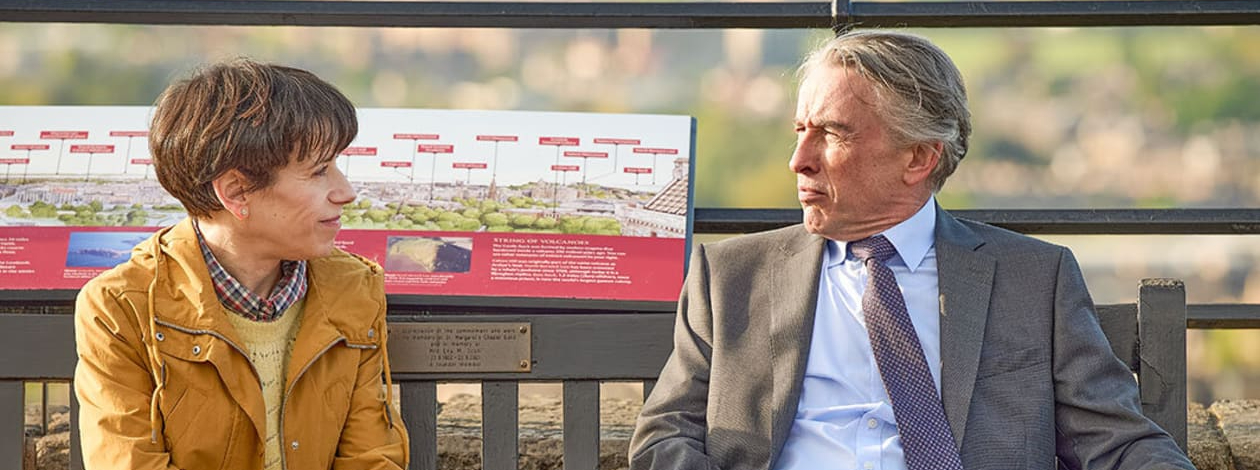
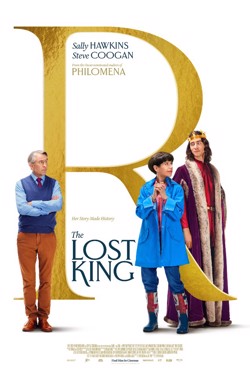
After seeing a performance of Richard III, and feeling underappreciated at work, Philippa (Sally Hawkins) sets out to try and find the body of the misunderstood monarch.

The Lost King is very much one of those films that shows you everything in the trailer. Admittedly, the subject matter (or at least part of it) was headline news. The side perhaps not told as much is that which forms the narrative of Stephen Frears’ latest directorial outing (written by Philomena, also directed by Frears, duo Steve Coogan and Jeff Pope) as we follow Sally Hawkins’ Philippa Langley. Feeling underappreciated at work after newer, younger employees are given heavy promotions she’s inspired to set out on her own adventure after a trip to the theatre to see Richard III.

As the performance of the actor playing the titular monarch (Harry Lloyd) begins to linger in Philippa’s mind she finds herself researching his life; attending society meetings where the group claims the king was misunderstood and painted falsely by Tudor society. And with this she goes on a mission to try and find the body of the titular lost king, finding further inspiration when he appears to her (again in the form of Lloyd) in various visions throughout the film. She’s adamant about proving innocence for the figure – frequently emphasising phrases along the lines of innocent until prove guilty, which gradually become quite laboured when overused in a scene.


There are a handful of elements throughout the film where, even if based on true events, when they appear feel somewhat forced and tenuous. There’s a feeling of ‘of course’ present in certain instances. There may be some interest here and there when it comes to some revelations – while some of the course may feel rooted in convention, interactions and conflictions with the University of Leicester, represented largely by Lee Ingleby’s Richard Taylor, does help to bring a bit more to the film – a handful of elements feel as if they’re simply padding out the run-time.

For a good proportion of The Lost King’s 108 minute course it feels as if things are being slightly stretched out. While such points may still be watchable and there’s still a level of engagement with the film and the unfolding events it feels as if what you’re seeing would generally be better suited to a 60 minute one-off special. You’re kept in place by the mild amusement that’s provided – there are a couple of chuckles to be had along the way – however as a whole the film’s perhaps likely to be quite forgettable. There’s a lot of passion displayed by some of the characters, particularly Sally Hawkins’ well-performed central figure, but that doesn’t always make its way to the audience. It ultimately makes The Lost King something watchable whilst its on, but not likely to leave a lasting impact.

While it’s largely watchable there’s a lot within The Lost King which causes it to feel padded out and at times tenuous, even if sticking to real events.

Rating: 3 out of 5.

Blonde – Review

Cert – 18, Run-time – 2 hours 46 minutes, Director – Andrew Dominik

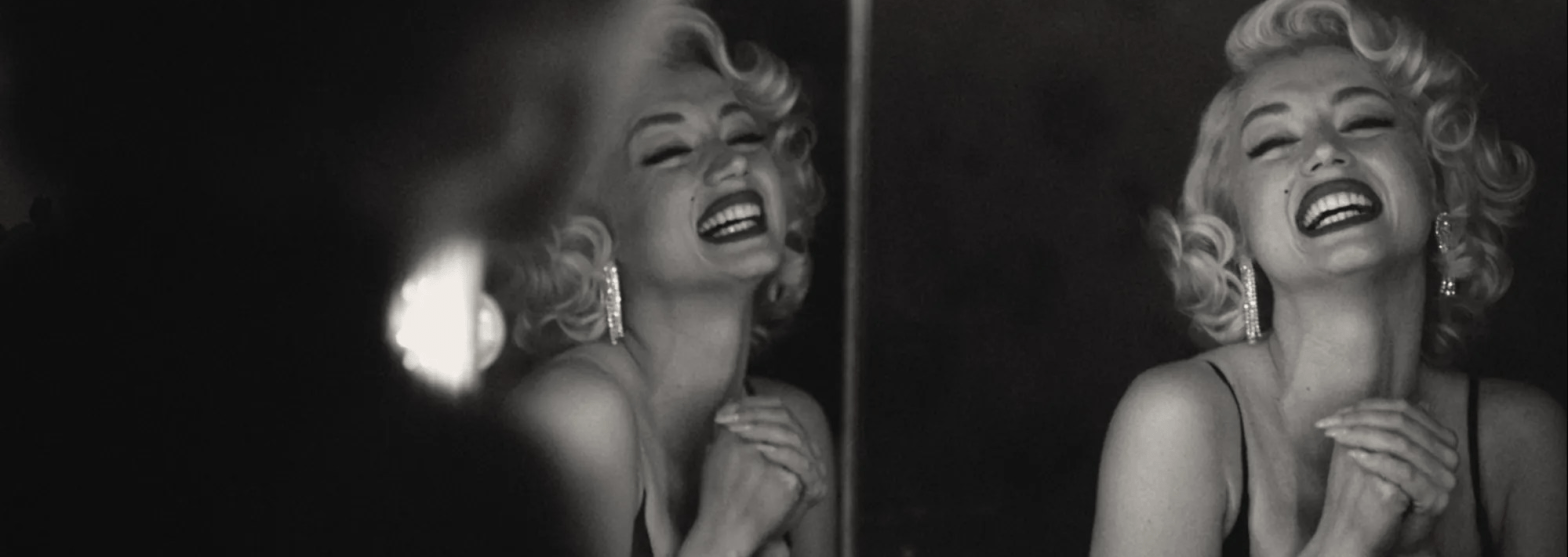
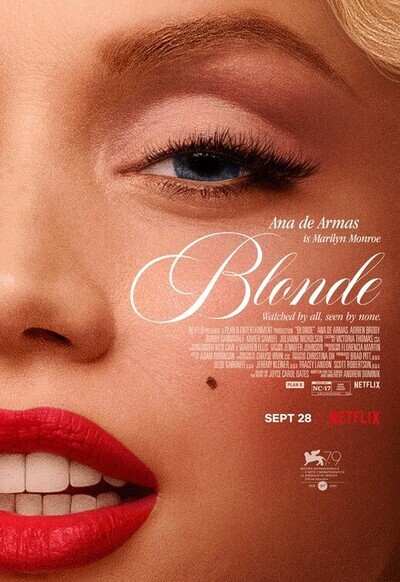
As Norma Jeane (Ana de Armas) experiences a fast-track rise through Hollywood fame her life merges with her screen persona of Marilyn Monroe, both are taken advantage of and abused throughout lives of tragedy.

For those going into Blonde expecting a Marilyn Monroe biopic you’re very likely to be disappointed. However, if you go in expecting an exploitation film with Marilyn Monroe as the main character, perhaps the better initial mindset to have, you’re also not going to be completely catered to throughout the film’s nearly three hour run-time. However, it’s this tone and style which writer-director Andrew Dominik’s film largely leans towards in the opening 20-30 minutes. We see the early childhood of Norma Jeane Mortensen (Lily Fisher), spent with her mentally unstable mother (Julianne Nicholson) before being left at an orphanage by a neighbour. If Baz Luhrmann’s Elvis threw all the glitz, glamour and spinning cameras in the opening stages, Blonde sets a heavy tone of tragedy and dark despair in its opening stages.

It feels slightly odd going from seeing a young child crying “I’m not an orphan” to an instant cut into a montage of now grown-up Norma Jeane (Ana de Armas) beginning to take the form of Marilyn Monroe in a series of pin-up photo shoots. The film is brief with a number of its moments. Feeling like a set of montage-like sets of sequences its such moments which focus most on the hardship of Monroe as she hurtles into higher and higher levels of fame. Only to be met with further abuse from key studio figures and multiple tragedies in her personal life, from rocky marriages to unwanted abortions and miscarriages. There’s no denying that this certainly isn’t an easy watch at times, perhaps unhelped by the distance that there seems to be from Domink to his subject.

A subject who becomes split in her own life. Trying her best to live her own life and not be taken over by the idealised persona of Marilyn, the person who everybody loves and yet is subject to much of the hurt and suffering within her career. It feels at times as if she’d give anything to drop her ‘movie-star lifestyle’ (“I want to begin again from zero. I want to live in another world, away from Hollywood”) for a quiet family life, or perhaps a stage career. It’s during the quieter scenes which focus on Monroe verbalising her feelings, particularly in a handful of monologues and auditions, as she tries to deal with living almost two lives and the pain which comes with each of them that the film perhaps works best. It continues to lean away from a mainstream feeling and there’s some interest to be found in it, largely thanks to de Armas’ performance – even if every now and then you do still see her coming through (it’s a hard task to try and capture Marilyn Monroe, especially in a film such as this, after all; but she still gives a good turn regardless).


As we travel through the years and trials of the central figure’s life the visual style occasionally changes to match a particularly filmic look. While largely in black and white we occasionally get glimpses of colour, alongside a changing aspect ratio. It’s a relatively unintrusive set of decisions which generally help to push the visual style and solidify the fact that the cinematography by Chayse Irvin throughout the film is rather striking.

Yet, when it comes to the film as a whole and the way in which it presents itself. It may change between Marilyn Monroe exploitation film and arthouse biopic, and it certainly won’t be to everyone’s tastes, but there’s something interesting here. It chooses not to focus on most of the progressive elements of Monroe’s life and career and instead focuses on many of the tragedies. With this in mind it’s easy to understand why so many haven’t got on with the film, or have been rather mixed with it, It’s not a mainstream biopic and seems very much aware of it.

As it shifts away from it’s ‘we’re going to make this NC-17’ stylings and actually makes its film (albeit still with NC-17 elements) something else begins to emerge. An interesting film (although certainly not one to be taken as gospel when it comes to Monroe’s life as a whole) which may take some adjusting to properly engage with. It may not be completely successful in everything it wants to depict, and will likely continue to be divisive. But for what it does provide it’s more interesting from a filmmaking perspective and as the piece of work that it is than as a Marilyn Monroe biopic – something spoken quite loudly in its overall style and nature.

Perhaps the feeling of distance between Dominik and his subject heightens the occasional exploitation feel, but it also boosts the idea that this isn’t quite a full biopic. Interesting from a filmmaking perspective over anything else, there’s a strong visual style and central performance from de Armas, but it’s certainly going to be highly divisive.

Rating: 4 out of 5.

Hocus Pocus 2 – Review

Cert – Recommended for ages 12+, Run-time – 1 hour 45 minutes, Director – Anne Fletcher

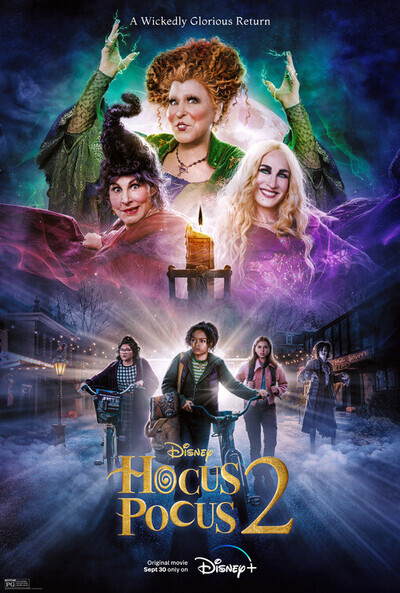
Friends Becca (Whitney Peak) and Izzy (Belissa Escobedo) must stop the recently revived Sanderson sisters (Bette Midler, Kathy Najimy, Sarah Jessica Parker) before they cast a spell which could give them the power to kill the town of Salem.

Despite not being a huge fan of the original Hocus Pocus, I certainly like it but don’t hold it as fondly as many who have grown up with it, there’s no denying the smile that appeared on my face as the Sanderson sisters returned. While the following musical number of ‘The Witch Is Back’ might not entirely strike the same feeling Bette Midler’s preceding cry of “lock up your children. We’re back!” is a true mark that the trio (also including Kathy Najimy and Sarah Jessica Parker) have very much returned after 29 years.

They’re brought back by a spell-gone-wrong in the ‘forbidden woods’ by school friends Becca (Whitney Peak) and Izzy (Belissa Escobedo). The two have been interested in magic and witchcraft for many years, however aren’t quite ready to be dealing with the resurrected Sanderson sisters, especially when their aims switch from living further than the night to casting a spell to give them all-power. A spell which would allow them to kill the entire town of Salem – which has done them wrong before in its various different forms through history. Helping them to get the objects that they need to cast this spell is Sanderson museum and gift shop owner Gilbert (Sam Richardson), with the help of returning zombified former Sanderson lover (“It was one kiss”) Billy Butcherson (Doug Jones).


There are a handful of different groupings throughout the film that we jump back and forth between. While the main one is perhaps that of Becca and Izzy trying to stop the sisters from destroying their town the stars of the show are truly Midler, Najimy and Jessica Parker. They ramp up the camp with intentionally over-the-top performances and it seems clear that the three are all having a great deal of fun returning to these roles. The fun emits from the screen as there are plenty of chuckles to be had within the scenes where they take the lead. For fans of the original film this sequel is likely to be a hit. While it ticks the various throwback boxes it still paves itself out with enough to justify itself as a sequel largely down to its storyline, even if that element doesn’t overly steal the show.

The surrounding elements may sometimes slip into feeling like a cliched ‘Disney Channel’ movie (one particular strand for Becca and Izzy involves their rocky friendship with Lilia Buckingham’s Cassie since she started dating Mike (Froy Gutierrez) – a guy who is sometimes late because he “decided to have two breakfasts”) although this can be viewed as it simply working/ leaning towards a new generation. For a new group of people this may be what the original Hocus Pocus has become for many people since its first release, or rather in that film’s case various annual airings on TV. This is very much a film for fans of the original, and a new generation of young viewers.

However, for those outsiders, or with generally less connection to Hocus Pocus and the Sanderson sisters, there’s still a good deal to enjoy here. Plenty of chuckles and awareness of campness help to move things along and boost the overall enjoyment of the film. The story may feel somewhat mixed at times with its various different elements, but the film certainly knows what the audience are here for and it supplies it while still moving things along.

The various sets of characters may bring a different tone as the story jumps between each one but Hocus Pocus 2 knows that the main attraction is the Sanderson sisters and it provides them in all their camp comedic glory whilst not halting the film as a whole.

Rating: 3 out of 5.

Mrs Harris Goes To Paris – Review

Cert – PG, Run-time – 1 hour 56 minutes, Director – Anthony Fabian

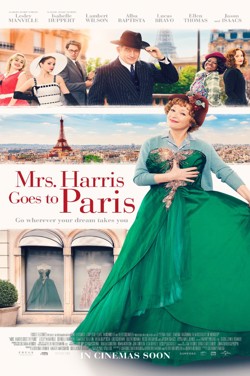
Mild-mannered, widowed cleaner Mrs Harris (Lesley Manville) sets out to achieve her dream of buying a Christian Dior dress from Paris.

Mrs Harris Goes To Paris is a film lifted up thanks to the way it captures its events through the eyes of the titular central character. Lesley Manville plays the mild-mannered cleaner who, after finding out she’s owed a war-widows pension fund from her beloved Eddie who passed away 13 years before during World War II, jets off to Paris with her eyes set on buying a Christian Dior dress. She’s an uncynical, unassuming figure out for a big one-day adventure before returning to her quiet life. The film captures this spirit perfectly with an effortless-feeling level of charm which simply helps to wrap you up in the unfolding events all from the warm viewpoint of the leading figure of Ada Harris.

After eventually making her way into a Christian Dior show – only being allowed in after displaying her rolls of saved up money to brand image-aware directress Mrs Colbert (Isabelle Huppert) and receiving an invitation in the moment from Lambert Wilson’s Marquis de Chassange – a one day trip turns into a couple of weeks away. A dress must be custom made to fit the buyer. As she begins her sessions of fitting and measuring Manville’s character jokes you “don’t get this king of fuss for a frock down Woolworths”. There’s a light tone throughout such sequences thanks to the joy which Manville brings to the role. As she attends the Dior show and watches the parade of dresses in astonishment you almost feel the same emotions and uplift thanks to the subtle connection you’ve formed with her through the film’s styling.


While something of an outsider in Paris, particularly in the world of high-end fashion with her brightly-coloured cardigans, there’s no denying the effect that Mrs Harris has. Overtime she begins to bring together the likes of Dior accountant André (Lucas Bravo) and top model Natasha (Alba Baptiste). Such strands may be structured with convention but to a large degree you don’t mind thanks to the likable nature of the piece, helped by its slightly stripped-back nature and calm attitude to many proceedings. Even the hints of a potential romance with the Marquis simply add to the point that Mrs Harris’ kindness has a genuine effect on those around her without it being made a big deal of. With her interacting with so many people it may mean that the final stages feel slightly drawn out with their holding various resolutions and further developments, but there’s still a tonal consistency to enjoy and be caught up in.

Perhaps where this adaptation of novel Mrs ‘Arris Goes To Paris succeeds the most is in the fact that it marks itself as something of a rarity. A good, enjoyable film free of cynicism. It’s something we don’t often see, but when we do it serves as a pleasant delight – much like the titular Mrs Harris, wonderfully performed by Manville with a similar air of natural charm as the character. This is a film where the central figure goes to Paris to buy a dress. And from the moment you realise things have clicked and you see her reactions to the display that’s shown before her during the key show sequence you truly want to see her succeed in this aim. There may be a number of positive happenings and effects along the way, but you’re consistently reminded of the dress at the heart of the film. Much of the events link back to it all through the delightfully kind actions and lens of Mrs Harris.

It may begin to feel slightly drawn out in the final stages but Mrs Harris Goes To Paris still deals with the dame effortlessly uncynical tones and themes as beforehand, led by a delightfully charming Lesley Manville who you simply want to see buy her dream dress.

Rating: 4 out of 5.

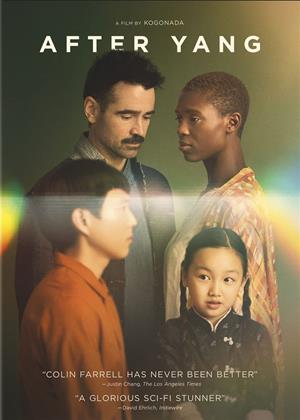
After Yang – Review

Cert – PG, Run-time – 1 hour 36 minutes, Director – Kogonada

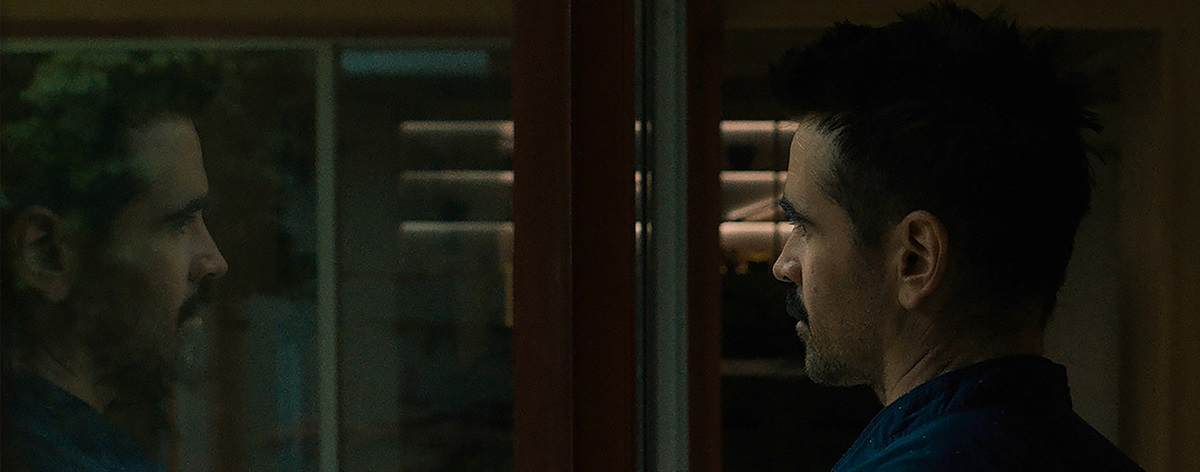
When the AI sibling (Justin H. Min) bought for his adopted daughter (Malea Emma Tjandrawidjaja) malfunctions Jake (Colin Farrell) discovers more about the human-like robot’s life as he searches for ways to fix him.

Sci-fi has long been used as a way to reflect upon our world as it is now. Looking at the distant future somehow often allows us to think about ourselves at the moment. Writer-director Kogonada’s After Yang gently uses this idea to push forward its well-observed ideas about connections and relationships of different forms.

We follow parents Jake (Colin Farrell) and Kyra (Jodie Turner-Smith) as they try to find a way to fix the malfunctioned AI sibling they purchased for their young, adopted daughter Mika (Malea Emma Tjandrawidjaja) to better connect to her Chinese heritage. While there’s the potential for this event to allow for the pair to better connect with their daughter after having potentially become too reliant on human-like Yang (Justin H. Min) we gradually learn more about their own relationships to him and the connections that they formed with the second-hand purchase. While the film’s narrative focuses on Jake searching for ways to fix Yang it’s the discoveries made along the way, such as memory files, which act as the true focus and source of interest.


We see flashbacks to conversations and quiet moments of bonding amongst the family and their different relationships with Yang. A scene set in the garden between Mika and her friend (whose dialogue briefly reminds us every now and then that he’s a robot) sees her discussing her familial ties and who her real family is. Such moments are so sensitively dealt with that they seem to lift up with ease and simply wrap you into the scene along with the characters, caught up with the themes and the points which are being discussed with such care and compassion. Helped by a set of great central performances – particularly Farrell who leads the film with a sense of unspoken grief – you’re engaged in the film from the opening stages, including a much louder, and highly discussed, synchronised dance competition sequence backing the opening credits.

From such a moment there’s interest in where the film is going to go and what it’s going to do. Knowing very little about it brings a slight sense of surprise as the true course takes shape. An admiration for the restraint and thoughtfulness that it displays towards the characters and the emotional situation they find themselves in. Naturally showing their past connections and they way they interact, and to some extent re-connect in the face of Yang’s breaking down. All of this is given time by Kogonada to pan out over the course of the short 96 minute run-time. Never feeling cramped or overstuffed there’s an element of interest and intrigue when it comes to some of the revelations about Yang’s own perspective and the way in which he viewed relationships, shown not just in flashbacks from Yang’s own point-of-view but also in Min’s performance when talking to his character’s adoptive family.

The time given is emphasised through the quietness of the film. A number of scenes and conversations are set to what feels like silence. However, even moments backed by Aska Matsumiya’s effectively stripped-back feeling score (the film’s theme composed by Ryuichi Sakamoto) have an added layer of poignancy and emotion to them, the score seemingly working hand-in-hand with the film. Perhaps much like the relationships and connections depicted in the film After Yang feels like a finely-tuned set of collaborations. Each element working well with the others to allow the characters space and time to show their thoughts and emotions, sometimes in flashbacks, sometimes without saying much, or anything, at all. Quiet grief, reflection, thoughts and bonds are put on display from a screenplay which understands its focuses and weaves them into the narrative which gradually pans out amongst them. All within the lightly-reminded near-future setting which adds further detail to the story and the emotional arcs and relationships of the characters themselves.

After Yang is a quiet and thoughtful reflection on both familial and emotional relationships and bonds. Complimented by its near-future leanings and an excellent cast, the characters are given time and space and the film is all the more effective for it.

Rating: 4 out of 5.

Smile – Review

Release Date – 28th September 2022, Cert – 18, Run-time – 1 hour 55 minutes, Director – Parker Finn

Therapist Rose (Sosie Bacon) finds a curse attached to her, passed on through witnessing traumatic events. With an uncertain amount of days left until it catches up with her she must learn what it is and how to defeat it.

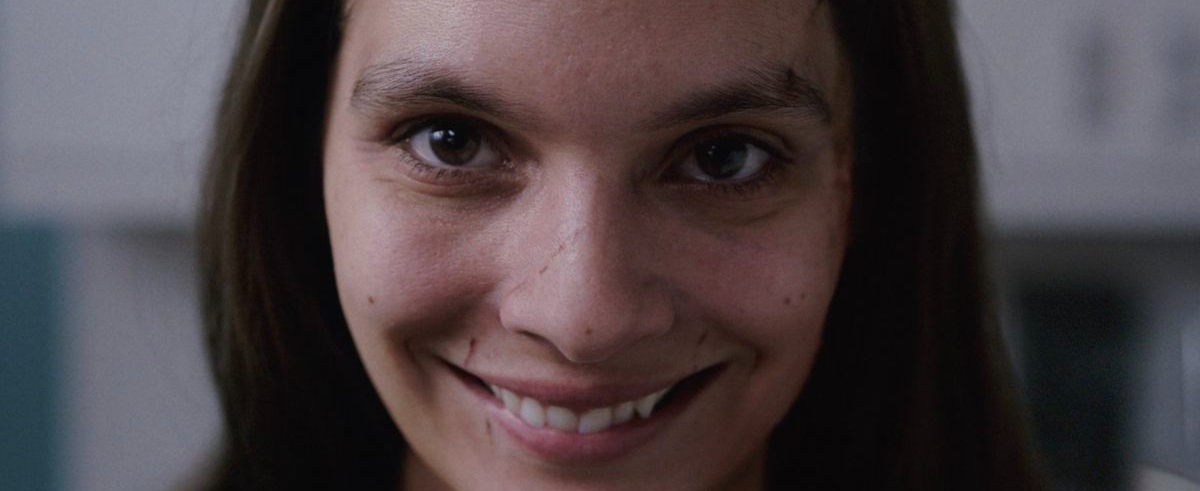
There’s no denying that Smile certainly justifies its 18 rating in the opening few minutes. As therapist Dr Rose Cotter (Sosie Bacon) watches a patient of hers commit suicide right in front of her. It’s one of a number of gory moments throughout the film and yet while this creates some horror, alongside a handful of unsettling images throughout the film, where it succeeds the best in creating tension is its snaps back to reality from the supernatural. The traumatic event which Rose witnesses early in the film passes on a curse to her. Initially haunting her and playing tricks on her mind, and those around her, the force – displaying itself as large, creepy smiles on the faces of people Rose knows or is around – soon begins to attack Rose, with her having to somehow defeat it with an uncertain amount of days before it reaches her and continues the chain to the next victim/ witness.

Yet, noone around the central figure is able to see what Rose sees. Writer-director Parker Finn doesn’t quite bring in a sense of ambiguity here, it’s largely acknowledged that what Rose sees is something that’s actually stalking and threatening her. While there’s some tension built up in some of the attacks a lot of the horror comes in the effects afterwards, seeing the ways in which the curse has played with Rose’s mind and begins to affect her relationships and actions. A particular snap back into reality at her nephew’s birthday party is one of the most unsettling sequences in the film due to the way the events begin to merge into each other as Rose tries to deal with multiple things at once in a situation she doesn’t overly understand herself. It causes her to become distanced in her relationships – including to her fiancé Trevor (Jessie T. Usher). It’s evident that everyone views her as becoming increasingly unstable due to the fact that she starts to wear baggier, scruffier clothes with her hair down (the initial title for the film when entering production was Something’s Wrong With Rose).


It’s some of the more conversational moments between characters, especially between Rose and Trevor, which somewhat bring the horror to a halt throughout the film. They feel more dialled down and simply don’t click as well as the suspense of the more investigative sequences into what the curse (eventually credited as simply ‘The Monstrosity’) actually is and how it might be able to be stopped, at least for Rose. Such instances cause the film to begin to feel a bit on the longer sider, at nearly two hours overall, particularly when it comes to the final stages which begin to feel quite drawn out themselves. This partly being down to the fact that much is introduced into the film, including some characters, largely for convenience and moving the narrative along with not always a great deal of detail/ push beyond. Bordering on the basics of Chekov’s childhood.

When focusing on horror the film is at its strongest. There are some good jump scares alongside scenes of genuine suspense and tension within reality and the supernatural; gradually coming together over the course of the film. When mixed with some truly unsettling imagery, particularly in the latter stages, there are some truly clever patches of horror which appear throughout. They may be dampened afterwards by the arrival of a more talky scene which leans away from the built-up tension, but luckily they manage to arrive again and still create an effect. You’re still able to engage with them, and the film as a whole – even if it does begin to slightly push its run-time. Perhaps slightly uneven in places due to its shifts in tone and occasional wobbles there’s still enough within Smile to create suspense and an effective fear factor within scenes which focus on creating just that.

While somewhat tonally uneven, and slightly overlong, when it focuses on horror and suspense Smile certainly has a tense effect. Even after slightly dampening conversational scenes, investigation and snaps between reality and the supernatural still manage to create scares.

Rating: 3 out of 5.

Don’t Worry Darling – Review

Cert – 15, Run-time – 2 hours 3 minutes, Director – Olivia Wilde

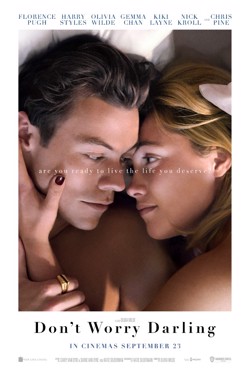
Housewife Alice (Florence Pugh) begins to suspect her life may not be as idyllic as it seems when she starts to witness odd goings on hidden by the company who own the town and neighbourhood.

There’s clear order and design to the 50’s-style suburban look of Victory. Everything appears to move like clockwork with the men going to work in the desert just outside the borders of the town and neighbourhood each morning while their wives stay at home putting in the hard, yet thanked-for, work of cooking, cleaning and occasionally going to the nearby shops – as long as they stay in the safety of their surroundings everything will be fine. Or at leas that’s what they’re told. Everything may not quite be as it seems when housewife Alice (Florence Pugh) begins to notice strange and out-of-the-ordinary goings on which disrupt the flow and order established over the last 900+ days of her life in Victory.

At first these sightings are generally dismissed by Alice as thoughts created by Kiki Layne’s Margaret, who for a while has been questioning what’s really going on around her. However, as she starts to have strange visions and sees men in red jumpsuits trying to cover up dark revelations about Victory the world around her begins to descend into chaos – much mentioned as the enemy of everything the Victory Project stands for. It takes a while for these developments to find a real flow as we’re initially introduced to a world which feels as if its providing developments and further information to questions which it hasn’t yet asked. This particularly being the case as life continues to move on with little question from the protagonist for a good portion of the third act despite what we’re seeing and hearing.

Perhaps the feeling largely comes from the fact that much of the idea of what is being hidden from both the audience and the housewives of the film lacks substance. A number of ideas throughout the film never quite lift off from the initial point, or simply continue with it for the duration of a scene without bringing in anything new. It means that the thriller aspect that feels as if it should be present never quite picks up and lacks a sense of tension or dramatic stakes.


As Alice begins to break down and tries to piece things together, especially at a dinner party in front of a group of her friends, her husband (Harry Styles – who initially doesn’t get as much to do as you might think, although the film does occasionally stop to allow him to shout) and the head of victory, Frank (Chris Pine), things begin to come together more. When the film deals with more than one thing at a time, or at least plays with different elements and ideas in a scene, it strikes a better chord and begins to stir its sense of mystery. It feels as if more is going on, especially in developing points beyond a more general idea. What we get beforehand certainly has its watchable moments, but it never truly takes off to truly involve the viewer until some of the third act twists and turns.

A series of events which fluctuate between slight obviousness, in terms of basis, and interest. Interest eventually manages to overpower and lead the final stages of the piece in an engaging way – although it may not be to everyone’s tastes – largely helped by the staging of the reveals and a rather thrilling chase sequence; perhaps the highlight of the film. It’s wrapped in further progression and basis for Alice’s worries, which lacks in the early stages of the film despite what’s shown around her, and indeed the conflicting mindset that Alice starts to have. Basis may take a while to properly arrive, yet Pugh, as expected, gives a strong leading performance throughout. Surrounded by a good supporting cast, including Gemma Chan, Nick Kroll, Kate Berlant and director Olivia Wilde, all of whom do what they can with not-always-fully-developed characters.

While it might take some time to get its elements together to allow for a better sense of flow to come into place there’s still some engagement to be found within Don’t Worry Darling. It’s helped along by its performances, especially Pugh in the leading role, with the cast trying to bring things above the occasionally single idea format of a scene. We eventually get more, and the film as a whole has enough to interest and engage throughout its just over two hour run-time, but you do find yourself wishing for more detail almost from the opening stages.

Don’t Worry Darling occasionally moves above its lack of substance, partly thanks to its performances; especially Florence Pugh. Working best when dealing with more than one thing at a time it gradually picks up a better flow and gains interest and engagement through its developments.

Rating: 3 out of 5.

Ticket To Paradise – Review

Cert – 12, Run-time – 1 hour 44 minutes, Director – Ol Parker

A long-divorced couple (George Clooney, Julia Roberts) travel to Bali to stop their daughter (Kaitlyn Dever) from marrying a man (Maxime Bouttier) she’s just met whilst celebrating her graduation.

With many celebrating and praising the ‘return’ of the big studio rom-com over the past few years Ticket To Paradise arrives to truly bring about something of a throwback. Pitching the undeniable chemistry of George Clooney and Julia Roberts as a constantly feuding divorced couple who find themselves having to team up in order to stop their daughter, Lily (Kaitlyn Dever) from getting married to someone (Maxime Bouttier plays seaweed farmer fiancé Gede) she’s just met whilst celebrating her graduation in Bali. They fear that she’s going to make the same mistake they made when they were her, to each other.

It’s a narrative where you can roughly tell what’s going to happen over the course of the film and yet you generally buy it thanks to the performances of Clooney and Roberts. Their movie-star charm and aesthetic helps to sell the film and brings you on board, alongside selling a number of the chuckles along the way. In other hands a number of the gags could feel tired and laboured, with the film as a whole feeling as if it belongs on Netflix with a pun title, but Clooney and Roberts, almost effortlessly, succeed. The running joke of their bickering and exaggerated hatred towards each other – Roberts’ Georgia insists in her opening lines “I try not to be in the same time zone [as him] if I can help it” – can begin to wear thin, particularly as the film wants to show the pair coming together with their joint mission, but there’s still enough to be amused by throughout.


The two leads certainly aren’t always in the spotlight throughout, though. The supporting cast, primarily Dever and Bouttier, get their moments – although perhaps not always in the comedic vein – to allow things to progress and remind you of the reason why we’re here in the first place (with Bali (actually Australia) being given a tourist-encouraging view by director Ol Parker, who was behind Mamma Mia: Here We Go Again). However, the real scene-stealer is Billie Lourd as Lily’s best friend Wren. Having stolen the show in 2019’s Booksmart as Gigi, here Lourd brings a similar energy and plenty of successful laughs with her handful of one-liners and excellent timing proving her to be a true comedic force even with fairly limited screen-time.

With such performances the film manages to sell itself and fill its 104 minute run-time well enough. It may have its noticeable conventions and you can tell where it’s generally going from the outline, although you might not quite buy some of the final stages due to some of the gags throughout the film, but there’s a likable and enjoyable enough film within Ticket To Paradise to warrant viewing. Likely to please fans of the central pairing, who are of course great together, and perhaps rom-coms in general, the cast helps to make for something which might not take the audience to paradise, but certainly acts as a smooth enough journey nonetheless.

Ticket To Paradise certainly has its conventions and familiar elements, in other hands it may not click, but thanks to the central cast; particularly the undeniable chemistry of Clooney and Roberts, there are enough chuckles to make for worthwhile amusement throughout.

Rating: 3 out of 5.

Moonage Daydream – Review

Cert – 15, Run-time – 2 hours 15 minutes, Director – Brett Morgen

Documentary using archive footage to explore the mystery behind David Bowie and his characters.

Brett Morgen’s Moonage Daydream is a film that initially revolves around the idea of the mystery that surrounded David Bowie and the characters he performed as on stage. Who was the real David Bowie? Did he know himself? We see interview footage where he admits “I’ve never been sure of my own personality… I’m a collector. I collect personalities”. The idea of collection, and indeed that “there’s a feeling of excitement and titillation about moving in areas that are forbidden to society”, is pushed in the cascading barrage of sound and vision which floods the screen in loud montages. Assembling clips and images from films, newspaper articles, concert footage and more to push across the idea of influences. This may be one of the few films ever to use footage from both Barbarella and Triumph Of The Will, and to end with a reference to Pete and Dud.

Bowie states at one point that Ziggy Stardust started as an alien rock star and was then further developed by people’s perceptions of the character. We see in these early years (at least in terms of what the film covers) a man discovering his own personalities through his characters, yet almost being overcome by them. The use of overlapping footage powered by the almost non-stop Bowie soundtrack (without feeling overpowering, it pairs finely with the well-edited and combined visuals which are made for the big screen – this certainly deserves the IMAX treatment it’s been given) emphasises this as the audience is projected into this kaleidoscopic world exploring the mystery of the central figure. Mystery which is kept intact thanks to the way in which the film leans into perception and fascination – including Bowie’s own of his characters.


As things move on and we reach the star’s return in the 80s the film becomes something of a personality drama within the career documentary aspect. We see more of the focus coming through and building his own personality as he begins to perform as himself instead of the likes of the Thin White Duke. While the extent of the montages might slightly die down, or at least their frequency, it allows the personal elements of someone discovering themselves to come through more amongst the parallels of footage – some of Bowie simple exploring the literal world he lives in, or finding connecting points in his music videos and behind-the-scenes footage.

There’s no denying the consistently compelling and fascinating nature of the visuals. With so much happening Morgen manages to not overpower the viewer and instead forms an easy-to-follow narrative without the use of talking heads and largely allowing for Bowie to speak for himself, alongside the masses of images and footage used throughout the 2 hour plus run-time. A run-time which does admittedly begin to feel a bit on the long side, but there’s still a strong level of engagement to be had with the film thanks to what it presents as a truly cinematic experience. Even without the exploration of his mystery and character/s Bowie is enough himself to command the screen, particularly within concert footage – we see people early on describing just what they like about him, when asked why she’s crying one girl simply replies “he’s smashin'”.

There’s a casual humour to the film. Largely coming from the central figure in interview clips. It puts us on a more equal plain to him and opens up another level of accessibility and openness. Such points are certainly not frequent, but they add a slight extra detail which helps to push your involvement in the mixture of the film as a whole. One which is part concert film, part career documentary and part personality drama. It’s all well balanced and helps to form the narrative which is being developed through the use of footage and following of the stages of Bowie and his developing career from the early-70s to the late-90s. A rolling tide of intense visuals and chest-pounding sound brings you into the potential world of David Bowie and who he was through his characters. All while keeping his mystery intact. It’s a brilliantly constructed film made to be experienced on the biggest screen possible. The title seems to sum it up rather well.

Part concert film, part career documentary, part personality drama there’s plenty of themes within the wonderfully edited and controlled Moonage Daydream to match the force of the colourful images and powerful sound. A true cinematic experience which explores Bowie’s character/s while keeping him intact.

Rating: 4 out of 5.