Transformers: Rise Of The Beasts – Review

Cert – 12, Run-time – 2 hours 7 minutes, Director – Steven Caple Jr

To stop planet-eating Unicron (Colman Domingo) from destroying Earth the Autobots must team up with humans and Maximals to stop his servants from obtaining an ancient artefact which can open portals through space and time.

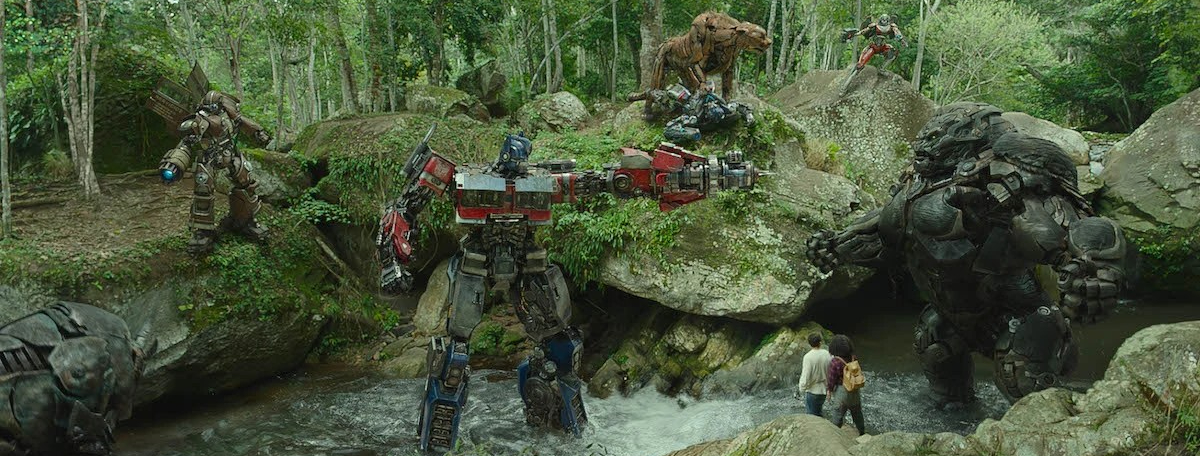
There’s a point midway through Transformers: Rise Of The Beasts where a giant robot falcon from space called Airazor details with great seriousness, in the voice of Michelle Yeoh, the feud between the Autobots, Maximals and Teracons in relation to the transwarp key. It’s a moment which almost leads to a humoured response simply due to how seriously it seems to be taken. Certainly in comparison to the lighter tones of what has come beforehand, particularly in regards to the Transformers franchise as a whole. In general this is a film that understands that these a giant transforming robots and, particularly in the first half, runs with it – largely by focusing more on the human characters.

Noah (Anthony Ramos) and Elena (Dominique Fishback) are the core engagement of the film and make for the most interesting perspectives, even during the big action sequences, although eventually melding with the Autobots and co in the end. They meet when Noah breaks into the museum Elena interns at when looking for an artefact to help his recently-discovered aliens stop planet-eater Unicron (Colman Domingo) from destroying the Earth, and opening portals through space and time to do the same to other planets, including the Autobots home world Cybertron. Yet, fuelled by the dark energy of their master Unicron’s towering servants – led by Peter Dinklage’s Scourge – seem like an unstoppable force, no matter how much planning and knowledge is on the protagonists side.


While as the film goes on the human and robot perspectives combine somewhat more, especially during the action sequences which get better as things progress, it remains the case that the most believable elements lie with Elena and Noah. Even as things explode and clang in front or behind them they prove to best get what’s going on across – best shown in a brief shot of them ducking for cover compared to the blasters and fire of the rest of the scene. While not entirely bland or confusing – Steven Caple Jr is in the director’s chair for this particular entry instead of Michael Bay – you occasionally wish the film would call back to that feeling of remembering the base of these characters. They started from toys after all. Certainly a globetrotting element and sense of narrative through-line helps with this, particularly when in a race to reach the hidden transwarp key before the Teracons.

Things are direct and easy enough to follow and overall there’s a likable piece of work here. With plenty of focus on the human figures who make for the stronger segments of the film, and strengthening action along the way it works best with lighter moments which feel more of a family-friendly feature. Elements of a more fantastical PG, although the film is a mild 12, certainly without the grit and grimness (of various kinds) of the other main features in this franchise, it’s definitely more towards Bumblebee territory; even with its 90s setting (let’s not worry about the timeline now). Certainly not perfect, but for the time its on there’s plenty to be caught up in and amused by, largely thanks to the adventure elements within the narrative. Following the characters in search of that key item. It works rather well and while there might be some bumps along the way there’s an overall decent arc here.

Transformers: Rise Of The Beasts is best when focusing on its human characters rather than the titular robots, luckily it uses them quite often. There’s an enjoyable nature to the lighter adventure and fantasy-like elements which helps move on from the occasionally bumpy action. Overall it’s rather likable.

Rating: 3 out of 5.

Spider-Man: Across The Spider-Verse – Review

Cert – PG, Run-time – 2 hours 20 minutes, Directors – Joaquim Dos Santos, Kemp Powers, Justin K. Thompson

When a new villain (Jason Schwartzman) intent on taking down Miles Morales (Shameik Moore) travels across the multiverse to grow his powers thousands of Spider-Men are at risk of having their canon and worlds destroyed

Amongst various other elements one of the many reasons for which 2018’s Spider-Man: Into The Spider-Verse received praise was its visuals. One things that’s clear from the very beginning of sequel Across The Spider-Verse is the even more stylised nature of the animation. Different styles crop up throughout as we meet different variants of Spider-Man from across the endless universes and each one fits right into the piece and simply allows for an overall stronger visual flare, and there are some truly stunning (and fun) shots in this film. The sequel was delayed a handful of times during production for reasons of the pandemic and just to give it more time. The extra time was worth it as not only are the visuals great but the story flows effectively from one development to the next.

The flow best comes across in the extended action sequences where it’s clear that the creatives know how best to move things along and keep track of them in the moment through both the storytelling and animation. It helps to move the overall story along as Miles Morales (Shameik Moore) finds himself thrown in and out of different universes in an attempt to track down The Spot (Jason Schwartzman – having increasing fun with the character the more the film goes on). After being labelled as a simple ‘villain of the week’ the ‘nemesis’ in question truly begins to gain the label of an unstoppable threat as he grows power from the different spider-universes intent on taking down Morales and his family.


However, as Miles tries to chase him down and stop him, with familiar faces such as Hailee Steinfeld’s Spider-Gwen by his side, it’s him who comes under even greater threat as he risks breaking the canon, the key events of each Spider-variants life, which holds each universe together. The figure monitoring everything and making sure all stays in order? Spider-Man 2099, AKA Miguel O’Hara (Oscar Isaac). A looming figure with seeming little trust for most new figures he meets as he tries to ensure that what needs to happen in each world happens. He contrasts to the much brighter, far less threatening, figures we meet across the way, especially the likes of Pavitr Prabhakar AKA Spider-Man India (Karan Soni) and Spider-Punk (Daniel Kaluuya).

With a number of the variants, particularly when all roaming around together in one world where there are plenty of references, jokes and cameos to delight in, there are a number of laughs to be found. Amongst the action which takes place, and the tension which arises, this is a very funny film almost from start to finish. Finding the right balance with everything that goes on over the course of the relatively tight 2 hour and 20 minute run-time. With so much going on there’s a well-tracked nature which keeps you engaged and generally avoids dropping for the most part, only seeming to take a slight second after the big action sequences before getting back into the swing of things. Plus, it gets out just as it borders on feeling a little too long.

There’s a strong feeling that Across The Spider-Verse may even strike better on a re-watch. However, for a first viewing there’s plenty to enjoy within what is an excellent piece of work. You can see the time and effort which has gone into making both the visual story and that taken upon by the characters and it all draws you in and keeps you in place throughout.

Overflowing with visual style and an equally strong narrative flow. especially during action sequences, there’s a lot to like about the developments and storytelling within Spider-Man: Across The Spider-Verse. An overall excellent piece of work.

Rating: 4 out of 5.

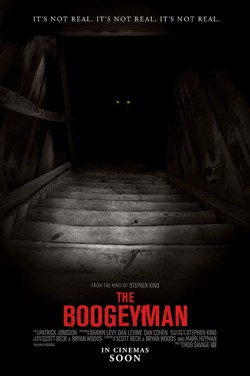
The Boogeyman – Review

Cert – 15, Run-time – 1 hour 39 minutes, Director – Rob Savage

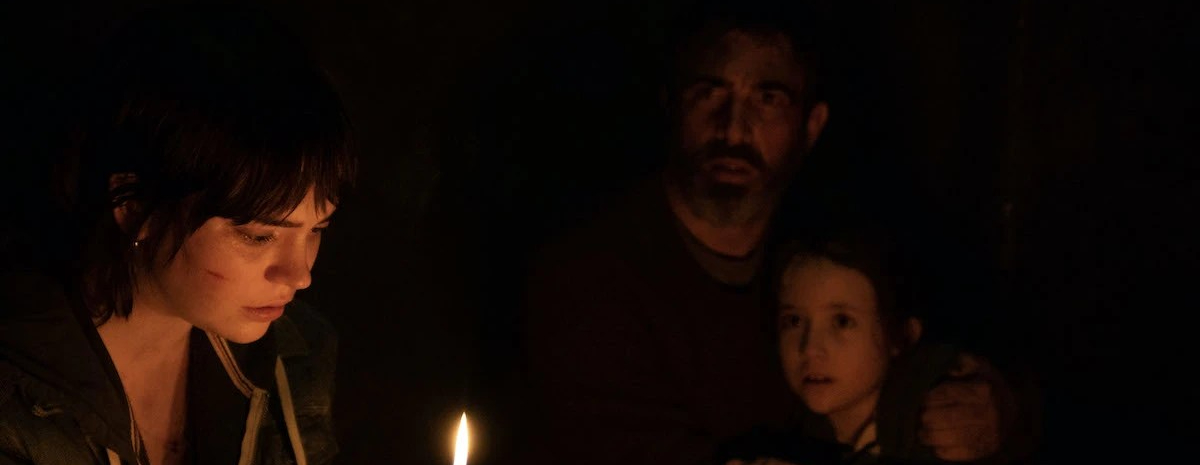
After a visit from a new client (David Dastmalchian) a grieving therapist (Chris Messina) and his two daughters (Sophie Thatcher, Vivien Lyra Blair) find themselves haunted by a creature which lurks in the dark

After Host and Dashcam I was very much prepared to consider myself as a fan of Rob Savage and his works of tension building. With The Boogeyman preparedness is removed as I’d happily label myself a fan. The director’s first studio venture certainly has the markings of a studio horror piece in being more direct with its elements of convention than the former two titles, however this largely comes in the presence of one character. The character who often crops up in Stephen King adaptations, this particular one taken from the short story of the same name, to explain what’s going on and give warning to the protagonist.

Yet, there’s a fair deal of time spent building up the tension before this. Savage solidifies that he’s an excellent suspense-builder with the smallest of details. Bringing you in to the moment to feel the fear of those on-screen – primarily sisters Sadie (Sophie Thatcher) and Sawyer (Vivien Lyra Blair). Much of this assisted by the quiet and lingering nature of Patrick Jonsson’s score which emphasises the tension of the moment, the uncertainty and realisation of just how little is known about the unnamed creature which appears to be living in the darkness.


A refreshingly little amount of information is given for a studio horror of this nature. All we get is what we need to get the gist of the story. A new client (David Dastmalchian) to Sadie and Sawyer’s therapist father (Chris Messina) appears to bring with him a demon which lurks anywhere light doesn’t touch, attacking anyone in the darkness of the family home, still holding many shaded memories of their recently-passed mother. It’s effectively enough to build-up the story and ideas being played with and allow for the scares to come through in a number of scenes. They arrive early in the moment and continue to build-up there lasting until the cut to the new location or sequence.

This even being the case after the, luckily brief, moments of convention which themselves have good points about them and some good horror within. Perhaps it comes down to the central performances which effectively capture the family throughout, alongside a number of the ideas which crop up every now and then – one highlight includes a character lighting up a room with blasts from a spell in a video game. Things move along easily and quickly and make for an engaging piece of work with plenty of moments of suspense to keep the fear factor in place. Even with work he hasn’t co-written (Gemma Hurley and Jed Shepherd are also not present here as Mark Heyman adapts previous drafts written by also-credited duo Scott Beck and Bryan Woods) Savage manages to focus on the small details and recognise that suspense and what’s not to be trusted lies in the background, or does it?

While it may stray into occasional brief patches of convention The Boogeyman is an effective studio debut for director Rob Savage who, with a strong cast – particularly Thatcher and Blair – manages to create plenty of moments of suspense with little build-up and detail.

Rating: 4 out of 5.

The Little Mermaid – Review

Cert – PG, Run-time – 2 hours 15 minutes, Director – Rob Marshall

Mermaid Ariel (Halle Bailey) makes a deal with a sea witch (Melissa McCarthy) to grow legs to explore the sea world, however if she doesn’t obtain true love’s kiss in three days the deal becomes a curse.

I’ve said many times that I try to go into every film with an open mind, however going into Disney’s latest reimagining I must admit to having felt a bit of scepticism. Perhaps because of the announcement of a Moana remake not even ten years after the original film was released, or the fact that since 2019’s take on The Lion King these live-action takes have felt, while generally fine, somewhat subpar. The Little Mermaid itself suffers slightly from similar points to The Lion King in that the bright, colourful worlds created don’t always translate to the screen. In particular I Just Can’t Wait To Be King fell flat due to the fact that the characters simply ran across a watering hole for three minutes.

While there’s less photorealism on display and a bit more chance for fantasy to play in, and indeed the songs themselves work with good performances given, there are some restrictions from the live-action nature. Yet, the performances of the likes of Under The Sea and Poor Unfortunate Souls – both of which show the money Disney has thrown at this film with a heavy amount of CG; not necessarily a bad thing and indeed helping to show that imagination and creativity is on display – are enough to lift things up, and the visuals manage to not fall entirely flat helping to pull things through.


It’s the songs which feel like the necessary elements from Disney for this particular remake. And while the film still follows the same general narrative, albeit with one or two changes, the rest of it certainly feels like a reimagining, you can tell there was some thought as to how this could be made different, and much of this arrives in the second half once mermaid Ariel (Halle Bailey – who eases you into the film and settles any worries with her performances of Part Of Your World around 20 minutes in) has arrived on the land with her newly obtained legs.

There’s plenty to enjoy and be entertained by as director Rob Marshall explores the island Ariel almost washes up on, particularly a market sequence which evolves into a dance scene. However, while enjoying all the surface world has to offer crustacean Sebastian (Daveed Diggs), fish-friend Flounder (Jacob Tremblay) and gannet Scuttle (Awkwafina) must keep her on track to obtain true love’s kiss in three days or else she returns to being a mermaid, and becomes the property of sea witch Ursula (Melissa McCarthy – effectively channelling Pat Carroll whilst doing enough to give her own spin on the villain). The man she’s already formed a connection with after saving his life at sea? Jonah Hauer-King’s Prince Eric – a character who now with his own autotuned song truly demonstrates the music-video nature of some of the songs.

The more the film goes on the more you ease into it and enjoy it. There’s a character to it that, yes, sticks to the Disney mould but manages to differentiate it from the original and just about earns the label of reimagining. At over two hours the run-time may be a bit on the long side, with certain elements from the largely-underwater first half perhaps in need of some trimming, but as a whole things pass by relatively well with plenty to enjoy. Including some effective darkness in the closing stages which brings to mind the kind which was present in some of the older Disney animations (even pre the ’89 adaptation of the story). There may be elements of the live-action format which hold the film back slightly, largely during musical numbers which are lifted by the performances (and, let’s be honest, it’s hard to beat that original soundtrack) but overall there’s an enjoyable nature to this take on The Little Mermaid.

A reimagining with both an entertainment factor and some new ideas there’s a good deal to entertain and carry you through the run-time in this take on The Little Mermaid. Some of the songs may be restricted by the visuals, but there’s still a push from the performances and a spark of creativity every now and then.

Rating: 4 out of 5.

Sisu – Review

Release Date – 26th May 2023, Cert – 15, Run-time – 1 hour 28 minutes, Director – Jalamari Helander

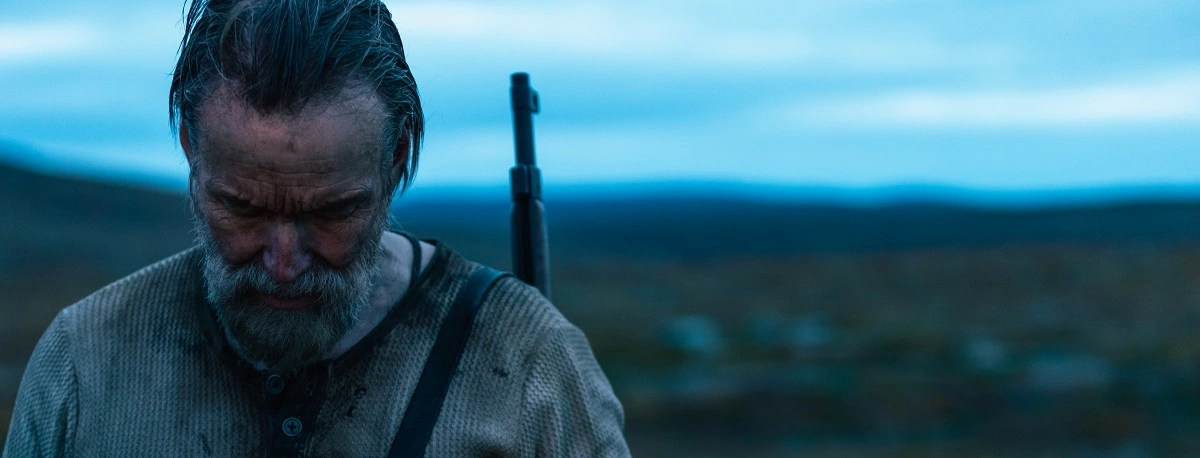
An elite ex-soldier (Jorma Tommila) mining for gold in the Finnish wilderness finds himself taking on a unit of highly-equipped Nazi soldiers.

It’s strange how one small detail that doesn’t overly play into the narrative of a film or entirely the way in which it works can affect the final product so much. In the case of Sisu the simple use of chapter titles creates something of a stop-start nature to the narrative. It points out a repetitive nature to the goings on as Jorma Tommila’s “one man death squad” is chased down by a unit of Nazi soldiers, equipped with tanks, machine guns, bombs and more while all he has is a pickaxe and a dog, he takes some of them down, escapes, moves on and gets ready to do it all over again in another location just down the road.

Yet, while there’s this cyclical feeling to the story, again largely emphasised by the presence of occasional chapter titles, somehow – perhaps slightly thanks in part to the 88-minute run-time – the piece goes by quicker than it might initially seem. It may slow down every now and then at the beginning of a new chapter, however it’s not too long until you’re at what’s clearly the big third act battle. A point which certainly had me thinking ‘I know he’s meant to be immortal, but there are a number of times where he should have died by now’ in regards to Tormilla’s central character.


Action is the biggest draw of the film. The bloody violence is what it sells itself on and certainly there’s plenty to like about what’s on display when it is unfolding. There’s a Tarantino-style quality to much of the action, not just because of the very bloody nature which while bringing a sense of slightly restricting familiarity does provide an engaging style to such moments. Generally this seems to largely be a film to entertain audiences with various instances of Nazis being stabbed, shot, blown up, run over, drowned, etc and it undeniably provides that and does a relatively good job of doing so.

Things move along and are kept fairly tight by the under-90-minute run-time – a big benefit to the film stopping it from looping further or going on too long – and, again, provide enough amusement for the time that it’s on. How much is remembered after viewing remains to be seen, a couple of moments currently linger in the mind when recalling the film about a week after seeing it, but when watching there’s enough to like and be engaged by. It’s a fairly simple premise and set of events which writer-director Jalamari Helander sticks to, and once more the film is held up, and occasionally back, by its simplicity. A small thing such as chapter titles in a film of structural simplicities can create a noticeable impact amongst the rest of the film, pointing out the repetition amongst the amusing action.

While Tarantino-inspired action may provide enough amusement for the duration of the film there’s a repetitive nature to Sisu’s narrative which only drops in the final half hour. Occasionally preventing a consistent flow within the otherwise quick-paced 88-minute run-time.

Rating: 3 out of 5.

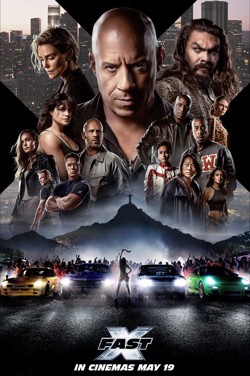
Fast X – Review

Cert – 12, Run-time – 2 hours 21 minutes, Director – Louis Leterrier

Scattered across the globe Dominic Toretto (Vin Diesel) and his family find themselves being hunted down in a deadly fight for survival against a vengeful figure (Jason Mamoa) who will destroy anything to kill them.

It’s largely accepted that the Fast And The Furious franchise turned around into ridiculous action around Fast Five. Now at the tenth instalment in the main franchise we’re certainly far from the days of drag race action and more minor heists which took place 20 years ago. Fast X is very much a combination of the old and the new, most prominently shown in the contrast between its main protagonist and antagonist.

Vin Diesel has long seemed to take this franchise much more seriously than anyone else involved. He’s certainly a key push in its longevity and is undeniably the face of it. Here more than in any other entry he gives a directly serious performance, although with glimpses of his own enjoyment, as returning Dominic Toretto, distanced from his family as they’re all scattered across the globe he faces his greatest, and deadliest threat yet. While Diesel’s performance might stand out from the louder moments of large-scale action it would be amiss to say that it feels out of place. Partly because such moments have become expected from this franchise but also because the film – perhaps not intentionally – feels like a big look back on the franchise as a whole. The more dramatic moments, mostly the more the film goes on, actually work. Perhaps not the strongest moments, but they eventually wind into the action fairly well.

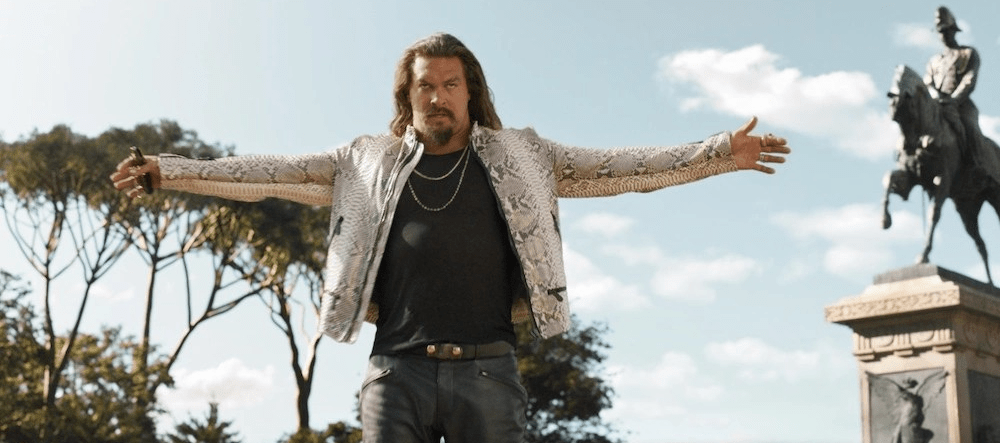
Meanwhile, Jason Momoa gives the performance of someone who knows exactly what this franchise is, and has watched each of the films. In a film where giant bombs roll through cities and catch fire Dante is a camp, flamboyant, brightly-coloured villain (whose style is only outdone by Brie Larson’s Tess, the daughter of Kurt Russell’s Mr Nobody) who knows he’s the villain and is having great fun knowing that. He’s the kind of villain we don’t see much of in mainstream films these days and with just how much fun Momoa seems to be having in the role he’s a pure joy to see. He even has his own Caesar-Romero-Joker-style giggle as he attempts to destroy Toretto’s family, exacting revenge after the death of his father; Fast Five villain Hernan Reyes (Joaquim de Almeida).


Whilst the pair play cat and mouse around the world the rest of the Toretto clan are also unsafe, playing out their own separate escapades in different locations. Whether it be John Cena in a buddy-road-trip comedy with Leo Abelo Perry as uncle and nephew race around trying to get to a safe rendezvous point or Ludacris, Tyrese Gibson, Nathalie Emmanuel and the little-seen Sung Kang trying to figure out how a mission early in the film went so wrong there’s plenty to enjoy. Admittedly, the intentional humour in the latter grouping may not always come through but there’s still enough on display to entertain and keep things moving.

Yes, there may be some slight unintentional chuckles at the true absurdity of some of the action, but there’s a self-awareness to a number of the events which adds to the chaos on display. It’s mentioned that the central family often defy “the laws of God and gravity” with their various stunts, and to an extent that certainly happens here. Some of the dialogue appears to be written with a wry smile as we take a break from another off-the-wall set of explosive, engine-roaring circumstances – some of which come with a genuine feeling of tension as you simply sit back and enjoy the thrill of it all.

Again, a lot of what works within Fast X may not be entirely intentional, some of it might be slightly looking a bit too much into it. But, regardless, there’s still a deeply entertaining film here. One that comes with a layer of self-awareness when it comes to the action and manages to make a well-flowing piece of work which conjures up plenty of laughs and tension. It’s exactly the kind of film which audiences have begun to turn to this franchise for.

Ridiculously entertaining with its explosive action a lot of the joy of Fast X comes from its self-awareness, assisted by Jason Momoa’s joyous villain turning up the camp. There may be some tonal shifts with each group, but they all work as a whole when not entirely in the straight dramatic. For the most part it’s a highly enjoyable, nonsensical actioner.

Rating: 4 out of 5.

The Old Man Movie: Lactopalypse – Review

Release Date – 2nd June 2023, Cert – 15, Run-time – 1 hour 28 minutes, Directors – Mikk Mägi, Oskar Lehemaa

With his grandchildren (Mikk Mägi, Oskar Lehemaa) visiting for the Summer, The Old Man (Mägi) must chase down his escaped cow (Märt Avandi) before it explodes due to not being milked, or is killed by a former milker (Jan Uuspõld)

If A Town Called Panic had a head-on collision with South Park the result would likely look something like The Old Man Movie. A crazed barrage of gloriously silly jokes fusing the crude and the absurd as characters try to live the much-celebrated “milk life!” Characters with clumped-together and loosely-carved looks, speaking with highly cartoonish voices (largely provided by writer-directors Oskar Lehemaa and Mikk Mägi) and simply heightened by the use of stop-motion animation there’s plenty on display which lets you know early on that this is going to be an utterly bonkers ride.

The Old Man (Mägi) lives a quiet life of routine at the top of a small village. Every day he goes into his barn, milks his cow (Märt Avandi) – spraying milk straight from the udder into the jars of paying customer. However, when his three grandchildren Aino (Lehemaa), Mart and Priidik (Mägi) visit from the city for the summer the cow is quickly set loose when they believe their grandfather is abusing it. It’s only in the morning that they’re told that if a cow isn’t milked the milk stores in the udder until it explodes. The group are rushed onto a tractor (minus Mart who’s unknowingly left behind to come up with an invention to get milk from other animals) and power into the forest where they hope to find the cow before it’s too late.


Yet, whilst racing against time the family are also trying to get to the key animal before Old Milker (Jan Uuspõld), not only a villain with a fantastically drawn out evil laugh but also a former milker who encountered this exact problem many years before and has since been more milk than man. Determined not to allow this to happen again he’s set on killing the cow before a disastrous lactopalypse. The gags throughout are fitting to a film with a narrative as silly as this, but it’s clear that the creatives are taking the silliness seriously. Crudity isn’t there just for the sake of crudity (and there’s a fair deal of it in the short 88-minute run-time) and you can see that, amongst the feeling that the filmmakers enjoyed putting the jokes together, there was a seriousness to the scripting process and putting things together for the finished product.

Gags come thick and fast with gradual increments expanding upon certain jokes and points. Stages of jokes acting as continuing yet new points and each getting a response; there are plenty of laughs and giggles to be found here. This is a film designed to be silly and to simply make the audience laugh, and it certainly succeeds in doing so. The madness is made clear from the start and it’s easy to engage with it from the opening prologue of a public information film about milk. Yes, maybe the final 15 minutes may be a bit long-winded, but there’s still plenty to amuse and entertain within the madcap ideas which are spun. Imagine a film which has the word Lactopalypse in the title. The Old Man Movie is that film. And it’s wonderfully bonkers.

Perhaps the maddest animated film since A Town Called Panic, The Old Man Movie: Lactopalypse is a gloriously silly film with plenty of laughs, which themselves have clearly been taken seriously by creatives who appear to have had a great time making this absurd delight.

Rating: 4 out of 5.

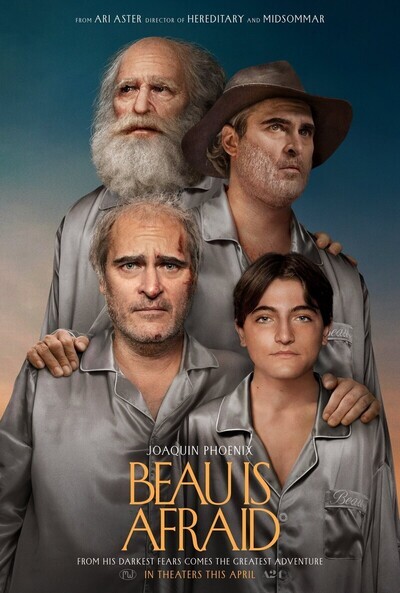
Beau Is Afraid – Review

Release Date – 19th May 2023, Cert – 15, Run-time – 2 hours 58 minutes, Director – Ari Aster

After learning of his mother’s (Patti LuPone) passing Beau (Joaquin Phoenix) must leave his flat to return home as quickly as possible, however along the way his anxiety is the least of his troubles.

For the first hour of writer-director Ari Aster’s Beau Is Afraid we’re firmly in Beau Wassermann’s (Joaquin Phoenix) mind. A realm of anxiety perhaps overemphasising the world around him. The street he lives on, whilst holding street performers and food vendors, houses fights, eye-gougings, knife fights, murders, drive-bys and more, for him it’s a constant source of worry and panic. The early events feel like if a Charlie Kaufman script met a pessimistic Wes Anderson with plenty of bizarre yet enjoyable situations occurring. While it’s easy to see the drama in the fantastical lengths of the central character’s anxiety there’s plenty of opportunity for comedy to be found in the exact same elements.

On discovering that his mother (Patti LuPone) has passed away Beau must risk leaving his flat to get back home as quickly as possible. He’s told on the phone by someone close to her that everyone is waiting for him, the guilt settles in further when he’s told “every minute that we wait adds to the humiliation”. However, it’s a long road to get there with much worse events and happenings than his frequently panicking mind could conjure up. The fantastical nature begins to fade with the feeling of anxiety alongside it (Aster manages to capture anxiety without pushing it on to the audience with worry and tension like in a Safdie brothers feature).


Instead, as Beau finds himself confronting both the world around him and his relationship with his mother – which we briefly see him hesitantly discussing with his therapist (Stephen McKinley Henderson) at the start of the film – we see a handful of flashbacks to his past. It’s such moments, alongside a lengthy not-quite-dream sequence, that provide the film with it’s almost three hour run-time. As a whole it doesn’t feel overly lengthy – although it’s apparent that a good few minutes could be trimmed off from the longer elements, and perhaps some situations altogether – but you do question the relevance of such moments at times, particularly the more they go on. It feels as if the film is trying to say something or get somewhere but is trying to build-up to something so in the distance that it never quite includes the right details.

As Beau progresses on his journey he meets various figures from a family who take him in (played by Amy Smart, Nathan Lane and Kylie Rogers) – a set of events which eventually feel as if they go a bit overboard in the final stages – a set of performing travellers (primarily one played by Hayley Squires) and more. Each section feels different in style and feels as if it drifts away from the initial structuring and direction. Not to say that everything should be like the first hour in Beau’s world of familiarity; although some of the most engaging content lies here. More that things feel as if the more they move away from this the more the film as a whole begins to lose itself.

Elements of strangeness come back into play but they never quite have the same feeling as beforehand and instead leave you slightly baffled as to what is going on. Events are drawn out further in the third act where you’re largely led by slight interest over engagement. There are still certain points to like (Phoenix is, as you would expect, very good in the lead role, particularly in the way his character holds himself) and enough to generally keep you going, however, as mentioned, the events begin to get lost in themselves as things change quite considerably from what has come beforehand; admittedly with some developments. What starts off as an engaging, and rather entertaining, world of chaos and anxiety from the central character’s perspective begins to slide away from itself into something increasingly tangled up and less clear as to where it’s going or what it’s doing.

Starting off with an engaging and creative style Beau Is Afraid begins to lose itself with each new stylistic change and diversion. There may still be interest in where it’s going to go but it’s certainly not always clear as to what it’s trying to say or doing in sequences where the narrative drifts away.

Rating: 3 out of 5.

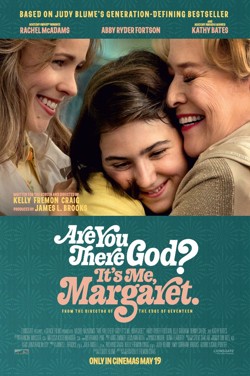
Are You There God? It’s Me, Margaret – Review

Release Date – 19th May 2023, Cert – PG, Run-time – 1 hour 46 minutes, Director – Kelly Fremon Craig

After moving from the city to the suburbs 11-year-old Margaret (Abby Ryder Fortson) tries to work out who she really is, whilst trying her best to grow up as fast as possible in the wake of adolescence.

“It gets tiring trying so hard all the time, doesn’t it?” Barbara (Rachel McAdams) partially asks herself as she cuddle up to her daughter after a particularly stressful set of events. “Yeah” 11-year-old Margaret (Abby Ryder Fortson) sighs, exhausted from trying to grow up as fast as possible. While all her friends seem to have already had their first period and the exercises she tries to go up a bra size (“I must, I must, I must increase my bust!” she chants) don’t work she’s also trying to work out just who she is. Since moving from New York City to the New Jersey suburbs everything has changed, particularly as she’s on the verge of adolescence.

Director Kelly Fremon Craig’s capturing of the American suburbs gets across the everyday nature of the story at hand. By keeping the events in 1970 (the year Judy Blume’s novel of the same name, on which the film is based, was published) a timelessness – referenced in much of the advertising – is established to the events and feelings brought up throughout. Much of this extends a hand to the audience, old and young (particularly those of Margaret’s age), and brings them in to the various tales which are being told over the course of the year the film covers.


The humour of some of the ideas presented, such as the ways in which Margaret and her friends seem to be in a rush to grow up or the awkwardness of learning about the changing body via a presentation at school, is effectively contrasted with the dramas on display. From the different reactions to first periods to rumours about the girl at school (Isol Young) who started to go through everything much earlier than everyone else. Meanwhile, Barbara worries about making her house look as perfect as possible, the living room goes without any chairs or a sofa for months as she tries to find the right one, while she begins to miss the art which she focused on teaching classes before moving. Yet, perhaps the most emotional point for her is the relationship she has with her parents – who she hasn’t spoken to since they disapproved of her marrying a Jewish man (Benny Safdie). It’s a strand which, helped by the natural subtleties of McAdams’ wonderfully understated performance, sticks the landing every time it’s brought up.

McAdams relationship with Fortson is a frequently touching one, particularly when it comes to the quiet mum-daughter bonding scenes, especially towards the end of the film. There’s a believable bond between the pair which contrasts with the louder, still caring, relationship Margaret has with her grandmother (Kathy Bates) who adores her granddaughter, showing her off when they go to Temple – not knowing that Margaret is trying to work out whether she’s Jewish or Christian. There’s a tenderness to such relationships, especially mum and daughter, marking a clear difference to those which are present at school and elsewhere in Margaret’s life. It’s all part of the nature of growing up which Craig’s film so effectively captures with tones of humour and, most importantly, understanding.

While acknowledging humour and a sense of awkwardness Are You There God? It’s Me, Margaret is a clearly tender and thoughtful depiction of the everyday trials of growing up from the female perspective. Helped by great performances from Fortson and McAdams it welcomes you in for a rather unique piece of work.

Rating: 4 out of 5.

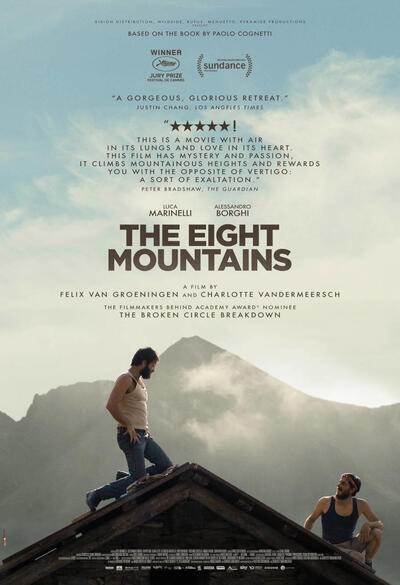
The Eight Mountains – Review

Release Date – 12th May 2023, Cert – 12, Run-time – 2 hours 27 minutes, Directors – Felix van Groeningen, Charlotte Vandermeersch

Over multiple decades growing up separately in the city and countryside childhood friends Pietro (Luca Marinelli) and Bruno (Alessandro Borghi) keep returning to the peace of the Italian alps.

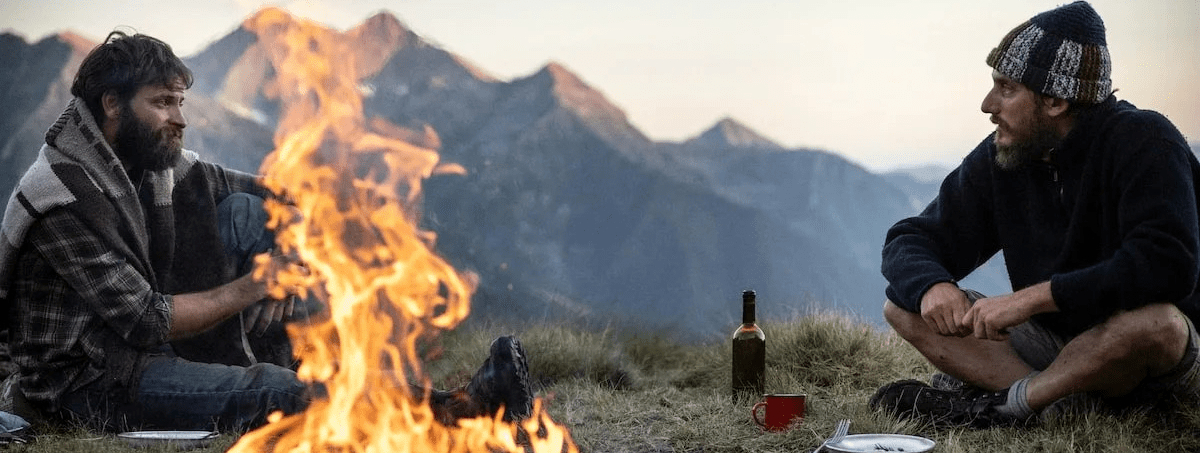
There’s a sense of peace and calm in the silences of The Eight Mountains. The quiet isn’t used to emphasise something which has come beforehand or to make a point, it’s simply used as what it is. Silence. Nothing needs to be said between the two central friends at the heart of the film. They’re happy enough in each other’s company and, assisted by the surroundings of the Italian alps. This isn’t to say that the moments of silence don’t add to anything, at times they feel like moments of deeper reflection within the narrator’s mind.

An adult Pietro (Luca Marinelli) guides us through the events of the film from childhood summers in the countryside where he first meets farmworker Bruno (Allessandro Borghi) to continued meetings in adulthood in the same location (Lupo Barbiero and Cristiano Sassella on childhood duties for the pair respectively). The box-like aspect ratio brings to mind the feeling of old polaroids being looked at, each one continuing the story. The frequent use of Daniel Norgren tracks acting as the one nostalgic record from the holiday cottage taking him further back to those days. Days which span decades of a closely-bonded friendship.


The pair develop distant relationships with the father figures in their lives – eventually leading to a key emotional sequence of discovery in the later stages of the piece. Yet, there’s a close male bond between them creating for a gentle friendship throughout. They may change themselves as they grow up (in a believable, natural way) yet despite time jumps we know they’re the same people thanks to their relationship. After having not seen each other for years they plan to rebuild a house together on the mountains. “This is our summer house, where we’ll see each other every year” Pietro says, almost demanding a promise from his friend. In a similar vein you genuinely believe him when he assures over the phone “I’ll be on my way as fast as I can”.

At two-and-a-half hours you never question the film’s run-time or where it’s going. The pacing, like the central relationship, is relaxed and guides you along with ease as you’re given time to drink in both the stunning surroundings (the natural environment is truly amazing to look at) and the places we see the core pair go in their own lives – largely led by Pietro’s perspective – in the brief gaps between when they next see each other and return to the mountain just up from where Bruno lives and works. Both characters have their wants for where they want life to take them, although occasionally question the course and themselves, adding to the natural progression of life that the film charts.

You stay with it because of just how much you buy into the care and love that Pietro and Bruno have for each other. Brought about through the performances and the scripting of their various meetings over the years there’s a lot to be caught by as the events play out amongst the well-captured scenery and landscapes. The silence in the safety and security of the alps is pure silence marking a true place of escape, yet one where there is confrontation of past relationships with other men in the character’s lives. There are a handful of different male relationships on display, yet the core focus is that of a calm, gentle friendship guiding the film and making for rather moments of genuine profundity throughout.

The central performances mix with the gentleness of The Eight Mountains to make for an engaging depiction of male friendship amongst the effective dramas of the central pairs lives. Like looking back on old photograph memories with stunning scenery it’s a truly compelling piece of work.

Rating: 4 out of 5.