Insidious: The Red Door – Review

Cert – 15, Run-time – 1 hour 47 minutes, Director – Patrick Wilson

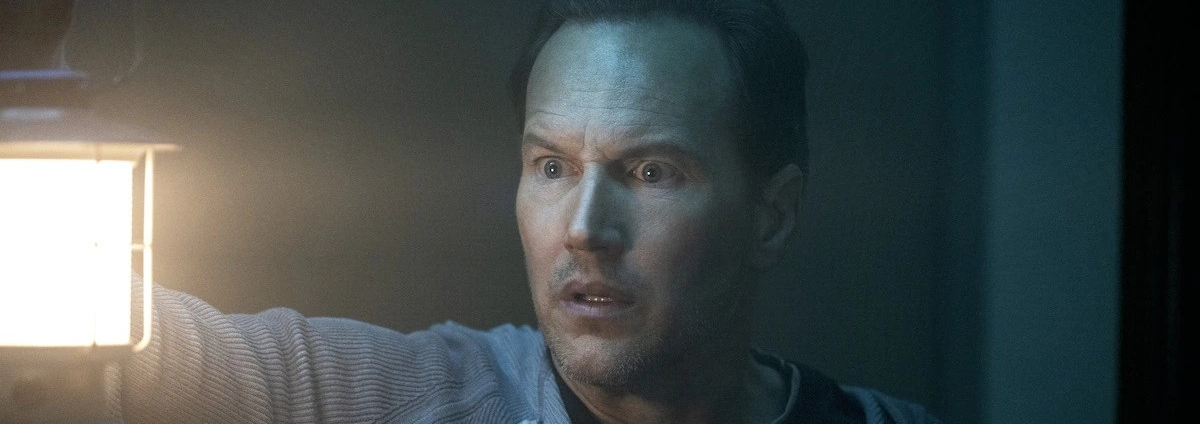
After moving to college Dalton Lambert (Ty Simpkins) finds himself being haunted by the demons of The Further while his distant father (Patrick Wilson) tries to find an explanation as to why his mind has clouded up over recent years.

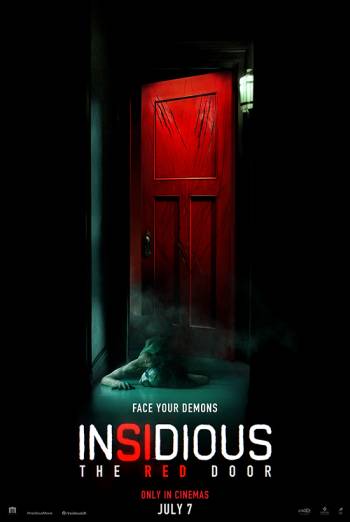
The Insidious franchise has been a fluctuating horror over the last 13 years. For the most part it’s had its moments of amusement and a couple of thrills, and certainly appears to have found a supportive fanbase. It’s this fanbase which the fifth instalment, The Red Door, plays towards as the distanced Lambert family returns to once again be haunted by the demons of The Further. However, much of the goings on are unfamiliar to disconnected father and son Josh (Patrick Wilson) and Dalton (Ty Simpkins) who were hypnotised to forget about the hauntings of nine years ago.

Emotionally and geographically distanced, with Dalton having gone off to college to study art, the pair are unprepared for the various horrors which lurk in the darkness around them. While there’s a lot of narrative build-up largely focusing on the younger of the pair as he settles into college, trying to decipher what his strange, almost demonic, artistic creations are saying about him, it must be said that the early ghostly encounters do provide some solid jump-scares. Yes, one or two may have a bit too lengthy a build-up, but it doesn’t stop them from causing you to leave your seat for a brief moment.

For much of the film we focus on Dalton, perhaps where the more interesting elements of the somewhat bland narrative are. It’s certainly a film more about his discoveries and treading in his father’s footsteps more than anything else. As things progress, and Josh becomes more a part of the piece with his own discoveries about his forgotten past, there’s a feeling that The Red Door is trying to be some form of Doctor Sleep within the Insidious universe – although without reaching those heights. It’s when the pair begin to be put in focus together that things pick up more, and there’s indeed more directness to the way in which things progress.

What’s come beforehand has wavered with some effective jump-scares amongst the bland plotting, however things manage to gradually gain your interest – although perhaps not your involvement – as the developments pan out. In a number of ways an encapsulation of the franchise up until this point. This may also be the case simply as someone who isn’t exactly a fan of the franchise. There’s certainly a lot here for more invested viewers in this universe to get a kick out of, with plenty of throwbacks and references it almost seems as if this is more for the fans than anyone else who may be coming to this fifth instalment as a more casual viewer, or maybe even new.

While starting out with an uninvolving narrative there are some good jump-scares within Insidious: The Red Door to help things move along. Certainly more for the fans with plenty of details and references to the rest of the franchise, for more casual viewers it’s a decent enough, if uncertain horror.

Rating: 3 out of 5.

Ruby Gillman, Teenage Kraken – Review

Cert – PG, Run-time – 1 hour 31 minutes, Directors – Kirk DeMicco, Faryn Pearl

Teenage kraken Ruby Gillman (Lana Condor) learns that she’s descended from underwater royalty, risking her stable life on land to stop the war between mermaids and kraken.

There’s a bubbling energy as Ruby Gillman (Lana Condor) delivers a colourful presentation on why she should be allowed to go to prom. Despite having missed out on all major school events, all her friends going, the safety of the boat and the attractive captain her mother, Agatha (Toni Collette), still says no. The Gillman family are krakens living amongst humanity – when asked about their blue skin they simply explain they’re from Canada – and every family rule prevents them from going back into the ocean. Ruby discovers what her mother has been hiding from her for 15 years after diving in to save her crush Connor (Jaboukie Young-White) after a prom proposal gone wrong – she’s not just a teenage kraken, she’s a giant teenage kraken.

Towering above the rest of the underwater ocean life Ruby begins to discover, thanks to her queen of the krakens grandmother (Jane Fonda), the powers she has. Powers which she’s set on using to help end the war between humans and mermaids – after making friends with new-at-school mermaid Chelsea (Annie Murphy). Much of this is kept secret from the protagonist’s mother, who warns her daughter about her ‘grandmamah’ (as the character insists on being referred to, and is credited, as) without ever really explaining why. In fact the relationship between the two older generations is lightly dealt with and doesn’t feel entirely developed, only really mentioned for the narrative sake when required. Therefore when Ruby converses with her grandmother it feels slightly odd to see them talk with little hesitation or reference to Agatha.


The nature of the narrative is very much a case of ‘in and out’. The story is told quickly and concisely, coming in at 91 minutes, including credits, and generally seems to fit that space rather well. Any more and it may feel somewhat overlong. Partly this is down to the stripped back nature of things, and a slight sense of familiarity. The energy which Ruby is first introduced with, bringing about thoughts of The Mitchells Vs. The Machines’ Katie Mitchell, doesn’t quite linger, and while she herself remains a likable character she somewhat shifts with the film as the nature becomes much more direct.

A couple of laughs crop up here and there and as a whole there’s a decent piece of, albeit likely forgettable, work here. The story is told quickly, with a selection of cartoonish, comic-strip style characters to provide their own pieces of amusement along the way. There may not be anything entirely new here, but for what there is Ruby Gillman manages to keep her head above water making for a likable piece of work which may not quite sail as far as it may hope but certainly floats with enough stability to make for likable viewing.

There’s not entirely anything new within Ruby Gillman, Teenage Kraken, however a likable main character helps to guide us through the concise narrative elements for the short duration of the film.

Rating: 3 out of 5.

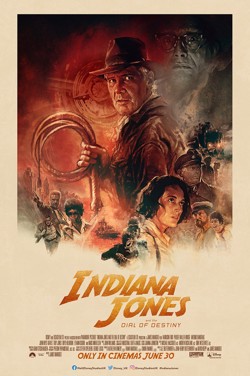
Indiana Jones And The Dial Of Destiny – Review

Cert – 12, Run-time – 2 hours 34 minutes, Director – James Mangold

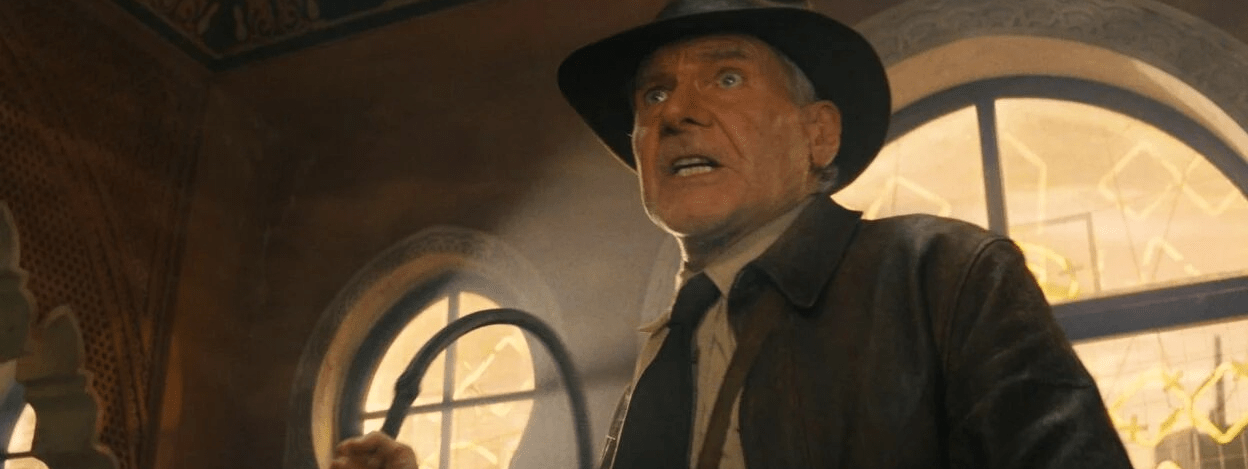
On the verge of retirement Indiana Jones (Harrison Ford) is dragged by his goddaughter (Phoebe Waller-Bridge) into one last adventure, and a race against time to stop Nazis from changing history.

Watching Indiana Jones And The Dial Of Destiny you realise just how much adventure was in the previous films. The set-pieces had action wound into the adventure, made from the elements in the shot and expanding out from there. Allowing for the world to grow and be further explored. Much of this appears to be down to the push of Steven Spielberg, who steps down for directing duties for this final adventure for Harrison Ford’s titular explorer with James Mangold in place.

Mangold directs well but appears to put action at the core of the film with a number of extended sequences constructing the 2 hour and 34 minute run-time of the piece. They’re paired with moments of lengthy explanation and back and forths about history and archaeology to give further context to the developments in the chase for the dial of destiny. A treasure which retiring Professor Henry Jones has encountered in the past, with it chasing back after him in the form of Mads Mikkelson’s Dr Jürgen Voller, hoping to combine both halves of the dial to reverse time and help the Nazis win the war. Thus a race to find and combine both halves begins, with plenty of meetings between the pair along the way.


While Voller has his henchmen (Boyd Holbrook, Olivier Richters) by his side to do all the punching and shooting – causing him to feel less of a threat himself, and this is Mads Mikkelson – Jones has goddaughter Helena Shaw (Phoebe Waller-Bridge). Occasionally, particularly after first meeting her, Helena feels like a character written for someone in their mid-20s. However, after Waller-Bridge certainly puts in a good performance and manages to make the character her own with her own spin of humour, removing the initial feelings created by the dialogue as the film goes on – managing to bring a good handful of chuckles to the proceedings with her sarcastic nature.

Raiders Of The Lost Ark was initially made after a string of big-budget features from Spielberg, and the chaos of 1941. The director decided that he needed a more controlled and restricted budget and decided to make an ode to the B-movie adventure flick and thus the Indiana Jones franchise began. There’s something of that spirit within each of the subsequent films – even Kingdom Of The Crystal Skull, which I’m a defender of. There’s always been elements of the strange and absurd within the occasional fantastical leanings. Here – with an almost $300 million budget! – this is a full on, big-budget main feature blockbuster. The action further pushes this idea, managing to amuse and engage but never quite capturing the spirit of adventure which should be a part of this. Set-pieces are more about what’s going on in them rather than what can be done in them.

The film as a whole is fine and has enjoyable moments within the various sequences which hold your attention for a good del of their duration. A fitting final shot allows Ford to bow out particularly well, and while this might not be the strongest entry in the franchise it’s still overall good. You just wish that it would have a bit more of a sense of adventure. Delving in to what it has rather than drawing out what there is.

There’s some good action within Indiana Jones And The Dial Of Destiny, however it leads you to wish that it would delve a bit more into the adventure and explore its set-pieces just a little bit more.

Rating: 3 out of 5.

Elemental – Review

Release Date – 7th July 2023, Cert – PG, Run-time – 1 hour 49 minutes, Director – Peter Sohn

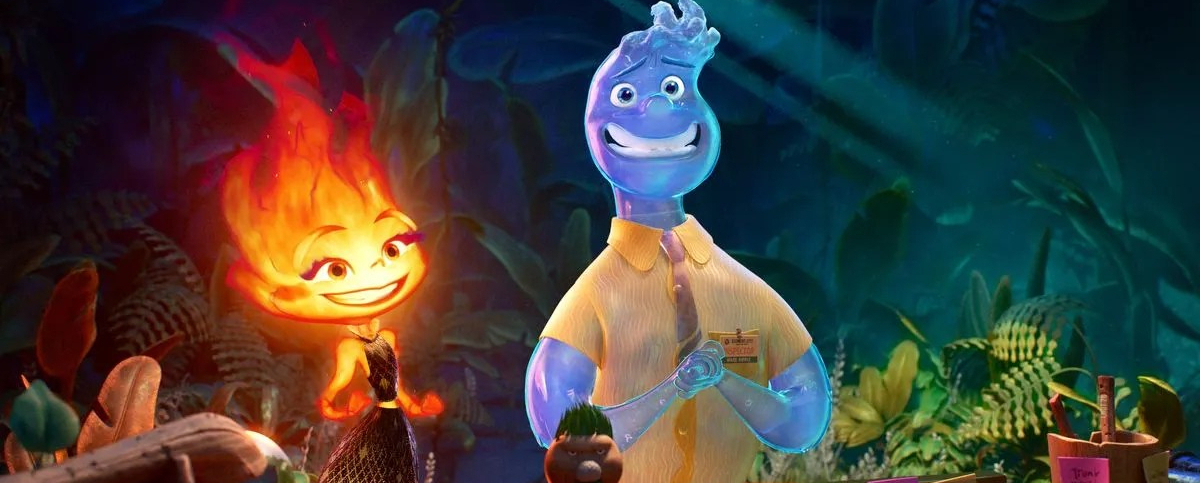
When a neighbourhood of fire elements is at risk of flooding Ember (Leah Lewis) teams up with water figure Wade (Mamoudou Athie) to seal the leak. However, as they get closer the world (especially her parents) insists that elements don’t mix.

It’s strange to think that the studio which brought us Inside Out could ever be on the nose with the themes that it’s presenting. Even the more middlingly regarded Finding Dory wasn’t so upfront with what some saw as themes celebrating disabilities and autism, using them as strengths. Yet, with its repeated point of “elements don’t mix” Elemental, when truly pushing such themes, feels rather obvious.

The belief is one pushed upon central figure Ember (Leah Lewis) as her fiery parents (Ronnie Del Carmen, Shila Ommi) prepare her for taking over the family shop which they set up when first arriving from their homeland, leading to the creation of a fire-based neighbourhood away from the rest of Element City where fire seems to boil or burn everyone else around. However, as the area is put at risk of flooding Ember teams up with highly-emotional water element Wade (Mamoudo Athie) to find the source of the leak, and hopefully save her parents’ business from being shut down after multiple violations are discovered. Leading to various ventures across the landscapes of Element City – a place, also inhabited by grass-patch earth and cloud-like air, with plenty of amusing details and designs to allow for a number of good gags.


Like with Luca, it’s nice to see a film of this nature without a proper antagonist, perhaps even more so than the former. Without this the film still finds plenty to deal with, once properly set on its narrative arc, however at times it feels as if just one too many points are being juggled at once. Alongside the core narrative, the relationship between Wade and Ember and the idea that ‘elements don’t mix’ writers John Hoberg, Kat Likkel and Brenda Hsueh try to deal with Ember’s constantly enflamed temper – trying to find out who she really is and what she wants to do in life – the different opportunities and treatment of different elements and more. Yes, such themes may be dealt with lightly but still, when arising sometimes it feels like there’s a bit too much happening at once.

Through the more on the nose points and the various other themes that pop up here and there throughout the film the biggest thing that helps keep it going is the humour. There are a number of chuckles to be had which help to push the lighter tone which Elemental holds. There’s a likable venture to be found here with enough interest to be gained to keep you in place for the duration of the run-time. There are a number of enjoyable moments during Elemental, and the entertainment factor is certainly there. However, you can’t help but feel that it needs a bit more substance in some of its details to avoid being so on the nose and as if its juggling multiple separate points.

Elemental feels strangely on the nose for a Pixar film, sometimes feeling as if it’s juggling one too many points at once. However, there’s plenty of amusement and detail to make for a worthwhile venture into the engaging and well-designed landscape of Element City.

Rating: 3 out of 5.

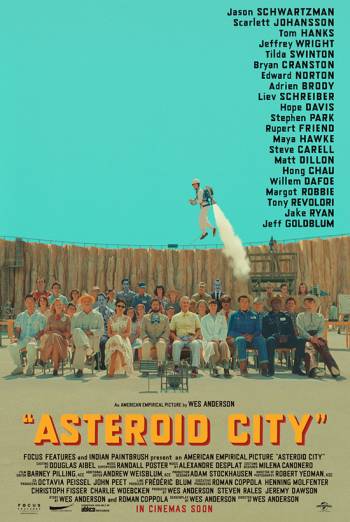
Asteroid City – Review

Cert – 12, Run-time – 1 hour 45 minutes, Director – Wes Anderson

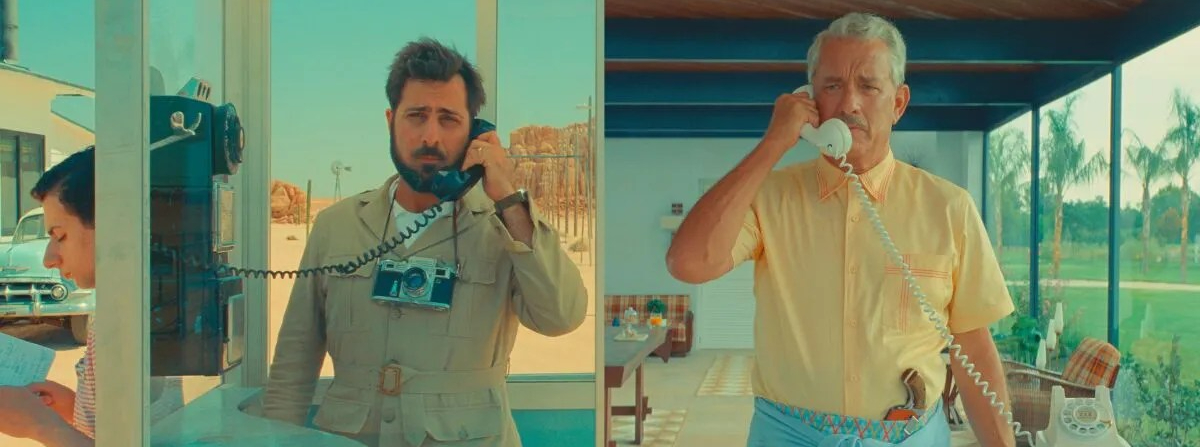
The story of a play about a group of strangers quarantined in a small desert town after an alien encounter.

There’s been plenty of internet discussion around Wes Anderson in the last few months from TikTok trends to AI created trailers for ‘Star Wars if it were directed by Wes Anderson’. Some claim this has diminished the writer-director’s work showing that anyone can make one of his films. Yet, as Anderson opens up the first layer story of his latest film he demonstrates just why this isn’t the case, not just with him but for cinema and the creative arts as a whole. Television host Bryan Cranston details that we’re about to see a televised production of Conrad Earp’s (Edward Norton) stageplay Asteroid City, with details on the creation of the production scattered throughout. The ode to the creative process is passionate and caring and continues to show Anderson’s love of stories and storytelling.

His empathy shows, with particular emotional disconnect, to allow for feelings to be improperly shown. The characters within the play especially are unsure of how to express their true feelings, leading to a confused state of emotions, as if being experienced for the first time. Yet, with how much is going on within the film – a grieving father (Jason Schwartzman) telling his children they’re mother has passed away and them coping with the loss, an actress (Scarlett Johansson) wishing for more comedic roles yet constantly playing tragic alcoholic drug addicts, teenagers trying to work out their place in the universe – the emotional disconnect hinders a number of the themes. You can’t help but feel that there would be more effect during such moments of drama if there was more emotional expression and connection from and to the characters.


Even in regards to the central idea of a group of strangers trapped in a small quarantined desert town after a brief alien encounter. The surrounding environment is plainly laid out with some truly excellent production design, creating room for the camera and cinema audience while also reminding of the story-within-a-story nature and the fact that this is meant to be a play. The town, and indeed its temporary inhabitants, joined for the stargazer and space cadet camp, provide plenty of amusement against the backdrop of the circumstances. Plenty of traditional dead-pan Anderson chuckles are dotted throughout, alongside one or two slightly absurdist elements to provide some surprise.

However, while the core arc is engaging and provides good amusement perhaps the best moments lie in the black and white depiction of the play’s creation and performances. Somewhat breaking the barrier showing different angles of figures trying to find meaning within their life and work. It’s an interesting enhancement which works and helps to push the themes with a more engaging angle – particularly in the third act as the film develops and rebuilds some elements from the second act; more focused on the uncertainties of character emotions and reactions. Building back up it stops the viewer from disengaging and provides enough impact in each moment to make the themes and previous thoughts of those on-screen worthwhile.

When asked what his play is about Conrad Earp responds “it’s about infinity, and I don’t know what else”. Indeed Anderson’s film deals with a small group of characters struggling with the idea of infinity, how that places them now compared to how they were placed beforehand in perhaps already struggling lives. Some of this largely comes to the fore, or at least is only realised as at the fore, in the closing stages of the film – perhaps making for an interesting rewatch – yet it certainly leaves a good deal to reflect on in terms of the characters in Asteroid City itself and the effects a very brief alien encounter have on them. Not all may resonate due to Anderson’s emotional disconnect, but there’s still enough to create an interesting film which leaves plenty to think about, dwell on and grow on you, perhaps.

While the personal emotional strands of Asteroid City could do with more open expression from the characters there’s a good deal of interest within the themes brought to the fore in the third act and how they reflect on the humorous, finely-designed film beforehand.

Rating: 4 out of 5.

No Hard Feelings – Review

Cert – 15, Run-time – 1 hour 43 minutes, Director – Gene Stupnitsky

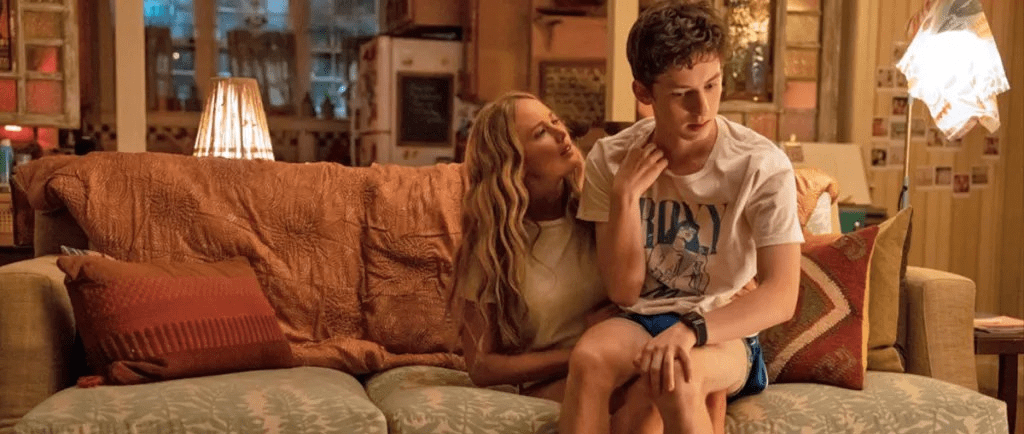
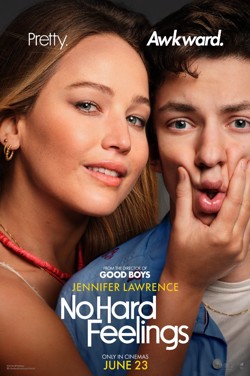
Desperate to not lose her summer Uber income 32-year-old Maddie (Jennifer Lawrence) takes a job to ‘date’ a 19-year-old (Andrew Barth Feldman) and bring him out of his shell before college in order to get a new car.

No Hard Feelings has been billed by some as bringing back the raunchy R-rated summer studio sex comedy. However, what it doesn’t seem to recognise is the fact that this subgenre seemed to fade away largely because such films often felt quite repetitive. That’s somewhat the case here with an added layer of discomfort as 32-year-old Maddie (Jennifer Lawrence) attempts to ‘seduce’ 19-year-old Percy (Andrew Barth Feldman) in order to bring him out of his shell before college.

For Maddie it’s all about getting a car offered by Percy’s parents (Laura Benanti and Matthew Broderick) in exchange for her ‘dating’ their son – she’s desperate to get the summer Uber money from tourists visiting the seaside town where she lives however her own call has been towed due to being behind on rent payments. For Percy he genuinely thinks someone is interested in him. You can’t help but feel sorry for him at times as Lawrence’s character simply seems so annoyed that he won’t have sex with her and keeps rejecting her advances – starting off by unwillingly taking him to her house within half an hour of first meeting.


As the pair get to know each other over the ensuing days Maddie’s attitude may somewhat change but there’s still a slightly uncomfortable nature to a number of her actions. Later developments from around the halfway point when the film realises it needs to rectify this behaviour never quite feel as if they justify what has come beforehand leading to a somewhat lacklustre feel, even more so when paired with little-seen strands such as barely touched suggestions of Maddie’s struggles to commit in previous relationships. Eventually much of the film feels as if it’s trying to rectify and redeem itself from the tone and nature of the first half instead of properly moving things along.

In a number of ways it feels like the central character herself. While clearly putting on a different personality around Percy in order to achieve her goal of making him a man as quick as possible there are a handful of other points where Lawrence appears to be playing a different personality and not in the way the character or film intends. It leads to some odd points where her character’s intentions and mindset don’t quite seem to match what’s come before, or at least aren’t entirely clear – especially standing aside from her general development over the course of the narrative.

While still remembering to bring in some laughs very few of the gags within No Hard Feelings actually take off. Despite how clearly the film has gone for the R rating from the off the best gags are the much simpler ones leaning away from the raunchy nature. The brief lines of dialogue which are inserted into a moment and then moved on from. However, there’s few of these in the largely unamusing 103-minute run-time. The film is so intent on being a big, brash sex comedy that it suddenly realises that it might need to redeem its main character and in a rush to do so begins to lose itself in crossed developments while still continuing with the same, lacking, style of humour.

There’s a tangled nature to No Hard Feelings as it clambers to redeem its central character, and uncomfortable nature, through multiple barely touched details while still continuing its brash sex comedy humour, only really gaining laughs with much simpler gags.

Rating: 2 out of 5.

Mark Cosgrove ‘Cinema Rediscovered’ 2023 Interview

Founder of Cinema Rediscovered film festival Mark Cosgrove joins me to discuss this year’s edition of the festival, being held across Bristol from 26th-30th July. Throughout the interview we talk about capturing modern attitudes in a repertory festival, the role independent cinemas play in delivering films and, of course, the events which makes up this year’s festival.

To find out more about this year’s Cinema Rediscovered, and buy passes and tickets, you can do so via the Watershed website. If you would like more from Mark you can find him on Twitter.

To listen to Mark’s song requests you can hear them by following the links below:
Everybody’s Talkin’ – Harry Nilsson
Suicide Is Painless – Johnny Mandel
Time Is Tight – Booker T. And The M.G.’s

Greatest Days – Review

Cert – 12, Run-time – 1 hour 52 minutes, Director – Coky Giedroyc

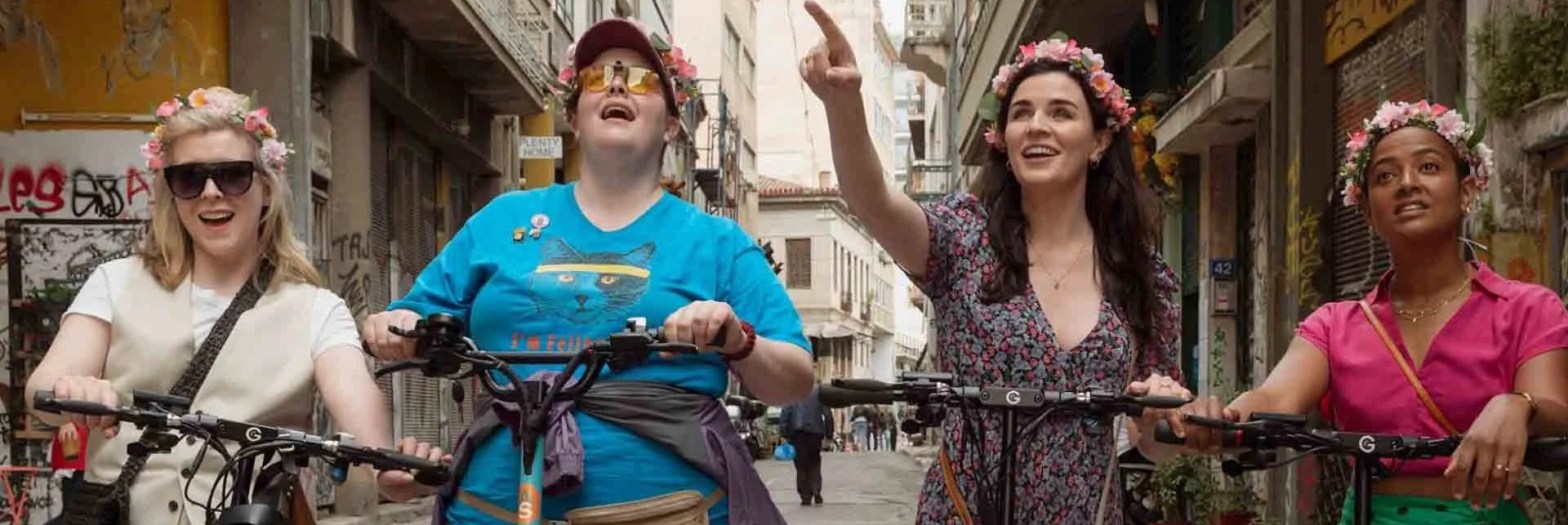
Four friends (Aisling Bea, Jayde Adams, Amaka Okafor, Alice Lowe) reunite after 25 years apart to attend a concert of their favourite boy group from their teenage years, however rifts of their pasts are still present

Both Mamma Mia films so far undoubtedly get a good deal of their energy from the crowbarring of ABBA songs into the plot. There’s a slight joy in seeing just what the next song will be, and how it’s going to be worked in to the moment, with the entire cast clearly having a ball. The songs may only have slight relevance to the moment, but more often than not we run with it. As a jukebox musical of Take That songs the same cannot be said for Greatest Days where perhaps one word of certain songs feels lazily crammed in to certain scenes. There may be more but the lack of energy with which some musical numbers are delivered with simply leads to a lack of interest.

As our four central characters (Aisling Bea, Jayde Adams, Amaka Okafor, Alice Lowe) reunite after 25 years ready to fly in glamorous style the boarding area is filled with dancers. The group are about to jet off to see their favourite boy group from their teenage years in Athens after Rachel (Bea) has won an extremely unrealistic prize for a (presumably) community radio station to be giving away. Champagne flows in their minds as the pilot in a sparkly hat and jacket, making him look like the Megabus man dunked in sequins, sings about how their time is coming “don’t be late (hey hey)”. That’s right, for them the whole world is going to shine. Unless it’s in this musical number set against the backdrop of an easyJet plane. The whole sequence is so lacking and tacky that it could genuinely be an advert for the company.


Songs are forced in with little relevance with each one becoming more and more tiring. There’s certainly a narrative here but not one that truly grips you. When we get close to properly engaging – one particular moment towards the closing stages involving Rachel looking back on her childhood comes to mind – the film starts back up with a song, even if just one line, to knock what it’s built up back down again. While some of the renditions are fine others feel strange and almost otherworldly. As Greatest Day itself is drawn out it seems that most of the Greek residents performing it line by line can’t quite sing – some of the few figures seemingly not assisted by autotune – although themselves seem to question in the moment the relevance of some of the lines aside from the actual point of it possibly being the greatest day of the character’s lives. In general songs simply feel used to lengthen scenes and base ideas before moving on to the next point.

When drama finally properly comes in after exploring the teenage connection with ‘The Boys’ in various flashbacks it all feels a bit late. Arguments seem to come from nowhere – aside from some early hesitation and estrangement before the partying begins – just at the point where all care for what’s happening seems to have disappeared. Things don’t quite become frustrating – although I did raise an eyebrow at a handful of details throughout, such as the group taking selfies by a fountain with the phone screen off, or simply sighing when the point of certain songs is revealed – they just never quite feel carved out, or joyful, enough to truly engage and bring you in to the story which is attempting to slowly unfold.

Writer Tim Finch, creator of stage musical The Band on which the film is inspired by, appears to want to focus on the core narrative of the quartet of distant friends reuniting. However, the film appears to want to focus on the music of Take That without ever quite getting the right tone. Neither celebrating it or getting caught up in it – the people who seem to love it the most are the sixteen-year-old versions of the central figures, so in love with the group that they want to have their “sweat baby”. In the end it feels as if hopes and intentions are tangled up and the final piece isn’t quite sure what it wants to be, or who it’s meant to be for.

The more Greatest Days goes on the more it loses its shine. Tangled focuses on narrative or music create a clash with the flood of songs never quite seeming to fit the moment, and the film needing more patience before jumping into the next underwhelming number.

Rating: 2 out of 5.

The Flash – Review

Cert – 12, Run-time – 2 hours 25 minutes, Director – Andy Muschietti

In an attempt to change his past Barry Allen (Ezra Miller) finds himself crashing into an alternate universe with no superhumans, trying to save the world of multiple timelines.

The journey to the big screen for The Flash has been a long one. Through various iterations of development hell the flashpoint story has been rumoured to have been worked on to lead to resets into various iterations of new DC universes. And indeed one of the big selling points for the film has been just who pops up in the different timeline which Ezra Miller’s Barry Allen crashes into. DC universes and characters of the past collide in a film which, if its production/s and build-up were anything to go by, could so easily have been a mess.

Luckily, there’s a solid enough piece of work present. Yes, it may be too long – you start to feel the run-time at about the half-way point with various scenes or moments which could be shortened or skipped past – but at least your attention is generally held for the most part as Barry tries to save not just the alternate world he finds himself stuck in but multiple others as a timeline without superhumans finds itself under attack from General Zod (Michael Shannon), searching for Earth’s hidden Kryptonian – Sasha Calle’s Supergirl.


His parents may both be alive in this universe, the film opens with patches of exposition explaining Barry’s mother (Maribel Verdú) was killed when he was a child with his father (Ron Livingston) wrongfully accused of the murder. However, the family reunion is short-lived when an alternate un-powered 2013-Barry (also Miller) turns up. One thing leads to another and soon both are teaming up with Bruce Wayne (Michael Keaton) to save the world. There are various criss-crossing moments within the drawn-out narrative, largely simply to explain the next steps and where things are going to go from x-point, but for the most part it’s easy enough to follow, and not think about it too much. Certain patches may feel like they’ve come from an origin film of years gone by, but there’s still enough to like and be amused by within what’s present to help things pass by.

Perhaps not the attempts at humour which frequently never quite land, although manage to avoid a groan or eye-roll, but in general the more relaxed nature in which the film seems to go about itself. There’s an air of seriousness about it but not an intense one to drown out any colour or thrills. The action may be dampened by heavy amounts of dodgy CG making certain events look like they’ve been taken out of a mid-2000s video game cutscene – especially during the lengthy third act – but as the film goes on it generally manages to improve from the early stages where tonal confusion runs rampant. As the titular hero runs up a collapsing hospital saving falling babies the music suggests everything is very serious, but the visuals – including one of the newborns being put inside a microwave to protect it – lean towards a more comedic intention.

There are plenty of bumps throughout The Flash’s lengthy run-time yet it’s held down by its lighter nature. Occasionally this might bring about some of the rougher patches, but Andy Muschietti’s direction manages to keep you engaged in the winding events through the lack of grit and seriousness which the film is told through. There’s uneven terrain, but generally the film runs across it with enough pace to get through it fine.

The run-time may not provide a short run and there are a handful of visual and stylistic bumps along the way, but The Flash’s lighter and generally engaging nature brings you in after taking some time to dust away initial uncertainties

Rating: 3 out of 5.

Chevalier – Review

Cert – 12, Run-time – 1 hour 48 minutes, Director – Stephen Williams

Set on leading the Paris Opera Chevalier Joseph Bologne (Kelvin Harrison Jr.) finds himself in a contest to put together the best opera, however as talk of revolution rises in France his race and background are further discriminated against by his high-society peers.

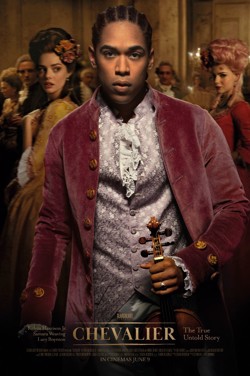
Perhaps it’s down to my ignorance (I used to play percussion and would quite like to know how to play the banjo, and maybe the steel pan drums) but I never knew the violin could be so exciting. Yet, there’s a captivating nature to the musical duel between Chevalier Joseph Bologne (Kelvin Harrison Jr.) and the man he shows up in the middle of a concert, a praised foreigner called Wolfgang Amadeus Mozart (Joseph Prowen). Unknown to Mozart the Chevalier is a highly praised figure in Paris, known for his musical compositions, fencing skills and friendship with Queen Marie Antoinette (Lucy Boynton); and he’s certainly aware of his own talents. So much so that he’s determined to take over as leader of the Paris Opera.

However, it’s a highly sought after title, leading to a contest, suggested by Antoinette, to see who can produce the best opera, whoever succeeds claims the role. Yet, making the best opera possible isn’t the only thing that stands in the Chevalier’s way. As talk of revolution rises in the streets of France he finds that his race and background, not just as an illegitimate child, are frequently being brought up by his high-society peers. Despite his title has he ever truly been viewed as an equal in this society?


The core creation of the opera – which includes the Bologne’s affair with his lead actress Marie-Josephine (Samara Weaving), married to the famously ruthless Marquis de Montalembert (Marton Csokas) who forbids her from performing – makes for an admittedly conventional arc, however it’s surprising just how much you don’t notice it thanks to your engagement with the film. Perhaps it’s down to the attention to detail in the visual nature of the piece – the costume design is certainly one of the most striking elements of this period drama.

Elements such as the revolution or the protagonist’s mother (Ronke Adekoluejo) – now free from her son’s slaveowner father – residing in his home, offering occasional words of wisdom guiding her son to realise who he truly is are occasionally brought into the mix but only for a brief burst every now and then. While not quite disturbing the flow these points do create an occasional bump of cliché when brought back without bringing much more detail with them.

It’s in the final half an hour where such points are truly brought to the fore. This also happens to be when the convention is much more noticeable. There’s still a good film here, helped by the tone of the drama and the solid performances throughout – particularly Harrison Jr, Weaving and Boynton – it’s just more noticeably familiar with the elements that it switches to. During one sequence it almost feels as if you’re watching a different film due to a strong tonal change, almost exclusively for this one scene. It may be understandable in the moment but it still feels odd. Yet, there’s still an engaging piece of work to be found, although more so in the first hour where the core of the work and narrative appears to be held. Helped by the fact the film deals with what it claims is a little-known story without seeming to boast about it or treat everything with a sense of shaded mystery.

While it may tip into cliché there’s an engaging nature to the core of Chevalier’s narrative which, alongside Kelvin Harrison Jr’s lightly charming central performance, brings you in to the visually detailed world for most of the run-time.

Rating: 4 out of 5.