It’s been another interesting year at the cinema with the tables turning at the box office and another set of coincidental trends and similarities between films. 2023 was the year where superhero films seemed to generally underperform (the main exception being Guardians Of The Galaxy Vol. 3) while lengthy adult dramas such as Oppenheimer and Killers Of The Flower Moon (of course boasting the names Nolan and Scorsese) saw critical and commercial success.
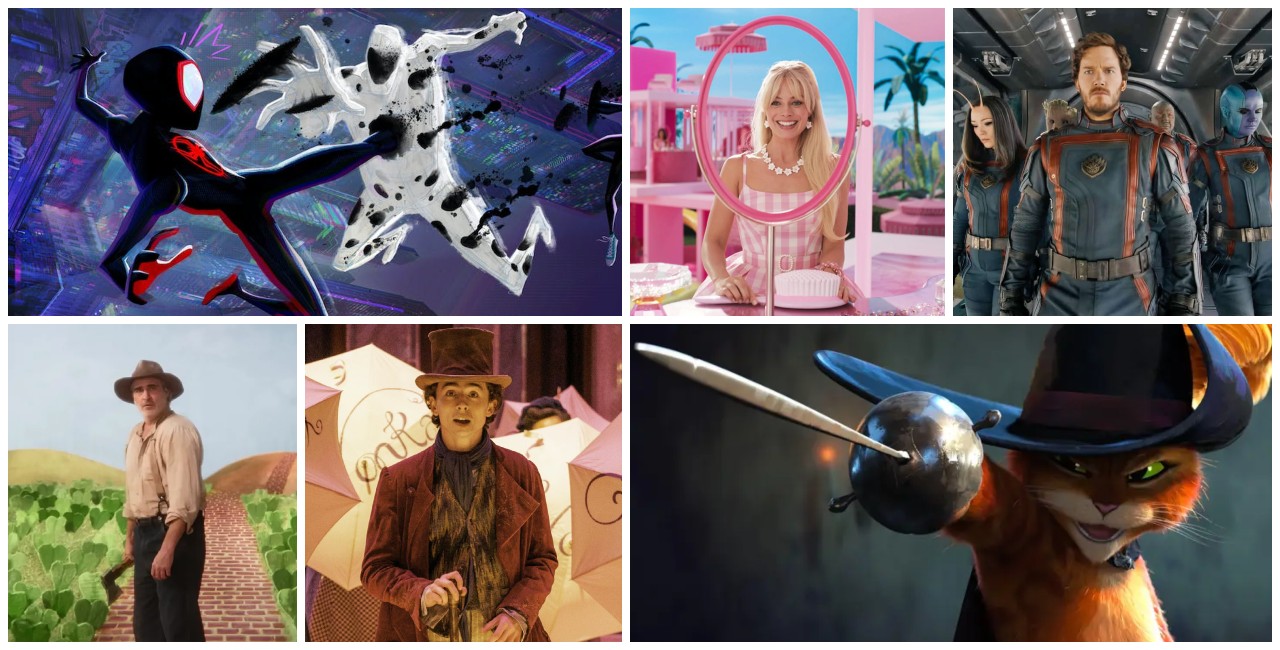
Animated films took a leaf out of the Spider-Verse book – which itself saw a sequel early in the year – and provided us with unique, energetic visuals adding to the personality of their films. Titles such as Teenage Mutant Ninja Turtles: Mutant Mayhem, Nimona, Suzume and Puss: In Boots The Last Wish (just to name a few) all benefitted from a change from what some have branded the ‘standard’ look of 3D CG animation – and even Pixar and Disney mixed things up a bit with the looks of Elemental and Wish. Equal amounts of energy were packed into big concert film successes, as David Bowie and Talking Heads saw re-releases, Taylor Swift and Beyoncé packed the cinemas with their respective recorded performances, alongside pushing their unique distribution methods.
Yet, perhaps the biggest trend of the year has been that of ‘based-on-a-true-story’ business tales. The stories of the rise and fall of iconic brands and items. Tetris, Air Jordan’s, BlackBerry, Beanie Babies, Flamin’ Hot Cheetos; all receiving the feature-length treatment. However, what this year really seems to have shown is a want for original storytelling. While some may point to The Creator’s $104 million box office (on a budget of $80 million), there was still much discussion around it as an original piece of sci-fi filmmaking. There are plenty of original stories which have dominated conversation throughout the year (Barbie, albeit inspired by existing IP, was the biggest film of the year!), British films of all genres, from Rye Lane to How To Have Sex, in particular have truly had an effect on audiences.
Looking back on my top ten list for this year, and the films that just didn’t make it, 2023 has actually been a good year for a variety of genres. When looking back at the year and what stood out there was actually quite a bit more than I initially thought/ expected. However, I had to whittle it down to some form of ranking of the ten best, one which proves a rarity in that I’m actually generally happy with how it stands. And so, without anymore waffling build-up from me, here are my personal top ten best films of 2023:
10. Taylor Swift: The Eras Tour
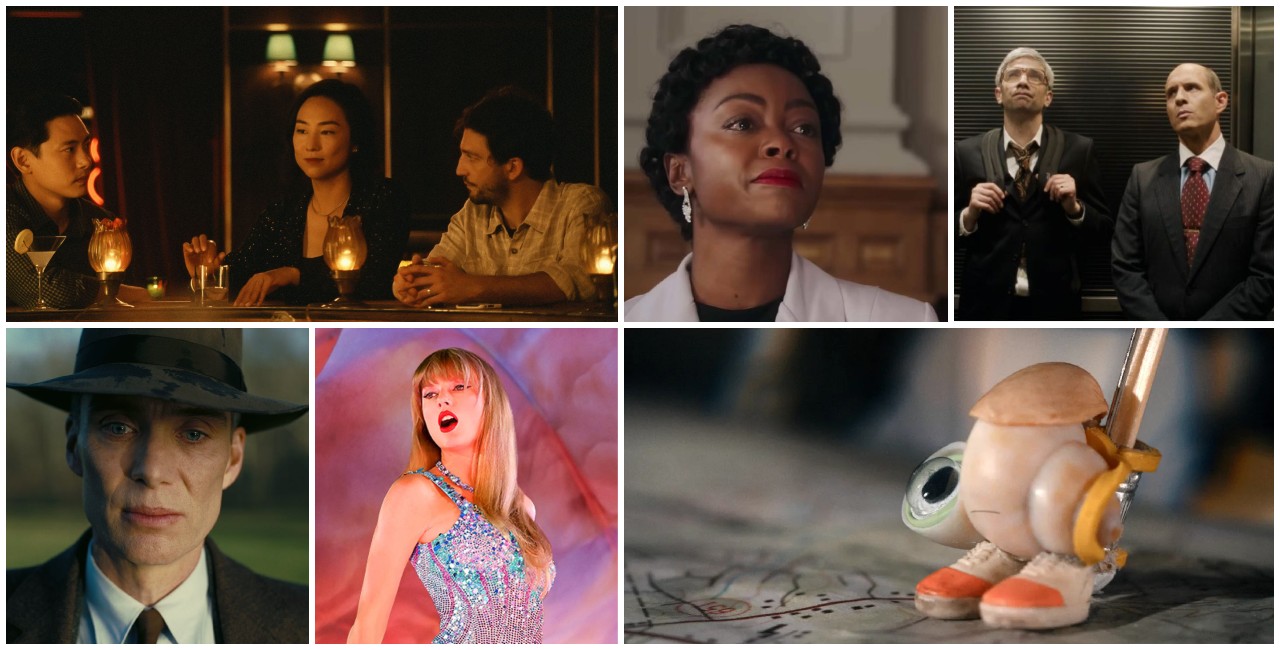
Perhaps the most unexpected film in my top ten this year, I may have only recognised about about six songs, all of which were released ten years ago, but I can’t deny that this was one of the best things I watched in a cinema all year. Taylor Swift’s Eras Tour concert film is excellently shot and directed by Sam Wrench. When blended with the editing of the almost three-hour gig the big screen is used to full effect. You’re not so much a part of the crowd, but on the stage itself watching up-close. The Eras Tour makes a point of being a film instead of a recorded concert.
As the songs blasted through the speakers and colour filled the screen, the sets and dance numbers helping to create a further cinematic feel, there’s just something about the pure energy on display that I couldn’t help but be caught up in. And, to state the obvious, Swift’s talent is undeniable as she invites the audience to be as much a part of the celebration as those spread-out on the stage. With how engaged you become even the moments of Swift simply standing at a microphone and singing with a guitar – “I hope you’ve got a spare ten minutes” she says with a smile before going into All Too Well – have a big effect.
There’s so much attention to detail in the technical aspects, both those within the stadium and those that go into the filmmaking process, which means that everything combines to crate something of an extra layer of escapism to some of these songs. The sets, alongside Swift’s introductions and explanations, emphasising the worlds in which each one takes place. Even on the small screen there’s some effect to be found in the details, and again the editing which truly lands an impact and puts you right into the moment. I might not know many of the songs, even now, but I do know that this is one of the best films to have filled the big screen with colour all year.
9. Polite Society
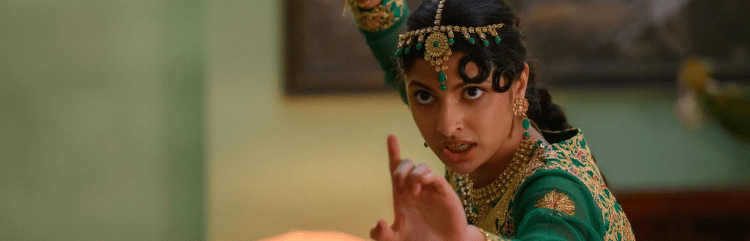
Polite Society overflows with chemistry both in front of and behind the camera. Showcasing an array of great British talent Nida Manzoor’s feature debut provides an entertaining mix of genre influences. A style further captured in the punchy fight sequences which helps to heighten the sharpness brought about by the screenplay.
When you throw in a hilarious gym heist which marks a tonal opposite to the high-tension of The Killer’s and one of the best performances of the year from Nimra Bucha’s suspenseful villain the Polite Society cocktail is a fine blend. Yet, where it best succeeds is in the depictions of friendship and sisterhood at the heart of the film’s themes. Whether it be between sisters Ria (Priya Kansara) or Lena (Ritu Arya), or Ria and her best friends Clara (Seraphina Beh) and Alba (Ella Bruccoleri) – making for an excellent, inviting friendship of three people who aren’t the ‘weird kids’ but are a distance from the other crowds at school. The bonds and relationships throughout are tight and bring plenty of humour to contrast with the threat and darkness presented by Bucha.
There’s plenty of colour and spark to the action sequences which themselves have a flair to work hand-in-hand with the fantasies sometimes emerging from Ria’s mind and contrast with the lightness of other areas of the film. Manzoor’s feature debut has plenty of confidence both in front of an behind the camera, making for an energetic and punchy film with plenty of entertainment value throughout. Bringing a good deal of personality and creativity to familiar British tones and elements, hopefully leading it to become a notable British title in the future.
8. Past Lives
Greta Lee and Teo Yoo bring to life the tender emotion – both differently stunning on big and small screen – within Celine Song’s Past Lives. A film of natural fantasies, reuniting conversations providing the feeling of wanting to dance down the street, leading to disappointment as ghosts from past lives echo years on. “He was this kid in my head, then this image on a laptop, now he’s a physical person” Lee’s Korean-born Nora explains to her American husband, Arthur (John Magaro), both experiencing varying confusions with the re-appearance of Nora’s childhood friend Yae Sung (Yoo).
Delving into feelings of identity Past Lives allows the subtle character details to be relished in each frame. Certain shots may linger to create a greater effect, yet there were so many points where I wished I could pause the film simply to gaze at the imagery for even longer. Drinking in what’s happening both visually and thematically at multiple moments in time as two personal tales of quasi-regrets and reluctance play out simultaneously.
The emotions and behaviours, both visual and hidden, throughout feel consistently natural and believable. Subtle in how they’re given away and displayed to the audience, always with an empathetic understanding from Song who lets her characters’ courses develop without the feeling of narrative interference or convenience. A set of refined depictions and details allow for a truly moving piece of work that brings you in, moves quickly and leaves plenty to stay with long after.
7. BlackBerry
As mentioned, 2023 was a year that brought us a good deal of films about the rise (and occasional fall) of a number of iconic brands. For me, BlackBerry was the best of the lot, partly thanks to its self-awareness in telling a story about “that phone that people had before they had an iPhone”. While the self-awareness helps bring humour to the proceedings there’s also a good deal of tension brought to the drama, particularly in regards to Glenn Howerton’s supporting performance as profit-focused, swirling force of anger Jim Balsille.
Howerton’s turn is an Oscar-worthy performance, stealing the show and propelling those around him, including lead Jay Baruchel and co-writer (alongside Matthew Miller) and director Matt Johnson – who play BlackBerry co-founders Mike Lazaridis and Doug Fregin – to further heights. The screenplay provides plenty for them, and the audience, to sink their teeth into as things develop with a hint of nostalgia for board room meetings that barely anyone was a part of – but, remember the launch of the iPhone?
Johnson helps capture the chaos of the rapid rise, and shaky fall, of the company with documentary-like camerawork, giving the feeling that the audience are getting a true look behind the curtain here. Seeing what the central characters don’t want you to see behind the calm veneer generally seen by their potential customers. All held within tight, well-balanced script everything comes together to create a really engaging drama led by the characters and their decisions. Telling the story through their responses to what’s happening to their business and how, and whether, they can keep up with the pressure.
6. Theater Camp
Not just the funniest film of the year, but the funniest mockumentary since Borat, Theater Camp is full of self-aware flamboyance and it’s all the better for it. A just over 90-minute celebration of theatre kids and how they can “turn cardboard into gold”, and finding a place where you fit in and belong (just four hours from New York). There’s a knowing nature to the loud personalities and campiness which is on display throughout allowing for the mockumentary nature to fit right into the proceedings, and bringing about a number of big laughs due to the clashes in personalities.
Where the film perhaps best succeeds, however, is in not slipping into irony. This comes down to both the screenplay and direction. Good direction is often hard to notice in a comedy, particularly in one of this kind, but it’s clear that the direction of Theater Camp is excellent. Filled with passion from the creatives for the subject matter, and theatre in general. It comes through most of all in a key musical number towards the end of the film – Camp Isn’t Home is a great track – showing the heart of both that specific moment and the film as a whole.
Theater Camp wasn’t in cinemas long here in the UK, and it took a while to get any form of streaming release, but it knows who its audience is and seems to target and capture them rather well. Frequently hilarious with plenty of laugh out loud moments (and one particular unexpected joke which made me laugh more than I have for a long, long time) Theater Camp is just an excellent slice of passionately made joy and welcoming.
5. Till
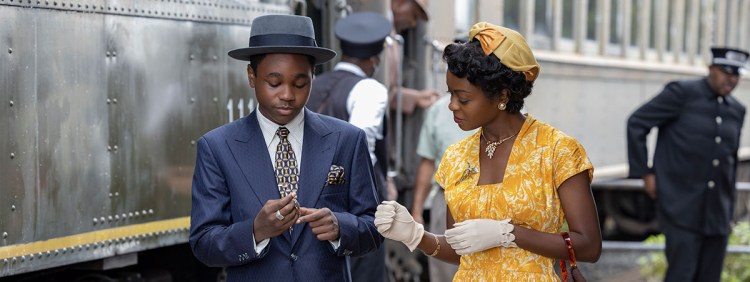
From the funniest film of the year to one of the most devastating, Danielle Deadwyler deserved all the plaudits for her powerful, heartbreaking central performance in Chinonye Chukwu’s Till. The pain and emotions felt by both Mamie Till in the wake of the murder of her 14-year-old son Emmett (Jalyn Hill), who we’re reminded in the build-up to his off-screen death; a drawn-out sequence of emotional tension, that he is still a child, are used to propel Mamie and those around her in her search for justice. Converting into power and large strides towards the end of the film, still with its emotion and anger to further fuel things.
Till never feels bogged down or stuck in the tragedy which it centrally deals with, instead its a launching pad for the activism which is just as central. Increasing the power on display, and indeed your responses to the punches which are delivered. This is a film that causes chills to run down your spine with its pained speeches and leaves you floored by the time the credits begin to roll.
So much is caught in Deadwyler’s performance, I could just write about that but that would perhaps undermine the rest of the film around her, which is itself excellent. Chukwu manages to keep the feelings and tragedy stirring as they propel the events and actions of the narrative, of the strive for justice and stride through adversity. There’s powerful, striking storytelling here acting as fuel which works hand-in-hand with the cast and the way in which things move along. The film doesn’t need to keep you in place, it uses your empathy and emotional understanding to make you feel as if you’re present in each moment, as things pan out. Feeling a greater impact as a greater connection with the piece and its events make them all the more devastating.
4. Broker
Broker focuses on a group of strangers who for much of the run-time remain strangers to each other, and to some extent the audience as well. Yet, there’s an intriguing nature to their bond and the way they become a knowingly dysfunctional family unit. There’s a fairly light drama playing out made up of personal emotions and attempts to understand against a central uncertain aim of trying to sell a newborn child, with the police on the group’s tail.
The road trip nature throughout allows for the characters to open up just that little bit every now and then, allowing for them to feel more comfortable with each other and therefore lead to something of a knock-on effect. The performances from the central group match the tone, and the believable unit as a whole, and overall make for an engaging and likable set of strangers who form a successful hook into the narrative. A narrative which knows that at some point it needs to bring in some bigger developments and does so just before it draws out the initial connecting of the initial quartet.
Consistently acknowledging along the way in some of these developments and personal details that we don’t entirely know these people – and they don’t entirely know each other. Cinematography Hong Kyung-pyo works with director Hirokazu Kore-eda to bring about a number of shots which get across the personal feelings of individuals compared to the large world which surrounds them. This acts as the real key to Broker, the company the characters find themselves in, how they view it and how such feelings change over time. Bringing a sense of thoughtfulness to the well-handled ensemble drama.
3. Marcel The Shell With Shoes On
The most wholesome film of the year, and perhaps for quite a few years, to quote my notes from first viewing this “I love that shell with shoes on”. “Guess why I smile a lot” says tiny shell Marcel (Jenny Slate), “Why?” asks Dean Fleischer Camp’s AirBnB guest and director behind the camera “Because it’s worth it”. To an extent this perfectly sums up Marcel The Shell With Shoes On. A film which finds comfort and joys within simplicity and curiosity as it follows titular Marcel in a search for his family.
There’s less a plot playing out and more a set of developments, yet they keep you in place thanks to fully buying in to the mockumentary styles which blend live-action with animation seamlessly. The attention to detail, no matter how small, makes for an even more engaging and effective piece of work, Marcel and his grandmother (Isabella Rossellini) may as well be real with how much I’ve bought into them each viewing. Partly due to the small details being relished in not just being those in the film, but those in life in general. There’s a sense of warmth in these moments, an utterly entrancing sense of gentleness which the film glides along for 90 minutes.
Yet, there’s so much else going on. Alongside the attention to detail there’s a calm stirring of emotions throughout as Marcel and Dean talk openly about their lives, pasts and hopes. One of the small characters of the year perhaps displays the biggest heart, sweeping you up to believe he’s real. There’s so much to love about the tone and style of the piece, and indeed the places that it goes and what it achieves with its small budget. This is a testament to creativity and kindness, backed by an equally calming score by Disasterpiece. I love that shell with shoes on.
2. Rye Lane
There’s a strong feeling of the 90s indie scene within Rye Lane. If you took the outline of Before Sunrise and fused it with the natural dialogue of Clerks the result might look something like this. Yet, the spark and energy which runs throughout this spectacular rom-com, flashbacks and moments of fantasy which break their way into the real world to allow the characters to connect that bit more easily – and simply bring a surge of personality to the film as a whole.
This is a stylish feature overflowing with personality and style. Raine Allen-Miller brings things to life with a burst of colour and energy which never stops for one second. Going from one funny situation to another the laughs flow consistently over the short run-time which knows exactly how to contain its story without feeling as if it skims on the details. As central characters Dom (David Jonsson) and Yaz (Vivian Oparah) cheer their names telling a fictional story at karaoke you later find yourself wanting to do the same thing when they find themselves in a somewhat similar situation – a truly great scene.
Rye Lane just bursts from the screen from the moment it begins. Enjoyable loud and bold with those 90s indie influences clear throughout it still manages to be its own product and is all the better for it. I genuinely hope that this will be remembered and will become a future British classic, because it thoroughly deserves to be considered as one, as soon as possible. I’ve seen this a handful of times now since it was released early in the year and each time it’s been even more enjoyable, even more entertaining and simply manages to hook me in with its unashamed way of telling its stories and characters’ feelings. It was very almost my number one of the year, and it’ll likely be one that I revisit the most from 2023.
1. Oppenheimer
I genuinely believe that this is Christopher Nolan’s best film to date. Yes, there’s plenty of spectacle, and tension, in the Trinity test sequence, and the build-up to it. There’s tension throughout, even thought we know how things turn out. But, there’s also spectacle in the simply idea of people in rooms talking, discussing things over. Largely thanks to the dramatic tension which is built-up by Nolan and his cast – all of whom are giving great performances, particularly the much-discussed Cillian Murphy and Robert Downey Jr (both giving two of the best performances of the year).
Oppenheimer is a film concerned with asking ‘how do you cope with having become death, destroyer of worlds?’ With the way that it focuses on Oppenheimer (Murphy) testifying in order to keep his security clearances after his past links to communism are brought back up. Meanwhile, we see US Atomic Energy commissioner Lewis Strauss (Downey Jr) going through a senate hearing dominated by discussion of Oppenheimer in the hopes of becoming Secretary of Commerce. The editing between the two lines is sometimes montage-like, capturing the pacey feel which Nolan and editor Jennifer Lame conjure up.
You feel the worry and regret of the titular scientist all the way through, instantly changing and fitting into whichever time we find ourselves in – again, effectively captured and understood thanks to the editing. Everything blends together to create a well-paced and tracked story tackling big themes with great effect and understanding. Knowing that what’s being tackled within this not-quite-biopic are grand in scale, as much so as the atom bomb project, but with a great screenplay capture them with detail to match the visuals brought about by each of the technical departments – the production design in particular is great and needs more discussion around it. All contributing to this tense, scary and consistently engaging portrait of a man plagued by regrets. A film about fear and consequences, and I’ve certainly felt both of this each time I’ve watched it. It’s masterful filmmaking, and, as I say, Nolan’s best film to date, and my personal best film of 2023.













 Just A Little Bit Random