Wish – Review

Cert – U, Run-time – 1 hour 35 minutes, Directors – Chris Buck, Fawn Veerasunthorn

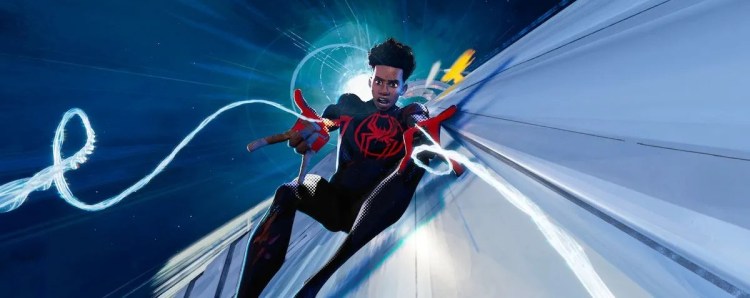
After failing to become the sorcerer king’s (Chris Pine) apprentice, Asha (Ariana DeBose) wishes upon a star which travels from the sky and puts the king’s wish-stealing under threat.

When announced as part of the 2022 D23 Expo Wish was simply described as an encapsulation of 100 years of Disney. How did the star that gets wished upon become that very star? The story takes us to the town of Rosas, where on their 18th birthday residents give their hearts desire to the sorcerer king, Magnifico (Chris Pine), in the hope that it will one day be granted at a monthly wish-granting ceremony. However, when trying to become his apprentice Asha (Ariana DeBose) discovers that the king is very picky with which wishes he grants, even wanting to inspire people through music could lead to inspiration to create chaos and riot.

After failing to get the position Asha bursts into song – This Wish is the successful big song of the film, with a big mid-2010s pop song style – and wishes upon a star in the sky. The effect of her wish is that the star, a chubby, tinkling ball-like figure, falls down to the ground and puts Magnifco’s magic, and keeping of wishes, under threat. A plan hatches to reveal the truth about what’s happening to the wishes of Rosas, however the king’s magical power begins to grow darker as he feels increasingly uncertain about what’s happening around him.


The plot overall is relatively thin and simple, contained within a thankful 95-minute run-time. You can feel the markings of a classic Disney film within the narrative and lightness, helping to move things through. The opening shot is a storybook opening up to kick off this fairy tale, with occasional references to past films and characters here and there – although on some occasions just whether something is meant to be a reference or not is questioned. Many of these moments come just before, or in, musical numbers. The songs throughout work rather well and are enjoyable while they unfold, helping to bulk up certain moments and move things along to the next moment.

Much like the songs the film as a whole is a likable piece of work. It moves along with generally little trouble and while not quite pushing any boundaries, or itself, it makes for something watchable and easy enough while it’s on. Plus, finds itself helped by not being a 100-years-of-Disney fest from start to finish, actually telling a(n if light) story without outstaying its welcome. The traditional leanings both help and slightly hinder the film, but for something simplistic it works well enough, and come the end of the credits there’s a nice little effect as the studio shows the positive impact of simplicity.

While the story might be generally light Wish makes for a likable 95-minute run-time focusing on narrative over Disney throwbacks. The songs help move things along and there’s an overall likable nature to the traditional influences of Disney’s centenary celebration.

Rating: 3 out of 5.

Napoleon – Review

Cert – 15, Run-time – 2 hours 38 minutes, Director – Ridley Scott

Napoleon Bonaparte (Joaquin Phoenix) rises through the French military on his way to becoming emperor with half his mind on Europe and the other on his wife Josephine (Vanessa Kirby).

It takes longer to settle into Joaquin Phoenix’s performance as Napoleon Bonaparte than it does Ridley Scott’s film about the French emperor. He gives little away about the thoughts and feelings of the figure who would go on to battle against most of Europe with a very dead-pan performance. His delivery as he acts out Napoleon’s early years, and initial interactions with wife Josephine (Vanessa Kirby) borders on the theatrical. As he rises through the ranks of the French military, his name spreading throughout France, the emotion begins to break through with a less exclusively dead-pan performance which doesn’t entirely fit in with the rest of the film around it.

Much of Ridley Scott’s latest historical drama focuses on the relationship between Napoleon and Josephine. One which often presents uncertain feelings as despite how much the pair claim to love each other there constantly seems to be a distance between them, a lack of connection to the half-faux coldness in their relationship. Even when on the battlefield in grand scale action sequences – truly pushing the strong visuals which the film boasts – his mind calls back to his wife, writing frequent letters; even if they barely get a response. With this being the focus it means that many events, particularly in relation to the titular emperor’s ascension to that very position in the first half of the film, feel like they’re somewhat skimmed through in order to better keep attention on the central relationship.


There’s a traditional quality to much of the drama at hand, most felt during more conversational and interrogation-like scenes. Scott appears to be making something in the vein of epics of years gone by, and the action sequences certainly try to capture the scope – with added bloodshed and violence. Visually the film is truly striking. The cinematography further brings to life the costume design and effects, especially during louder moments of cannon fire where Napoleon’s plans begin to come together. It’s these sequences; particularly when throwing us directly into the moment, or showing the action from an above wide-shot, which truly make the most of the big screen and have the most effect within the film.

Yet, when combined with the core drama things mix together to create a lengthy piece of work. At over two-and-a-half hours you feel the run-time as the third act draws on with core focus on battles over anything else. The cinematic angle still manages to come through, but the dramatic push isn’t as present as we see Phoenix’s character largely out on his own with his mind focusing on the enemy in front of him, bigging himself up with thoughts of how many battles he’s already won and how good his tactic are. It’s something which the film boasts, and demonstrates during some sequences with the help of the big screen. On most occasions we still come back to the relationship at hand, one which it takes some time to click with, as is the case with Phoenix’s performance, but with its traditional nature and cinematic push manages to keep interest in the guarded titular emperor.

It takes some time to settle into Phoenix’s performance of Napoleon, and his relationship with Kirby’s Josephine, but while overlong the traditional historical drama and grand scale action scenes create and hold interest when managing to work together.

Rating: 3 out of 5.

LFF 2023: The End We Start From – Review

Release Date – 19th January 2024, Cert – 15, Run-time – 1 hour 42 minutes, Director – Mahalia Belo

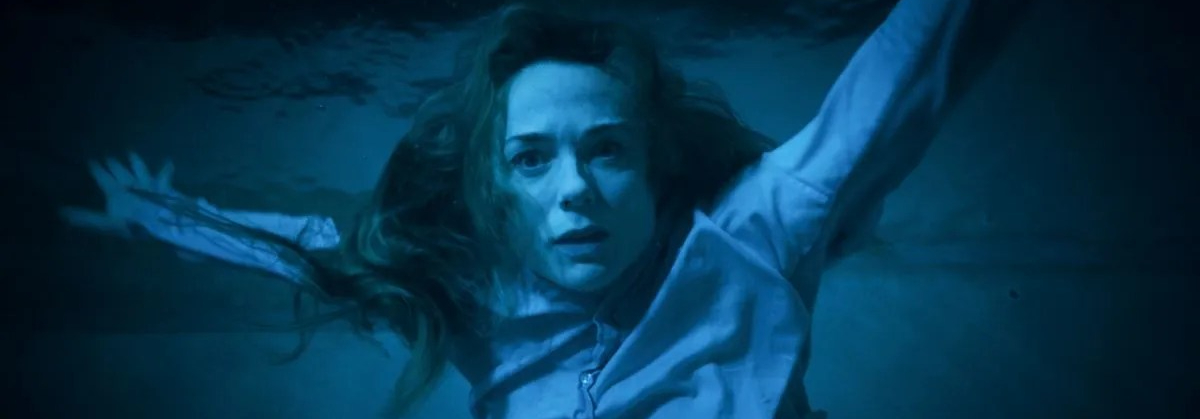
When London is hit by a catastrophic flood a young mother (Jodie Comer) experiences the chaos of a country struggling to survive whilst she waits to return home.

The End We Start From is an environmental crisis film which focuses more on the human impact that the environmental crisis at hand. Jodie Comer is forced to flee both her home and city with her newborn child when London is hit by a catastrophic flood. Whilst trying to find shelter and safety in different locations she encounters both kindness and harshness in the reactions to the events which have hit the country. The different reactions of those who have access to dry land and food, and those who have been most affected by the events leads to frantic attacks and escapes equal to those of leaving London in the first place.

As Comer’s character, simply credited as Mother, tries to survive whilst waiting to return to her home, and hopefully reunite with her partner (Joel Fry), she finds herself frantically going to various different locations each with different attitudes to her situation, and that faced by the country. As we go from place to place the actual disaster which started all of this off fades into the background and almost seems to be forgotten. The reason for this chaos; the reason for emergency shelters and refuge being set up, the threat at hand, is somewhat left behind as the film goes from moment to moment as part of the narrative.


Particularly when cutting between times and locations as part of sequences the effect that was in place fades over time lessening the dramatic impact and scale of what is happening. Things eventually border on repetition as we go from one place to another, with panic and disorder largely being the points which spur the need to run away and go somewhere else. It means that the points to engage with also dwindle as things go on, occasionally treading familiar disaster-movie or post-apocalyptic tropes – especially during a campfire scene with Benedict Cumberbatch, who also acts as executive producer, as does Comer.

The cliché arises as the threat diminishes and in the end there’s not as much to connect or engage with as Comer’s character awaits news of when she can get back home with her baby. You watch as new groups in different locations pop up with their own ways of life, hope or signs of safety and reassurance before it all breaks down whether due to riots – at one point I questioned what happened to the military which literally surrounded the location a few minutes before – or turns in character. The familiarity does little to help the film and in the end it trudges through these puddles towards its ending with the environmental disaster still somewhere in the background. The threat being focused on may be human, but the natural one which sparks it all lies in the background with little thought or effect, diminishing the overall push of the film.

The End We Start From focuses on the human chaos in the wake of an environmental disaster, however the spark and initial threat is quickly moved on for to make way for a familiar set of events which never manage to properly engage or connect you with the characters or events.

Rating: 2 out of 5.

LFF 2023: The Zone Of Interest – Review

Release Date – 2nd February 2024, Cert – 12, Run-time – 1 hour 45 minutes, Director – Jonathan Glazer

A Nazi commandant (Christian Friedel) and his wife (Sandra Hüller) try to live their most idyllic life, living next door to Auschwitz.

I’m willing to admit that I’m very likely not the best voice to listen to when it comes to The Zone Of Interest. I’m also in a minority when it comes to the film, largely because I don’t think I entirely understood it. In part because of how difficult it is to connect with the events that are being depicted, you certainly can’t connect with the characters. They’re Nazis unaware of the evil that they’re a part of, made even more concerning when we see the guard towers and gas chambers of Auschwitz peaking over the stone walls of the central family’s garden.

There’s undeniably a haunting nature to seeing the buildings, and hearing the screams and sounds echoing from the distance, looming in the background. We never see the atrocities, but we know they’re there, with constant reminders from the film. Yet, this is a slice-of-life drama following commandant Rudolf Höss (Christian Friedel) and his family, living out their peaceful life. He attends meetings and fills out paperwork, his wife, Hedwig (Sandra Hüller) and children attend to and play in the garden. The scenery is bright with the sun frequently shining down – this is the season for family trips to the lake.


Husband and wife, in-between arguing about whether they move away or not or reading Hansel And Gretel to their kids before they go to sleep, discuss their plans for after the war – when everything is over, we’ll farm”. It adds to the mundanity of the lives that are being lived. Throughout I could see what writer-director Jonathan Glazer was trying to do with contrasting the bland every nature of the lives of the Höss family with the unseen horrors which are unfolding in the background, however with the slice-of-life in so much focus it often dominates the overall tone and style at the fore.

There are interesting conversations and sequences here and there, such as Hedwig passionately telling Rudolf she wants to stay in Auschwitz, having built something of a dream life there and not wanting the change. However, while there are interesting points here showing the true level of ignorance to the evil and horror literally next door it was still hard to connect with the film and properly feel the full effect of the tones and themes that it wanted to get across. Again, this is very likely down to me not understanding it and missing out on something. However, while there’s interest in what happens and the angle the film is trying to take it doesn’t always have the intended effect of amplifying the darkness in the background, instead portraying a difficult-to-connect-with slice-of-life drama about Nazis.

There are interesting moments and conversations within The Zone Of Interest, however it never quite gets across the full effect of the horror and darkness lying in the background of this hard-to-connect with slice-of-life drama.

Rating: 3 out of 5.

LFF 2023: The Book Of Clarence – Review

Release Date – 19th April 2024 , Cert – 15, Run-time – 2 hours 16 minutes, Director – Jeymes Samuel

As debts begin piling up Clarence (LaKeith Stanfield) poses himself as the messiah in order to make money, however this comes with its own consequences.

When being interviewed about the controversy surrounding the then newly-released Life Of Brian on Friday Night, Saturday Morning John Cleese responded to Tim Rice’s question about ‘why Brian?’ simply stating “It’s one of the funny names, isn’t it? It’s like Trevor and Kevin, they’re just funny”. Now, joining the ranks of amusingly named not-messiahs is Clarence (LaKeith Stanfield) – the low-achieving twin brother of disciple Thomas (also Stanfield). Before premiering at this year’s London Film Festival multiple comparisons were between The Book Of Clarence and Life Of Brian, yet in this case you can actually see those similarities coming through, with plenty of extra spark and originality. While Brian was desperate not to be the messiah, Clarence is trying his best to come across as just that, and in the process is a very naughty boy.

Owing a growing amount of money Clarence devises a scheme to pose himself as the messiah, with the help of friend Elijah (RJ Cyler), in order to rake in the cash. As things start to look up for the pair, and those they rope into their con, it could be so easy for Clarence to come across as a much louder comedic character, yet he’s consistently reined in by Stanfield and writer-director Jeymes Samuel – previously working together on Samuel’s debut The Harder They Fall, where Stanfield stood out amongst a great ensemble cast.

Once again Samuel brings together an almighty ensemble cast (including David Oyelowo – very funny as John The Baptist – Alfre Woodard, Omar Sy, James McAvoy, Micheal Ward and Benedict Cumberbatch), each putting in great performances and matching his directorial flair and energy. Continuing from his debut feature there’s a clear punchy style from the director, and his scores too which also help to bring more traditional genres – in this case the biblical epic – up to date. Mix in the laughs, and there are a great many to be found here, and there’s a consistently entertaining piece of work. Even when nearing and past the two-hour mark the laughs still manage to flow in. It’s humour which feels so much a part of the characters and world that it naturally springs up yet still comes with an unexpected hit each time.

It helps to keep things going within a narrative which, while enjoyable, occasionally feels like it goes from A to C to get X for Y to get to B, before somewhat skimming around in the third act as it knows it needs to wrap things up. Yet, there’s still plenty to like about the energy and humour that the occasional narrative bumps don’t come through too often. Allowing for the dramatic tones in the later stages to be well-handled and led into for even more effect. It’s here where even more of the originality comes through with the themes and ideas that Samuel has been playing with coming more to the fore. Even the comedy beforehand plays into the impact.

It’s rare that a comedy exceeds two-hours and largely works, but by focusing on the characters – even if the story occasionally seems somewhat winding – and the way they develop and interact over the course of the narrative The Book Of Clarence successfully hits. Infused with Jeymes Samuel’s energetic and modern-feeling style the humour helps influence the later drama with both comedic and eventually narrative effect. The starry cast put in good performances with an excellent lead from Stanfield who powers through with a subtle depiction of growing confidence, and regret and fear. It brings an extra layer to this interesting and up-to-date, not to mention hilarious, biblical take filled with drive and energy. It feels destined to be looked back on very fondly in years to come.

Flashy and original there’s a lot to like about The Book Of Clarence’s punchy style and energy, all while still feeling effectively held in thanks to Stanfield’s excellent performance, backed by a great supporting cast. Helping both the comedy and eventual dramatic beats.

Rating: 4 out of 5.

LFF 2023: The Bikeriders – Review

Release Date – 21st June 2024, Cert – 15, Run-time – 1 hour 56 minutes, Director – Jeff Nichols

A photographer and reporter (Mike Faist) tracks the lives of a 60s motorcycle club as their dynamic shifts with the changing times and faces.

The Bikeriders is dominated by an aesthetic of ‘old school cool’. The style leads much of what comes across in the chapters and sequences which construct the development of a 1960s Chicago motorcycle club. All united by a love of riding bikes, and talking about riding bikes, the group – led by Tom Hardy’s Johnny – simply want to go about their business. They’re not a gang of tough guys, they’re family people. But, of course, they’re misunderstood by the rest of the city, seen as figures of unrest, particularly due to the actions of the younger generation who particularly misperceive the central bikeriding group.

A photographer and reporter Danny (Mike Faist) surveys and interviews the group the dynamic changes over the years. The shift comes through in bits and pieces, largely in the second half, within the chapters. There isn’t much of a narrative in place throughout writer-director Jeff Nichols’ latest, instead more a series of moments capturing that aforementioned vibe and aesthetic so key to the way in which the film wants to come across. So much of what we see is down to the initial external appearance. From the look of the gang, the roar of the bikes – there’s a clear attention to detail in the sound design – and on some occasions the accents.


Jodie Comer plays Kathy, the wife of key rider Benny (Austin Butler). She sums his reckless driving and attitude up with the statement “Benny thinks that when you die you’re better off than when living”. Benny is pitched as the successor to Johnny’s leadership of the group, maybe if he could get his act together, and the film seems to want to pitch Butler as a lead yet never really gives him enough to do to justify this. Meanwhile, Comer narrates much of the film with her outside view on the events and relationships of the core group, and while her performance is good it largely feels characterised by the accent.

With so much external detail happening on screen it does feel like the story is sometimes left behind. It’s hard to engage with some of the events and characters simply due to the main link being the bikes and same characters with little narrative happening alongside. The style is the personality and this would be more fine if there was more to the film as a whole. What we get is fine, and it has its moments and interesting beats, but it’s not always enough, especially in the first half before the changing face of motorcycle clubs leads to gangs and violence, to make for a more steady piece of work.

The plot beats, when arriving over halfway through, are skipped through with enough detail to have an effect while keeping the lingering embers of ‘old school cool’ in place to get across the point of “the end of the golden age of motorcycles”. In capturing the feeling of a photo collection – like the film is based on – things jump around and try to look back with largely the pictures and memories to go on. While this doesn’t quite construct a narrative to run throughout and properly tie things together it makes for something that works enough over the course of the film, even if not everything manages to grab your attention over the almost two hour run-time.

While there’s clear attention to detail in the overall aesthetic, look and feel of The Bikeriders the lack of story means it jumps through its sequences without always having something to engage with until the bigger developments of the second half.

Rating: 3 out of 5.

Thanksgiving – Review

Cert – 18, Run-time – 1 hour 46 minutes, Director – Eli Roth

A year after a Black Friday tragedy at a supermarket, a masked killer preys upon members of a town they deem responsible for the deaths caused.

There’s a self-awareness to Eli Roth’s feature length version of his trailer for Quentin Tarantino and Robert Rodriguez’s Grindhouse double feature (the pair get a special thanks mention in the credits). The clichés and familiar beats are served with a smile as the opening stages see an early Black Friday opening for a small-town supermarket turn to tragedy as the angry stampede for bargains leads to a number of deaths. The humour quickly turns to tension, with even early nervous laughter in the sequence dying down amongst the chaos.

One year later and a masked killer, dressed as a pilgrim with a mask of a historical town figure (conveniently names John Carver), is tracking down those they blame for the tragedy – particularly the owner of the supermarket (Rick Hoffman), his daughter Jessica (Nell Varlaque) and her friends. While the police, led by sheriff Eric (Patrick Dempsey), look for evidence to lead them to a potential suspect the body count rises rapidly. With each kill the gore and detail grows with some good effect – if not entirely providing scares – with some being delivered with a knowing smirk as most of the weaponry can be found on a Thanksgiving table (axes being the exception that proves the rule).


While the bloodshed has its likeable quirks the narrative of Jessica and her friends is, of course, at the fore. Overtime the awareness takes something of a backseat as the conventional tones and themes take more of a step to the fore for the sake of the story at hand. This especially being the case as they start to get picked off not-quite-one-by-one. There’s still engagement to be found within the film, although with the laughs having died out the overall narrative works and keeps you in place into the third act.

The run-time may feel a bit long as the third act unravels, with the film feeling better suited to something 85-90 minutes long rather than 106. The drawing out of certain instances largely leads to this, with one or two scenes leading to a slightly fidgety response, yet there’s enough to keep you in place from scene to scene. It may have more of an air of seriousness as things go on and move away from the darkly comic yet tense nature of the opening scenes, but there’s still enough to like in the narrative beats, and the way in which Roth captures the 18-rated kills throughout to make for a likable slice of sleepover slasher.

While the dark comedy dies down early on alongside the self-aware smirk there’s still an engaging nature to Thanksgiving thanks to the solidity of the narrative and the effect of the kills.

Rating: 3 out of 5.

The Hunger Games: The Ballad Of Songbirds And Snakes – Review

Cert – 12, Run-time – 2 hours 37 minutes, Director – Francis Lawrence

In a bid to get more people to watch the annual Hunger Games a group of students are made mentors of the tributes to bring more spectacle, Coriolanus Snow (Tom Blyth) views this as a chance to get closer to his future hopes of becoming president.

It’s been eight years since The Hunger Games: Mockingjay – Part One and the YA dystopia adaptation boom started to sputter to an end. Yet, with the publication of a prequel novel three years ago comes a new entry into the hit franchise, set just ten years after the launch of The Hunger Games ratings are low in the Capitol. Therefore a group of high achieving students are made mentors to this year’s batch of tributes from the twelve districts of Panem, given the task of driving them to fight and bring more of a spectacle to the annual broadcast. The most successful student will be given the opportunity to progress in their education for free, instead of usually being given to the person with the best grades.

With hopes of one day becoming president Coriolanus Snow (Tom Blyth) takes things one step further by trying to form a personal connection between his low-odds tribute, Lucy Gray Baird (Rachel Zegler), and the viewing public. Doing what he can to propel her for the public, and help her win in the arena. Yet, there are those in the Capitol who undermine Snow, or stand in the way of him and Lucy Gray, particularly key Hunger Games figures founder Dean Casca Highbottom (Peter Dinklage) and runner Dr Volumnia Gaul (Viola Davis).


There’s a good deal of interest in the scenes in which Snow tries to alter the course of the tournament in order to help the tribute he’s mentoring. We see occasional jumps into the arena where action is well-held and helps to further to course the main character travels across – while advertised as a lead, Zegler very much plays a supporting role here. Things may be very PG-13 – especially when it comes to lack of blood and cuts away from more potentially violent moments – but there’s an effect every now and then. Yet, where the most interest is found is in the relationship between Blyth and Zegler’s characters.

While any initial romantic connection may not be felt, the growing bond between them before and during the games themselves makes for engaging conversations and developments in the build-up to the broadcast. A broadcast hosted by Jason Schwartzman’s enjoyably egotistical, and flamboyantly named, Lucky Flickerman. The set up to everything may come with some initial hesitation due to clunky, unsubtle stereotypical-sounding YA dialogue, but once things are moving along there’s a good deal of interest to be found in the events.

Even as a narrative shift arrives in the third and final of the film’s chapters there’s still something engaging at hand, again especially with the way in which the relationship between the core two figures is handled. Yes, this might also be where the film starts to show it’s 157 minute run-time, but only in the closing stages. For the most part there’s a good flow to things thanks to the way in which the stories of Snow and Lucy Gray work together and never feel like two separate sets of events with a slight link. There’s a good deal more than the Games here and things are generally kept on track without being bogged down in a want to be darker or more intense.

While it stumbles in the opening stages The Ballad Of Songbirds And Snakes picks up and provides a more interesting set of events, pushed by the interactions between its two central figures whose stories feel successfully undistanced.

Rating: 4 out of 5.

LFF 2023: All Of Us Strangers – Review

Release Date – 26th January 2024, Cert – 15, Run-time – 1 hour 45 minutes, Director – Andrew Haigh

Struggling to write a script and potentially entering into a relationship with a neighbour (Paul Mescal), Adam (Andrew Scott) finds himself exploring what life would be like if his parents (Claire Foy, Jamie Bell) hadn’t passed away thirty years before.

The new block of flats that screenwriter Adam (Andrew Scott) lives in is almost entirely empty. The modern design somehow emphasises his isolation when he occasionally leaves his flat to wander the corridors or visit his parents. With each visit he’s greeted with warm smiles and welcoming hugs, a loving embrace from both mum (Claire Foy) and dad (Jamie Bell). In terms of real life ages Scott is older than both Foy and Bell, the seeming closeness of their characters’ ages is addressed later on when it’s revealed that Adam’s parents passed away thirty years before. He’s using their lives as inspiration for a screenplay he’s struggling to write, however the real reason may be closer to him simply confronting his long-lingering grief.

As he looks back on the past things begin to move forward with the only other person in his building, Harry (Paul Mescal). The two engage in simple back-and-forths to start with, clear interest shown between the pair towards the other, and overtime a relationship potential rears its head around the corner. Throughout the various conversations which make up the film very little is said, there’s plenty of breaks and silence capturing thought and hesitancy – “I play music, but it’s worse when it ends” Adam says about the quietness where he lives – characters say what they need to say and little else.


What’s said is frequently personal for the central character. Considered and believable conversations with his parents where he reverts back to his childhood state while still coming across as his adult self. The quietness is given time and space to settle in and have as much effect as possible, heightened by a set of great performances to boost the emotional core. Adam is trying to move ahead, but finds it difficult to do so as he continues to delve into the ‘what could have been’ of the past. While emotional at their core there’s a warmth to his interactions with his parents, and occasional humour. A scene involving him coming out to his mum is full of well-handled tonal changes as he tries to catch her up on the changes, and proved falsehoods, since the 80s.

Throughout Scott dives into the phrase “I’ve always said that writers know less about the real world than anyone else” as his potential fantasies make for a safe comfort, while the real world and his interactions with Harry, particularly a sequence in a night club, have their fair share of worry and uncertainty from Adam. Will he mess things up? Where will they go? Such thoughts are well combatted by Mescal’s more outgoing, highly flirtatious turn. One particular sequence set to Blur’s Death Of The Party particularly stands out for its effect – the soundtrack as a whole adds a good deal to the film.

Andrew Haigh brings a tenderness to the film through his direction, having also written the screenplay adapted from Taichi Yamada’s novel Strangers. Quiet, calm and thoughtful it injects feeling into the deeply personal set of events that Andrew Scott’s character goes through. The heart helps to power where the journey ends up going, and the confrontations and understandings he makes with his own grief. It invites us in and makes for a stronger connection with the characters as they interact with Adam, exploring his held-in emotions, potentially coming through in full if the events with his parents take place in his mind – the workings of that are up to the viewer. The worlds blend and work together to make for an emotionally intelligent and thoughtful drama.

Full of brilliantly performed personal conversations All Of Us Strangers emphasises thought and quietness in the emotional journey of Andrew Scott’s central figure, making for a tender portrait of stagnant grief and hesitant emotions.

Rating: 4 out of 5.

LFF 2023: The Holdovers – Review

Release Date – 19th January 2024, Cert – 15, Run-time – 2 hours 13 minutes, Director – Alexander Payne

Forced to stay at the boarding school he teaches at to look after kids with nowhere to go at Christmas, Paul Hunham (Paul Giamatti) finds himself forming an understanding with a particularly troublesome student (Dominic Sessa).

“Adversity builds character, Mr Tully” Paul Giamatti’s Paul Hunham tells one of his smartest, yet most troublesome, students after the wider class fails a key exam he’s set just before the Christmas break. It’s a break that he and Dominic Sessa’s Angus Tully will be spending together when the ancient civilisations (he makes sure people know that he doesn’t teach history) teacher is placed on duty for looking after the students with nowhere to go at Christmas.

Tensions are already high between the pair after Angus’ family leave him alone at the last minute, and are uncontactable when all the other remaining students find a way to spend the season elsewhere. Everyone present, including school cook Mary (a standout Da’Vine Joy Randolph) who recently lost her son in the Vietnam War, is closed off and distant. It’s with these kind of characters that Alexander Payne has long best succeeded. Even more so in creating warmth as they gradually come together.


There’s a strong heart shown to the characters in their respective isolation and pain. While one struggles to control his emotions and the other guards himself behind a curmudgeonly persona Mary acts as something of the midway between the pair – further pushing the strength of Randolph’s truly excellent, awards-worthy turn. All three performances are great and have their tender touches, particularly the quiet subtleties of Giamatti’s turn. As the trio gather together for Christmas dinner the moment is simply allowed to exist as it is. The hesitancy drops and the characters slowly draw together to be less alone on that day, and not just for the sake of not being alone.

Natural human relationships are at the core of the film. Effectively stemming from David Hemingson’s screenplay which is scattered with sharp, witty lines of dialogue – Giamatti gets a plethora of hilarious insults throughout, at one point referring to a restaurant as a “fascist hash-foundry”. You buy into the developing bonds on-screen, perhaps propelled by the warm wintry tones of the closing days of the year.

Yet, while there’s humour from the initially distant relationship between Paul and Angus, Payne manages to bring out the more emotional beats and elements of their natures. Overtime, while humour is very much still present but with different focuses instead of a new style, you grow closer to them; feel their disappointment, sadness and even loneliness. There’s a very considered nature to the ways in which their written and performed, pushing the details further and making for an even more engaging character-led piece. One which makes for a simple, unflashy depiction of humanity. Distanced figures coming together when they most need an extended arm. The Holdovers extends such an arm of understanding to both the characters and the viewer.

Consistently funny and filled with warmth, The Holdovers shows Alexander Payne doing what he does best with three brilliantly performed characters coming together amongst emotional pain and isolation, it’s a welcome arm of human understanding.

Rating: 4 out of 5.