Another Simple Favour – Review

Cert – 15, Run-time – 2 hours 1 minute, Director – Paul Feig

Struggling with book sales, Stephanie (Anna Kendrick) attends the wedding of friend-turned-attempted-murderer Emily (Blake Lively), where she finds herself blamed when death strikes again.

Paul Feig recently stated in an interview with Empire that sequels often tend to heighten what people liked so much about the first and loose some of their appeal because of that. He claimed that what people really want are what they’re attached to in the first place: the characters. In the case of Another Simple Favour, the sequel-hesitant director’s first follow-up, Feig appears to be in a different state of mind to returning writer Jessica Sharzer and new co-writer Laeta Kalogridis as they ramp up the campness of the multi-genre original.

A reasonable success when first released 2018’s A Simple Favour seemed to have a cult audience from the off. This follow-up appears to play to what that audience, or at least the vocal audience on the internet, claimed to love so much. Thus, like the heightened tone the characters also lean into a lighter, sillier sensibility. Feig has also talked about stakes and tension in interviews promoting this film, yet as the narrative of Another Simple Favour develops twists a more akin to preposterous nonsense – although entertainingly so.

We re-meet Anna Kendrick’s mum-blogger turned online investigator Stephanie Smothers embarking on a low-attended book tour to promote her novel based on her previous experiences with Blake Lively’s now-imprisoned Emily. However, Emily finds herself released on appeal, turning up at one of Stephanie’s events to invite her to her upcoming wedding, as maid of honour. With the hope of increased sales, and the threat of a lawsuit, Stephanie boards the colourful private jet to Capri for a wedding which quickly turns from sun-soaked to blood-soaked.
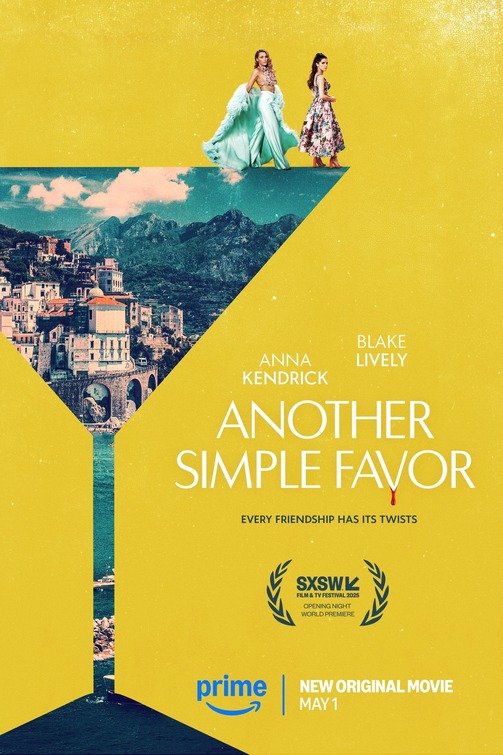

Finding herself accused of multiple murders, and surrounded by mafia figures, including Emily’s husband-to-be (Michele Morrone), Stephanie sets out to prove herself innocent and get to the bottom of what’s going on; suspecting Emily of seeking revenge. On paper the events may be those of a suspenseful thriller, when in actuality the film presents them as part of a lighter jaunt across an island, helped by the focus on the campness. As things develop they grow from feeling uneven and unengaging to, once they truly kick off, purely enjoyable for the slightly messy nature in which they’re dealt with. The eventually convoluted nature is to some degree all part of the fun of the unfolding shenanigans.

The cast appear to largely be in on this too, especially Kendrick and Allison Janney who truly hams it up in gloriously scene-chewing fashion. With the garishly colourful and sunny surroundings, and costumes to fit, the visual style of the film, even in dark rooms somehow seeming like a full-beam light is being emitted, matches a tone which appears to be aiming at a Mamma Mia audience. A film in which you can clearly see the blemishes but still manage to have an enjoyable time once the murder-mystery starts to unfold – and it certainly seems as if the cast and crew at least had a riot making this.

Almost at the midpoint between the genre-meld of the first film and a complete send-up, Another Simply Favour takes some time to get its elements together. It has its destination but wants to set everything up, and remind us of all the characters from the first film who we may have (for me almost certainly) forgotten beforehand – including Henry Golding reappearing as Emily’s now-ex-husband in a very different, frequently drunken, manner. The film enters a state of pure nonsense instead of tension in regards to its thriller aspects, and while this may not always be the intention there’s enough of a tongue-in-cheek feeling throughout to help with the enjoyment, and occasional laughs, to be found throughout.

Focusing more on the campness of the first film than anything else, once things finally get going, the twists of Another Simple Favour are pure nonsense and the cast seem to embrace this the sillier their performance get. Undoubtedly rough around, and beyond, the edges there’s at least still an amusing time to be had.
Rating: 3 out of 5.

Thunderbolts* – Review

Cert – 12, Run-time – 2 hours 7 minutes, Director – Jake Schreier

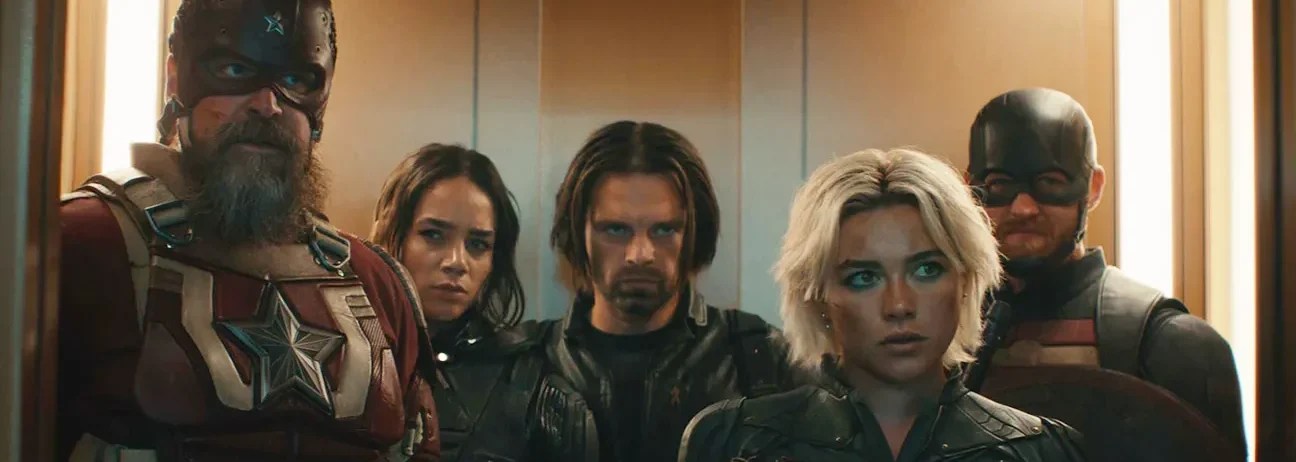
When sent by Valentina de Fontaine (Julia Louis-Dreyfus) to kill each other, a group of troubled and powerful rogues set out to get their revenge, however tragedies in their pasts may lead to bigger battles on their journey.

Perhaps not helped by how much the trailers give away, within the first 15-20 minutes of Thunderbolts* I could tell exactly where the narrative was going to go. I may not have been able to say about one of the undisclosed third act directions but much of what comes before this feels very predictable from the initial meeting of the titular rogues’ gallery.

Trapped together after being sent by Valentina Allegra de Fontaine (Julia Louis-Dreyfus), who up until now has been sending most on illegal missions for secret projects, to kill each other the group need to band together if they’re going to escape and get their revenge. However, their nature as a dysfunctional unit, and own tragic pasts, get in the way of forming a proper team – despite the insistence of David Harbour’s Red Guardian that they could be the new super team on cereal boxes, featured as toys inside.

It takes more time to connect with some members of the team than others. While much of the early events are told through the eyes of Florence Pugh’s Yelena Belova, having first made an impact in 2021’s Black Widow, as the unofficially named Thunderbolts come together there’s more of a group insight for the middle hour. Yet, it still feels like characters such as Ghost (Hannah John-Kamen), who we last saw during her debut seven years ago in Ant-Man And The Wasp, and super-soldier-gone-wrong John Walker (Wyatt Russell) don’t get a great deal of development. They still feel like quite basic characters, even with what they try to give Walker in regards to his anger and personal tragedies, with the world viewing him as a fallen sign of hope and a killer.


The film itself tries to lean into ideas of mental health throughout, especially regarding how the characters largely haven’t addressed or discussed the tragedies in their lives and the traumas which affect them. However, often these moments can feel somewhat clunky and quite on-the-nose. Even the third act where these points are admirably dealt with, even if taking a slight step away from the rest of the film, and to some other extent the wider MCU, feels slightly pushed, although not heavy handed. Perhaps this comes from the focus on one or two of the key characters who seem to have been more embraced by fans over the last couple of years; and the addition of Lewis Pullman’s Bob, accidentally placed into the vault at the start of the film when believed to be dead after being a medical subject for Valentina’s organisation, while others feel more present simply to make up the Thunderbolts and actually have a team, and with the writers to some extent perhaps unsure as to where to take them (Ghost, for the most part, despite John-Kamen’s efforts).

The presence of Sebastian Stan as now-Congressman Bucky Barnes feels placed to bring a more familiar face into the proceedings. While he ties in to an impeachment trial being faced by Valentina – led by the always welcome presence of Wendell Pierce – his eventual usage is less as a leader for the ensemble and more the reminder of what they can become, a further callback to past films and hopeful connection with this one. Stan, of course, puts in a good turn and there are some interesting developments eventually for him, and some of the more prominent team members, but they appear to come more to the fore very late in the day – it could be argued to some degree not until the end-credits scene, setting up some interesting dramatic elements that will hopefully arise in the future.

As the road trip to Valentina takes place there are some likable chuckles here and there, most of which are brought about by Harbour’s character most passionately believing in the non-existent team. They help to lift up some of the more uncertain or predictable moments, especially in the first half. Thunderbolts* appears to have started as something of a lighter MCU entry, maybe not quite an Ant-Man-style palate cleanse but perhaps a Guardians-esque romp, but overtime became something more serious as it got more into its dramatic themes.

While those themes don’t always have as in-depth a nature or discussion as could perhaps benefit the film they still make for some admirable details in the third act, especially when straying away from developments which can be seen from very early on. There’s a good film within Thunderbolts*, but one that struggles with some of its team members lacking detail in a narrative that needs an emotional connection or understanding with them to have a greater effect, and more enjoyment.

Thunderbolts* struggles to bring new depth or detail to some of its lesser-known or loved characters, meaning that there’s not a full connection with the team stopping the effect of the sometimes clunky and on-the-nose themes of mental health in an occasionally amusing, but predictable plot.

Rating: 3 out of 5.

Warfare – Review

Cert -15, Run-time – 1 hour 36 minutes, Directors – Alex Garland, Ray Mendoza

Having made a temporary base in a civilian house, a group of US Navy SEALs find their chances of making it out alive limited after an IED explosion causes chaos and injury amongst the group.

Warfare has sparked discussion about whether a war film can be truly neutral. With his previous film, last year’s Civil War, writer-director Alex Garland – here teaming up on both duties with veteran Ray Mendoza – tried to make a film that was apolitical and, depending on who your ask, generally achieved it. With Warfare the film may not be directly choosing a side, but then again it’s only showing the perspective of a group of US Navy SEALs in 2006 Iraq.

Having made a temporary base in a civilian home we see the troop in real time observing the buildings around them for suspicious activity, a sniper (Cosmo Jarvis) waiting to strike any target that could be a threat. However, once a rogue grenade makes its way into the building chaos erupts, made worse by a fatal IED explosion. The group’s chances of making it out alive grow increasingly limited, with much of the action confined to the one home and the growing screams, blood spills and panic. The families who own the apartments seem something of an afterthought, barely seen once pushed into the corner of a bedroom while the soldiers take over the home for their own surveillance needs. Perhaps this stems from the fact that these people weren’t the focus for the soldiers themselves. Based on real memories from those involved the film states at the end of the credits that events have been attempted to be replicated as accurately as possible.

It takes about 30-40 minutes for things to properly kick off. With much of the build-up less bringing us into the personalities of the group, the main character who seems to get something of a bigger push is Jarvis’ sniper simply from how much concentration we see him putting into his aim and scanning of the outside area through a small gap in the wall. Instead, we see the various details and elements of preparation the group (which also features the likes of Will Poulter, Joseph Quinn and Michael Gandolfini) are putting in to their work. It doesn’t form an entire connection with them which means that the key events in the second half may not have the emotional hit they could do after having spent this deal of time with them.


There’s still a sense of tension, already established in the quieter moments of focus, and the sound design helps to elevate the film, especially when multiple forces are cranked up loud. When shifting between perspectives and going from ringing ears and muffled noise to shattering screams there’s a slight jump in response, especially as often the camera cuts to some effective bloody detail at the same moment.

There have been criticisms of Warfare for lacking context. While I believe that what it provides is enough for what it shows and does, what I think it needs is more commentary. More to say about what’s happening, or at least more from the characters. While this may deviate from the realism on display, there’s no soundtrack or score throughout to keep this in place, the events as they’re depicted have some effect, but to some extent feel like the neutrality means that things have been held back somewhat in terms of the overall drama.

Warfare still has a punch in its style and details, even if sometimes it also feels held back by developments having to be waited for in real time due to the events unfolding outside the house – again, out of the memory of those involved because of where they were at the time. Particularly Mendoza, played here by D’Pharaoh Woon-A-Tai; getting more focus as events unfold with the camera cutting to him more often overtime. But, for the most part, there’s still a successful film within Warfare. One that creates interest in what’s happening and the uncertain fight for survival in the confined area which appears to be surrounded by opposing forces. What we get is good, but it does feel as if the key details of Warfare’s stances also hold it back.

While the look and sound of warfare has a good effect, its real time basis sometimes holds it back as you, like the soldiers, sit waiting for the next development in a film that sometimes feels as if it needs more commentary, even amongst the based-on-memory events.

Rating: 3 out of 5.

Sinners – Review

Cert – 15, Run-time – 2 hours 18 minutes, Director – Ryan Coogler

With the roaring 20s now faded away, twin brothers Smoke and Stack (both Michael B. Jordan) return to their hometown to open a night time music club and bar, however the opening night is disturbed by vampires seeking something within the music.

If you’ve managed to avoid the trailers for Sinners so far continue to do so. It’s amazing just how much of the film they give away, including key moments in the final 10-15 minutes. For those who have seen the trailers already these points likely won’t be spoilt. In their own moments they have a good deal of punch thanks to the style which writer-director Ryan Coogler brings to them. There’s a cinematic flair upheld by a burning fire, sometimes literally, in the filmmaker’s eye increasing the heat of both the tone and visuals.

Luckily, some of the best moments have been left out of the trailer. As the new nightclub opened by twin brothers Smoke and Stack (both Michael B. Jordan, tracking the film’s changing tones and events from both perspectives with some great details) on their first day back in their hometown gets its opening night into full swing Coogler steps into something entrancingly experimental. Like an out of body experience for the film itself as it takes the viewer with it, the sequence – which should simply be left to be seen – is led by the music, initially played by Miles Caton’s Sammie on guitar, as it weaves like the camera through the moving bodies in the busy club.

It’s a strong opener for the twins as they look to move on from their lives in roaring 20s Chicago. Now in 1932, with everyone back home believing they had gangster connections, they simply want to run a business and enjoy good blues music with friends. However, the night is soon disturbed by the arrival of vampires. Properly arriving almost an hour into the film this almost feels like another point that the trailers could have left out as a tonal surprise, although then there could be a very different film being marketed. That film would possibly be more along the lines of the opening hour which sees Jordan’s characters reconnecting with their roots and the town they left behind, bringing the people in it into their venture. Whether that be performing (Delroy Lindo on excellent form), on the door (Omar Benson Miller) or serving food and drinks (Wunmi Mosaku – whose character Annie previously had a relationship, and child, with Smoke.


There are a good handful of characters dancing, performing and discussing business throughout the night before the vampiric arrival, but the events are well tracked. Partly thanks to the feeling of a solid unit in both the cast and the characters themselves but also thanks to the ways in which Coogler tracks things with the camera and editor Michael P. Shawver. Even some sequences in which there are clear cuts feel as if they have a tracking/ one-shot nature because of the fluid nature in which events are caught. Yes, it might take a little bit of time to get here after the slightly unexpected build-up, which adds depth to the central characters, but once the night begins things move along smoothly and in entertaining style.

There’s something to relish in the tension and yet entertainment factor of the vampires, led by Jack O’Connell, standing at the door to the venue asking to be invited in, although much more sinister compared to how this would be gone about in What We Do In The Shadows. There’s a sense of dread once things start to properly go wrong. You can see the first domino truly fall and before it touches the next you know just how things are going to pan out. At least in terms of the doom that’s to follow, not specifically towards who. There’s still a sense of suspense and a darkness which hangs over the proceedings and the character piece things together and try to figure out how to survive the creatures lilting Irish folk songs outside.

Where Coogler fully flourishes is in his big set pieces. While largely confined to the one area for much of the screen-time there’s a busy feeling to the scenery which helps during more chaotic moments of action. As the climax nears you can almost feel the film clenching its fists, steadying its feet; preparing to make the first swing just before the fire bursts into life. From there you can feel the heat of both the location and the moment itself. The rage and fear which has built up over the last near hour as it unleashes in all directions for a spectacular finale – although make sure to stick around to the end where there’s something more sedate yet still effective – fuelled by the scope of Coogler’s direction and cinematographer Autumn Durald Arkapaw.

If you’ve seen the trailers then there’s still plenty of punch and surprises to be found within Sinners and how it works with its characters, and how they work with each other. If you haven’t seen them then continue to avoid them and enjoy the tonal changes and gradually increasing drops of sinister threat as the integral music guides the events, and at times camera, for something which at times is utterly entrancing.

At times entrancing, at others spectacular, and sometimes both. Sinners builds up the heat and darkness yet remains guided by the central music and established relationships between the ensemble whose night is thrown off course in tense and entertaining fashion.

Rating: 4 out of 5.

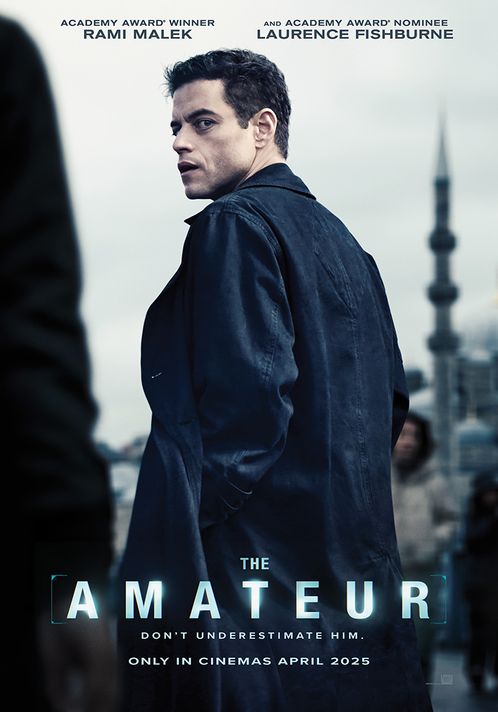
The Amateur – Review

Cert – 12, Run-time – 2 hours 3 minutes, Director – James Hawes

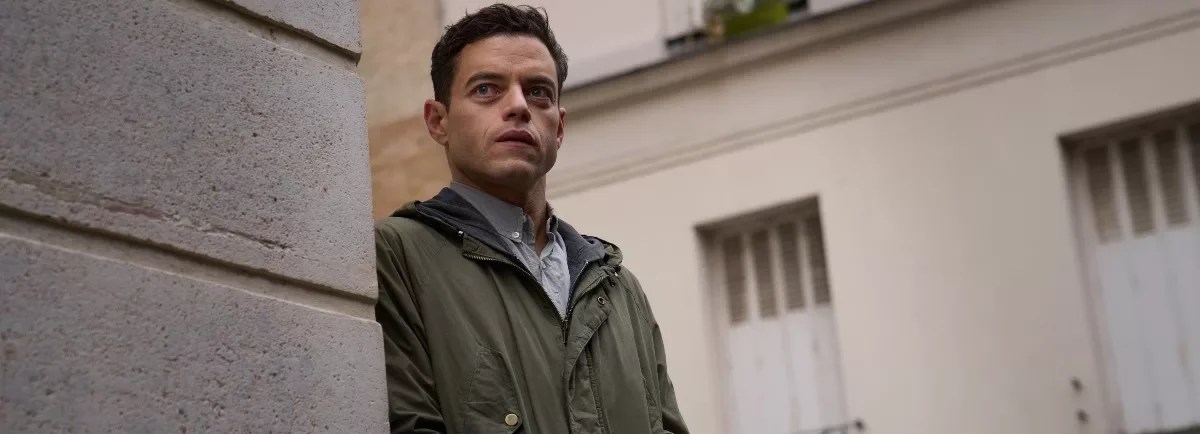
When his wife (Rachel Brosnahan) is murdered, CIA cryptographer and coder Charlie Heller (Rami Malek) sets out to get revenge on those who killed her, with multiple branches of his employers on his tail.

There’s quite a starry cast amongst the various players in The Amateur, yet with what they’re given to do it feels as if there may be quite a few details of various strands left on the cutting room floor. Not quite a 90s-esque thriller, or even ensemble, there’s quite a mixed bag as we follow the various stages of CIA cryptographer Charlie Heller’s (Rami Malek) revenge journey.

After his wife (Rachel Brosnahan – largely appearing in very brief flashbacks) is killed on a trip to London Charlie seeks training from his employers so he can kill those who murdered her. However, things don’t go well when he’s unable to use a gun or face a direct threat as it towers over him. When a plot to dispose of him after he discovers incriminating information about Holt McCallany’s CIA deputy director fails he goes both on the run from his employers and seeking out those he seeks revenge against using his own set of skills.


It’s at this point that the build-up which has already shifted once or twice shifts again with occasional scenes of Charlie using these skills as he faces those who took his wife away from him. The sequences are tinged with perhaps unintentional humour with the ways in which he tries to find information which will take him to the top of where he needs to go – trapping someone in a box which he’s funnelling pollen into to set off their allergies or depressurising the air between layers of glass in an infinity pool so that it shatters. These moments almost feel as if they’re making up for the lack of this kind of action in Jason Statham’s recent A Working Man, but feel so far apart and lacking a cheesy one-liner to properly give them an entertaining hit beyond mere amusement.

As a whole the film passes by with its various shifts in the narrative, as Charlie’s globetrotting becomes more of a chase with various branches of the CIA sending people after him – including Laurence Fishburne’s Robert Henderson, the man initially set to train Charlie to kill. There are some nice interactions between the two here and there, including one in a dirty Parisian bar, and indeed the chase aspect in general has its moments which help to speed things up and move them along. But it just marks more clearly the various stages of all the build-up, and indeed everything else that’s happening in the film. It’s not that there’s an overstuffed narrative, just that the film quite obviously moves from point to point with a bordering-on-chaptered nature.

Things are generally put together with little trouble and they move along well enough, if not always being thrilling or fully engaging. Malek’s central performance has its moments during quieter scenes, largely not when facing a direct threat in-person, and as a whole the ensemble around him works, even with those who are given very little to do. It feels somewhat of a standard tech thriller. It’s unlikely that much of it will be remembered long after watching, or to some extent shortly after doing so either, but for the time it’s on there’s just about enough within the slightly staggered course of The Amateur to keep it largely afloat.

With a cast and pacing which feels as if quite a bit has been cut out, The Amateur moves along well enough and provides some likable moments once its cat-and-mouse strands break out, but doesn’t quite realise the ridiculousness of some of the revenge aspects it suddenly breaks out into.

Rating: 3 out of 5.

Drop – Review

Cert – 15, Run-time – 1 hour 35 minutes, Director – Christopher Landon

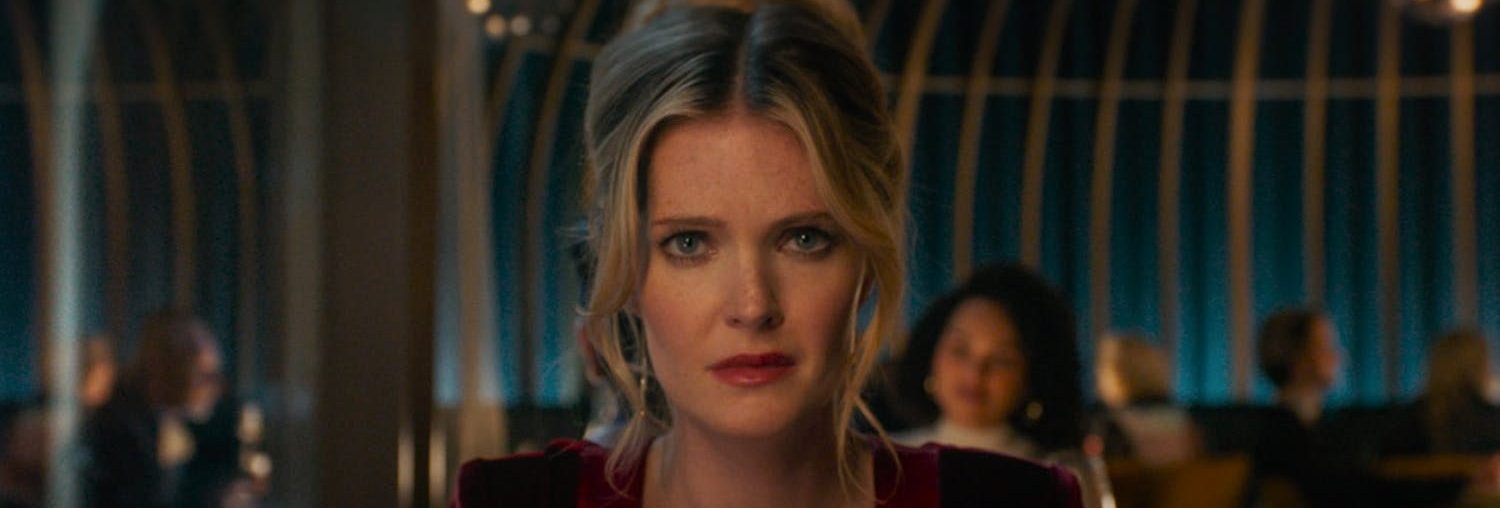
On her first date in years, widowed mother Violet (Meghann Fahy) is plagued by messages from an unknown phone telling her to kill her date (Brandon Sklenar) or her son (Jacob Robinson) back home dies.

There’s a shift in the final stages of Drop where it turns from a suspenseful thriller into truly daft territory. While there’s dark comedy sprinkled amongst the escalating tension the sudden turn, you’ll know it as soon as you see it, is such a shift that it induces a different kind of laughter simply due to the immediacy of the switch. Yet, maybe because it doesn’t construct an entire third act, and it feels like the film allowing the growing bubble to finally burst as it nears an end, there’s something about this ending which works and doesn’t cause things to entirely swerve off the rails.

For the most part Drop is a well-contained, single-location thriller. Set in a fancy, skyline restaurant widowed mother Violet (Meghann Fahy) is on her first date in years. Leaving her five-year-old son Toby (Jacob Robinson) with her sister (Violett Beane), she’s nervous but just fearing an awkward date. Not to look at her home security cameras and see a gunman lurking in the shadows, ready to attack if she doesn’t follow the instructions being sent to her via an Airdrop-esque app from an unknown phone in the restaurant – not helped by the fact that everyone within the 50 foot radius seems to be cancelled out by an identifiable profile picture.


The instructions sent to Violet constantly increase the stakes for her, and increase the threat of not just her son being killed but also those in the restaurant with her, including her date, Henry (Brandon Sklenar). With each image or message Violet receives, shown in daunting form as large text hangs over her shoulder (and in mirror reflections), the tension ramps up. Director Christopher Landon has great fun with Jillian Jacobs and Chris Roach’s screenplay, drawing out various instances and working with the cast to show the various thoughts and doubts running through their minds – whether it be the lives that are on the line, or the date simply not going well.

Every now and then a dash of humour is brought into the proceedings without disturbing the flow and rise of the suspense. Sometimes from the direct situations at hand, other times from the first-shift waiter (Jeffery Self, consistently funny when on-screen) dealing with Violet’s erratic behaviour. Contrast that with references to domestic violence, a factor of Violet’s marriage before the death of her husband, and there’s a number of well-handled details and elements working under the surface of this tight and effectively-told thriller. One which still manages to capturing the core thrilling nature with its deliriously entertaining tension, and to some extent silliness of the final stages.

Tense and darkly comic, even in the silliness of its closing stages, Drop is a tight and brilliantly entertaining thriller effectively confined to one location and really getting across the mixed thoughts and worries of the central date and beyond.

Rating: 4 out of 5.

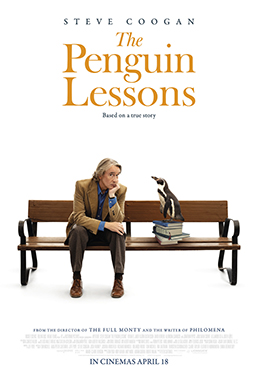
The Penguin Lessons – Review

Release Date – 18th April 2025, Cert – 12, Run-time – 1 hour 52 minutes, Director – Peter Cattaneo

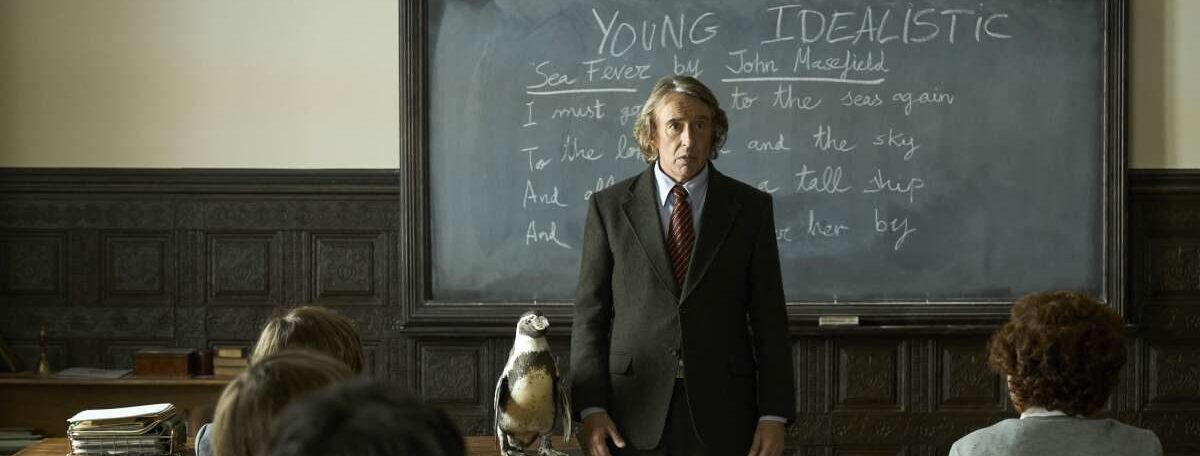
1976, with Argentina on the verge of a military coup, English teacher Tom Michell (Steve Coogan) finds his worries are more focused on keeping a penguin which has followed him back to work a secret from the rest of the school.

Marketed as a light comedy about Steve Coogan inadvertently adopting a penguin, The Penguin Lessons is absolutely what you’d expect it to be, even down to the slight swerving of more serious points. Set in 1976 against the backdrop of a military coup in Argentina we see and hear about people disappearing after being arrested in the street and crammed into the back of a car. Much of this is brought more forward in the second half of the film, still put in the background of Coogan’s English teacher bonding with a penguin, eventually named Juan Salvador, which has followed him back after a few days away in Uruguay – having saved it from an oil spill in order to impress a woman (Micaela Breque).


The biggest worries for Tom (Coogan) relate to the penguin and keeping it a secret until he can hand it over to a zoo. With a ban on any pets imposed by the headteacher (Jonathan Pryce, slightly feeling as if he was in the area with a couple of days free), and therefore his job on the line, especially when cleaning staff discover his reluctantly-held pet. A familiar light dramedy plays out with a hint of quirky unlikely duo energy. It’s certainly where the film wants to lean, despite at times feeling as if it wants to get into the more serious elements of drama, but steps away with a fear of losing the seeming silver-screen target audience.

It leads The Penguin Lessons to form a perfectly fine Sunday-afternoon-with-a-cup-of-tea film. There are some occasional chuckles, although they can tend to be sparse, and what’s there is light and engaging enough for the time the film is on. Coogan puts in a good turn which helps to lead the film and make its slower moments more engaging, also helping to lift up the more familiar beats and bring more to the dramas when they play out. There is a slight confliction at times between what the film wants to focus on and where it strays for the sake of keeping an engaged audience, but Coogan generally rides it out well and acts as the main consistent throughout, and there are indeed some nice moments between him and the central penguin.

The Penguin Lessons strays away from its more serious points in favour of the lighter man-and-penguin narrative. While it means the drama doesn’t quite land the right hits Coogan’s performance helps to lift what there is, making for a film that generally works, even if in forgettable fashion.

Rating: 3 out of 5.

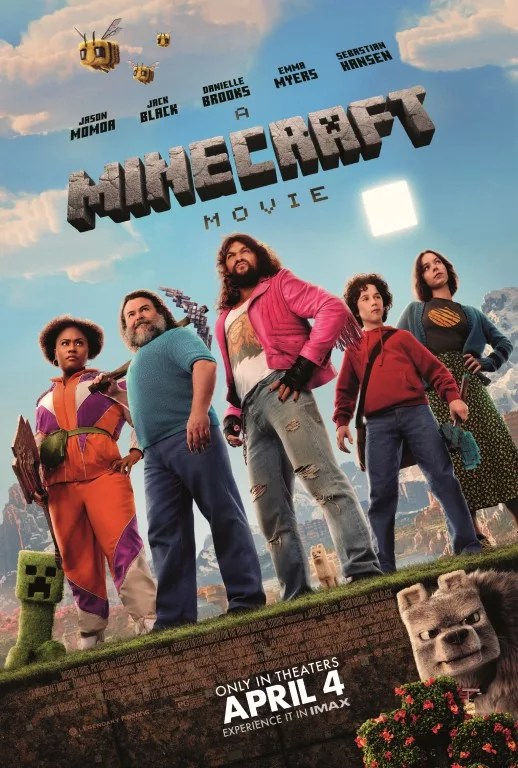
A Minecraft Movie – Review

Cert – PG, Run-time – 1 hour 41 minutes, Director – Jared Hess

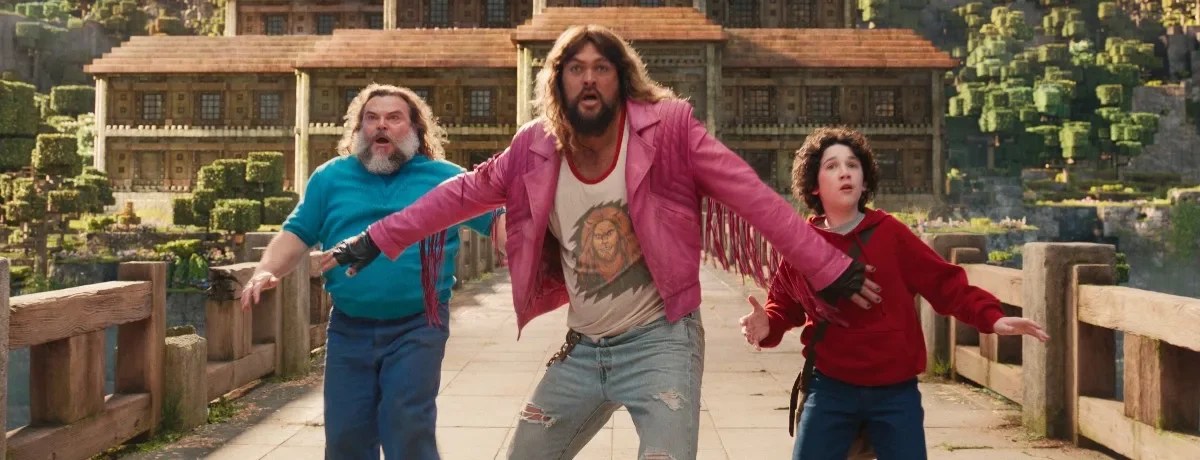
A group of strangers (Jason Momoa, Emma Myers, Sebastian Hansen, Danielle Brooks) are transported to a world made of blocks, under threat from a sorceress (Rachel House). To defeat her and get back home they must learn to use their imaginations and the elements of this new world.

A variation of a film based on Minecraft, one of the most successful games of all time, has been in the works for over a decade. Multiple directors and leads have come and gone through both live-action and animated forms, Steve Carell’s name was attached for a number of years, but the base of the game has largely remained the same. It’s summed up in the eventual Minecraft movie’s prologue: an endless sandbox where you can make almost anything using the blocks and elements which construct the world. A world of infinite possibilities, as long as you use your imagination.

While that might be the spirit of the game and its open world it hasn’t translated to the screen or narrative. When not focusing on Jack Black announcing items and figures as if the film expects an recognising round-of-applause the story constantly calls back to better takes on unleashing your creativity – The Lego Movie consistently comes to mind for much of the slow 101-minute run-time.


The narrative itself is light, as a group of near-strangers, each feeling as if they’re stuck at their various points in life, are thrown into the Minecraft world after following a magical orb. However, in order to get back they must restore the cube the orb connects to and defeat piglin sorceress Malgosha (Rachel House); intent on travelling from her dark dimension to the ‘Overworld’ and spreading a destruction which removes creativity. Acting as a guide for Jason Momoa’s former gaming prodigy Garrett ‘The Garbage Man’ Garrison and Sebastian Hansen’s young designer Henry – while older sister Natalie (Emma Myers) and, almost nameless, family friend Dawn (Danielle Brooks – the only person who seems to be aware that the script smacks of having five credited writers) are pushed aside with their own side-strand which involves simply walking around and finding the others – is Black’s Steve, having left Earth in exchange for the freedom of Minecraft many years ago.

For those unfamiliar with the game there’s little to access here. For those familiar with it, get ready for a whistle-stop tour of item namedrops before moving on to the next batch. There’s less a rove through locations and more just a working down the list of key game elements that haven’t been seen or mentioned yet. Thankfully, any fears of an uncanny-valley aspect to the largely-CG visuals are put to rest quite early on. There may be some quite obvious green screen/ lighting clashes here and there, but for the most part the live-action characters blend into the world fairly well, and the likes of animals and villagers are certainly nowhere near as horrifying as the dwarfs in Disney’s recent Snow White remake. One of the best elements of the film involves a Villager travelling to the real world and ending up on a date with a character played by Jennifer Coolidge. Each moment is brief, but they create some light humour with a couple of silly gags. Plus, they act as the best way of telling just how much of the film is left in terms of how far through the date we are.

The humour doesn’t quite spread back into the Minecraft world as the majority of the film lacks laughs and is largely hampered by the biggest issue of the fact that it’s simply quite boring. Again, we’ve seen the overall arc of the narrative done multiple times before, and even more creatively. It feels like someone else showing you their lacklustre builds as you sit behind them, looking over their shoulder, without having been able to see any of the build-up or exploring process which could have maybe at least made them somewhat worthwhile. The film certainly isn’t the wreck that some might have predicted, in fact it’s not really a wreck at all and contains some brief glimmers of amusement, mostly when not bogged down by the Minecraft aspects. Instead, it’s just a rather bland traipse which frequently preaches about imagination but doesn’t display a great deal of it itself.

For a film all about unleashing imagination and creativity, A Minecraft Movie feels heavily familiar to a number of other family films in its vein. There are some light moments of amusement scattered throughout, but they don’t stop the boring feeling of seeing someone else wander through their own uninspired builds.

Rating: 2 out of 5.

Death Of A Unicorn – Review

Release Date – 4th April 2025, Cert – 15, Run-time – 1 hour 47 minutes, Director – Alex Scharfman

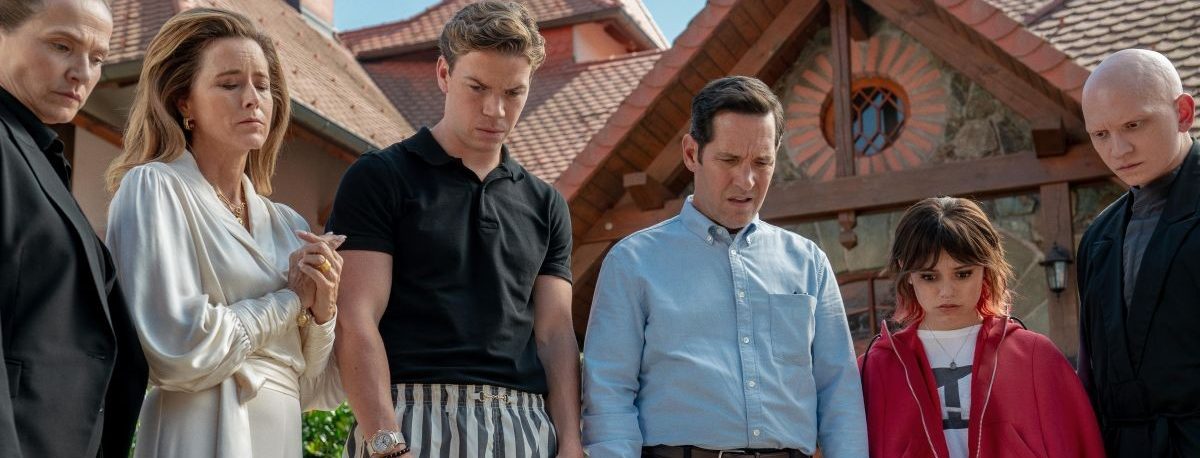
After hitting a unicorn on the way to the wealthy Leopold family’s estate, father and daughter Elliot (Paul Rudd) and Ridley (Jenna Ortega) struggle to keep their secret, especially when the creature is revealed to have healing powers.

Death Of A Unicorn feels very much inspired by the works of Ruben Östlund. It particularly feels like a response to his Best Picture-nominated Triangle Of Sadness. However, this film, acting as the feature writing and directorial debut of Alex Scharfman, leans much more into an Americanised satire, with jokes much less drawn out. It also doesn’t realise the slight irony of its eat the rich story led by such a starry cast.

Yet, perhaps the biggest issue when it comes to the humour is the fact that the film itself doesn’t have enough bite. While some of the performances do, Will Poulter as a wealthy CEO’s son truly goes for it and gives the standout turn of the film as the man spoilt by riches his whole life, the screenplay doesn’t quite provide enough satirically to truly provide the right push. Yet, there are still some chuckles to be found here and there, particularly as the Leopold family discover not just the unicorn which has been hidden in the back of father and daughter Elliot (Paul Rudd) and Ridley’s (Jenna Ortega) car, after hitting it on the way to the vast estate, but the fact that it has healing powers. With supplies seeming scarce their decision is to keep the secret to themselves and only tell their wealthiest and most unwell friends.


However, what they don’t expect is for more unicorns to turn up, to find the missing member of their pack. With deadly attacks now unfolding there’s a split between saving lives and coming up with a plan to capture the creatures and use them for further gain. As the third act, where much of this is contained, plays out there’s a successfully growing air of tension as the unicorns are shown much more closely. Yes, sometimes the clearly CG nature gets in the way in some instances, but there’s still some suspense and fear factor to them as they prowl corridors or create havoc in the grounds of the Leopold family. All while Ridley, against the trip in the first place and brought along by her lawyer father who wants to show his good family connections to his potential employers, insists that she and her dad try to escape, as she pieces together just how deadly unicorns can be from an ancient tapestry.

While it might not have quite enough bite in regards to its satire, there’s still a watchable nature to Death Of A Unicorn. It sees itself through relatively well, helped by the performances at the centre and a sense of engagement even if it doesn’t always raise the laughs that it may wish for. In fact, the laughs come through best with the more it leans into a sense of horror and the aforementioned terror. The tones might not quite work hand-in-hand, but they certainly compliment each other well and bring out the sharper edges of the narrative and characters. Perhaps because of in-the-moment decisions the upfront nature of what’s happening to everyone at the same time at these points in the second half.

For the most part, there’s enough within Death Of A Unicorn to see it through, especially once its elements are set up. The performances may be more on the attack than the screenplay, but there’s still a solid debut which manages to engage, and has some good effective moments when it leans into its horror in the second half.

Lacking the same bite or scathing nature as its seeming inspirations, Death Of A Unicorn’s cast feel a step above its screenplay, which creates a couple of chuckles here and there, but largely when working alongside its successful later-stage tension.

Rating: 3 out of 5.

Restless – Review

Release Date – 4th April 2025, Cert – 15, Run-time – 1 hour 29 minutes, Director – Jed Hart

When Nicky (Lyndsey Marshall) starts to lose sleep with her new neighbour’s nightly parties her attempts to calm things down lead to further torment.

In an age of social horror films Restless may be the most everyday. It’s also one of the most terrifying. As middle-aged nurse Nicky (a stunning Lyndsey Marshall) loses sleep with the noise created by her new neighbour’s nightly parties the torment grows when she tries to find some resolve, with nobody else in the road wanting to get involved.

Every decision leads to a seat-gripping, squirm-inducing sense of panic that the worst is going to happen. When she finally starts to drift off in the middle of the day, the only time it’s quiet, we see Nicky dreaming that young neighbour Deano (Aston McAuley) has crept into her home to stab her. While this moment is fantasy as the situation escalates and both parties grow increasingly heated in their responses to respective actions the threat rapidly increases. After one specific sequence of revenge the consequences see Deano almost breaking down Nicky’s door in a fit of rage, screaming through the letterbox and creating pure terror as Marshall’s character tries to hide.

Writer-director Jed Hart, in his feature debut, keeps everything stripped-back and naturalistic. It heightens the everyday sense of the horror, bringing in an air of familiarity as a story of nightmare neighbours jumps to worst case scenarios while still maintaining a believable atmosphere. Allowing for the tension to be ramped up as Nicky begins to fear for her life, becoming increasingly desperate in a fight she seems to be facing by herself – all while still facing the loss of her mother who used to live next door to her.


Marshall brilliantly captures the stress, panic and rising anger in her character as a war of quiet and noise breaks out with McAuley’s increasing aggression. The way she holds herself brings in the sympathy as you can see the toll the lack of sleep is plaguing on her. Alongside Hart they create the engaging world of realistic horror with great effect, making for a wonderful pay-off which completely flips the coin and is a pure joy to watch unfold.

Yet, we have to go through the relentlessly scary build-up to get there. The confirmation of her worst fears adds an emotional side to what she goes through, segueing from pure suspense into the emotion instead of suddenly just moving on. It helps with the flow and overall engagement to be found within Restless. Packing a lot into the short 89-minute run-time while not breaking or deviating for the horror genre that it sets itself up with.

Throughout I sat physically reacting to the panic and tension drawn out in a number of sequences, fearing the worst for the central character. Almost muttering as I willed her on to just go back and not go ahead with her in-the-moment impulses. I’m sure that this will be one of the scariest films of the year.

Bound to be one of the most terrifying films of the year, Restless is packed with suspense that plays into our own fears of worst case scenarios, wonderfully captured by Lyndsey Marshall’s growing anger and panic.

Rating: 4 out of 5.