Karate Kid: Legends – Review

Cert – 12, Run-time – 1 hour 34 minutes, Director – Jonathan Entwistle

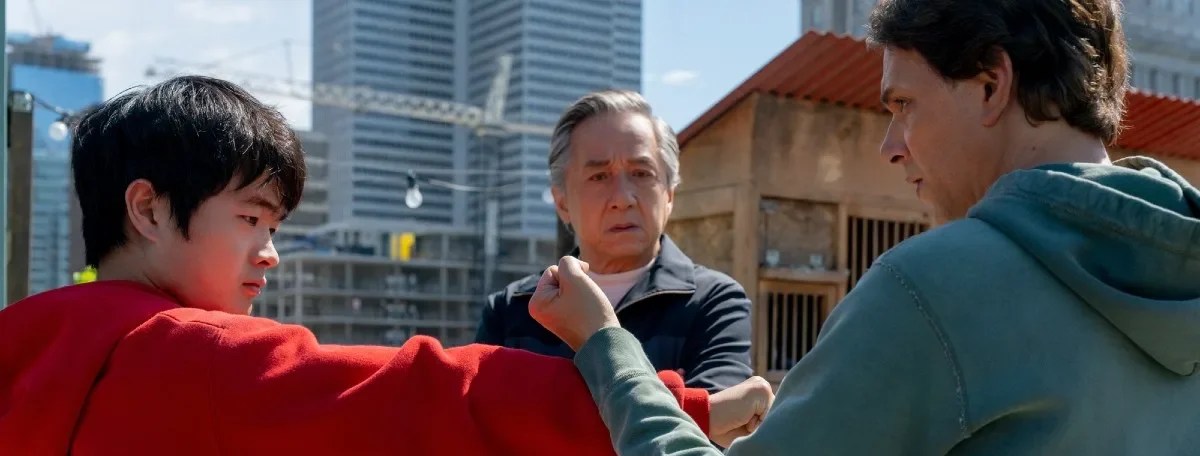
Shortly after moving from Beijing to New York, Li Fong (Ben Wang) breaks his promise to his mother (Ming-Na Wen) to not fight, as he faces a karate-master bully (Aramis Knight) in a city-wide tournament.

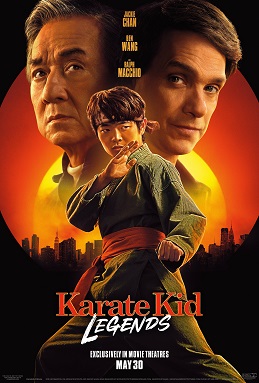
Karate Kid: Legends has been sold on the return of both Jackie Chan and Ralph Macchio, the original film and remake joining together. Yet, this idea doesn’t come into play until almost an hour of the relatively short 94-minute run-time has gone by and we’re finally reintroduced to Macchio’s now-sensei Daniel LaRusso. With Chan’s Mr Han asking him to train his great-nephew in the ways of Miyagi-do karate; claiming that what Daniel was to the late-Mr Miyagi, Li Fong (Ben Wang) is to him.

The pair unite and bring about much of the Karate Kid core that you’d expect in training montages and the eventual fights as Li builds up to a city-wide tournament across New York, with the aim to make it to the final to fight young karate-master Conor (Aramis Knight). Until this point Li has been training pizza shop owner Victor (Joshua Jackson) the ways of martial arts to improve his boxing, to both defend himself and get back into competing so he can pay off debts he owes to violent karate teacher O’Shea (Tim Rozon), of whom Conor is a student.

There’s a likable unit formed between Li, Victor and his daughter Mia (Sadie Stanley), who are the first people the protagonist meets after arriving in New York City from Beijing. They’re interactions create a good few chuckles as training develops, and while there might be a bit of a Disney Channel feeling to the way Li and Mia’s relationship develops the tone is generally light and enjoyable. Even amongst the more conventional aspects such as Li’s mum (Ming-Na Wen) making him promise to stop fighting after they move, having lost his older brother (Yankei Ge) after a kung fu competition, there are still moments which have an emotional impact, even if slight.

Yet, as the training unfolds and the antagonism from Conor – who seems to be at least ten years older then Li but still goes to the same school – grows there’s a feeling that the film is somewhat basking in the glory of previous entries in the franchise. As if slightly on autopilot before properly kicking in once Li starts to receive his own training from Chan and Macchio – who themselves make for a good double act who I could have sat and watched bicker and try to one-up each other for the whole film. In fact, the best moments, which have been the main selling points, are largely confined to montages approaching and in the third act. It’s where a better flow comes into play as the film feels more invested in itself.

It’s as if the tournament gives it an extra spark as something bigger for the central character to build up to. Helping to see through the final half hour with a new kick brought about by the face-off that’s been gradually rumbling away in the background until this point. As a whole the film is generally likable family fare, but once it get to the points that it, and likely the audience, is most excited about it lands its punches with a solid amount of energy in both training sequences and the climactic fight.

While much of the narrative plays out basking in the glory of the Karate Kid name, Legends makes for likable and good-humoured family fare which grows a stronger kick once the development of the central character and his fighting skills takes centre stage, with help from Jackie Chan and Ralph Macchio’s entertaining double act.
Rating: 3 out of 5.

The Ritual – Review

Release Date – 30th May 2025, Cert – 15, Run-time – 1 hour 38 minutes, Director – David Midell

Two priests (Dan Stevens, Al Pacino) with conflicting views on exorcisms and possession are brought together to deal with a young woman (Abigail Cowen) whose case brings fear into the grounds of a church.

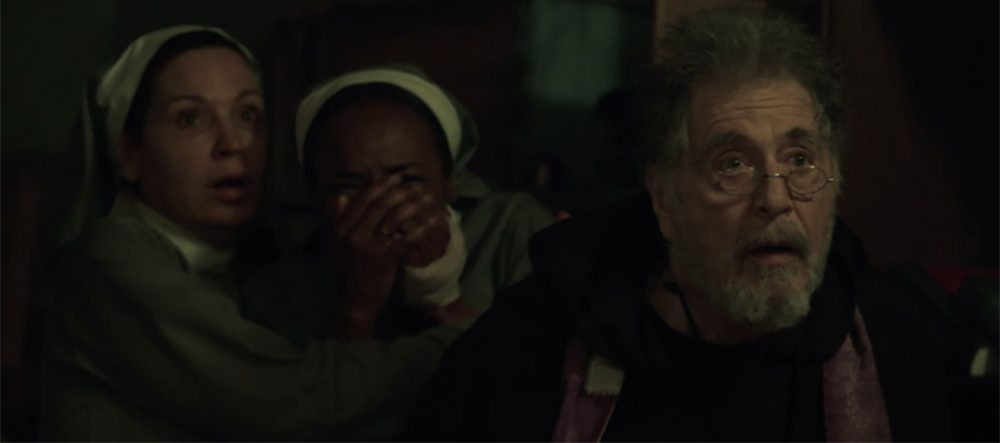
The opening and closing text of The Ritual emphasises to us that the exorcism of Emma Schmidt (Abigail Cowen) is a true story, to the point of it being one of the most documented instances of exorcism ever. To get this across in the film that unfolds in-between every sequence is shot like an episode of The Office. Crash zooms are used unsparingly alongside an occasionally wobbling camera to get across the fear being felt by the nuns and priests involved in the exorcism, but in actuality it simply creates a strange forced feeling that feels disconnected from everything else happening.

Perhaps this feeling also stems from the overall disconnect there is to be found with the film. There’s little that differentiates this from the many other exorcism films we’ve seen over the years and it causes The Ritual to feel almost overwhelmingly bland. There’s little given to Dan Stevens and Al Pacino aside from the former looking panicked whilst his co-star reads Bible verses in a faux-German accent.

Stevens’ Father Joseph Steiger is dealing with the recent loss of his brother. He continues with his work and keeping things ordered within his parish, with the help of Patricia Heaton’s Mother Superior. However, when it’s specifically asked that Emma is brought to New York to be exorcised, with the priest to do the job already being confirmed (Pacino’s Father Theophilus Riesinger), a darkness begins to spread throughout the building as fear starts to spread in the wake of a possible demon being brought in.


Steiger questions whether what is happening is the work of the devil or just a mental illness which more has been learnt about in recent years, this being set in 1928. However, Riesinger has seen cases where the victim was left alone, seemingly having recovered, only to be attacked by the same demon much more aggressively years later. Much of what we see involving the pair, outside of one or two quite conversations in the church pews, is in the various rituals which take up most of the 98-minute run-time. After one or two instances they start to feel repetitive and increasingly lacking.

Nothing new is brought to the table, and there’ little attempt to actually create any mystery regarding what’s being faced by Emma. It seems to undoubtedly be a demon possessing her, leading any doubt posed by Stevens’ character to fall completely flat. The bigger mystery is what he and Pacino are doing in this film. Again, there’s little for them to do and no major dramatic weight in the screenplay as it stands in the final product – and it doesn’t feel like a lot was removed in terms of character detail.

In fact, The Ritual has very little happening at all. It makes for a long and tiresome 98-minutes largely constructed of repetitive scenes which are building up to an exorcism. Apparently all part of the process, we don’t actually learn anything about the process or how it develops. It just seems that Emma gets covered in more scars and bruises and the demon begins to talk a bit more. Yet, none of it feels like development, the film simply feels stagnant and stuck in the same place until the end; which, when it finally arrives, feels similar to what has come beforehand in that it doesn’t really provoke any feeling. With a lack of effective build-up it certainly can’t be called an anti-climax. It just sort of happens, just before I shuffled out to quickly forget the film, and just remember how bored I was by it.

The Ritual’s biggest mystery is how its two lead stars came to be in it, a bland trudge of an exorcism horror it appears to go in circles around the same points with little development or detail. Largely just happening as it becomes increasingly boring.

Rating: 2 out of 5.

A New Kind Of Wilderness – Review

Cert – 12, Run-time – 1 hour 23 minutes, Director – Silje Evensmo Jacobsen

A family living in the Norwegian wilderness face the prospect of having to integrate with modern society after one of the parents passes away.

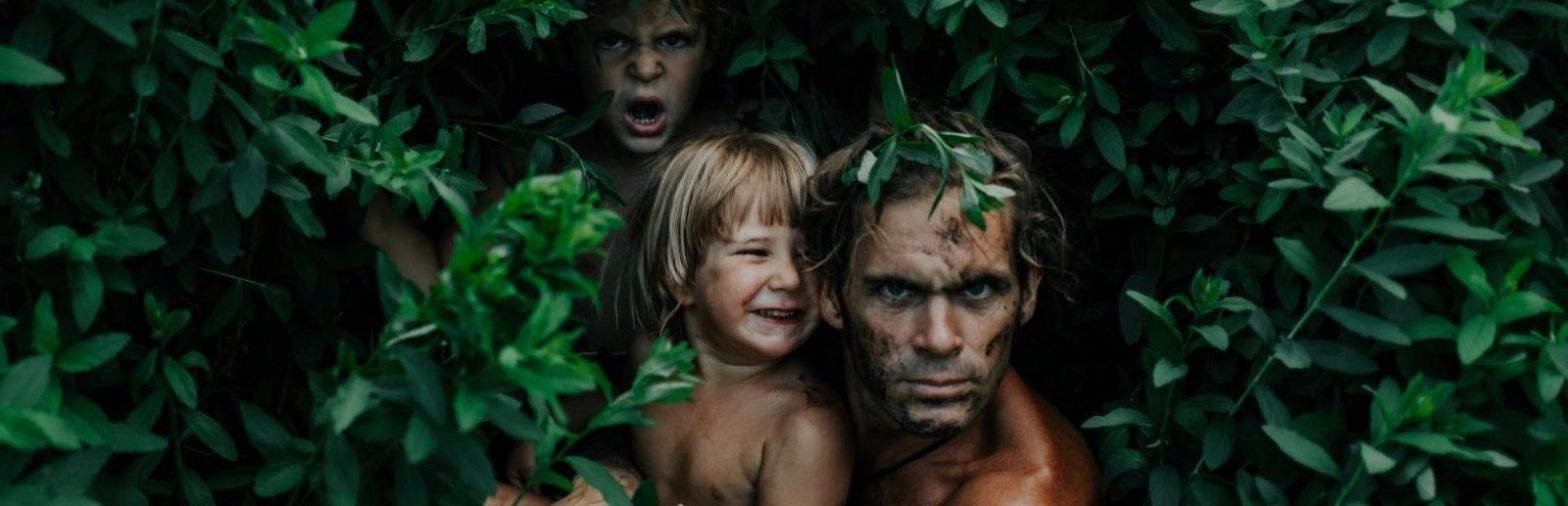
Whilst driving past a school one of Nik Payne’s kids looks out the window and refers to it as a prison. She, alongside her siblings, has been brought up largely away from society, although still having some contact with it, on the edges of the Norwegian wilderness. To be free, learn from the elements and be taught at home. It’s a life that’s suited them and for years the family have harmoniously been in touch with the world around them and have loved their lives away from the rest of the world.

However, after the loss of Nik’s wife Maria to cervical cancer there’s a struggle to bring money in, Maria seemed to be the main breadwinner with her photography work and website depicting the family’s woodland life. It leads to the possibility that the family may have to integrate with modern society, with the likelihood of three young kids being put into the school system.


From here Silje Evensmo Jacobsen’s documentary brings to mind feelings of Captain Fantastic and Leave No Trace. However, in this case there’s a strong passion from the kids for staying with their current lives. They, alongside their father, try to maintain what they know as much as possible, they’re consistently vocal in what they want – amongst open discussions about grief in the wake of their loss.

There are already connections to the outside world. Older step-sister Ronja has been living, more comfortably from her perspective, with her father from Maria’s previous relationship for a number of years. In a key moment defining the conflicted nature of the family which grows as their possible entry into wider society grows more likely she leaves an emotional and honest letter to her younger sister about the life that she wants differing from the state of where her siblings are at. Even by this point there have already been sacrifices made, and Nik is looking for ways in which there can still be a connection with the outside world beyond a simple garden.

The gradual development and look for balance and compromise makes for an intriguing and engaging sense of confliction and uncertainty within the family. Tinged with the emotion of grief which continues to hang over throughout the short run-time. But, letting go and moving on can be different things, and they can have different degrees and extremes. These are quietly and naturally explored in the background as the core decisions, searches and conversations of the family take shape, having a strong and engaging effect on these core strands and focuses. A New Kind Of Wilderness keeps itself simple, but says a good deal with what it chooses to focus on and holds naturally in the background.

A simple yet layered look at grief, confliction and compromise which fuels the development of the central family with quiet emotional details naturally working in the background to push what’s being observed at the fore.

Rating: 4 out of 5.

The Marching Band – Review

Cert – 15, Run-time – 1 hour 43 minutes, Director – Emmanuel Courcol

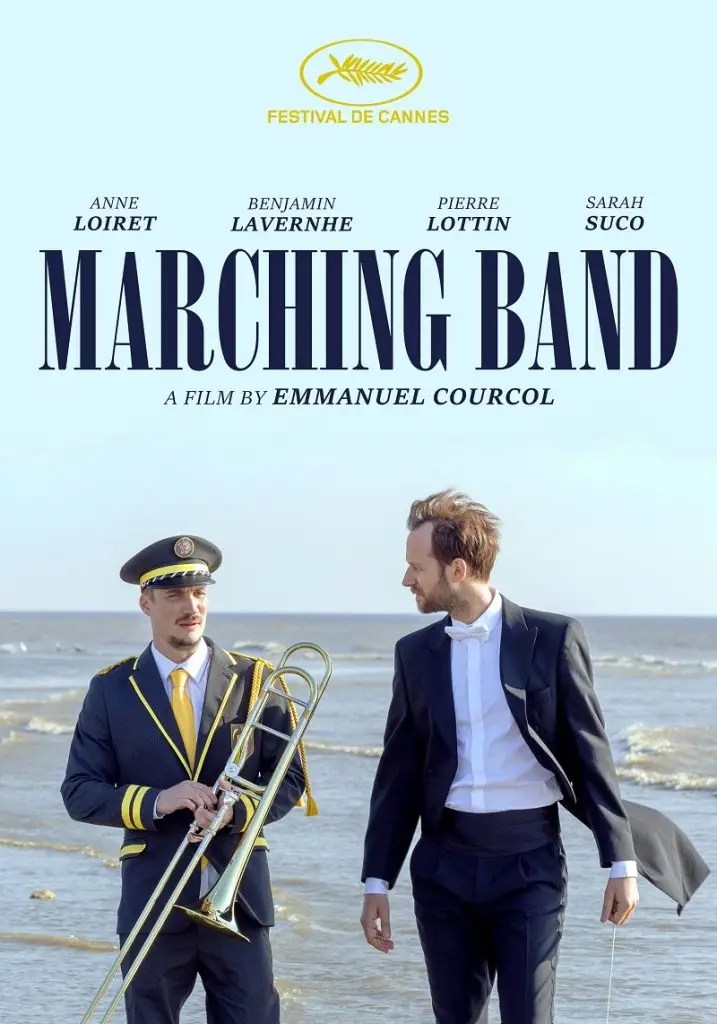
After being diagnosed with leukaemia and searching for a bone marrow donor orchestra conductor Thibaut (Benjamin Lavernhe) discovers his birth family, leading him to work with his brother’s (Pierre Lottin) factory-worker brass brand.

At its heart, The Marching Band is a film about connections with music. Whatever the genre, whatever your class and whether you can or can’t read sheet music. For orchestra conductor Thibaut music is an escape, but a serious one of focus. His players need to be finely-tuned and in perfect harmony. However, after learning that he’s adopted and meeting with his birth family he discovers that his brother, Jimmy (Pierre Lottin) plays trombone in the brass band of the factory he works in the canteen of.

The reason for Thibault’s discovery of his adoption stems from his search for a bone marrow donor, in order to save his life after a leukaemia diagnosis. The initial exchange between the brothers is tense and distanced, a stranger has turned up to Jimmy’s home with a strange, and upfront, explanation and request, after all. However, after a successful transplant Thibault’s life is saved, a trip to say thanks leads him to discover the dysfunctional band. One where not all members can read music, and some simply play it by ear based on what everyone else is playing.


Practice is taken up more by duff notes and bickering, but there’s still a want to play and enjoy the music, and company, as the threat of the factory’s closure hangs over all involved. Seeing room for improvement, Thibault offers to help out and conduct the band and finds a bond with both them and Jimmy, taking the film in along a simpler and more direct line than the various points of the opening stages may suggest.

We’ve seen the general course of The Marching Band before, particularly in a number of notable 90s British films – Brassed Off of course comes to mind – but its tackled with a likability from both leads and director Emmanuel Courcol that the lightness on display makes for engaging viewing. Details relating to the class differences of the central characters, and indeed the musicians and pieces that Thibault is working with, float in and out from scene to scene. Such points certainly help when it comes to the more dramatic elements in the relationship between the central pair, even if at times the wider band and their future is more at focus rather than the brothers.

But, there’s enough present to make the payoff of the finale worthwhile. An effective sequence which summarises the more fore developments of the film rather well. Those linking to the music, and what the characters can find, and have found, in it, and how their views may have changed from each other. It works rather well and caps off a likable, if unchallenging – but that doesn’t have to be a negative point – drama.

A familiar drama that’s handled well with a likable nature to both the central performances and overall execution, some ideas might float in and out of focus but the music remains a consistent and quietly effective core.

Rating: 3 out of 5.

The Phoenician Scheme – Review

Cert – 15, Run-time – 1 hour 41 minutes, Director – Wes Anderson

After a sixth assassination attempt, a wealthy businessman (Benicio Del Toro) seeks to make his distant daughter (Mia Threapleton) his heir before renegotiating funding for his grand vision to control a country’s core industries.

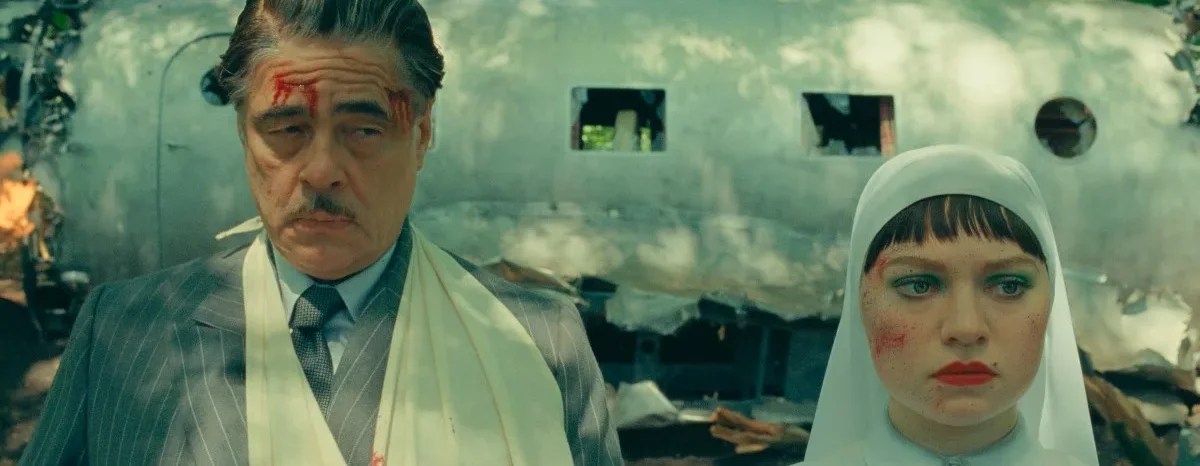
After a story about grief that needed less emotional distancing, Wes Anderson returns with perhaps his most emotionally engaged film since The Grand Budapest Hotel. The writer-director’s visual style is still very much present but with The Phoenician Scheme it feels as if Anderson is entering new thematic territory. Closest to The Royal Tenenbaums in comparison to his previous work, the central father-daughter relationship between Benicio Del Toro’s wealthy businessman Zsa-Zsa Kador and his distant, and only, daughter Liesl (Mia Threapleton), a nun preparing to take her vows.

After surviving a sixth assassination attempt Kador gets in contact with his daughter in the hopes of making her his sole heir, at least after a month’s trial period. A trial which involves showing her the ropes by travelling across the country of Phoenicia to convince fellow entrepreneurs, family members, royalty and industrialists to give up more money to fill a gap in a construction plan; the titular Phoenician Scheme. A plan which would allow Kador, and his investors, to control the core industries, and therefore economy, of the country through a complex system of mines, waterways and unethical practices.

As the pair go from place to place, investor to investor through a series of likable and amusing interactions – with more lightness and less coldness than the marketing or first 20 minutes may suggest, one situation featuring Tom Hanks and Bryan Cranston as a very funny double act involves a bickering-filled basketball shootout in a mine. The progression of investments are certainly tracked throughout but more as a key factor in Liesl’s ‘training’ in order to take over the family business. However, the core of the film relates to the different natures of the relationships she has with her father.


It’s mentioned that her mother was killed, but it’s not known by who. Her beliefs go against almost everything her father stands for, and wants her to inherit, and up until this point they haven’t spoken for six years. The chemistry between the pair brings a lot to the way Anderson moves the film along. Their behaviours both individually and bouncing off each other, helped by two great performances, particularly Del Toro on excellent from, create an engaging and funny dysfunctional relationship. One best summed up, as Anderson does so well, in a quiet exchange of one or two lines of dialogue – a key development here has a similar effect to Gene Hackman reassuring Ben Stiller’s “I’ve had a rough year, dad” with “I know you have, Chassie.”

The opening stages may feel conflicting as the verbose dialogue and fast-delivery tries to take place amongst longer scenes and set-up, but once things are established as the journeying across the country begins there’s a more relaxed film at hand. Even cuts to a black-and-white set of afterlife-based visions had by Korda throughout the film begin to settle in and have more poignancy as the film goes on, their meaning seemingly much more down to interpretation. For the rest of the narrative, the humour grows alongside the emotional journey at hand, with the connection/s being formed both felt and visible.

While handling likable zany elements – although not entering the territory of saccharine quirkiness – to add to both the humour and world at hand, one which is once again meticulously designed with excellent production design. There’s a lighter-than-expected tone here which still contains a good deal of heart amongst the deliberations and shouting matches which act as negotiations for the deal. Much of which is displayed in an, at least for Del Toro’s progressively bloodied and beaten character, increasingly dishevelled look.

It might take time to come together, but The Phoenician Scheme is Wes Anderson’s most emotionally engaged film since The Grand Budapest Hotel. Featuring a brilliantly performed core father-daughter relationship playing with new ideas, there’s a good deal of heart and humour amongst the quirky and amusing supporting characters in the quick-moving stages of the world.

Rating: 4 out of 5.

Lilo And Stitch – Review

Cert – U, Run-time – 1 hour 48 minutes, Director – Dean Fleischer Camp

Thinking he’s a dog, six-year-old Lilo (Maia Kealoha) befriends genetic experiment Stitch (Chris Sanders), while his creator (Zach Galifianakis) is on the hunt for him as he wreaks havoc across Hawaii, and puts her older sister’s (Sydney Agudong) status as her guardian at risk.

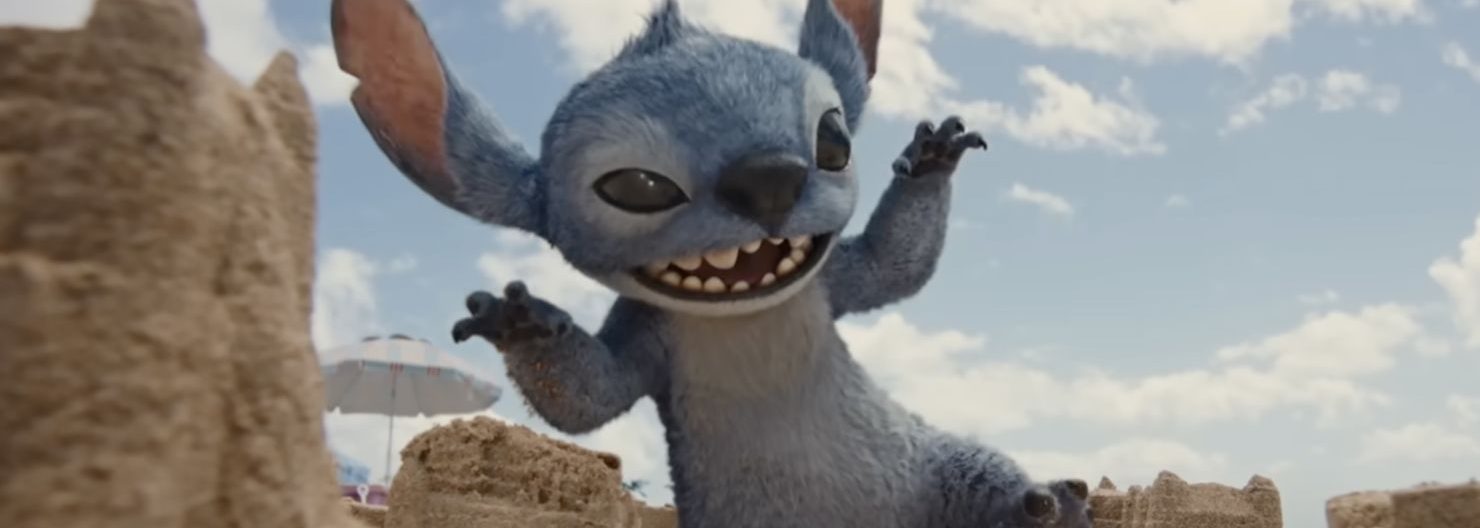
Disney has once again wielded the studio hammer and brought damage to their own product by doing so. The opening ten minutes of their live-action remake of Lilo And Stitch – until Moana comes along next year, currently the film with the least gap between the original and live-action remake for the studio, at 23 years – feel like a shot-for-shot, joke-for-joke, near beat-for-beat take adaptation of the original film. As things move from space to the shores of Hawaii there’s still a strong similarity in our introductions to both Lilo, Stitch and the supporting characters. It feels like the studio once more trying to remind us of how great the original is, and therefore just how much of a good time we’re going to have seeing the same thing again just in slightly different form.

When director Dean Fleischer Camp – behind the wonderful Marcel The Shell With Shoes On – properly gets the reins he takes a sincere look at sisterhood. Eighteen-year-old Nani (Sidney Agudong) is the legal guardian of her six-year-old sister Lilo (Maia Kealoha) after the passing of their parents. She’s struggling to hold things together at home, and is given four days by their social worker (Tia Carrere – the original voice of Nani) to get health insurance, stock up the fridge and pay the bills on the kitchen table or else the pair may be separated.

However, the arrival of genetic experiment Stitch (once again voiced by original film’s co-writer-director Chris Sanders), who is adopted from an animal shelter after crashing to Earth the night before, causes chaos in the pair’s lives. Especially with his creator, Jumba (Zach Galifianakis) and galactic agent Pleakley (Billy Magnussen) on his trail, sent to capture him by the Galactic Federation (led by Hannah Waddingham) – with Galifianakis and Magnussen providing both voices and live-action performances as the copied human bodies the pair adopt to blend in with the world around them. Although in both instances lacking any kind of double-act energy.


The comedy on display from all is much more slapstick based and to some extent brings Stitch down to just a chaotic figure rather than a creature designed for evil eventually trying to do good. He’s less positioned as one thing whilst the ohana that embraces him shows him that he can be good through their own kindness and is more displayed as mischievous with the havoc he wreaks. His bringing back home is less a housewarming for him and more just a continued instant spark that Lilo has with him. Only largely easing as the narrative develops and Fleischer Camp’s voice comes through more.

Yet, he’s more interested in the relationship between Lilo and Nani. The different bonds and relationships which they have, at one point Lilo says that she much prefers Nani as a sister than a mum. It’s a quiet and tender moment where the two, for a brief moment, don’t feel lonely or swamped under the rest of their lives. There’s a sincerity that’s not been on display for much of the studio-formed narrative beforehand. When bringing in its newer aspects and focuses, telling that more human story about relationships, this take on Lilo And Stitch is at its best.

There are some chuckles along the way, and generally things move along well enough, but it’s mostly the case when doing something different. When the film takes its time instead of rushing around trying to push a creature of chaos rather than – as the case was with the marketing for the original film, in regards to Stitch and previous Disney films – a character who stands out as different from all of his surroundings, but that can be embraced while dimming down some of his ‘badness’, as Lilo calls it. When taking its time there are slight reminders of the 2016 remake of Pete’s Dragon – still the best that Disney has spun out thus far. I just wish that happened more often instead of leaning back into attempts to remind the audience of all the points from the original film and just how much they may have enjoyed it.

There’s a sincerity to the gentle themes of sisterhood within Dean Fleischer Camp’s Lilo And Stitch, it’s a film that takes its time and still manages a good few chuckles. But, it’s paired with Disney’s remake of the same film, directly copying elements from the original just with more emphasis on chaos to diminish some of the ideas at play. Thankfully, there’s enough in the sincerity to make this likable viewing for the most part.

Rating: 3 out of 5.

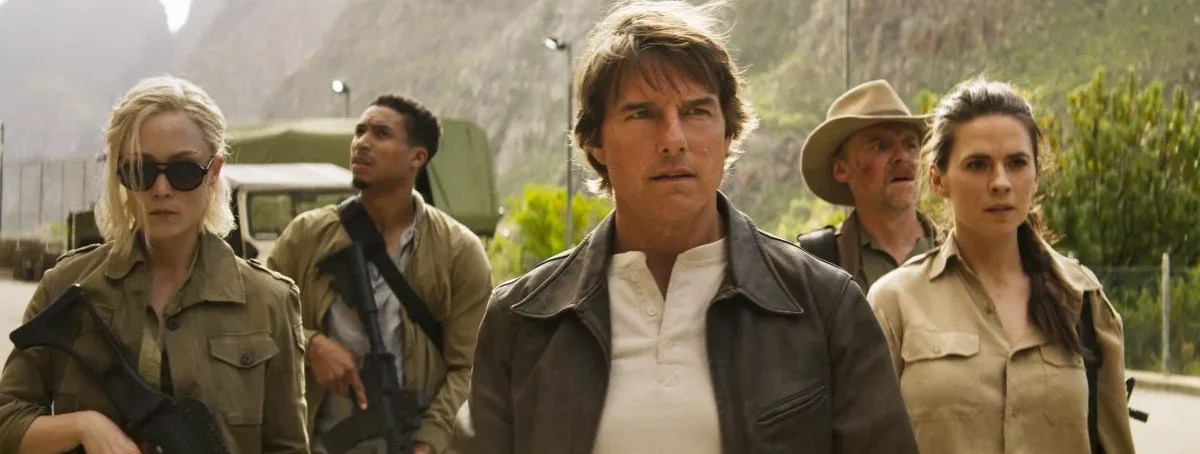
Mission: Impossible – The Final Reckoning – Review

Cert – 12, Run-time – 2 hours 50 minutes, Director – Christopher McQuarrie

With world leaders ready to defend themselves at any moment, Ethan Hunt (Tom Cruise) and his team have 72 hours to take down an AI power before it launches all of the world’s nukes, or someone else gets control of it.

For the most part the Mission: Impossible franchise has worked as a set of standalone films. Yes, there may have been callbacks to previous entries here and there, but they still hold up alone. The Final Reckoning, perhaps the final outing for Tom Cruise’s Ethan Hunt, acts not just as a part two to 2023’s Dead Reckoning (formerly followed by Part One until the sequel’s name chance) but a victory lap of the entire franchise up until this point.

In-between discussions of geopolitics and the possible wiping out of the entire human race clips and flashbacks of previous stunts and IMF escapades are sprinkled in when brought up – despite the feeling that the mention alone is enough, and something is taken away from them by the use of clips. Yet, even amongst both of these elements there’s a Mission: Impossible film to be found as Hunt and co have 72 hours to find the source code for the powerful AI named The Entity, to shut it down before it hacks into the biggest nuclear arsenals in the world and launches armageddon with them. However, world leaders are ready to push the button while they can to defend their country, while there are others – including Esai Morales’ Gabriel – who want control of The Entity, and therefore the world, for themselves.

While Dead Reckoning was an action-packed first half made up of multiple thrilling extended set-pieces, The Final Reckoning is a much more dialogue-focused piece. The action is still present, and there are some truly tense moments, especially when considering the stakes at hand, however they feel somewhat weighed down by the narrative themes that are playing out. Yes, this franchise has dealt with nuclear weapons before, but not quite to the hammered-in extent of the end of humanity.


Since Brad Bird brought the franchise into a new era with 2011’s Ghost Protocol, with Christopher McQuarrie successfully taking the baton for the subsequent follow-ups, there’s been something of a lighter tone to this franchise. Earning their 12 rating but still perhaps working for some family audiences. With The Final Reckoning’s tone and dealings it certainly pushes itself near the upper ends of a 12-certificate. The threat at hand hangs over each decision and action, especially with the need for everything to be done analogue to avoid The Entity finding out, while also weighing down a number of sequences. This is a heavy film which even after the first hour of discussion and throwbacks still feels occasionally bogged down by its stakes and conversations.

As the central team have to split off instead of feeling like two elements of the same story the second hour starts to feel like it’s telling two different stories while letting them play out at the same time. It adds to the overall business of the narrative, despite some likable moments. As with previous entries that are moments of lightness and one or two chuckles to be found here and there, maybe intentionally not as many but still some appreciated moments of levity crop up even during the climactic stages – where Cruise and the supporting cast throw themselves further into the piece than the large extent which they already have.

Pushing the action and tension when unfolding in grand scale moments which eventually come together more effectively to work as one. Helped by the racing score to back these sequences, whether defusing a ticking bomb or engaging in battle hundreds of feet above, and in one particularly breath-holdingly suspenseful instance below, ground there’s a lot of tension ramping up as the timer gets ever closer to zero.

There’s still a good deal to like about The Final Reckoning, although it could save its victory lap for the final stages rather than sprinkling it throughout the film’s near-three-hour run-time. Suspense and tension are still very much present, although the action scenes are perhaps fewer here to make room for the geopolitics and weighty set-up. It’s a set-up that sometimes holds the film back due to its pure weight and darkness, landing a heavy impact on the various points that play out. But, managing to keep its head above water there are still reminders about why this franchise has been, and continues to be for maybe this last outing, so thrilling.

Held down by dark and heavy themes, this more dialogue-focused mission means that The Final Reckoning, when not acting as a victory lap, can feel very busy when not catching you in its tense fights for time and survival. There’s a likable actioner within the various elements at play, it just sometimes takes its time.

Rating: 3 out of 5.

Hurry Up Tomorrow – Review

Cert – 15, Run-time – 1 hour 45 minutes, Director – Trey Edward Shults

A singer (Abel Tesfaye) in the middle of a world tour finds himself strained by a recent break-up and a failing voice, could an overnight encounter with a fan (Jenna Ortega) help or worsen matters?

Going into Hurry Up Tomorrow my lack of knowledge about modern music meant that I couldn’t have named you a single song by The Weeknd. Leaving after the credits had rolled I’m still not sure I could. Maybe a better knowledge of at least some of his music may have helped with the viewing experience of the film which the artist has co-written, co-composed, co-produced and leads. It’s an undoubtedly personal work. but for much of the run-time I sat there wondering what it was I was meant to be feeling and taking away.

As Abel Tesfaye, playing a version of himself with his character named The Weeknd; as if this film is acknowledging the dropping of a character, is tied down to a bed a fan, Jenna Ortega’s Anima, mimes along to some of his biggest hits, explaining the more-personal-than-they-may-seem lyrics to him. The scene, which appears to be directly referencing American Psycho, comes somewhat late in the day and with a more direct nature compared to previous montage-based sequences. Yet, it feels as if it adds little development to Tesfaye or his character, or even his stage persona. We’ve seen him up until this point struggling with a harsh break-up in the wake of his unfolding world tour, dropping out of a show in the opening song after being pushed on stage by his manager (Barry Keoghan) despite a failing voice. But these largely seem to be ideas rather than fleshed out points in the narrative.


Director Trey Edward Shults, who did interesting work with the style of 2019’s Waves, tries to create an otherworldly, dreamlike feel in the opening stages. As if aiming for an almost Lynchian feel it makes for an interesting opening and introduction to the world. Perhaps some of this comes from the simple fact that it’s nice to see a film like this on a wide release, in mainstream multiplex cinemas. That may have been part of the reason why I sat there throughout wanting to like it so much. There are some interesting beats here and there amongst the heavy dose of Acting from the three stars.

Yet, while creating some engagement this style also causes the film to feel unsettled as it cycles through the various struggles faced by The Weeknd – with the eventual resolve for him being to shout down the answerphone to his ex-girlfriend (voiced by Riley Keough) about what went wrong and how she never gave him a proper reason for leaving him. Could Ortega’s character be the one to save him from his spiral, or will she just make things worse? The looping events form something quite boring, struggling to find itself amongst a stretched run-time. All told between references to the aforementioned American Psycho, a sequence taken directly from The Shining and shots from The Adventures Of Prince Achmed, the latter of which I don’t think I’ll ever work out the inclusion of.

But, I still sat there wanting to like the film. I could feel it trying, but struggling under its constantly moving style. It feels unfocused and undetailed bringing in a slow dullness. It ultimately means that what it’s actually trying to say and go for feels unclear, even if at the same time attempted to be rushed and pushed in the final stages. Confusion begins to rear its head, and even slight frustration starts to settle in the more things are pushed causing things to drag and lose any interest that may have been initially developed in the dreamlike style.

A slow and unfocused character piece with little character insight, Hurry Up Tomorrow tries to push its style but even that falters eventually leading to a film where it’s unclear what’s meant to be taken away from it, no matter how much you yourself try to put into it.

Rating: 2 out of 5.

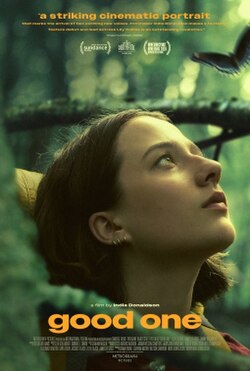
Good One – Review

Cert – 15, Run-time – 1 hour 30 minutes, Director – India Donaldson

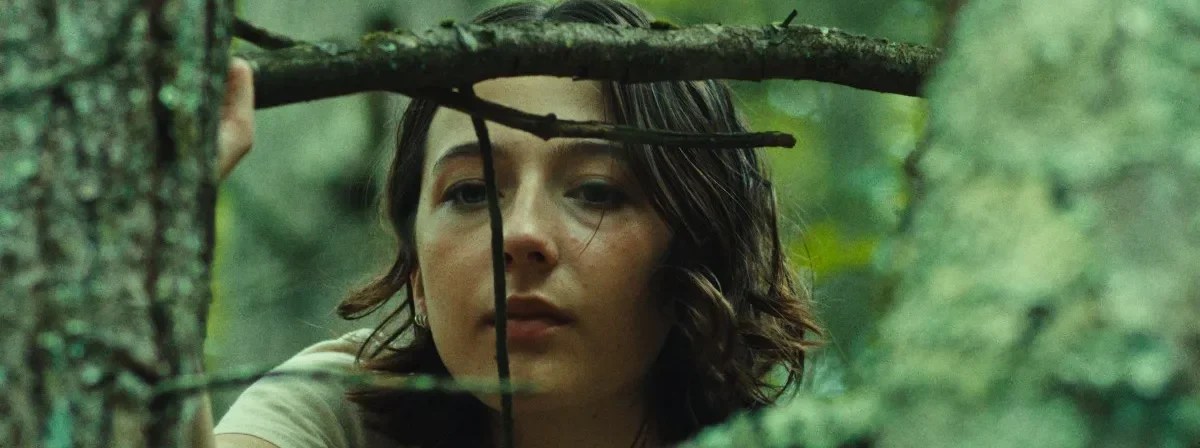
During a hiking trip with her dad (James Le Gros) and his best friend (Danny McCarthy), Sam (Lily Collias) finds herself at a distance with the machismo attitudes of the older generation.

A weekend hike is a competition. Whilst Sam (Lily Collias), quietly looks at the woodland scenery around her, taking it all in, the shots of her father, Chris (James Le Gros), and his best friend, Matt (Danny McCarthy) are loud in comparison as they make their final preparations before properly setting off on the walk. Rips and clatters display a noisy seriousness from the pair as if the weekend is less about letting loose and more about holding on to something.

As the trio meet a group of young men on their own hike, one of many which have taken them around the world, Chris’ face is washed with resentment. He and Matt seem to instantly hold something, or more likely multiple things, against the group and much of it seems to be immediately based on a generational divide.

While they display far less subtlety than they may be thinking, although the performances behind them are quite the opposite, writer-director India Donaldson’s feature debut is packed with it. Sam is gay and thinking about going to college, what could be three days of reconnecting with her father – after a distance has formed following on from his divorce from Sam’s mum and quickly moving on to a much younger partner who he has a baby with – leads her to feel at odds with the machismo behaviour and internalisation on display.


Led by a fantastic performance from Collias, often shown in close-up or alone in the middle of the natural surroundings, this is less a coming-of-age film, as many have put it, and more a quiet character study as Sam’s plans for a calm weekend face a generational and gender gap. Meticulously observed by Donaldson and understood by her cast there’s a compelling set of events unfolding from start to finish.

The hesitant divide is set out early on as Matt arrives at the car, having just argued with his son who was meant to come along. From their everyday frustrations begin to appear in the older pair as life hasn’t handed them their preferred cars in the last year or two – leading them to look back on their whole lives, to some degree. 

Matt’s eventually uneasy behaviour round a fire is dismissed by Chris when his daughter tells him what happened. It’s here where extra layers are brought to Collias’ performance, as the one character who has effectively externalised thoughts and feelings, at least to herself, does so even more. It’s what much of Good One starts to revolve around, externalising and holding in feelings in addition to a generational gap. Effectively detailed and engaging in its quietness, this is an intelligent and in-touch drama which never loses sight of where its main character sees herself in the world.

An intelligent, emotionally observant and in-tune depiction of a young woman facing a generational and gender gap in calm surroundings. Brilliantly performed and packed with subtleties this is a fantastic debut from India Donaldson.

Rating: 4 out of 5.

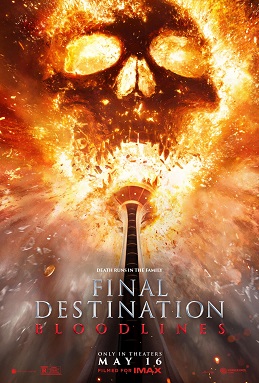
Final Destination: Bloodlines – Review

Release Date – 14th May 2025, Cert – 15, Run-time – 1 hour 50 minutes, Directors – Zach Lipovsky, Adam B. Stein

With her life being disturbed by a recurring nightmare, student Stefani (Kaitlyn Santa Juana) attempts to locate her grandmother (Gabrielle Rose) to find out what it means, only to discover that death is catching up with her family.

Instead of making a return with a remake or requel, as has been the case for other returning horror franchises since 2018’s Halloween, after 14 years, and following on from two generally lesser-regarded entries, Final Destination returns to the big screen for a sixth outing. One working in a similar standalone vein as before with occasional nods to previous entries. Yet, where it best succeeds is the fact that directors Zach Lipovsky and Adam B. Stein, clearly both fans of the franchise, understand the balance of comedy and darkness at play.

For every Tom and Jerry style marble-run build-up and execution of death there’s a suspenseful build up and sense of threat hanging over. Both forces combining to make for tremendous fun as the various escalations which lead to the demises that we see feel like their own individual set-pieces. Approaching the death with gleeful anticipation shared by the film and the audience. Getting a laugh from the sometimes, knowingly, ridiculous set of circumstances and a flinch from the gory splatter.

Death’s plan in this case has taken a while to catch up as he targets the family of student Stefani Reyes (Kaitlyn Santa Juana). Plagued by nightmares of a skyline restaurant disaster, seeing the perspective of two people with the names of her grandparents, she tries to track down her grandmother (Gabrielle Rose), despite family claims that she’s best just leaving things alone. However, after finding her she discovers that her dream was a vision her grandmother had before saving multiple lives at the restaurant; ever since death has been catching up, and now has to kill those who were never meant to exist – including Stefani, her younger brother (Teo Briones) and their cousins.


With each progression there’s a swiftness to Bloodlines that, while being the longest entry in the franchise at just under 2-hours, leads it to fly by. A good deal of which comes from the pure entertainment factor. Insert shots which add to the tense fate that the characters are unaware of and thrill of waiting to see how things unfold from a simple penny falling on the ground. Leading to an eventual trail of bloodshed and mutilation.

Within this trail the darkness lies. Yet, even in quieter scenes as the cast try to figure out how to stop death and break the cycle – featuring a wonderfully poignant turn from Tony Todd in his final film role, still relishing every line he’s given – there’s a sense of threat as they fear what will happen to them if they bring themselves to the only, still deadly, ways to disturb it. The balance throughout is well handled, often co-existing with great effect, and adds to the overall entertainment factor.

Very little of what we see is done with a wink down the camera. Instead, a great tongue-in-cheek grin staring directly into the lens as another wonderfully playful, chuckle-inducing needle drop adds to the dark humour (the soundtrack as a whole is rather good). Clearly made by fans who understand the workings of the franchise and what makes it so enjoyable; acknowledging and embracing the ridiculousness without ever feeling overruled by just silliness. Making for one of the best, and slickest, entries in the franchise.

Tremendous fun from start to finish mixing Tom and Jerry style disaster with dark tragedy for pure entertainment there may be plenty of laughs to be found within Final Destination: Bloodlines yet it never forgets the fear and tension in its splatter. As one of the best of the franchise it flies by.

Rating: 4 out of 5.