The Legend Of Ochi – Review

Cert – 12, Run-time – 1 hour 35 minutes, Director – Isaiah Saxon

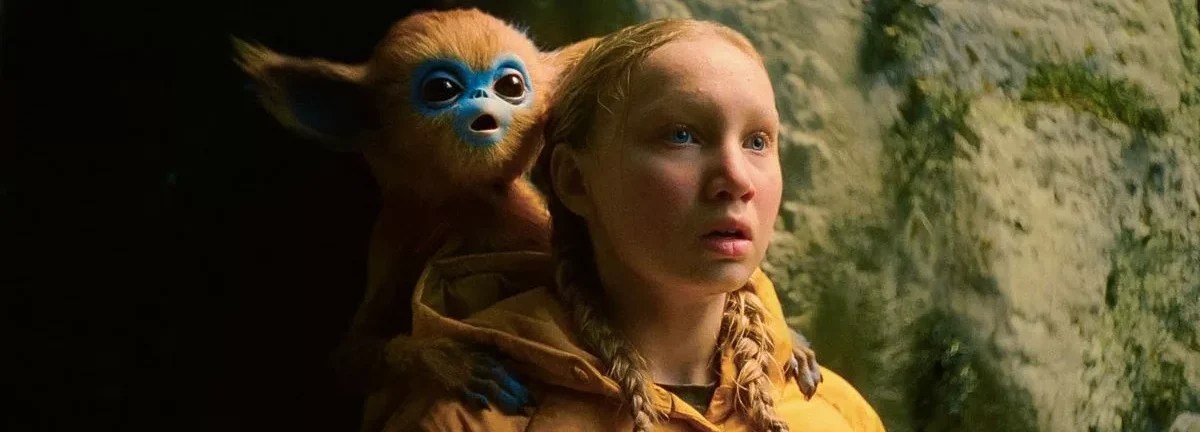
Growing up on an island, Yuri (Helena Zengel) defies the warnings of her father (Willem Dafoe) to take a potentially threatening baby creature to its home.

If you were to think of what an A24 family film might look like your first thought may not be something in the vein of 2023’s excellent Marcel The Shell With Shoes On. Instead, it may be more akin to The Legend Of Ochi. I’ve long talked a lot about the lack of live-action family films in recent years, and the indie studio’s latest offering is just that, with hints of Robert Eggers.

There’s a strong atmosphere held in the fog covering the forests of the island of Carpathia. Just outside the woodland is a small village, more a hut, where young men are sent to learn to toughen up and take on the world – or in leader Maxim’s (Willem Dafoe) eyes take on the deadly ochi; a group of large, orangutan-like creatures. Daughter Yuri (Helena Zengel) is often left behind, bored and wanting to explore the world instead of listen to her father’s warnings of doom and danger again. When discovering a baby ochi she has an excuse to do so in order to take it home.

As her journey exploring the brighter colours of the outside world unfolds a greyer one begins for Maxim and the children he’s training. Theirs is led by the belief that the ochi are the biggest threat out there. In both realms the technical aspects of the film create great sense of wonder.
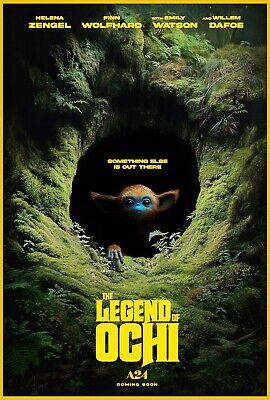

Evan Prosofsky’s cinematography brings about much of the visual atmosphere, with the production design and top puppetry for the ochi that we see bringing about the feeling of miniatures and classic family films from the mind of Jim Henson, such as The Dark Crystal and Labyrinth. Meanwhile, David Longsreth’s score will surely go down as one of, if not the, best of the year. A stirring set of pieces which perfectly compliment the visuals on screen and I’m bound to be listening to on repeat for some time.

There’s something transportive about each of the film’s elements that, even as it slows down in the third act to almost drink, and almost get lost, in its own surroundings, or tick off each of its elements, create a sense of wonder and immersion in the environments. Whether out in the forests, or creating chaos in a bubblegum-tinted supermarket there’s a good deal to be wrapped up in both emotionally and viscerally, and quite often those factors work hand-in-hand.

Throughout much of The Legend Of Ochi I was transfixed by the pure atmosphere of it. While its 12 rating means it won’t work for younger viewers, and it may be a hard sell for others, it’s a meticulously designed family feature that doesn’t shy away from a darkness and intensity, largely from Dafoe’s character and how he views the ochi. After struggling in the US, and getting little push here, this may mark one of my favourite films of the year.

A visually detailed family film with strong effects and an Eggers-like atmosphere, things might slow down a bit too much in the final stages but there’s still plenty to be immersed in, including perhaps the best score of the year courtesy of David Longsreth.

Rating: 4 out of 5.

The Naked Gun – Review

Cert – 15, Run-time – 1 hour 25 minutes, Director – Akiva Schaffer

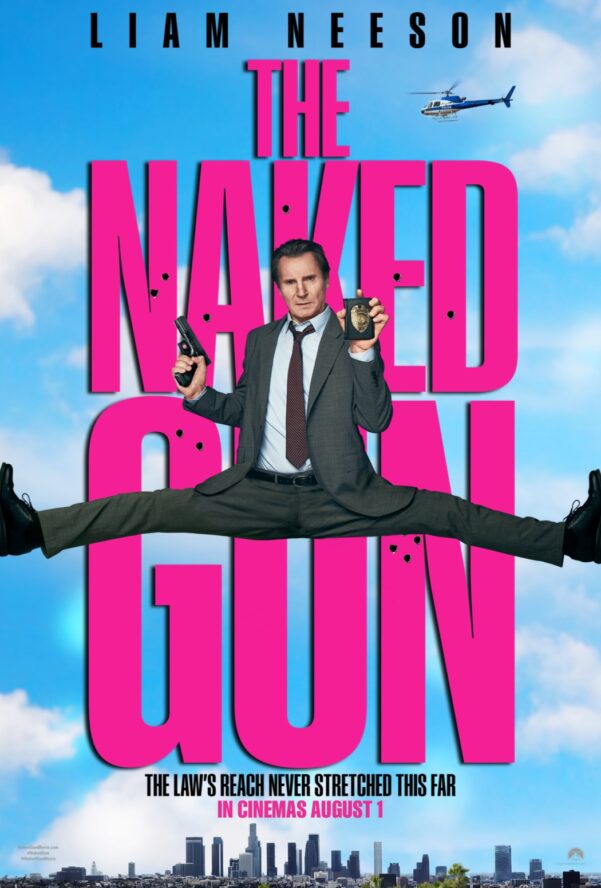
Whilst investigating a murder, Detective Frank Drebin Jr (Liam Neeson) uncovers a billionaire-led plot to destroy and restart the Earth.

While perhaps on the surface the ZAZ style of comedy seems quite simple, to actually pull it off takes a lot of effort to not make the obvious jokes obvious and also make it seem as if nobody on screen is aware that a joke is even happening. Even the great dead-pan abilities of Leslie Nielson ever so slightly acknowledged some of the gags with a bit of face pulling in the original Naked Gun films, although no bad thing. After years of sequel and reboot attempts, one finally arrives in the slight guise of a legacy sequel and Liam Neeson pratfalling into the lead role with no awareness of the comedy around him whatsoever.

It would be easy to fall into the trap of referencing and quoting the original film as much as possible, and while there are one or two visual nods, the writing team of Dan Gregor, Doug Mand and Akiva Schaffer (also serving as director), with additional uncredited material from Mark Hentemann, Alec Sulkin and producer Seth MacFarlane, largely stick to capturing the very silly tone of The Naked Gun rather than replicating gags. The only thing that sticks out amongst the slapstick and a consistently funny running joke about coffee cups, is an ill-sitting Bill Cosby reference; even in a film which includes a much-advertised to OJ Simpson’s role in the original trilogy.

The original Police Squad and Naked Gun series seemed very much to be parodies of 50s and 60s cop shows. In that vein this reboot, even with its references to electric cars, feels inspired by 90s and 2000s police dramas. Detective Frank Drebin Jr (Neeson) is investigating a murder case which leads him to billionaire Richard Cane (Danny Huston), who is secretly plotting to destroy the world with a device that unleashes people’s animal instincts (a la Kingsman), before restarting with a select few. It’s a narrative which is given just enough details to see the film through, as noted by the 85-minute run-time.


Where things truly set off quickly are in terms of the jokes. While the opening sequence may have largely been shown in the trailers once onto the unseen moments there’s plenty to raise laughs throughout the audience. Things may somewhat lose steam just before the third act arrives, but there are still a good few chuckles to be found. Perhaps not quite on the same consistent belly-laugh level as some might hope for, but certainly a number of audible chuckles are found throughout to help move things along. And, even then there are likely certain moments that go missed or unheard, or will simply still work on a re-watch – including a brilliantly understated brief visual gag involving a disposable glove. Plus, be sure to stay through and keep an eye on the credits.

The big screen comedy, let alone the summer comedy, has been much discussed as struggling, and almost non-present, in recent years. Many seem to be banking on success for The Naked Gun to show life still in the genre in cinemas. Thankfully, the film has a strong hit rate thanks to the attention that has gone into the screenplay and just what’s happening in the background of so many scenes as well as the upfront narrative and wordplay. A love for these films helps things to go a long way and trying to overly modernise and make something darker or more action packed doesn’t appear to have been on the agenda.

Instead, the efforts to make the joke are present for the behind the camera and below the line team, while those on screen go about unaware. Neeson’s oblivious turn is distinctly different to Nielson, he’s a gruffer, harder-edged LA detective with a love for season 1 of Buffy The Vampire Slayer. Meanwhile, Pamela Anderson, as femme fatale love interest Beth, continues a strong comeback – after an awards worthy turn in The Last Showgirl earlier this year – with a performance that truly lets go and embraces the silliness whole-heartedly. She may be underserved in some of the later sequences, yet still gives a great performance – as do the supporting cast, such as Paul Walter Hauser’s Ed Hocken Jr, Frank’s fellow detective making up for his blunders and misunderstanding of how the law applies to the police.

It may start to lose some steam as it gets closer to the finale, but this reboot of The Naked Gun still manages to deliver on the laughs. Understanding most of what made the original set of films work so well without trying to directly replicate them. It may not reach the heights of them, but it still manages to fit in among them (perhaps standing better than the final instalment 33 1/3: The Final insult). Helped along by great comedic performances from Liam Neeson and Pamela Anderson, be sure to see this on the big screen and with an audience.

A very welcome surprise with further entertaining surprises, The Naked Gun keeps the silliness and variety of the originals without leaning into repetition. Neeson and Anderson are brilliant in capturing the dead-pan nature that’s needed to keep things moving even amongst the loss of momentum in the latter stages. Making for a consistently funny, mostly quick-paced 85 minutes.

Rating: 4 out of 5.

The Bad Guys 2 – Review

Cert – PG, Run-time – 1 hour 44 minutes, Directors – Pierre Perifel, JP Sans

The Bad Guys have gone good, but the world struggles to accept them as such. To prove their change of heart they try to catch a new criminal mastermind striking the city, only to be blackmailed into their old ways one last time.

2022’s The Bad Guys was a pleasant, energetic surprise from Dreamworks. I left it more than happy to see further escapades from the titular group of criminals, even having turned good at the end of the first instalment. The opening to the sequel promises much of the same. We’re launched into an energetic car chase sequence – with a moment involving a crane and a magnet which induces a similar giggle-inspiring feeling to The Fast And The Furious franchise’s later instalments – full of bright, bursting animation – the studio seemingly inspired by anime visuals once again.

The team (voiced by Sam Rockwell, Craig Robinson, Marc Maron, Awkwafina and Anthony Ramos) are trying to prove to the world that they’ve gone good. But, the city struggles to believe them, especially during job interviews for a position at the bank they robbed three times. To prove they’ve gone good the team plan to capture a phantom thief who has been stealing notable items all across the city. However, the thief turns out to be a trio of Bad Guys fans (Danielle Brooks, Maria Bakalova and Natasha Lyonne), blackmailing the gang into helping them pull off one last heist, with unknowing global consequences.


From the opening car chase returning director Pierre Perifel, and co-director JP Sans, try to keep their feet pressed down on the peddle as best as possible. The screenplay is full of plenty of witty gags, and some good fart jokes in the climactic sequences, and they help to move things along with a quick pace. While there may be some familiar beats here and there they don’t tend to overly get in the way, at least as much as the sidelining of two of the three new criminal gang members. While leader Kitty Kat (Brooks) gets much of the spotlight, Doom (Lyonne) only really gets her moments in relation to Marc Maron’s Mr Snake, and Bakalova’s Pigtail feels like a cookie cutter excitable figure with only a few lines of scattered dialogue. The downfall of this pair feels largely linked to the fact that unlike the titular team, aside from their proper introduction, they don’t have something specific they can contribute to the heist at hand and so feel more like backup or just there for the sake of having a team instead of one new villain.

Yet, a sense of fast-paced fun is still to be found with the main focus being on The Bad Guys themselves. I left The Bad Guys 2 having once again had a pleasant time and being more than open for further outings for the chaotic group at the heart of the film, whether they be doing good or bad. Even when things stray into convention, or even for an animated film with talking animals raise questions as to how likely or survivable something is, there’s an easily embraceable ordered chaos unfolding on screen in colourful, energetic bursts.

There may be some familiar beats present in the narrative, and supporting characters might falter with an imbalance of details, but The Bad Guys 2 keeps its foot on the peddle for another fun, entertaining and energetically animated ride.

Rating: 3 out of 5.

Happy Gilmore 2 – Review

Cert – 12, Run-time – 1 hour 58 minutes, Director – Kyle Newacheck

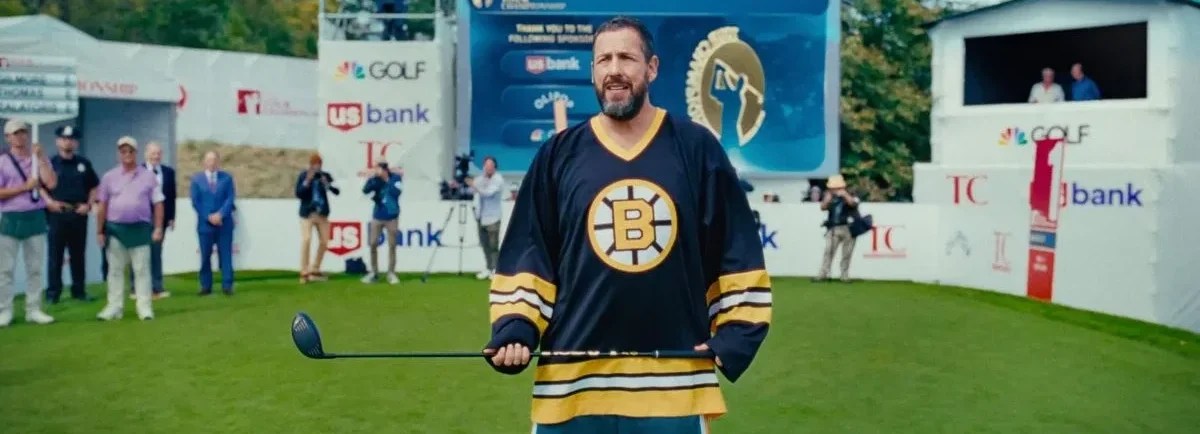
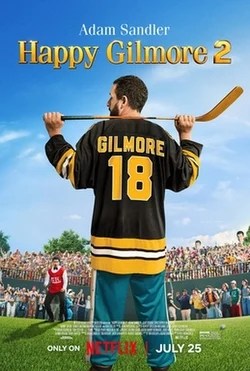
Happy Gilmore (Adam Sandler) is forced out of retirement to fund his daughter’s (Sunny Sandler) future in ballet. However, traditional golf is being threatened by a new, high-powered, video-game style of gameplay.

While some may accuse Adam Sandler of simply making films with his friends, cameos from the likes of Steve Buscemi and co have at least brought some amusement to the proceedings. However, when an entire film, one that’s almost two whole hours long, is crammed full of them – as if reporters and fellow golfers have been added almost for the sake of bringing in another famous face – it starts to wear thin quickly.

29 years after the original Happy Gilmore, one of Sandler’s more well-regarded films from his earlier years, the legacy sequel sees Gilmore (Sandler) down on his luck. After losing his style in the wake of his wife’s (Julie Bowen) golf-accident death he’s scraping by with work in a supermarket. However, when it’s recommended that his daughter (Sunny Sandler) attended ballet school in Paris the money to get her there seems as if it can only be raised by taking part in a golf tournament. However, with no help from alcohol, Happy’s skills have faded and he needs to get them back quickly.

Cue a first hour full of practice sessions on out-of-the-way courses and Alcoholics Anonymous meetings, featuring Sandler’s other daughter Sadie as the most supportive member of the group and Ben Stiller’s returning Hal L from the first film. Yet, while all this plays out in the background billionaire Frank Manatee (Benny Safdie) is trying to push Maxi Golf, a super-powered, video game style new form of gameplay made up of ultra elites, potentially including old Gilmore rival Shooter McGavin (Christopher McDonald – seemingly enjoying not holding back with his performance), fresh from prison. Maxi comes much more to the fore in the third act tournament. With all the colours, powers and stats which fill in the screen, and the general atmosphere of the sequences, Happy Gilmore 2 eventually ends up feeling like a video game adaptation that tried to keep as many of the visuals intact as possible, almost close to a let’s play of a game that doesn’t exist.


There’s a lot going on in this film, largely because of how many characters there are playing a part in Happy’s life. Each making a running joke, most of which fail to properly land. There are a couple of light chuckles here and there, but really not enough to justify a two-hour run-time. Instead, famous faces pop up here and there with the intended effect almost feeling like a point of recognition rather than a laugh from what they’re doing. Bring in the various callbacks and references to the small, much-quoted characters of the original and it starts to feel like Happy Gilmore 2 is largely just ticking boxes of fan service before jumping into a crazier comedy focusing on big scale crazy golf.

The underdog feeling of the original just doesn’t seem to be here. We know that Happy can play golf, especially when he gets back to the level he was once at. And the seemingly superpowered elite players of Maxi Golf with their colourful, cartoonish costumes appear to be angled as the golf equivalent of the Globo Gym Purple Cobras but never have the same effect, perhaps due to spending such little time with them apart from some lines of dialogue for Haley Joel Osment as main rival Billy Jenkins.

With so much going on, Happy Gilmore 2 simply feels like a messy jumble of ideas where instead of forming an underdog narrative the focus became creating characters and moments for Sandler’s friends and family to come to set for a day and make an appearance. It quickly becomes tired with the majority of gags faltering under repetition both from this film and the original.

There are more cameos than laughs in Happy Gilmore 2 which feels almost specifically designed to bring in as many of Adam Sandler’s friends and family as possible, leading to repetitive gags in a film that forgets its underdog stylings and instead leads to an overdone video game style golf tournament.

Rating: 2 out of 5.

The Fantastic Four: First Steps – Review

Cert – 12, Run-time – 1 hour 54 minutes, Director – Matt Shakman

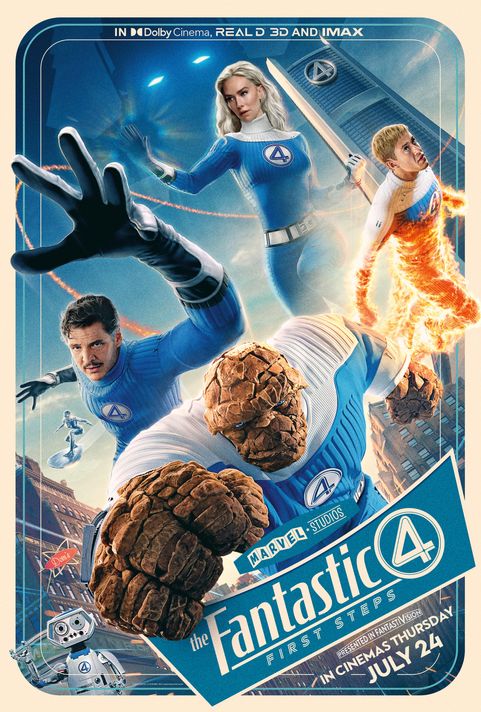
The Fantastic Four (Pedro Pascal, Vanessa Kirby, Joseph Quinn, Ebon Moss-Bacharach) find their status as beloved defenders of the world made tense when planet-eater Galactus (Ralph Ineson) threatens Earth, and the superhero family’s new arrival.

Pixar’s The Incredibles is often cited as the best Fantastic Four film. The inspiration of Marvel’s first family appears to be clear in that film, and now that film appears to have served as some inspiration on the 60s-inspired alternative-Earth setting of the group’s introduction into the MCU. The design doesn’t feel tacky and instead provides a welcome world that fits into the idea of the Fantastic Four being beloved defenders of Earth, with their own cynicism-free cartoon series and merchandise. The kind of team who people can go about their day not worrying about the world ending because they know the Fantastic Four will be there to sort out any threats that may turn up.

Yet, even with these feelings there were occasions through First Steps’ fairly restrained narrative that I felt that I’d rather be watching The Incredibles. Largely during the extensive build-up which sees multiple montage sequences to catch us up on the story so far, the family have had their powers for four years when we meet them, and get us finally to the big bad of the film.

After being warned of his coming by the Silver Surfer (Julia Garner) – who gets hints of some solid beats with Joseph Quinn’s Johnny Storm/ Human Torch – a trip into space introduces us to towering planet-devourer Galactus (Ralph Ineson), who plans to add Earth to his list of eaten worlds. However, he also has his eyes set on the son Reed Richards (Pedro Pascal) and Sue Storm (Vanessa Kirby) are expecting. Soon the family, including Ebon Moss-Bacharach’s Ben Grimm/ The Thing – in full acceptance of his rocky exterior – find themselves facing fears and accusations that they may not be able to save the Earth, with the population starting to turn on their family unit.


As Galactus gets ever closer an answer as to what to do seems more and more difficult to find. As this becomes the focus Galactus is generally made to feel like less of a big villain and more a threat to be faced – presumably with how much he’s built up and just how big a character he seems to be in the comics we’ll be seeing him again in the future, maybe in the main Marvel world/ universe, which this film sits outside of. There are some clever ideas in the final battle to face off against him, and in general when the film really strikes a good idea it runs with it and makes it last. One particular sequence involving the biggest plan of trying to defeat, or rather get around, the giant feels as if it’s being done with a smile as the effort off-screen appears to match that being portrayed on-screen – not to say that the rest of the film has a feeling of lax production, which is certainly not the case.

In general there’s a lightness to the film which matches the form of the narrative. There are some good chuckles here and there, largely from Quinn, and there’s an attempt to make the characters feel likable and engaging with their individual powers and traits, and as a team and family. While Pascal’s Mr Fantastic might not have his physical powers shown quite often, the film seemingly admitting there’s still an uncanny valley nature to live-action stretch powers; although those seen aren’t too bad here, his skills with a blackboard and piece of chalk are certainly rather good.

Generally, as it moves along, First Steps finds its stride and its pacing gets better. However, during a lengthy build-up and handful of montages along the way it feels as if the film is almost a bit too breezy, and trying to create the lightness through making things concise, which slightly backfires when it comes to the threat being faced. No doubt this Fantastic Four makes for a likable and engaging team who I’m sure will continue to grow these factors with future appearances – they’re bound to be key in next year’s Avengers: Doomsday – and they help to keep you engaged alongside the world that they slot into well, in addition to how that world responds to them which creates some interesting beats in a somewhat traditional vein. Yet, sometimes with everything I was seeing and feeling from the film I found myself wondering if it would be better suited to animation, and not just because of The Incredibles.

The likable dynamic between Marvel’s first family helps see The Fantastic Four: First Steps through a drawn out build-up and an occasionally held back narrative. When the film has a good idea it really runs with it and pushes engagement within its lighter confines.

Rating: 3 out of 5.

Friendship – Review

Cert – 15, Run-time – 1 hour 41 minutes, Director – Andrew DeYoung

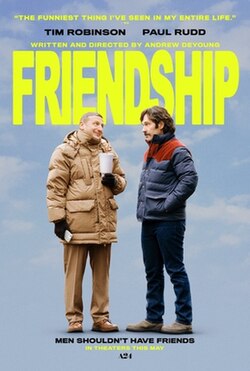
Marketing exec Craig (Tim Robinson) finds himself socially distanced from his colleagues and family, the arrival of suave neighbour Austin (Paul Rudd) brings a turbulent and increasingly desperate spark into his life.

With a simple bar of soap Friendship creates one of the most excruciating moments I’ll see in a film all year. With the push of Tim Robinson in the lead role, which was apparently written especially for him by writer-director Andrew DeYoung, bringing some of his I Think You Should Leave energy there’s a good deal of pure awkward cringe humour throughout the film as we see a man desperately trying to maintain a friendship which may not have ever started.

In an almost reverse Banshees Of Inisherin, marketing executive Craig (Robinson) appears to be at a distance from his colleagues and his wife, Tami (Kate Mara), and teenage son (Jack Dylan Glazer). The trio are looking to move house for a new start after Tami has been cancer-free for a few months, however when suave new neighbour Austin (Paul Rudd) moves in up the street Craig sees this as the potential spark that he’s looking for. The two appear to develop a bond when Craig is taken in by the TV weatherman’s almost carefree attitude to the rules and explorative nature – travelling through the sewers to find a space underneath City Hall – however after a sparring session with some of Craig’s friends goes wrong Craig finds himself quickly cast out and trying to make amends, only to make things worse not just with Austin but everyone.

The awkwardness hangs thick in the air on many occasions and with that how you’ll respond to Friendship is largely down to your tolerance of high-level cringe humour. For myself, I generally like the style but found it to run out of steam about halfway through. There are still good moments and a good few chuckles, another make or break for the film will likely be how those around you, if anyone, respond to it – I watched this in a very quietly attended screening with a scattered response.


As plot developments focus more on the downbeat situations that Craig finds himself in as his desperation to make amends and hold onto relationships pushes everyone away one or two developments don’t quite click as much. One particularly scene involving a drug trip in a Subway is certainly amusing but doesn’t quite feel as if it slots in with the surroundings. Certainly the second half of the film feels slightly more uneven as the build up, albeit taking things in unexpected directions and tones to what the trailers may have suggested.

The cast each put in good efforts with Robinson being a particular force with a performance that probably won’t get the levels of praise that it deserves simply for the comedy surroundings of the film. Yet, he’s where much of the cringe effect comes from on most occasions, especially in the aforementioned most excruciating moment – an instance which feels more and more drawn out with each new sentence that’s layered on as the group being ‘performed’ to look on in horror, shock and concern yet still holding an air of not knowing how to respond at all to what they’re being presented with.

Yet, Craig never feels like a wholly unlikable character. He certainly has a good deal of insecurity and self-doubt, especially in the wake of Tami’s relationship with ex-boyfriend fireman Devon (Josh Segarra). Yet, as he appears to drive his own relationships into the ground with a feeling of not knowing how to respond in certain situations, as if preventing awkwardness with his own inadvertent awkwardness, you can almost see him trying to do the best he can – at least largely in the first half before he appears to go too far. He’s constantly in search of that hope and spark to be the cool guy that people like, want to have a conversation and laugh with.

As that style takes a turn for isolation rather than loneliness in the second half things start to feel stretched out as the central figure starts to find himself at a loss of how to fix things. Leaving the film to slightly wonder what to do as well. It leads to a slower feeling to these events that while still holding some chuckles causes the run-time to feel somewhere pushed. Yet, there’s still some effective moments and a successful finale that helps to wrap things up without Friendship having to struggle as much as Robinson’s character does to maintain things.

While things might slow down in the second half, there are still a good deal of laughs, and effective cringe humour led by Tim Robinson’s great central performance, to see Friendship through until the end, although its truly excruciating scenes may prove too much for some.

Rating: 3 out of 5.

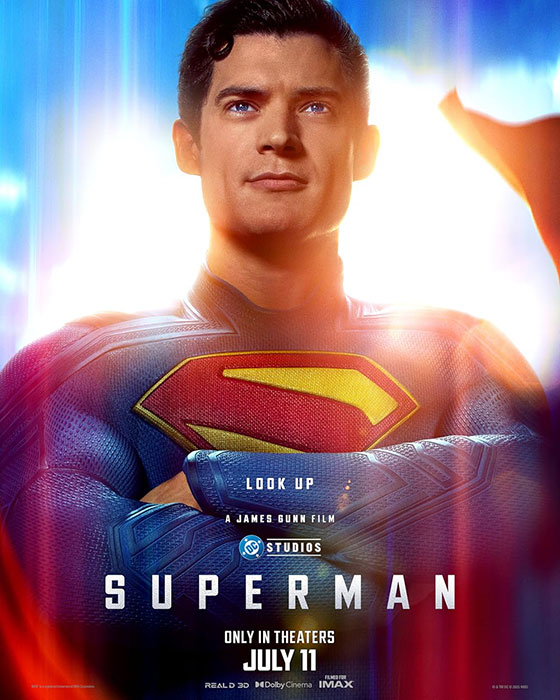
Superman – Review

Cert – 12, Run-time – 2 hours 9 minutes, Director – James Gunn

After stopping one country invading another, Superman (David Corenswet) becomes a figure of international controversy, something pushed and used by Lex Luthor (Nicholas Hoult) to finally defeat him.

The trailers for James Gunn’s Superman, the first entry in his and Peter Safran’s relaunched big screen DC universe, didn’t give a great deal away in terms of plot and instead hinted at a very busy affair. On seeing the plot it’s clear why that wasn’t used a selling factor – Superman (David Corenswet) dealing with the consequences of having stopped a war between two countries? Geopolitics isn’t quite what you want to sell your big summer superhero blockbuster on.

Yet, with the directions this narrative goes in, via way of corporate-financed heroes and pocket universes, there’s a symbol in the latter stages of the film that made me feel genuinely emotional. The 1978 adaptation of the iconic character, which to this day still means that Christopher Reeve is synonymous with the character, is a film full of hope; a patriotic tale of an American-based hero out to save the world and do good. It’s nice to feel that sense of hope again.

Leaning away from the tone of sci-fi romps such as Guardians Of The Galaxy and The Suicide Squad, Gunn still brings in a couple of chuckles here and there but understands that that style simply doesn’t work for Superman. This is a film where people wear silly costumes and dogs can fly (superdog Krypto is a force of joyous chaos throughout) and yet with the powers that are on display, and indeed the colourful nature, there’s an air of things being taken seriously so that ridiculousness doesn’t overpower. Although, there is the occasional nod and acknowledgement of some of the ‘from the world of comic books’ abilities here and there which brings in instances of humour – especially when it comes to the unofficially titled ‘Justice Gang’ featuring Green Lantern (Nathan Fillion), dead-pan Mr Terrific (Edi Gathegi) and the slightly pushed aside Hawkgirl (Isabela Merced).


The presence of these characters shows Gunn’s love and knowledge of comic books and there are clearly many characters and references for fans which may lead to further exploits for Superman or other figures who crop up here. And yet, the film as a whole avoids feeling so busy. As the hero deals with the follow-on attacks by Ultraman, who may have links to Lex Luthor (Nicholas Hoult really getting into the role of scheming, evil tech billionaire), the country of Boravia (whose president, played by Zlatko Bravic, has an air of Ken Dodd about his looks, but quite the opposite about his attitudes) inches closer to invading neighbour Jarhanpur. Growing international tensions and a race against time.

From the opening scene there’s a sign of a slightly flawed figure, or at least someone not always with the upper-hand as we’re told that Superman has just lost his first battle, three years after announcing himself to the world. Weaknesses come up a handful of times and there is an emotional nature to this take on the character, somewhat refreshing after the DCEU’s grittier, more fuelled-by-anger take. Corenswet steps into the cape with confidence and helps to bring about some of that sense of hope in his performance and strive to do good across the world. To save people. I believed him as Superman. In this take he and Clark Kent are very much the same, we see little of the latter guise, the relationships with Rachel Brosnahan’s Lois Lane and his adoptive parents on Earth (Neva Howell and Pruitt Taylor Vince), all aware of his secret identity, hint that there’s not as much of a performative nature to Clark and that he is simply part of Superman.

Yet, amongst all of this, the stakes at play and the elements of geopolitics, there’s an thoroughly entertaining film here. One that avoids feeling weighed down by all it features, although could perhaps have ten minutes cut from it, and creates an enjoyable, colourful comic book adaptation. A film that, for the first time in a long time, really gets across the idea of hope that Superman symbolises and strives for. It feels nice to feel that sense of hope, especially in this time and with what the film deals with as a part of its narrative – again, featured alongside all the unashamed comic book elements which fit right into the blend that makes up this particular iteration of Metropolis and beyond. Superman is once again a great time at the cinema.

Colourful, funny and entertaining yet never overblown, David Corenswet’s Superman returns the sense of hope to the character and his fight for peace. The action is punchy and there’s a lot to enjoy within both the comic book and geopolitical takes of good vs evil.

Rating: 4 out of 5.

Bring Her Back – Review

Release Date – 26th August 2025, Cert – 18, Run-time – 1 hour 44 minutes, Directors – Danny Philippou, Michael Philippou

After losing their father, brother and sister Andy (Billy Barratt) and Piper (Sora Wong) are taken in by foster mother Laura (Sally Hawkins), however their arrival may be part of a dark plan linking to Laura’s own grief.

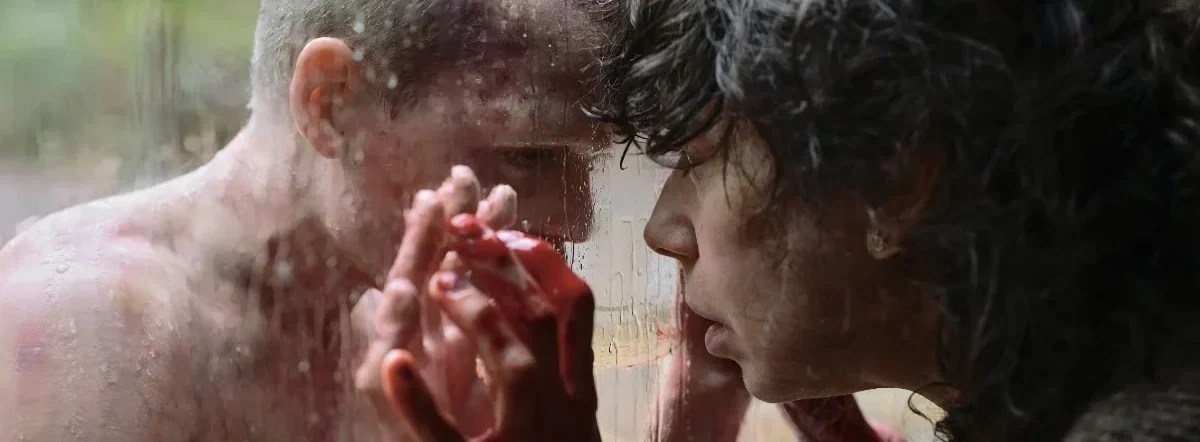
I didn’t know it was possible for your teeth to feel tense, however since seeing Bring Her Back a few days ago my upper fronts have been on consistent edge. The moment in question that spawns this, or rather moments, are undoubtedly behind the 18 rating given to the film by the BBFC for strong bloody violence and injury detail. Yet, much of what brings an effect to the Philippou brothers’ follow up to 2022’s Talk To Me is from what we don’t see.

One of the aforementioned moments involving an improperly used knife is built up to first in sound only as another character searches the lower shelves behind the kitchen counter. We know something has gone wrong, and can fear where things are going, but the visuals are eventually much more shocking. But, the clicks and scrapes of the build up are already enough to create a sense of tense dread for what we’ll see when 17-year-old Andy (Billy Barratt) turns around and the camera pans back up and along.

As Andy explores the home of new foster mother Laura (Sally Hawkins), having been welcomed in alongside his partially-sighted younger sister Piper (Sora Wong) after the loss of their father (Stephen Phillips), sinister forces appear to be at play. However, they might be darker than he could imagine. Laura’s behaviour towards the pair fluctuates and Hawkins unveils herself as the anti-Mrs Brown as we see glimpses of her seemingly recreating rituals she watches on a video tape.


The other presence in the house, young foster child Oliver (Jonah Wren Phillips), said to be selectively mute after the tragic lost of his birth family, successfully avoids the generic ‘creepy child’ clichés as his actions eventually take him into quite different directions which provide some of the most unsettling images and details over the course of the run-time. Yet, the bloodshed and grisly images are still somewhat rare in terms of everything we see in the film. Much of the film focuses on the psychological and delves into the sinister. It brings out the darkness and a sense of suspense as Andy, and in turn Piper, find themselves more involved in Laura’s world and a plan that she may have be hatching.

Laura’s behaviour grows into gaslighting and manipulation of Andy, especially when it comes to his relationship with his sister. When entering this territory heated emotions began to emit from the film and myself, partly from the frenzy of shouts and actions happening in these individual moments as characters emotions and hidden intentions begin to come to the fore. Yet, still not everything is clear which adds to the haze of these scenes. Writers Danny Philippou and Bill Hinzman, alongside the siblings in the directors chairs, give us enough to go on to maximise the fear of the worst in our minds, and only give us the necessary details instead of getting bogged down in unnecessary context or backstory for the cult video clips we see.

Again, much of what works about the film is what we don’t see and how things stem from that. Hawkins performance, while a highlight in a film with a number of great performances, is excellently twisted and sets up much of the sinister and eventually disturbing events, yet she isn’t where everything stems from. Instead, successfully Laura is where much of what we see branches off from, with her own grief at the loss of her 12-year-old daughter Cathy (played in flashbacks by Mischa Underwood), who she claims Piper reminds her of.

Bring Her Back may be a film that holds back its details and focuses on what isn’t seen by the characters, but eventually that all comes to the fore in pools of blood and a good deal of effective gore. Keeping a consistent hold on the strong performances and the dark forces at work, it’s a twisted and occasionally disturbing watch that really gets under the skin in a number of scenes as more comes to light, often for the viewer before it comes close to the characters. Much of which revolving around Sally Hawkins’ brilliant, increasingly mad, and at times maddening, performance.

Visually and narratively Bring Her Back holds off on a lot of details, providing the necessary details for a suspenseful build up that grows into a dark, disturbing and bloody burst with a set of great performances, particularly a brilliantly twisted Sally Hawkins.

Rating: 4 out of 5.

The Shrouds – Review

Cert – 15, Run-time – 2 hours, Director – David Cronenberg

Karsh Relikh (Vincent Cassel) owns a technology which allows you to see your lost ones inside their burial, however his connection to his late wife (Diane Kruger) twists when the software is hacked.

In a recent interview with Mark Kermode for Kermode And Mayo’s Take, David Cronenberg stated that he doesn’t view art or filmmaking as a form of therapy. While inspired by his grief in the wake of his wife’s passing in 2017, grief is given little time and space in his latest film, The Shrouds. A dialogue-heavy thriller every conversation, especially in the early stages, appears to intentionally skirt around the subject.

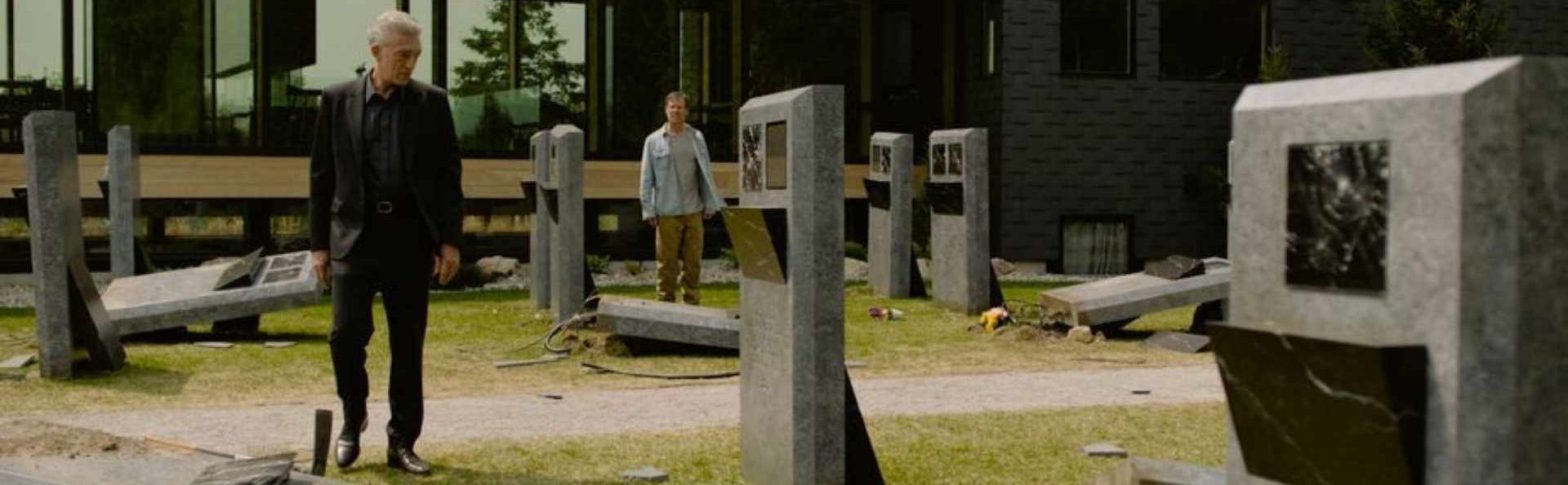
Karsh Relikh (Vincent Cassel – made to look somewhat like Cronenberg in hair and dress) has accepted the passing of his own wife (seen in visions in the increasingly dismembered form of Diane Kruger), but still has a series of connections with her. Through a software he owns, GraveTech, he can see her decomposing body inside the grave through a special 3D camera. Meanwhile, he gently talks to an AI system called Hunny made by a friend (Guy Pearce), designed to look and sound like Becca, while also experiencing a fluctuating relationship with her twin sister (also Kruger).


When GraveTech is hacked, and a series of graves, including Becca’s, destroyed Karsh’s search for the culprits leads to twists in his relationships. Cronenberg’s film is one about our relationship with the body being just as strong as that with the soul and mind. With the sense of distance that comes in the relationships there’s a coldness, too. The writer-director’s recent batch of films have each had an aesthetic coldness to them, in the case of The Shrouds helped by cinematographer Douglas Koch, but his latest appears to have an extra layer.

There’s something almost sinister and off-kilter about the aspects of Karsh’s interactions with people. Cronenberg sets the tone almost immediately with the opening line of the film as a dentist tells the protagonist “grief is rotting your teeth.” These feelings are heightened by the coldness on display, the way in which it feels that Karsh simply hasn’t been allowed the time to grieve, whether that be by himself or those around him. The dialogue is heavy but muted, the score sparingly used, it creates this feeling of withheld emotion. As if Karsh is still floating in his emotion, but having pushed it back in order to put himself into maintaining the physical and emotional connections with Becca in the forms she takes for him since her passing.

Morbid can often be seen as a negative term, but there’s a sense of it within The Shrouds that helps to push the interest there is to be found within the themes being played with. Even more so when it comes to the open admittance that this is a subject for which there may not entirely be ‘answers’, or even questions. It makes for an interesting and engaging watch, although one that’ll surely prove divisive, pushed by its untherapeutic attitude and demeanour.

A cold view of held-off, internalised grief, The Shrouds’ tone and style creates an interest in the various elements and meanings of the central character’s twisting relationships in a thriller led by withheld feelings and emotions.

Rating: 4 out of 5.

Jurassic World Rebirth – Review

Cert – 12, Run-time – 2 hours 13 minutes, Director – Gareth Edwards

A research team heads on a deadly mission to an island populated by dinosaurs, some mutated, to find a cure for heart disease, joined by a family they find stranded in the ocean.

18 months ago we didn’t know we would be getting a new instalment in the Jurassic Park/ World franchise. While having been worked on shortly after the release of 2022’s Jurassic World Dominion, based on an idea from Steven Spielberg and developed by screenwriter David Koepp, you could jump to accusing the film of having been made in a rush. However, while one or two slight instances might provide this feeling knowing the somewhat quick turnaround for the film, the main rush provided by Jurassic World Rebirth is a theme park style surge of excitement in its various sequences of dinosaur action.

Returning to a humans-in-a-dinosaur-environment basis, Rebirth sees a research team heading to an island near the equator where dinosaurs thrive, with the rest of the world seeing a decline in numbers having become bored and more inconvenienced by them than anything else, in the hope of finding DNA that could help create a life-saving cure for heart disease. However on the way the team (featuring Scarlett Johansson, Mahershala Ali, Rupert Friend and Jonathan Bailey) pick up a family (Manuel Garcia-Rulfo, Luna Blaise, Audrina Miranda and David Iacono) who are left stranded in the middle of the ocean after a mosasaur attacks their small sailboat.

It takes a bit of time to actually get to the island with all the build-up, and it’s not long until both parties are quickly separated after their brief uniting, when crashing into the location. From there we’re treated to a handful of sequences building up to the big finale, each involving a different dinosaur. The structuring is certainly somewhat simplistic, and can sometimes feel as if it’s putting a bit too much focus on the dinosaurs, but there’s no denying that they still have an effect.


Director Gareth Edwards clearly has a love for the creatures, and working with the visual effects in this regard after what was achieved with a mid-budget sci-fi such as The Creator. Plus, the T-Rex remains just as cool as it ever did and the river-side chase involving the creature is successful largely because of its presence. Yet, much like the film as a whole there’s a good bit of build up to it. It seems that each scene in Rebirth either has to build up to its point or stretches the point out a bit too much – causing the film to feel ever so slightly too long, perhaps fitting better closer to two-hours rather than two-and-a-quarter.

Part of this feeling may also come from the fact there there are effectively two stories being told with the separated group of characters, and perhaps the film could do without the presence of the Delgado family, despite the characters being involved in some good sequences. Their introduction feels like something of a tangent and each of their appearances as they try to make their way to a village they’ve been told about on the other side of the island make for a clear subplot which provides a bookend leaning into the main narrative arc, before the introduction proper of the D-Rex.

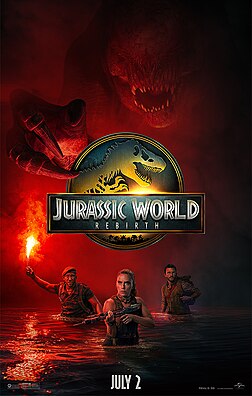
While having been featured in toy promotions and some marketing, if possible, the D-Rex is a creature that’s best witnessed for the first time in the film. A mutation straight from a shudder-inducing body horror, designed on the island as a way to bring back interest in dinosaurs around the world, the towering beast certainly provides a creeping sense of fear in the latter stages, while prior dinosaurs manage to create a sense of tension in their up-close moments.

The sense of wonder around some of the sights isn’t quite present, no matter how much Alexandre Desplat uses John Williams’ iconic Jurassic Park theme – only one time really feeling as if it’s been earned. But, there’s still a tension and excitement to be found within the individual moments which make up most of Jurassic World Rebirth’s slightly stretched run-time.

While the run-time might be stretched with drawn out or overly built up points, the individual sequences of dinosaur action that make up most of Jurassic World Rebirth have a thrill and tension that helps keep things going for the most part. There may not quite be wonder, but there is a fearful edge in the latter stages.

Rating: 3 out of 5.