Predator: Badlands – Review

Cert – 12, Run-time – 1 hour 46 minutes, Director – Dan Trachtenberg

A young predator (Dimitrius Schuster-Koloamatangi) tries to prove himself by travelling to the universe’s deadliest planet to kill the un-killable, with help from a broken Weyland-Yutani android (Elle Fanning).

Much of the threat and draw of the predator as an antagonist are its swift, evolved killing techniques. As Prey and animated anthology take Killer Of Killers showed this can go for whichever historical context you drop the Yautja species in as protagonists adapt and use what’s around them to fend for their lives. Predator: Badlands, once again helmed by Dan Trachtenberg, switches things up to focus on a young predator, Dek (Dimitrius Schuster-Koloamatangi), trying to survive one of the universe’s deadliest planets.

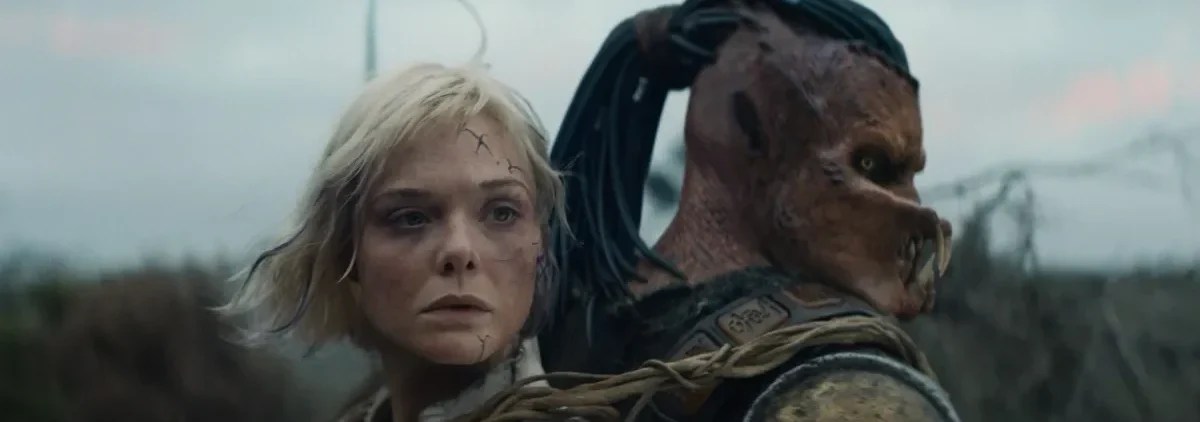
Travelling there to prove himself to his clan leader father (Reuben de Jong) by getting the head of an apparently unkillable creature as a trophy the planets and animals found on Genna are immediately forces to be reckoned with. Instead of showing off skills immediately Dek has to, like most characters in Predator films, learn and adapt before the big final confrontation – a sequence which from his perspective leads to the feeling of an alien John Wick or Robert McCall. However, it’s clear that on Genna Dek is out of his depth, and finds help from the remaining top half of a Weyland-Yutani android, Thia (Elle Fanning).


With Thia strapped to Dek’s back like a backpack the pair encounter the various forces and plants on the planet in a variety of action sequences. There’s something of an unsettled feeling to some of these events as the feeling of individual ideas and sequences comes through. It’s a tone that, alongside the generally CG-filled crashes of it all, created a sense of disconnect with me during these major sequences. There was some interest and amusement here and there, but they certainly create something of a lengthy build-up before properly getting into the meat of things with the involvement of Thia’s fellow android sister Tessa (also Fanning), trying to also track down the fearsome Kalisk, and now a Yautja, too.

When the feeling of things moving forward with more strength comes into play that’s when Badlands picks up and starts to progress with more engagement and a better sense of flow. The third act certainly takes a step up as it properly gets into more familiar Predator-style action, with an unfolding plan adding to the thrills on display, plus a hint or two of neon green blood marks (Badlands only holds a 12 – although likely top-end 12 – rating from the BBFC, a first for the franchise which has often held 15 and 18 ratings up until this point). Yet, it takes some time to get to these particular sequences with the various ideas happening in establishing future points, details and styles of action whilst exploring Genna. Ideas which have an occasional thrill despite being slightly bogged down in set-up and exposition.

Working best when focusing on the developed skills of the central predator, and those around him, through more fluid and structured action, Predator: Badlands takes some time to properly kick in with its, while lightly enjoyable, segmented expository sequences.

Rating: 3 out of 5.

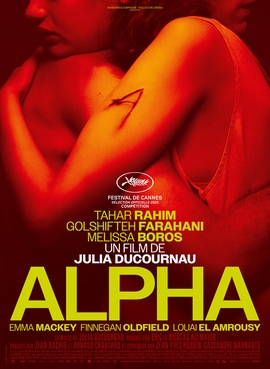
Bath Film Fest 2025: Alpha – Review

Release Date – 14th November 2025, Cert – 15, Run-time – 2 hours 8 minutes, Director – Julia Ducournau

After a dodgy tattoo, 13-year-old Alpha (Mélissa Boros) starts to be pushed away by those at school, and isolated by her mother (Golshifteh Farahani) when she may have a spreading virus that could turn her into marble.

The body horror of Julia Ducouranu’s Titane follow-up is much more gradual and less invested in shock factor than her Palme d’Or winner, or debut, Raw. While it could be accused of being more on the nose, with the virus that appears to turn those suffering from it into marble having very clear links to AIDS, it makes for an investing film as the fear of carrying the deadly virus, for which there is no cure, grows.

This is especially the case for 13-year-old Alpha (Mélissa Boros) and her mother (Golshifteh Farahani). After a dodgy letter A tattoo on her arm – both in look and tattooing process, seemingly done with an unclean, pre-used needle whilst almost passed out at a party – Alpha starts to display symptoms of the unnamed virus, leading to her being outcast from those around her at school. One scene involving other students fleeing from a growing pool of blood after an incident in a swimming pool displays the other side of fear for what will happen if she isn’t infected but everyone believes she is.

Isolated by her mother alongside her drug-addicted uncle Amin (Tahar Rahim), who is confirmed to be turning into marble; coughing dust and has back forming into jagged marble edges, a generational story starts to pan out with emotionally stirring effect. Ducournau shows that she’s not interested in just providing a shock factor – Alpha is rated 15, with only really one true ‘shock’ moment, compared to her previous features’ 18 certificates – and wants to use the body horror to tell and impact the story. To grow it in the tired, slightly run-down world that she and her cast and crew have created. One which I couldn’t take my eyes away from.


In general horror doesn’t appear to be the defining focus of the film, although it certainly falls comfortably into the genre with the worry and fear that grow not just within the titular character but her family, contrasted with that displayed by those around her. There’s no need to state further, or at all, the worries that are already present in those early teenage years, they’re naturally on display already as aspects already making things tougher for Alpha as she tries to navigate her new way of life, and the fact that it may be over sooner rather than later.

As things develop, and reach the closing stages, I may have found things becoming slightly tangled in the narrative yet I was still totally emotionally immersed. Alpha proved itself as a film that is primarily about how it made me feel over anything else. And I was totally in-tune with the emotions of the central character, and the ways in which Ducournau witnesses the world and the events that unfold in it. Blending horror into the themes at play and establishing personal character relationships through their fears to expand on both points at the same time with ease.

Whilst tonally different to her previous features, with a slower pace, Ducournau continues to prove herself as a masterful, visionary writer-director. Getting into the emotions of her increasingly scared young protagonist, with a strong performance from Boros, and those around her. The same goes for more fantastical moments when doctors, including Farahani’s character, walk the wards washing patients at different stages of turning into statues knowing there isn’t a cure, and seeing some of them pass away. Deeply rooted in its emotional basis, Alpha is a propulsive horror where the fear and worry are consistently about the conflict of personal and uncertain matters. It’s excellent, stirring stuff. I’ll be first in line for whatever vision Ducournau conjures up next.

A more gradual film than her previous works, Alpha still shows Julia Ducournau as an emotionally in-tune and invested writer-director, using subdued body horror to heighten the personal and uncertain worry and fear on display.

Rating: 5 out of 5.

A House Of Dynamite – Review

Cert – 15, Run-time – 1 hour 52 minutes, Director – Kathryn Bigelow

A nuclear missile has suddenly been launched from an unknown place directed at the United States. With 18 minutes until it strikes; is it real, and what should be done if it is?

With A House Of Dynamite Kathryn Bigelow channels a similar uncertain, deadly, countdown-based tension to the defusal sequences in her Oscar-winning The Hurt Locker. However, in the case of her latest it’s much more difficult to defuse a nuclear missile, or, it seems, to know how to deal with it. The United States has just 18 minutes to work out if the launch is real or not and if so how to respond to it, including working out where it’s come from and where it will land.

Tension rises the more uncertainty and its different contexts rise over the course of the opening 35-40 minutes. Shifting into panic as the digital clock rapidly morphs closer to 0 with still not a proper plan in place as to how to protect the population in such a short amount of time – alert notifications on phones only add to the tension and seem to largely be seen by government employees and officials who are already caught up in the fear, whilst trying to piece things together. For much of this time we’re based in the White House Situation Room, with attempts to contact the President (Idris Elba) trying to be made. From there we eventually switch to other linked locations and perspectives seeing more details of the US government’s responses over the course of the same countdown.


Diminishing returns is somewhat the case for the following switches in perspective as they tend to cover the same events just with a few more details in a different room. One of the best examples of the tension being brought back involves Gabriel Basso’s Deputy National Security Advisor frantically asking and negotiating with Russian ministers for assurances after time has already been lost trying to go through building security. During these instances which aren’t really heard of or glimpsed prior the film brings back detail and interest instead of feeling like a slight repeat which the second and third run-throughs certainly suffer from.

There are still interesting ideas at play, and a lingering sense of fear and dread around the central theme as a whole, but the tension isn’t quite as strong as it is through the more fluid escalations of our introduction to this world – especially with just how many players we see and hear from this time around. Bigelow does a good job of bringing in personal emotion for certain characters – one instance involving a father calling his daughter particularly comes to mind – even if the moments are brief and sometimes rub slightly against the pacing of the rest of the film.

As a whole the structure of A House Of Dynamite feels as if it holds it back. While everything happening at once would likely lead to a longer, busier, more chaotic film it would perhaps feel more solid with continuing tension than in the state of the finished film where we see the same (or at least largely similar) events three times. There’s still effect to be found beyond the first set of sequences, especially ones that try to lean into the emotional and moral side of things more, but the tension isn’t quite as effective as beforehand and that’s the biggest issue with a thriller of panic such as this.

By splitting A House Of Dynamite’s events across three perspective cycles the tension in the latter familiar instances feels held back, despite Bigelow’s focus on emotional and moral elements. There’s still suspense and panic to be found, but certainly not on the level of the strength of the first third.

Rating: 3 out of 5.

LFF 2025: Die My Love – Review

Release Date – 7th November 2025, Cert – 15, Run-time – 1 hour 59 minutes, Director – Lynne Ramsay

After moving to an isolated house in Montana and giving birth, Grace (Jennifer Lawrence) finds her mental health and relationship with her partner (Robert Pattinson) starting to spiral.

Die My Love was shown towards the end of this year’s London Film Festival, when tiredness has more than settled in and almost anything shown at 8am isn’t an 8am film. There’s a chance that I was too tired or not tired enough for Lynne Ramsay’s latest, sitting and waiting for the various ideas to come together in the vignettes which set up much of what is to come throughout the film.

We appear to move between moments and times in the relationship of Grace (Jennifer Lawrence) and Jackson (Robert Pattinson). Moving in to an isolated home in rural Montana the couple are ready for the next stage of their lives together, and to push ahead in their respective careers. For Grace that’s writing, however finding ideas and motivation to write becomes difficult as she struggles with her mental health, especially in the wake of her declining relationship and mental health.

“My brain just seems chopped up” she explains at one point, a phrase mirroring the style and pacing of the film. A slightly dizzying spiral of back and forths which certainly have their effect when leaning into the central performance which are often the standouts of the drama at hand. However, it does mean that the overall flow of the film can struggle. While the choppiness can help connect us to the character it can also put us at a distance from what’s happening on screen, especially in the introductory stages where it feels like a lot is being built up. The later knock-on effect is that the near-2-hour run-time starts to feel lengthy, especially when the scenes and needle drops in the closing stages each feel as if they’re about to bring things to a close.


Perhaps I should have known more about Die My Love before going into it, I went into it pretty much blind. When it strikes and really gets across the mental struggles that Lawrence’s central figure is going through there’s a real effect that gets across the toughness, and a sense of unease, about what’s happening – especially in the state of seclusion that the film takes place in.

Even when observing other characters there appears to be a sense of isolation that hangs over the tone and style of a scene. Something that Ramsay and Lawrence understand and click into place about the feeling of your mind kicking you and making you feel alone. It also comes through in a set of highlight scenes involving Sissy Spacek as Jackson’s mother, Pam – caring for her husband (a very briefly seen Nick Nolte) with dementia. One particular scene involving Nolte and Lawrence stands out amongst the noise of the surroundings and is called back to later on with a continuing effect from the translation of internalised mental pressure experienced by not just Grace but also Pam.

These are such aforementioned scenes which truly strike. Capturing a strain, a sense of isolation and possible fear with nowhere to properly escape or turn to. Would it matter much if the world caught fire or chaos broke out? Such thoughts perhaps make Die My Love worthy of reflection, and the film certainly grows whilst doing so. Beyond the occasionally choppy structure of ideas and vignettes which the film sometimes delves into. Regardless, it certainly seems as if a revisit in a non-festival state is in order.

Striking best when capturing the internal noise and struggle experienced by Lawrence, and pushed by isolation, there are a number of points where Die My Love feels like a lengthy succession of less-focused ideas and vignettes which hold back its biggest potential effects.

Rating: 3 out of 5.

LFF 2025: Anemone – Review

Release Date – 7th November 2025, Cert – 15, Run-time – 2 hours 6 minutes, Director – Ronan Day-Lewis

Former soldier Ray (Daniel Day-Lewis) has isolated himself in the woods for years, one day his brother, Jem (Sean Bean) turns up trying to convince him to come home to abandoned familial ties.

Halfway through Anemone it became apparent that this was a film that I was going to have to sit with for some time after. It was a feeling that only increased the more extended monologues of emotional openness led into moments of odd yet intriguing fantasy. Internalised anger leaks out in revelations such as “we learnt our violence from the #1 British regional champion” before leading into the sight of a strange, glowing horse-like figure.

Internalisation, and how it’s exacerbated by isolation, are key themes of Anemone. Daniel Day-Lewis’s Ray has closed himself off in a small shack in the woods. A former soldier, having done multiple stints during The Troubles, his hostile attitude gradually leaks out a history with violence and the undealt with effects that’s had on him. Building up into anger and hidden regret. His isolation and attitude has had knock-on effects that still hang over the family he left behind years prior – particularly ex Nessa (Samantha Morton) and grown son Brian (Samuel Bottomley). When brother Jem (Sean Bean), also a former soldier who has since turned to religion (a tattoo spread across his back reads “only God can judge me”), turns up to convince him to return home and confront the past there’s very little dialogue between the two for much of their initial interactions.


Bean remains generally silent for much of the run-time as the bulk of the dialogue is given to Day-Lewis for a series of monologues circling his character’s held-in rage and trauma. Day-Lewis not only notably returns to acting after retiring in 2017 after Phantom Threat but also co-writes alongside son Ronan, who makes his directorial debut with this feature. The pair appear to set out to cover a lot in the opening stages when it feels like there’s a lot being scrambled together, especially with the score and soundtrack assisting the feeling that the set-up is like a music video or lengthy montage.

When things start to settle that’s where the biggest emotional pulls are to be found. Yes, there are still the strays into more fantastical elements which will undoubtedly be very hit-or-miss; as the film likely will be, too, but they slightly gel better than some of the more naturalistic ideas at play. When we cut to Nessa and Brian alone at their home, whilst Ray tries to make it clear to Jem that the pair won’t reconnect, the quietness of these moments feel disconnected from everything else, as if not holding as much substance and only providing later details for Ray’s course. It’s part of the overall structure of the film which certainly creates some distance with its bumpiness throughout, yet still manages to have enough to hold interest in the unfurling emotions, confrontations and resistances.

Having given the film some time afterwards, and even more so before writing this, there’s no doubt that I have admiration for it and the ways in which it deals with the different ways of dealing with and confronting different kinds of trauma and violence. Especially when it comes to those which span generations. Strong performances, especially Day-Lewis who’s given the juiciest monologues throughout, help to add to the thematic interest, also present in the likely divisive fantastical beats. Just, whilst watching, much like the central brothers, there feels a slight disconnect between the elements at play which don’t always gel together.

While holding interest throughout, especially with its strongly performed themes of generational trauma and violence, there’s occasional disconnect between what Anemone depicts, especially when playing with a lot at once.

Rating: 3 out of 5.

Relay – Review

Cert – 15, Run-time – 1 hour 51 minutes, Director – David Mackenzie

A New York City fixer (Riz Ahmed) finds himself caught between parties in a chase for details when his client (Lily James) tries to hand back documents proving a major company cover-up.

I’ve long referred to Riz Ahmed as one of the best actors currently working. Relay is proof that he doesn’t even have to speak to be utterly chameleonic. Much of his performance as a New York broker/ fixer, helping those who have information of cover-ups but have decided against releasing it, is silent yet you can read exactly what’s going through his mind as he pieces together and executes each stage of his plan. Especially as things start to go off track and he needs to think in the moment, something which appears to rarely have to happen for him.

The client in the case of Relay is Lily James’ Sarah. Having taken a report from her former employer, Cybo Sementis, proving possible deadly issues with modified crops they’ve been working on she wishes to not whistleblow and uses Ahmed’s anonymous character – the pair are kept separate for much of the run-time, communicating via a telephone relay service for the deaf – to give them back before the team sent to stop her releasing them (led by Sam Worthington) catch up.


For much of the run-time there’s an intricate and exciting nature to the dialled-back action, largely based around Worthington and co trying to track James in various locations whilst Ahmed’s plan comes together (with him often appearing in a number of enjoyable disguises). As multiple parties almost converge at multiple points there’s a feeling that the control will easily shatter at any moment – especially in crowded public spaces such as an airport or Times Square. Tension helps to ease along the pacey nature of the run-time whilst separated by the communication between the two leads, still forming some form of connection and relationship despite never properly directly communicating.

There’s an air of a stripped-back paranoid thriller, yet one where you know full well that someone is constantly on your tail – especially with the fact that we see both their perspective and know their van is sat outside Sarah’s apartment building, with a prime view of her window. It’s a shame, then, that a key direction the third act takes feels so lazy, emphasised by the fact that the film appears to try to play it off as far more clever than it actually is. There’s still a thrill to be found in the events that follow, but just with a slightly tamer effect after the dampener that has been put on what has come beforehand. Where the tension that comes through still comes from is the continued reminders of how close characters are and Ahmed’s performance as his character has to think on his feet more quickly, and upfront, than he has before.

While there’s something of a dampener to the laziness of a third act decision much of Relay is an exciting, well-executed thriller of intricate plans that feel as if they could go wrong at any moment with the cat-and-mouse lens of the tension throughout.

Rating: 4 out of 5.

Chainsaw Man – The Movie: Reze Arc – Review

Cert – 15, Run-time – 1 hour 40 minutes, Director – Tatsuya Toshihara

Teenager Denji (Kikunosuke Toya) finds himself caught between romantic interests, however the devil form inside him, Chainsaw Man, may have to get involved, if he isn’t already.

On seeing the trailer for Chainsaw Man – The Movie before the latest Demon Slayer feature outing earlier this year I was led to giggling delight at the pure idea of Chainsaw Man. It’s largely what led me to seeing the feature follow-up to the anime series of the same name, which makes it clear early on that the base behind the devil form of teenager Denji (Kikunosuke Toya), and some of his fellow devil hunters, is no laughing matter, although there is humour to be found – watch out for a battle team up involving ‘shark fiend’ Beam (Natsuki Hanae).

In fact, slightly disappointingly, Chainsaw Man himself doesn’t properly appear until around 70-minutes into the 100-minute run-time. Before then the narrative is a relatively simple one. After a seemingly successful date with colleague Makima (Tomori Kusunoki), Denji meets coffee shop worker Reze (Reina Ueda) and a relationship quickly forms between them – despite Denji’s continuing feelings for Makima. There have been accusations towards this feature adaptation that the narrative is all over the place and confusing, largely from those who, like myself, haven’t seen the series (or heard of it until now). However, this general base is the rather simple core of things.


Devils and hunters are seemingly tracking down Denji just as his life is starting to find order, and a new meaning outside of work and Chainsaw Man, and much of this comes to fore in the latter stages of the second act, but a good deal of the film deals simply with the dates and relationships that the central character is exploring. His job and other form quickly explained in a simple line of dialogue or easily pieced together when needed. And even with trailers which have promised action and plenty of the titular figure it’s easy to settle in to the tone and style that the narrative is going for. There are some likable chuckles at the initial awkwardness Denji has when around Reze, and Makima to start with as they go through an entire day going between cinemas and coffee shops, unenthused by anything they see.

When the action kicks in it’s explosive in multiple ways. The already colourful palette gains a new array, even amongst the darker tones of the action as it kicks off. Boosted by the strength and detail of the animation, especially lively during action sequences. The different character forms we see emerge provide their own source of entertainment and a new layer to the fights that are jumped into with a good deal of energy. Maintaining engagement and thrills and managing to slot right into the almost rom-com edges of what’s come before thanks to the build-up of key developments.

Whether the film’s tone is one that fans will recognise from the series, or manga, I don’t personally know (although general response seems to suggest that it’s more than worked). However, for non-fans there’s a likable and entertaining quality to Chainsaw Man through its simple, entertaining and thrillingly explosive narrative.

Simple enough and engaging for non-fans, Chainsaw Man – The Movie has a likable relationship narrative which grows into an explosive and thrilling actioner with plenty of strength and colour in the animation to further fuel it.

Rating: 4 out of 5.

LFF 2025: Bugonia – Review

Release Date – 31st October 2025, Cert – 15, Run-time – 1 hour 58 minutes, Director – Yorgos Lanthimos

Cousins Teddy (Jesse Plemons) and Don (Aidan Delbis) kidnap a major CEO (Emma Stone) believing that she’s an alien intent on destroying the Earth.

I’ve begun to go into Yorgos Lanthimos films with the same giddy excitement that Star Wars fans may well have gone into the recent sequel trilogy with. Perhaps it’s for that reason that despite liking Bugonia I was still somewhat disappointed by it (and I was generally very positive on Kinds Of Kindness).

While a remake of Jang Joon-hwan’s 2003 dark comedy Save The Green Planet – originally intended to be directed by the South Korean director – the film is undoubtedly a Lanthimos production. While narratively one of the director’s more accessible outings, stylistically he continues to capture off-kilter worlds and exchanges, all with a dead-pan coating. Courtesy of the overall tone and strong central performances.

Yet, as cousins Teddy (Jesse Plemons) and Don (Aidan Delbis) hold powerful CEO Michelle Fuller (Emma Stone) captive in the basement of their isolated home there’s likely to be a strong split as to whether you see their interactions as humorous or serious. The reason for the kidnapping is that the pair believe Fuller to be an alien looking to destroy Earth, and they plan to stop her. As people around me in the screening laughed, sometimes uproariously, at the conspiracy-theory-laden views, led by Teddy, I saw the tone and intention as wholly serious. Especially during a particularly unsettling scene set to a tonally opposing needle-drop.


When humour does strike it’s the opposite of grinning and winking at the camera, fitting in with Lanthimos’ slightly sideways worlds and the fantastical edges that can construct them – in this case it’s uncertain as to whether Stone’s character is or isn’t an alien, although the film is less concerned with this question and more the cousins’ insistence that she is. Will they be found out, “they won’t” Teddy assures Don “no one on Earth gives a single f*ck about us.”

By focusing on the conspiracy theories at hand, and the CEO being subjected to them, Will Tracy’s screenplay might take time to properly kick in, but once things are properly brought together has an interesting exploration of the growing threat rumbling beneath. One which may well spark earlier on a rewatch, which I should give the film now on the other side of my likely too high expectations going in.

Once things have properly come together there’s a more direct nature to things. The narrative feels more confident as Teddy and Don start to lose theirs in the wake of unexpected events and resistance from their victim. As things ramp up the drive of the film and its themes, and seemingly what Lanthimos wants to explore most, grows. Bringing in that more engaging nature through the darker elements at play. 

Elements which you can flip a coin as to whether you see humour in them or not, but manage to eventually land an effect once the narrative is properly established. Making for a solid off-kilter satirical drama, even if slightly disappointing for those expecting another Poor Things from Stone and Lanthimos (to which Bugonia is very different).

It might take some time to get going, and responses to the satire will be split, but Bugonia’s engagement factor grows over time, especially when Lanthimos latches on to the perspectives which push the rumbling threat at hand.

Rating: 4 out of 5.

LFF 2025: Hedda – Review

Release Date – 24th October 2025, Cert – 15, Run-time – 1 hour 47 minutes, Director – Nia DaCosta

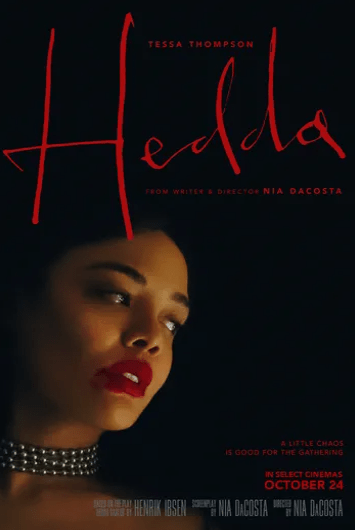
Hedda Gabler (Tessa Thompson) and her husband (Tom Bateman) are hosting a lavish party in the hope of persuading others into giving him a professorship, however an old face (Nina Hoss) from Hedda’s past, with an intimate manuscript, could derail the evening.

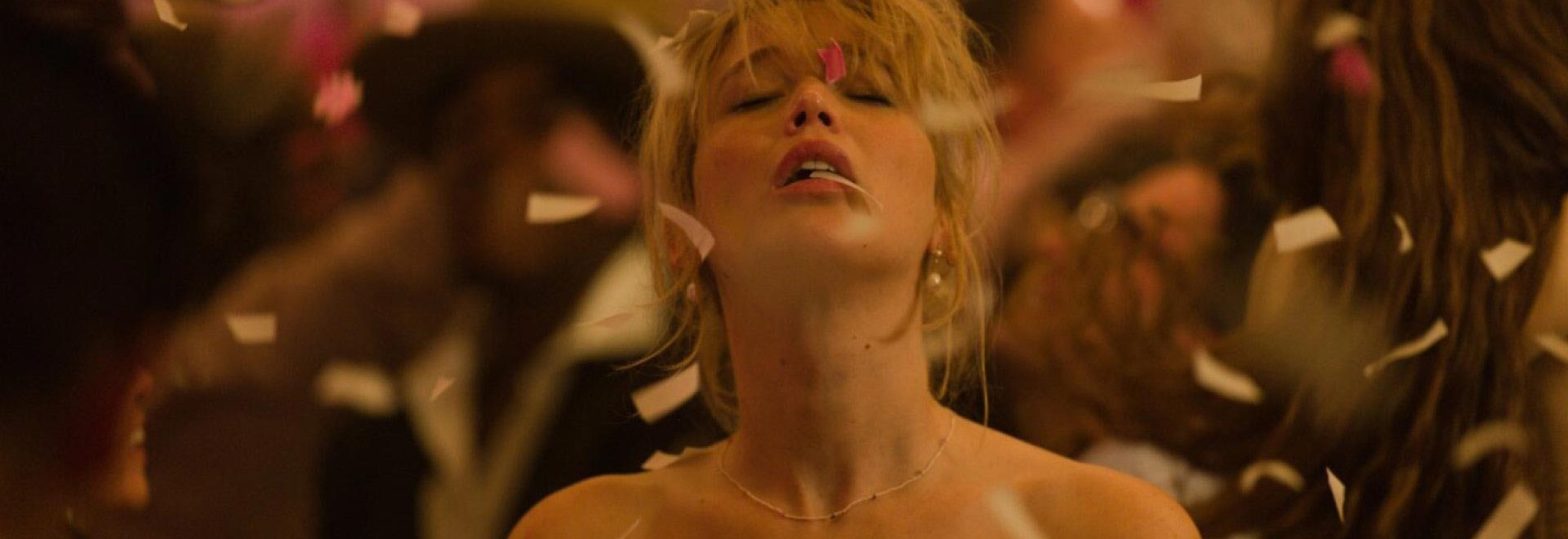
Mingling with guests, and trying to gently curry their favour into giving her husband (Tom Bateman) a professorship, Hedda Gabler (Tessa Thompson) is pulled in many different directions. Smiling, and often flirting, through her interactions she breezes through exchanges before moving to the next as if all one big conversation with a changing face. That is until the arrival of old face Eileen Lovborg (Nina Hoss) arrives. After learning that Eileen is in consideration for the same position, and has with her a manuscript of her life’s research – an intimate, and perhaps exposing, exploration of sex and humanity (a bold topic for 1950s upper-class Britain) – Hedda, alongside the narrative, starts to be pulled in multiple directions.

As Hedda’s early promise that “my whimsicality had its consequences” starts to unravel over the course of the night and she starts to multitask playing gracious host, old lover and competitor the faces and exchanges which crop up start to tangle. The overriding feeling for Thompson’s increasingly cracking composure is a need to have her dream life, by securing her husband the job. The way she glides around the halls decreases as things become less effortless for her, being told “everything that I have, everything that I am is because I’m f*cking brilliant!” in a heated exchange with Eileen.


When playing host the unfolding events certainly have their quirks. Less instances of squandered wealth and more moments that bring to mind that the rich characters are just living in another world entirely. It’s a thought that crops up a handful of times once the staggered build-up of the various elements at play is finally moved on from, the more locations around the grounds we visit, or figures we see – one thing’s for certain the film manages to avoid feeling stage-like, it being based on Henrik Ibsen’s play Hedda Gabler. Yet, the feeling of moving around adds to the slightly busy feeling within the narrative, and emphasises the overlap-turned-tangle at hand.

As things start to play out more closely together the run-time begins to be felt, especially with the decision to announce each of the film’s chapters with Roman numerals. The dramatic tones are heightened as the sensuality which DaCosta, alongside Thompson and Hoss, brings in starts to decline to focus on the heated interactions and titular character’s loss of control. There’s an intriguing nature to the various beats when they’re properly brought together and treated less as separate elements, but it takes some time, and a slightly staggered path plated with occasionally baffling luxury, to get there.

Much like Tessa Thompson’s lead character, Hedda’s narrative finds itself pulled in different directions, occasionally pushing its run-time and diminishing the combined tones at play.

Rating: 3 out of 5.

Sketch – Review

Cert – 12, Run-time – 1 hour 34 minutes, Director – Seth Worley

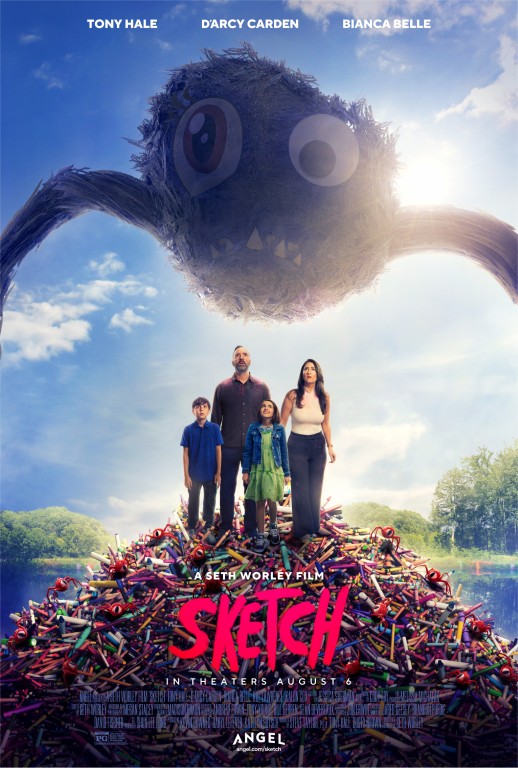
When her sketchbook falls into a life-bringing pond Amber (Bianca Belle) and her family take on the scribbled monsters which have emerged from the pages.

Sketch finds itself with a 12-rating from the BBFC, for ‘moderate horror’ and ‘violence’. While certainly some of the monsters that emerge from the pages of young Amber’s (Bianca Belle) sketchbook after it falls into a magical pond have a sense of threat and perhaps tension about them but not quite with a sense of darkness or strong fear-factor as something like the PG-rated The Kid Who Would Be King, to name another recent live-action family film, had.

The overall tone and style of the film is one that would feel fitting amongst well-remembered 80s family films, the kind that are fine when looked back on but hold a good deal of nostalgia and love for those who saw it at the time. There’s a slight Spielberg-produced influence to the narrative and visuals as the narrative rather simply revolves around Amber and her family – brother Jack (Kue Lawrence), father Taylor (Tony Hale) and aunt Liz (D’Arcy Carden) – trying to reach each other whilst battling the brought-to-life doodles; themselves a colourful array which create an amusing set of antagonists along the way. Alongside a handful of chuckles.


The monsters are encouraged creations of Amber’s. A counsellor at school says that instead of lashing out and actually attacking another student she’s doing the healthier thing by sketching her frustrations out – even if some of her drawings are quite violent. There’s an amusing and believable nature to Amber and her sketches. A childlike sense of knowing how violent what they’re saying and drawing is without being fully aware of how violence what they’re saying and drawing is. Even the more innocent creatures, orange spiders where the bodies are eyeballs, which are designed to steal phones and wallets are meant to eventually progress to taking eyes and fingernails.

While coming from her responses to bullies and comments at school Amber’s drawings also stem from grief over the loss of her mum. In the way that it speaks to its younger viewers about letting out emotions and dealing with them there’s an admirable quality to Sketch. One that speaks directly to such viewers while also working as an amusing 90-minutes or so for those also watching. With some effective chuckles and monster battles along the way throughout the slightly familiar beats of the narrative there’s a likable live-action family flick here.

Likely to speak well to younger audience members, Sketch should work for all ages with a likable and amusing, if familiar, 90-minutes with some solid monster doodle design.

Rating: 3 out of 5.