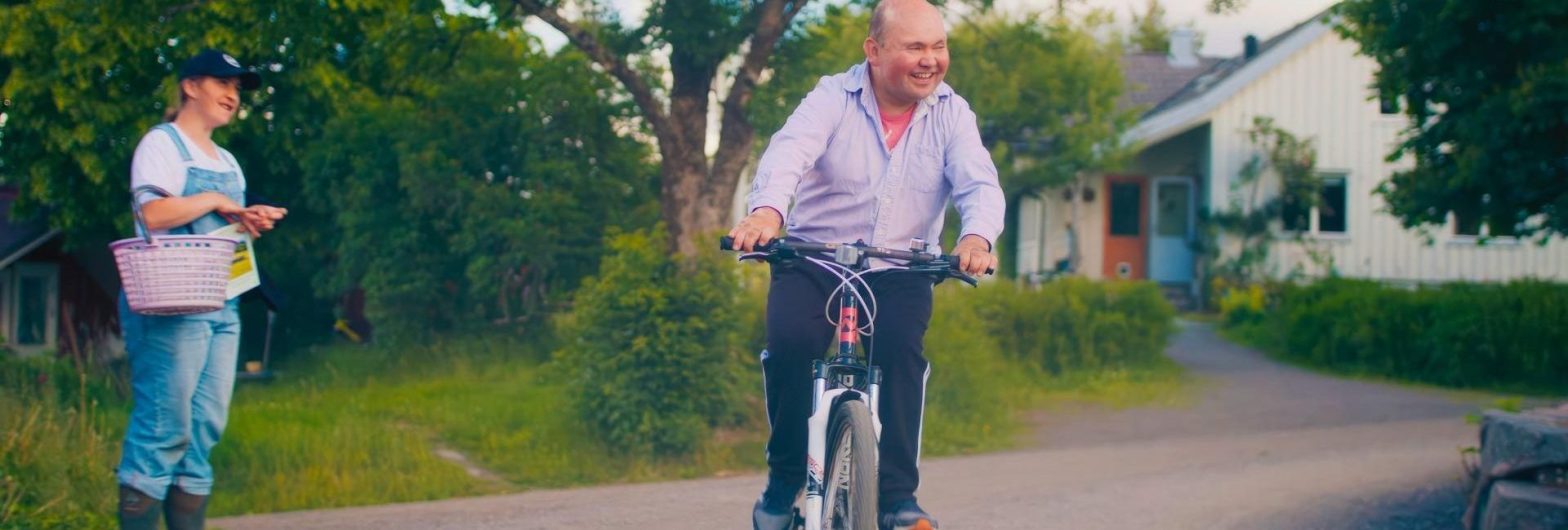
Release Date – 3rd April 2026, Cert – PG, Run-time – 1 hour 12 minutes, Director – Ragnhild Nøst Bergem
30-year-old Ola lives in an inclusive Norwegian village, exploring the community around him and looking at what life is, and could be, like for him in the wider world.
30-year-old Ola Henningsen doesn’t let the world stop him. He doesn’t need to when he’s allowed to be as determined as he is, both by himself and those around him. He lives in Vidaråsen, a small Norwegian village which houses an inclusive community, particularly for those with learning disabilities such as Ola. It’s a quiet place, seemingly tucked away, where people are people. Everyone’s supported and encouraged by each other and life appears to be calm and welcoming.
Of course, there’s a world outside and one of independence which Ola talks about exploring, especially when his friend moves away. Independence, community and respectful acceptance are key themes throughout director Ragnhild Nøst Bergem’s documentary which follows the titular figure through his life as he discusses his passions through taking part in speaking events and activities put on in the community he lives in.
However, after a while the tone and attitude of such scenes can start to feel similar. At just 72-minutes Being Ola is a short film, yet it feels as if its points could be condensed into an actual short film with less bordering on repetition. Ola still makes for a likable focus, especially when talking about his views for independence, moments showing him going out into the world have a particular effect as things finally appear to have developed in some way beyond the affable focus that takes up much of the run-time.
Again, one that’s good-natured and likable, especially when it comes to the figures we see as part of the peaceful and picturesque community at the heart of the film, but feels as if it has more that it could explore and say, yet steers focus into the basics and activities in the village where Ola lives and takes a while to stretch beyond. We see Ola step out, and want to see him succeed and continue the confident stride after his mentions of exploring independence. When this happens, there’s a regrown interest and engagement as ideas of acceptance are widened out to look at the wider world, and possibly make bigger points away from the base of the village where things feel most firmly comfortable.
Feeling better suited to a short film, there’s a likable nature to Being Ola, especially when it manages to widen its focus to look at independence and wider acceptance beyond that of the titular figure’s peaceful community.
 Just A Little Bit Random