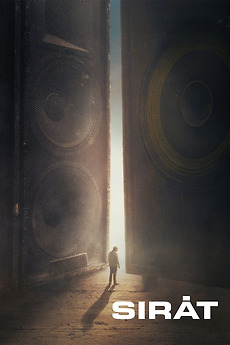
Release Date – 27th February 2026, Cert – 15, Run-time – 1 hours 54 minutes, Director – Óliver Laxe
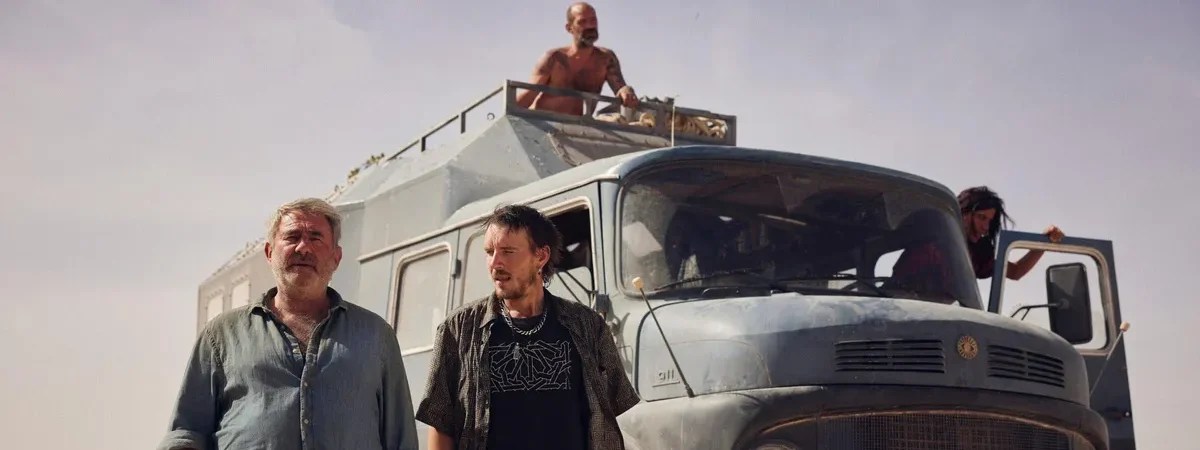
A father (Sergi López), alongside his young son (Bruno Núñez Arjona), goes in search of his missing daughter through a series of raves in the Moroccan desert.
Sirât’s Oscar nomination for Best Sound isn’t just for the rave music that echoes throughout it. Pulsating in the early scenes through the crowds of organised gatherings before thumping through personal speakers set up near a couple of vans. Whatever the set up each happens in the middle of the desert. An endless and shattering landscape, the effects of which are altered by a set of drawn out, tragic noises around the film’s midpoint.
It’s a moment that switches from one likely divisive half to another. While some may find the first half of Óliver Laxe’s drama, co-written with Santiago Fillol, slow and focused more on the raves than father Luis’ (Sergi López) slightly repeating search, accompanied by his young son Esteban (Bruno Núñez Arjona), for his missing daughter, others may find the emotional punches of the second half a growing stretch that can prove difficult to buy into; or perhaps just a bit much.
In the case of the second half I certainly found myself starting to struggle to buy into one particular moment towards the closing stages before the tension started to settle in. Bringing back round the feeling of pure overhanging fear that the film creates so well. When mixed with the music I was reminded of Gaspar Noé’s Climax, a film that while highly divisive I love the consistently descending terror-inducing effect of. So much of the effect of these moments in Laxe’s film is down to the atmosphere created in the soundscape. The explosive bursts, the echoes of the desert landscapes and van convoys as Luis and Esteban follow a group of ravers to what’s described as the last dance, in the hope that Mar might be there. It seems to be their last hope and opportunity.
As it goes on, the film proves itself to be so much about its atmosphere and landscape. The sense of bleakness that starts to play into the events of the second half as Luis and Esteban start to become more a part of the close unit of partiers going from one drug-assisted rave to the other spreads out into what we hear of the rest of the world. Radios tell us directly, and soldiers telling European ravers that they need to go home immediately, suggest that international tensions are escalating, attacks could be hinting at World War III. But, the problems of the ensemble are still the focus, they’ve escape from the troubles of the rest of the world, but into their own pains and troubles.
It’s an idea that takes a while to grow in the film, especially in the somewhat held back nature of the first half as the father and son that act as the film’s perspective are wandering towards a more direct sense of searching. There’s a push from what we see, and attention to detail in what we hear where many of the moments that hit are defined by how they sound more than anything else.
Throughout Sirât I found myself interested by what it was doing and the directions in which it was going. And it’s certainly a film that I’ve thought about quite a bit in the days since seeing it. Largely in terms of the tone that it strikes and the shift that occurs halfway through into a likely more divisive narrative than that taking place in the first, and for rather different reasons. My thoughts have continued to be interested by the film, and its most dramatic moments. Those intended to stop the audience, and characters, in their tracks with a sense of emotional shock. I may not have always felt that, but I still felt some form of effect and generally stayed in the world of the film and the various senses of loss that it looks at in an isolated state and place shut off, initially intentionally, from the rest of the world.
Both halves of Sirât will likely prove divisive for different reasons, the first may be somewhat repetitive and the second may have beats that aren’t always brought into. But, the detail of the sound design creates an atmosphere to the desert and growing pain of the characters that undoubtedly continues to interest me and hold some form of lasting beat in my mind.
 Just A Little Bit Random