Release Date – 13th February 2026, Cert – PG, Run-time – 1 hour 18 minutes, Directors – Maïlys Vallade, Liane-Cho Han
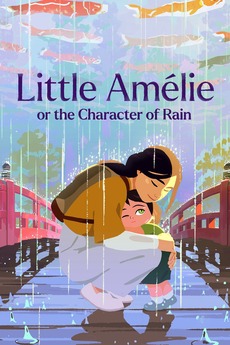
In the first years of her life in 1960s Japan, Belgian Amélie (Loïse Charpentier/ Emmylou Homs) explores the world through her young interpretation and imagination, growing to understand it through the help of nanny Nishio-san (Victoria Grosbois).
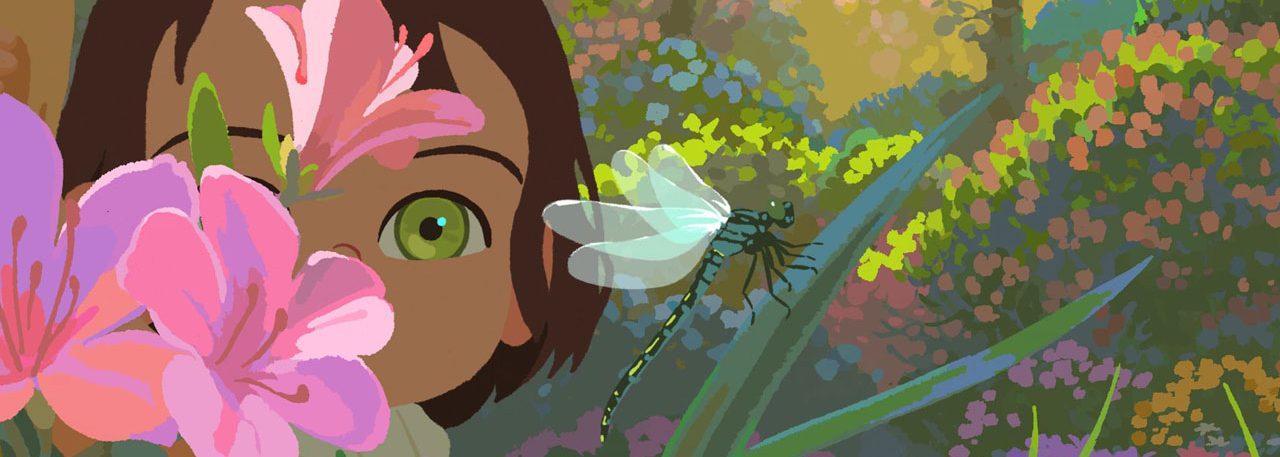
It’s rare that a film scene can create an almost complete sense of calm. Even rarer that that feeling can be induced for 70-minutes. There’s a meditative quality to the hand-drawn world of Little Amélie as we see the first three years of the titular characters life (narrated by Loïse Charpentier as her future self, with in-the-moment dialogue provided by Emmylou Homs) brought to life by colour and her imaginative point-of-view.
She acknowledges that her youth means that she doesn’t always understand the world, or what those around her are feeling, particularly in the wake of bereavement, but through the help of nanny Nishio-san (Victoria Grosbois) understanding starts to grow. There’s an inquisitiveness to the central character, and indeed the film as a whole, as the Belgian toddler explores late-1960s Japan, her world and lust for life awakened after trying white chocolate for the first time. There’s an air of Ghibli to the meditative nature of the avid exploration, especially when around water, whether it be a pond or key effect of rain. Even amongst Amélie’s energy.
For 70-minutes I was transported into the kinetic world of the film. Wonderfully detailed in the vibrant animation which brings so much personality to what unfolds. Accepting early on that the lead character believes that she’s God, born in a vegetative state and observing the world around her until she finds herself able to walk and (try to) talk as someone her age would during an earthquake. Humour and emotion intertwine both caught in the heart that the film is made with and emits in equal measure. The relationship between Amélie and Nishio-san is filled with so much care that understanding of the world takes on a layered meaning.
At times I was reminded of moments of peace in the relationship between the two lead characters in Lilo And Stitch. As when Lilo puts a lei around the chaotic genetic experiment’s neck as he walks around creating havoc in her room. There’s a gentleness to Little Amélie’s very short run-time, but one that subtly gets across its emotional beats and profundity through the view of the central character. The relationships and behaviours that she observes, the loss and rifts experienced – especially between Nishio-san and landlady Kashima-san (Yumi Fujimori) as they discuss the tragedy their families faced in World War II and how that shapes their attitudes and actions now.
Little Amélie plays out as a film for adults from a child’s perspective. With its PG rating, it’s one that young people can watch, and will undoubtedly find something in, but there’s another layer of maturity in the way the world is realised, and adapted from Amélie Nothomb’s autobiographical novel The Character Of Rain. One that adds to the emotional aspects displayed in the warm embrace that the film creates in its visuals and style. From start to finish I found myself utterly entranced and in a state of pure calm by it. If this isn’t one of the best and most affecting films of the year, 2026 will have been a brilliant year for film.
With echoes of Ghibli in the lively animation and calm thematic exploration, Little Amélie is 70-minutes of pure, inquisitive calm that subtly deals with its mature aspects in accessible, humorous and emotionally in-tune style.
 Just A Little Bit Random