
Release Date – TBC, Cert – TBC, Run-time – 1 hour 37 minutes, Director – Rachael Abigail Holder
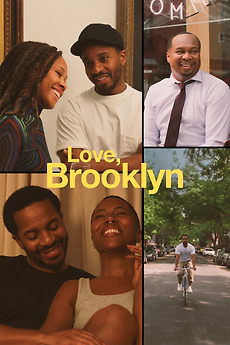
Writer Roger (André Holland) is trying to write a feature about Brooklyn as it enters a new post-COVID chapter, whilst balancing relationships with friendly ex Casey (Nicole Beharie) and widow Nicole (DeWanda Wise).
Much like Love, Brooklyn tries to focus in on the New York City borough as much as it can, the film itself feels very held in. A contained look at the location and the lives within it. Namely through the eyes of writer Roger (André Holland) as he tries to write a magazine feature about the new chapter Brooklyn appears to be entering in a post-COVID era. However, writer’s block has struck, and his mind appears to be focusing on his romantic relationships. Thus, a contained and considered love triangle narrative plays out.
Whilst friendly with art gallery owner ex Casey (Nicole Beharie) he’s begun seeing widow Nicole (DeWanda Wise) although not seemingly labelling an official relationship, despite a relationship being formed with her daughter, Ally (Cadence Reese). Debut feature director Rachael Abigail Holder takes Paul Zimmerman’s script and doesn’t make a blown out, broad comedy and instead keeps everything contained and considered. There’s a quietness to the film which is maintained throughout in an overall calm tone.
Even moments that feel as if they should be more swollen moments of emotion – the phrase “you think I don’t know how f**ked up I am?” stands out yet still slots right in with the quietness of the rest of the film – are kept in the film’s view of natural and honest character emotion. There may not be a rise, fall or shift in tone or emotion but there’s still a watchable film at play for the short run-time at hand.
The relationships don’t conflict and instead play off each other well as Holder gently looks at them and allows them to be. Trying to keep them within the creative angles of Brooklyn, with occasional reminders of the location and the feature that Roger’s either meant to be or is struggling with writing. In the end the unifying idea for Holland’s character amidst the love triangle he finds himself at the upper point of and his work is “it’s possible to love something new in a different way.” In this view, there’s a considered film here. One that, even if it may not quite, perhaps intentionally, fully impact with its emotions, makes for calm and likable enough viewing.
A calm and considered film, even if that means it doesn’t lean into the possible rises and falls of its emotional elements, Love, Brooklyn doesn’t go for big comedic laughs in its view of its love triangle and seems to be better and more contained for it.
 Just A Little Bit Random