Release Date – 5th December 2025, Cert – 12, Run-time – 1 hour 44 minutes, Director – Jafar Panahi
A group of former prisoners believe they’ve kidnapped the man who tortured them whilst imprisoned, but is it the right person and what should they do with him?
Perhaps because of largely only seeing much of Jafar Panahi’s output post-house arrest and ban on filmmaking from the Iranian government I wasn’t quite prepared for the farcical tones of It Was Just An Accident. Each character is frantic in their growing lack of uncertainty as to whether the man that they have kidnapped, a face that tortured them whilst in prison, is who they believe him to be. The more people we see in the contained ensemble, and the more places we find them in, the more moral questions grow as to what the characters are doing in their possible revenge.
Yet, amongst the patches of humour which crop up here and there the overhanging threat is clear. Both in regards to possible consequences and, again, the moral questions raised by the characters and the film. It brings a consistency to the film while the various stages can be seen as Vahid (Vahid Mobasseri), the man who first sees the suspected Eghbal (Ebrahim Azizi), travels to the different faces who also faced torture in prison.

The set-up takes a quick turn as we initially follow Eghbal after taking his car to Vahid to be fixed, having hit a dog whilst driving at night. From here, and the shift to Vahid’s kidnapping and attempt to bury the unconscious driver in the open desert, the film’s title takes on multiple meanings and perspectives. It’s something that writer-director Panahi keeps as much intense focus on as his camera, steadily and observantly following each interaction and development amongst the questions which some characters are doing a better job of holding back than others – as if some are just looking for an excuse to let out their long-held-in pain and rage in whatever way gives a good enough excuse.
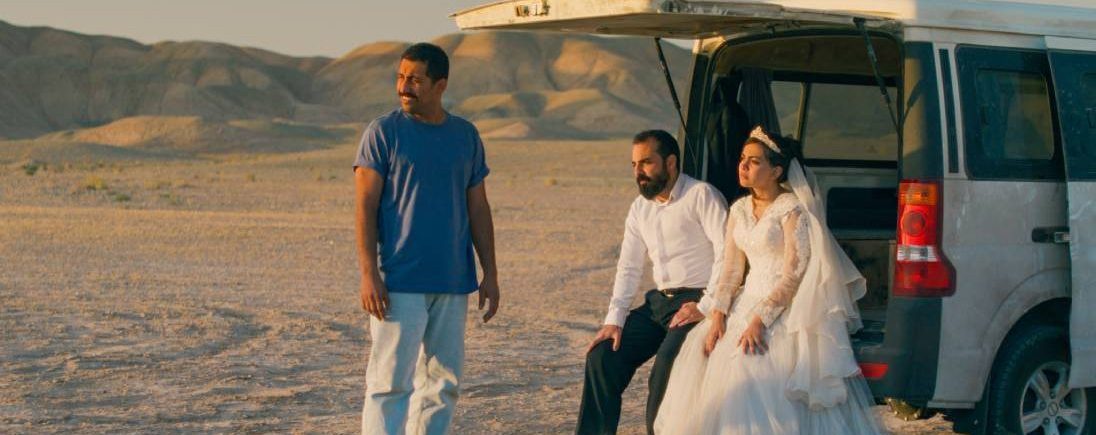
The phrase “you killed me a hundred times, have you forgotten?” echoes long after its asked. Accidents and excuses are looked into in subtle detail as the narrative naturally unfolds, even if the stages are noticeable. Much of this comes through in the dialogue and the often crammed-in nature of conversations. Whether through not wanting to be overheard – rushing out of a wedding photo session proves to be particularly amusing – or being crammed into the back of a van, with the body in a box acting as a seat. Panahi and his camera are quietly analytical of the characters in the film and the things they say, and try to hide. Making for an intriguing, unexpectedly farcical drama.
An analytical drama with enjoyable moments of farce which provide a flow to the clear stages of the narrative, It Was Just An Accident looks into the multiple meanings and perspectives of the title with ease and detail towards the moral questions at hand.
 Just A Little Bit Random