Release Date – 20th August 2025, Cert – 15, Run-time – 1 hour 50 minutes, Director – Mike Flanagan
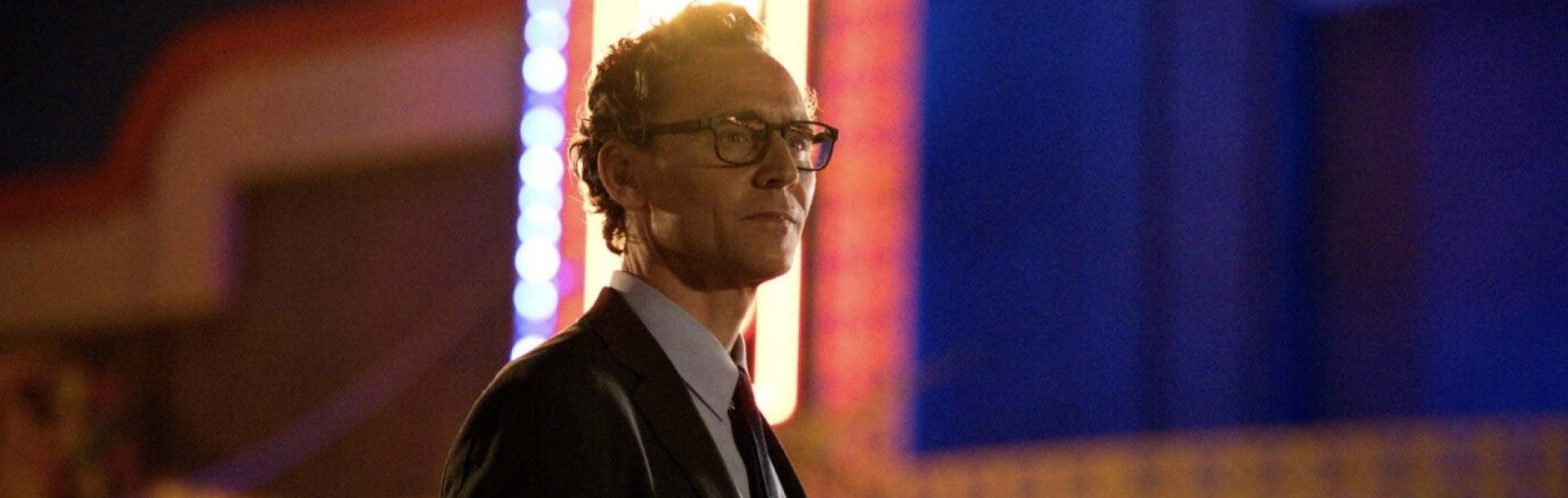
Who is Charles Krantz (Tom Hiddleston), and how has his life led to his face appearing everywhere as the world comes to an end?
One of the big questions asked throughout the opening act of Mike Flanagan’s latest Stephen King adaptation is ‘who is Charles Krantz?’ His face (Tom Hiddelston) appears on posters and adverts all across town as at first the internet goes down and the end times appear to be getting closer. However, as his life, or rather three stages, one, or two, of which are more particularly moments, plays out in reverse it’s made clear that he’s very much an ordinary man. An accountant walking down the street who one day finds the confidence to drop his briefcase and dance along to the busking drummer (The Pocket Queen).
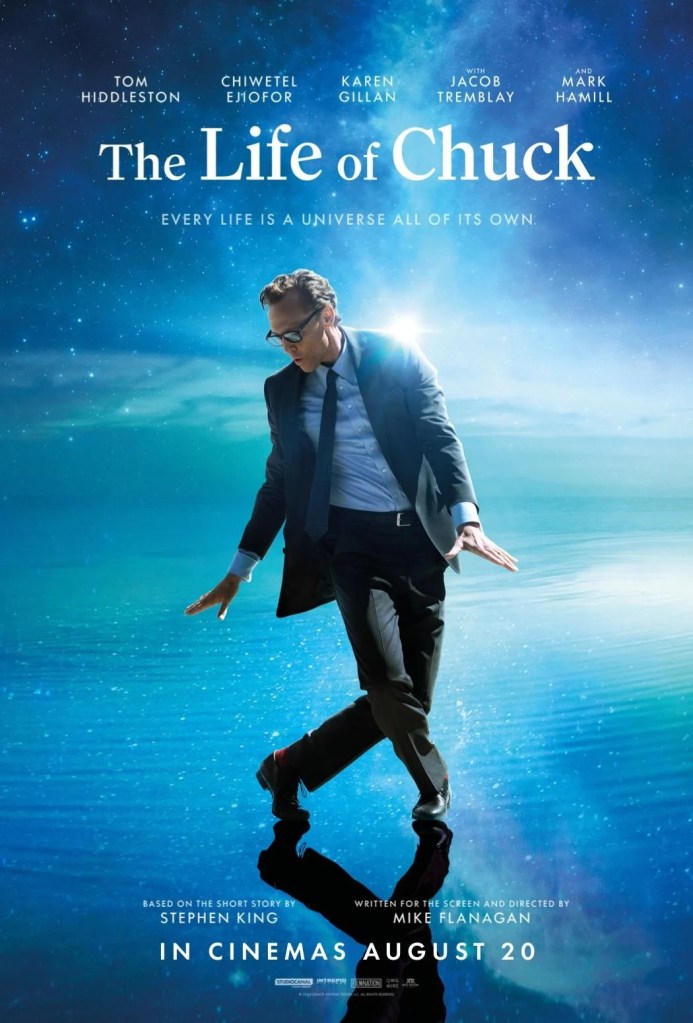
It’s a moment of catharsis in the middle of the street as the sun beats down on the everyday, especially as he ropes in a complete stranger (Annalise Basso’s just broken up with Janice) to join in on the display for the growing crowd of onlookers. As the chapter’s of Charles’, nicknamed Chuck, life play out Nick Offerman provides occasional narration, emphasising the normality but perhaps spectacular nature of his life. One which has faced tragedy and uplift, love and loss. Not all of which is seen, and entirely felt, but manages to come across in some way in the story.
Not one of King’s horror stories, Flanagan still manages to bring in a sense of fear to the proceedings. It’s light and infrequent but throughout his childhood Chuck (played here by Benjamin Pajak) is told by his grandparents (Mark Hamill and Mia Sara, both on excellent form and stealing the show despite brief screen-times) to never go into the mysterious room at the top of the house. Little is said about it apart from when Chuck’s grandfather is in a drunken state of grief, suggesting it has links to past deaths and tragedies. The treatment of this room has feelings of the Overlook Hotel without stretching into pure horror, only the aforementioned fear, perhaps spurred by the mystery.
This latter chapter, providing answers and context for what has come beforehand, is perhaps the best of the film. As a whole, there are good moments throughout The Life Of Chuck, including some wonderful conversations between characters pondering life for an individual scene – moments including Matthew Lillard and Carl Lumbly come to mind – but there can sometimes feel a slightly drawn out feeling to some points. Particularly in the first chapter where many of the questions are built up and pondered before moving on to focus more directly on Chuck’s life. With this in mind, while the final stages tie things together rather well and provide some effective context there’s still the feeling of watching three, albeit linked, short films rather than more tied together chapters.
Where things work best are where Chuck is most directly involved. Hiddelston may not have a great deal of lines, but he certainly gives it his all when it comes to the dance that he gets to do, and the following thoughts going through his character’s mind about what compelled him to do it in the first place. There’s a thoughtfulness to Flanagan’s film, and the story which unfolds. It may not always boost things in the way that might be hoped for as there can be spaces between the most effective and enjoyable moments propelled by a real connection to the thoughts of life and humanity. They’re well done, but can sometimes feel slightly conflicted with the more drawn out details trying to approach these moments.
There’s a thoughtful film within The Life Of Chuck, one sold by a handful of the supporting characters and moments of the title character seizing life. However, it’s pondering can sometimes feel drawn out with the feeling of three short films.
 Just A Little Bit Random