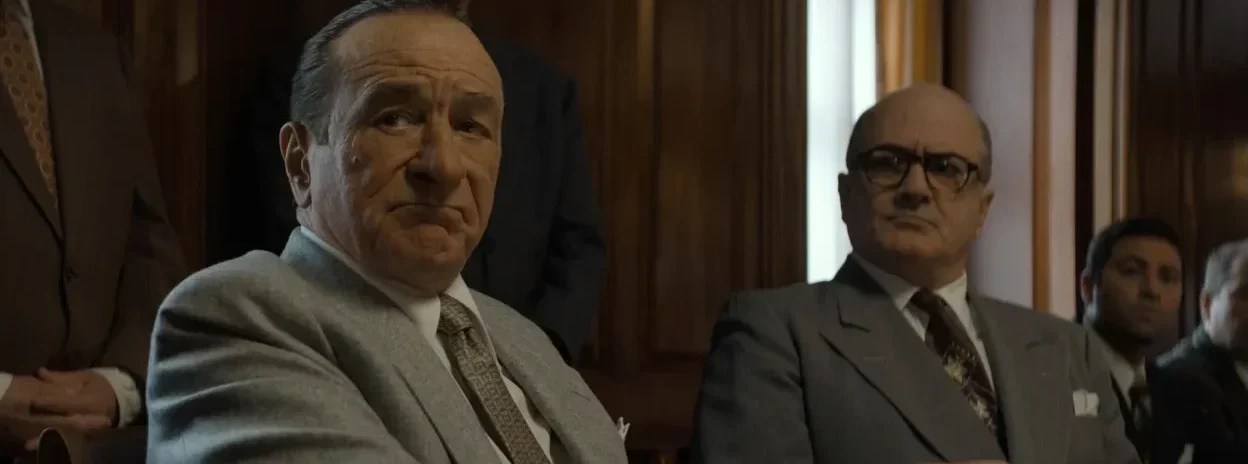
Cert – 15, Run-time – 2 hours 3 minutes, Director – Barry Levinson
Childhood friends Frank Costello (Robert De Niro) and Vito Genovese (De Niro) find their relationship growing tense over the decades as their ways of controlling New York City and fellow crime bosses differ.
The comparisons to Goodfellas and crime classics have been many for director Barry Levinson’s latest, The Alto Knights, so far. With writer Nicholas Pileggi behind the screenplay, and indeed Levinson’s past credits such as Bugsy, a throwback to the mafia movies of the 90s seems to have been expected. However, The Alto Knights is something of a quieter affair less about the upfront crime and more about the relationship between two crime bosses in the 50s, both with very different ways of getting things done.
We see much of the film’s events through the eyes of Frank Costello (Robert De Niro), trying to live his life peacefully as he fills the pockets of police and politicians. This is his business and he deals with things in a largely straightforward way. Meanwhile, Vito Genovese’s (also De Niro) business is violence. Often surrounded by gang members and henchmen, the film opens with a hit job he orders against Frank. The two grew up together as childhood friends, however over the decades tensions have grown in their relationship, particularly in a bid for control of New York City, and more importantly other crime families.

De Niro isn’t quite playing two leads, more a lead and key support. We see less of Vito than might be expected, and the two only really appear in two scenes together – handled well without the feeling of a gimmicky push of ‘look, it’s the same actor!’ The actor, who has suggested multiple times in the past that he’s done with crime movies, puts in a pair of good performances which in many ways the film rests on. While there may not be many differences, aside from the fact that Vito often wears a hat and glasses and appears to be inspired by Joe Pesci in Goodfellas, there’s enough to sell these as two separate figures and move the narrative along with them as their lives crossover multiple times, with some cases being more conflicting than others.
As the third act unfolds we see two different perspectives of a journey to a key meet-up, it’s a simple drive, but Levinson brings in a layer of growing tension, particularly for Frank, as the destination gets closer. It’s an extended sequence which while causing the run-time to be felt a little bit, acts as one of the most engaging points of the film. There’s a good deal to like throughout the subdued nature of the narrative, largely in scenes where we see the different behaviours and responses of the two bosses – as Frank testifies to congress Vito watches on TV, shouting at the screen and forming a highlight at the same time. Again, much of The Alto Knights seems to rest on the decision to bring De Niro in to play both roles and his performances, and luckily they’re effective turns which help to move things along and create a rift between the characters which still holds the impression of childhood friends who grew up together.
It doesn’t seem like Levinson is trying to go for Goodfellas, or those other notable throwback titles. Yes, there may be some shared elements and nods here and there, but as a whole this isn’t a film with the same darkness or bite. It has its moments of tension, largely after a good deal of build-up in the relationship and quiet feud between the two De Niro roles, and that feud is the central focus. The ways in which its organised and gone about, and the differences between the two figures responses. There’s an interest to be found in it and while the run-time could do with a slight trim, for the most part there’s an engaging and competently made crime boss drama at play.
Not the throwback to the likes of Goodfellas that some may be expecting, The Alto Knights is a more subdued affair that rests on the shoulders of Robert De Niro’s engaging central performances, making for a well made film with enough interest to see it through.
 Just A Little Bit Random