
After last year’s Best Picture nominees saw a selection of big names, in terms of titles and crews, competing for the top prize, 2025’s line-up is dominated by a diverse range of genre films. Featuring multiple blockbusters, indie flicks and foreign-language films there truly is an eclectic selection in the running for the top prize at this year’s Oscars. And with a race which has seen a number of different titles take the apparent lead in a consistently neck-and-neck race, even after multiple awards shows throughout the season, to use a consistent cliché, this year’s Best Picture race seems as unpredictable as ever.
And so, as with every year, it’s time to take a look at each of the ten nominees and the forces which could lead them to, or diminish their chances of, Oscar glory. A variety of very different films battling it out on a preferential ballot and a race that’s led to no clear winner; it’s time to once again look at what the Academy of Motion Picture Arts and Sciences could name the best film of the last year.

If there’s one film that shows the way in which genre has been embraced in this year’s Best Picture category it’s The Substance. Out of all genres the Academy are often labelled for being particularly horror averse, especially when it comes to body horror. However, after much acclaim when released and many expecting its chances in technical categories The Substance has grown in strength and found itself with five total nominations – including nods for director Coralie Fargeat and Lead Actress Demi Moore, a frontrunner in that category. While when it comes to horror the Academy have their leanings, social horror such as Get Out and Best Picture winner The Silence Of The Lambs (campaigned as more of a social thriller), there’s no denying that while The Substance represents this it’s still a body horror.
Yet, the social elements have even more of an awards body favourite element, the fact that they directly reference and relate to the film industry itself. By revolving around body and beauty standards, particularly those held towards women, from the perspective of a screen star from years gone by there’s a mirror shown to Hollywood. And, if there’s one thing that Academy voters love it’s a film about themselves. However, there’s no denying that the style of horror may likely turn some voters away. Some in anonymous articles have mentioned that they’ll gladly vote for Moore, with the angle of a career vote (although she is great in the film!), but won’t watch the film because of how gory they’ve heard it is. It could very well mean that this is the nominee least likely to appear on the most preferential ballot rankings, diminishing its overall chances.
However, there are still pushes for the film. It finds itself with nominations in key categories, in addition to those mentioned there’s also a nod for Original Screenplay; and finds itself as a frontrunner in Makeup And Hairstyling. If it wins this, particularly with the film’s style in mind, it could mean that The Substance is being given a chance, and has been embraced by multiple key bodies (even if only partly by the actors branch who many say snubbed Margaret Qualley in Supporting Actress – although this branch makes up the largest percentage of Academy votership, with a likely large overlap with SAG who awarded Moore Lead Actress this year) within the Academy. Not just in major categories, but also in below-the-line races showing that there are further impacts being made and noted about the film.
It’s already exceeded early expectations from when it was released, and was one of the most praised and celebrated films of last year for its boldness and just how it presents itself and its themes. With the likes of Everything Everywhere All At Once and The Shape Of Water being recent Best Picture winners, there’s every chance that The Substance could end up winning the top prize this year, especially if it manages to win in the categories it’s predicted by many to win in outside of this race. However, the constant feeling that it may simply be avoided by voters, especially older more traditional members who still make up a good chunk of the membership, due to what it’s perceived to be (in actuality the most severe body horror doesn’t come until towards the end and may not be as graphic as you could make it seem. Well, apart from that ending). But, this is one of the most unpredictable films in this year’s race, because of the fact there’s not really been anything like it at this level at the Oscars before (The Exorcist is perhaps the closest comparison, and maybe the aforementioned Get Out), and with the consistency it’s displayed and the way in which it’s been embraced, particularly as a portrait of and for the film industry, The Substance could find itself sneaking up as a very exciting Best Picture winner.

If The Substance is viewed as a divisive nominee then undoubtedly the most divisive of this year’s Best Picture assortment is Emilia Pérez. A film which has had a strong campaign built against it online. But, if there’s anything that the Oscars have proved over the years, it’s that voters don’t really take into account, or see, what’s happening online; after all Green Book still won Best Picture. That is apart from when such points make their way into the trades and beyond, then a film can find itself on shaky ground. After receiving 13 nominations, the most of any film this year, and being a much-discussed favourite of many vocal figures in the industry, this musical drama’s chances of receiving Best Picture quickly diminished shortly after nominations were announced.
Past (although still very recent) controversial (and in some cases downright racist) comments and tweets from lead actress (and nominee) Karla Sofía Gascón and (also nominated) director Jacques Audiard were brought to light bringing much controversy to the film and its awards chances. Can voters vote for Emilia Pérez and the film about her when the person playing her has made such troubling statements? It certainly could be the case. But, what if the film is actually about Zoe Saldaña’s character? Despite being a frontrunner, having almost swept the category at multiple awards shows where voting has closed after the controversy surrounding the film, in the Supporting Actress category many have claimed Saldaña to be the lead – in one of what many have said are multiple instances of category fraud in this year’s supporting categories – and perhaps this, despite the title, could switch the perspective and tone of Emilia Pérez for some voters.
The film has been a big contender since its Cannes premiere, meaning it’s been in the conversation for a long time and clearly has remained in some minds, and it still finds itself as a frontrunner in the categories it was leading even before Gascón’s past comments were brought to light. And a vote in Best International Feature could lead some voters to remember how much they liked the film there, leading it to a higher ranking on the preferential Best Picture ballot. Or, the adverse effect could be had. Why give the film multiple wins in categories where it’s been named as an overall best, why not share the love? Although, again with 13 nominations, the love certainly seems to be strongly recognised across the Academy. And with two Best Original Song nominations, with El Mal still leading the pack for the win, the key musical elements of the film are also clearly being remembered and focused on and staying in the minds of voters. Maybe an earworm could be what keeps Emilia Pérez in mind (even if it didn’t work for La La Land a few years ago).
But, where the film could best succeed is in its representation. While many Mexicans and LGBTQ+ people have spoken out against the films representation and said that it’s full of negative portrayals, for those who have liked the film, and there are clearly many, the story on display and those featured in it could act as something of a political vote. The Oscars have certainly been political on a number of occasions, and under a returning Donald Trump presidency there could be a handful of figures who push a film like Emilia Pérez in the wake of this, despite the backlash towards it in this regard. It has clearly had a staying power, there’s no doubt about that. And I also don’t doubt the amount of Academy members who are completely unaware of any division or controversy relating to the film or those in it. It was once a frontrunner and seemed one of two films that could win this prize, and then suddenly fell away overnight. But, if its wins at other ceremonies show anything, it’s that there’s still clear support for this film and maybe there’s been an overestimation of how much it’s fallen away in the Best Picture race, alongside others. After all, much of this doom-saying is on social media. And since when does that dictate what wins Best Picture?

If there’s one film that some are saying could damage Emilia Pérez’s chances not just in Best Picture but also Best International Feature, it’s I’m Still Here. Because why not just pit the non-English language features against each other instead of looking at their respective stories and elements? Much like The Substance, I’m Still Here found success at the Golden Globes (while I’ve been negative towards this ceremony many times in the past, one thing it has done this year is shine a light on these films and helped grow their interest and chances in the awards season races). From there this Brazilian film went from being on very few radars to being a contender in three Oscar categories, including Best Picture.
Much like Drive My Car in 2022, I’m Still Here has grown as a word-of-mouth success throughout awards season. After it started to do well at other ceremonies people went to check it out and see why it was getting such acclaim. While this film may not have the same number as nominations, or perhaps success, as Drive My Car it may have had slightly less time, and has only grown as more people have had the chance to see it, especially after it crept into what appears to be the ninth or tenth slot for eventual nominees. While that slot often signifies a film with an outside chance of winning Best Picture, due to not many appearances or mentions in the conversation, there’s no denying the growth that this one has had since the nominations, again because of the word-of-mouth success.
In International Feature it could pull ahead of Emilia Pérez, and even in its other nominated category, Leading Actress, some are predicting a possible win for Fernanda Torres, and not even in a situation where Demi Moore and Mikey Madison cancel each other out. While missing out on key Screenplay, Director and Editing nominations, I’m Still Here could well have a chance of winning the Oscars’ highest honour. Some of its themes, the film itself is set largely in the early-70s, echo into today and have an air of social relevance alongside telling what has been praised as a strong and effective story with the force of an emotionally stirring leading performance.
And since the nominations there has been a big campaign put behind the film. And one that doesn’t seem to have backfired as has been criticism of some films in the past, often those backed by Netflix; one of the criticisms of 2022 nominee The Power Of The Dog (which lost to fellow streamer Apple TV+’s CODA) was that it simply became overpromoted to voters. While subsequent awards bodies have put minimal attention on the film the effect on Oscar voters could lead it to a Best Picture win, if the limited time between nomination and voting closing meant they had time to make a bigger connection with it compared to those that have had longer to stay in the mind, and may have been watched more than once. In that regard, I’m Still Here might have something of an uphill struggle compared to its competition (and the fact that its qualifying run was a very brief, very limited release at the end of last year with its main US release only arriving just a couple of weeks ago, although in time to be checked out on the big screen at a key time for voting so it’s fresher in the minds). If its impact is strong enough, and its word-of-mouth consistent enough, then we could very well be seeing the second non-English language feature winning Best Picture.

Moving from a small film that’s grown through word-of-mouth to a blockbuster which has had masses of promotion. Wicked has been a part of not just awards but general conversation for months prior to its release with what might be one of the world’s longest, and still ongoing, press tours. After years of trying to get an adaptation of one of Broadway’s most successful musicals to the big screen, Wicked had plenty of build up and plenty of box office. Showing strength after overperforming against predictions at other ceremonies, in terms of nominations, translating into 10 nods at the Oscars (not including one for Original Song, with the film making the rare decision not to include one for the adaptation).
However, what might hamper Wicked is the fact that it’s only half a story. With Part II (AKA Wicked: For Good) scheduled for release in November of this year, and the film ending on a cliffhanger, there’s a chance that voters may wait for the second part to be released, presuming it will be as good, with the thought that by that time it will have their vote. It’s something we’ve seen before with The Lord Of The Rings and even Dune, the sequel of which is also nominated for Best Picture this year, that if we know there’s a follow-up on the horizon there may be nominations but the win will often be waited for, if it ever arrives.
But, Wicked appears to have particular favour with the actors branch, having done well with SAG nominations, including a surprise nod for Jonathan Bailey in Supporting Actor, although not translating to the Oscars. Despite this, the film didn’t pick up any awards at the ceremony, losing Best Ensemble to Conclave. Meaning that there may be favour towards Wicked from the Academy’s biggest branch, but maybe not enough to lead towards a win.
There’s also the fact that while the film has ten nominations, including a slight surprise appearance in Original Score, it lacks a presence in Best Director or Adapted Screenplay, key categories to look out for alongside acting and editing, which it ticks the boxes of. With these nominations lacking it does mean that Wicked may have something of a distance to Best Picture, but there’s clear support from a number of groups – and it’s believed to be a frontrunner in some of the technical categories such as Production and Costume design.
Despite nothing for an Original Song nomination, the songs that are present are undoubtedly earworms. They have been for many years already, and by ending with Defying Gravity there’s no denying the final punch that this first part delivers, perhaps landing it with a strong effect at the end for voters to stay in their mind. These songs are synonymous with the musical, and the film; they come to mind when you think of them and could easily be the case for voters in remembering them and perhaps enjoying them, giving Wicked a boost in this race. There’s also, again, the fact that it’s felt like it’s been around for so long because of the lengthy promotional campaign focusing on the two leads, both nominated for acting awards – Cynthia Erivo for Lead and Ariana Grande for Supporting Actress – which may not quite give them a push in their respective races, although Grande is believed to be a strong competitor against Zoe Saldaña, but could boost the film, if how much has been seen and heard doesn’t backfire.
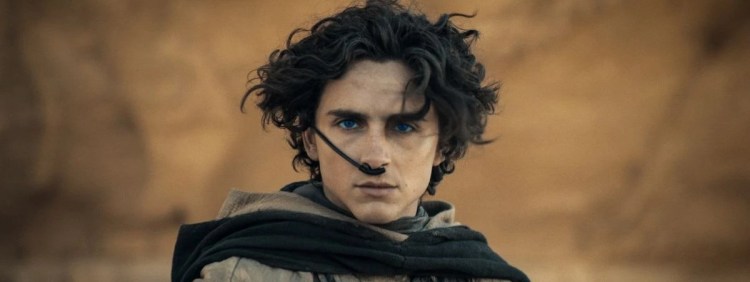
From one blockbuster to another, Dune: Part Two was widely believed to be a Best Picture frontrunner after the Oscar success and acclaim of the first instalment, people were just waiting for the story to be finished. When this sequel was released to similar acclaim it seemed set for awards glory, all until the confirmation that follow-up Dune: Messiah would be going into production, now likely to film this summer. With that announcement Part Two’s chances diminished, as shown by its nominations.
While the first film managed to pick up an Adapted Screenplay nomination amongst multiple tech nods, this second half of the story has only five nominations, including Picture, each of which are tech-based, and it doesn’t even seem set to win all of those as Dune almost swept them. With a lack of acting, Film Editing, Screenplay and particularly Best Director nod for Denis Villeneuve, a second time for this franchise, Dune: Part Two almost seems to be a case of The Two Towers. The middle film that gets less nominations, picks up one or two wins, while we all wait for the third and, in this case likely, final instalment which goes out with a bang and plenty of gold statues. With no Best Director nod for Villeneuve’s grand scale work, and even Film Editing nomination, it really does seem like this sci-fi epic went from a frontrunner to something of an outsider.
However, the scale and scope are also courtesy of the visual effects and technical departments with have been recognised with nominations. The key details that many have loved and found so absorbing about Dune and the world of Arrakis and beyond still land an effect and have been remembered many months on. While Wicked has had consistent promotion, Dune: Part Two may have lingered in the mind – having been released at the start of March last year, even before the 2024 Oscars ceremony! Some could say that its release date could mean that it was too far away to any longer have a chance or impact, although the idea that you have to release late-October to mid-December to be in with a chance of Best Picture or general Oscar glory is continuing to gradually fade.
In the film’s lead role, and a key push for some for it, is Timothée Chalamet. A man who has starred in seven Best Picture nominees in seven years (often two a year, as is the case this year) and multiple box office successes. His continued presence on the awards circuit, and promotional trails, could well give Dune: Part Two a boost, even if the main point of his promotion is the film that he’s in the running for as Lead Actor, A Complete Unknown. In this case the latter film could well be getting the focus with Dune left somewhat in the background, but the fact that Chalamet prominently stars in both could give the former a boost in voter’s minds, and it perhaps helps that it’s quite a different beast. A big, grander scale cinematic beast that makes the most of the big screen – here’s just hoping the voters have seen it on the big screen rather than on a screener at home.

And from one Chalamet-led film to another, A Complete Unknown is perhaps the most traditional film amongst this year’s Best Picture nominees. The kind of safe and conventional film which benefits most from the preferential ballot. People consistently like it, and therefore agree on it and it gets consistent placements on ballots. It’s the way in which safe and conventional films like CODA and Green Book win Best Picture. And to some extent A Complete Unknown is helped by the fact that it’s a biopic of sorts, with Chalamet challenging Adrien Brody in the Lead Actor race, having won at SAG, for his portrayal as Bob Dylan.
Having not screened at major festivals to give time for editing to make it to a December release in good condition, A Complete Unknown was turned around quickly and it seems to have worked with the acclaim which it has received. Stacking up eight nominations, ticking off all key categories except for Film Editing and even picking up some technical nods. James Mangold was seen as something of a surprise nomination in Best Director, even after his DGA appearance, but the fact that he shows up here shows just how much of a push there is behind the film, in addition to three acting nominations (with Edward Norton and Monica Barbaro joining Chalamet in Supporting Actor and Actress respectively). Mangold also seems to be growing as a favoured director for the Academy with a number of his films finding awards favour over the years, Ford V Ferrari was nominated for Best Picture alongside other nods and even Logan found itself in the Adapted Screenplay race, despite the Academy’s aversion to comic-book adaptations.
And, again, this is the kind of traditional film that does well with a variety of voters, particularly older voters and the good deal of the Academy membership that they make up. Not just in terms of being a biopic, which helps Chalamet’s chances, but the general tone and style of the film as a whole, largely brought about by Mangold – who receives his first Best Director nomination for this film. Due to the last-minute nature in which A Complete Unknown properly came into the race, it was suggested to be a contender due to the basis and star power behind it in the build up to release, the film is perhaps fresher in minds and has only had chance to grow, and may not have reached its peak. And with Chalamet’s surprise win at SAG there is perhaps growing favour towards him and the film. And if he’s playing Bob Dylan in a film about Bob Dylan, and his shift to different styles of music as he went electric, that core performance could have an effect on the film and could, like with the concerts in the film, lead A Complete Unknown to only continue its growing loudness with the cast and crew being the last to take the stage on Oscar night.

If Chalamet wins Best Leading Actor then he will become the youngest actor to win in this category, beating current record holder Adrien Brody by around seven or eight months. Brody also finds himself nominated in this same category this year, 22 years on from his win for The Pianist, and appears to be a frontrunner after having won a number of precursors for his turn in The Brutalist.
Brady Corbet’s film, for which he seems likely to win Best Director, is an epic drama which has picked up ten nominations, including one in each key category and appears to be a frontrunner in quite a few. In some years the idea of a long run-time – in this case just over 3-and-a-half hours – could be said to be a turn away for voters, and maybe the suggestion of an intermission might help or hinder The Brutalist, but it feels that this argument can’t quite be used this year. A number of nominees are around the two-and-a-half hour, or longer, mark this year, with the average run-time being that mark with the combined run-times making for the longest set of Best Picture nominees in Oscar history (totalling 24 hours and 53 minutes).
To bring back the point of the current American Presidential administration, The Brutalist tells a story about immigration and the American Dream, and trauma echoing from the past into the present and the ways in which this is, and isn’t confronted. Much of these themes feel universal to some degree, and we’re all aware of the American Dream, but feel especially backed against a current political background, and could give the film more of a leaning in voters’ favour.
There’s also the feeling of a cinematic achievement here, this sprawling epic with a look and feel on this scale made for $10 million is truly a big achievement, and is part of why Corbet feels like he’s leading the pack for the Best Director Oscar – even if Sean Baker picked up the top prize at the DGA awards for his work on Anora. While the awards haven’t lined up as consistently in recent years there’s still an idea that if you look at Best Picture, Best Director should line up with that, and it had come back into effect in the last year or two with the likes of Oppenheimer and Everything Everywhere All At Once. If Corbet picks up this win then that would likely put The Brutalist in good favour for the top honour of the night, especially when taking into account that aforementioned achievement of it being pulled off, and the emotionally affecting narrative that it tells; much of which is captured in Brody’s performance.
As the season has gone on The Brutalist has found itself consistently in the awards conversation, but not always at the fore. It’s not been pushed towards the back of the pack, but just behind the frontrunners. And maybe that’s what it needs to win. Again, the consistently liked and agreed-upon film that can get high-enough ballot placements that can help it to win Best Picture through that agreement rather than a lot of overall acclaim. Even as frontrunners have changed overtime, The Brutalist has maintained something of a steady position, a key indicator that there’s consistent favour towards it. If voters can get around that considerably longer run-time, less so for the run-time but spending it with the heavy themes that its playing with, then this could very well be the film the Academy names as the best of 2024.

Moving from a story set in and about the past to a thoroughly modern story, Anora has had quite the back-and-forth journey this awards season. Starting out at its festival appearances many were tipping it as an early Best Picture frontrunner. From there, as with most early frontrunners – think most Spielberg and Scorsese films of late; West Side Story, The Fabelmans, Killers Of The Flower Moon, The Irishman – it fell away from the conversation as other titles began to be more discussed, particularly once the nominations were announced. However, this may be the social media vacuum coming into play again because suddenly in came surprise wins at both the Producers and Directors Guild Awards – the Producers Guild being notable for using the same preferential ballot system as the Oscars.
Alongside a win for Original Screenplay at the WGA Awards, with the film a frontrunner in this category at the Oscars, Anora has won a good deal of its precursors. Mikey Madison may be said to be slightly behind Demi Moore in the Lead Actress race, although she managed to pull off a win at the BAFTAs and I don’t think she should be underestimated for being able to pull off the big win, she’s fantastic in the film and that has been recognised. The success at such major precursors with overlap with Academy members suggests that the initial responses that Anora underperformed in terms of nominations – despite ticking all the key boxes, and it wasn’t really going to be competing in that many technical categories anyway – were incorrectly signalling the drop in the films chances.
Even those who have claimed that the Academy are quite sex-averse when it comes to the films they award; let’s remember this is a film following exotic dancer and sex worker Ani discovering her relationships with sex and intimacy, should take a look at more recent Oscar winners – especially after the success of Poor Things last year, particularly Emma Stone’s lead performance; although these are quite different to actually winning Best Picture. The biggest question is: could a film that could be viewed so strongly as a comedy win Best Picture? Comedy, like horror, is another genre that the Academy often tends to stray away from, largely because of just how subjective it can be, or the different impact it has compared to a great drama which can stay with you in another way. Anora certainly seems to have jumped these hurdles with its more serious moments and themes, but there’s still a good chunk of the film that could be seen as playing out as a comedy, whether this chaotic strand turns some people away or not is a different matter.
Certainly Producers and Directors seem to like the film. Yet, alongside the film not quite running away at BAFTA, Madison again still won Best Leading Actress there, Anora didn’t find much love at the SAG awards when it came to winners; although consistent nominations for Yura Borisov in Supporting Actor categories do show some additional love for the film and its subtleties, especially with his largely quiet, perhaps background-held, supporting role. Whether Anora’s success is a bounce-back or a case of the love for it never actually went away there’s clearly a strong backing behind it. Voters are often not bothered by something picking up multiple wins in a season and therefore switching to something else, hence why plenty of films have swept across a season each year. And Anora could continue its string of victories to lead Sean Baker’s latest, Baker himself growing in appearances and love at awards shows after frequently cropping up with wins and nominations at independent award shows for his last few features, to pick up Best Picture on Sunday night.
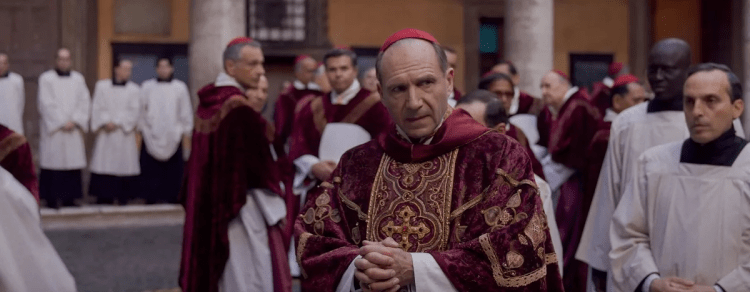
From films about the past and present to one about the clash between both, and beyond, Conclave could be the film that upsets Anora’s winning streak, and to some extent already has. After a trio of big wins for Anora, Conclave came along and won both Best Film at BAFTA (although the British-leanings of the film, which also picked up Outstanding British Film there, did give it bonus points there and BAFTA haven’t quite aligned with the Academy a great deal in recent years, and Best Ensemble at SAG. It was this latter win which truly shook up the race and once again showed just how unpredictable, and varied, this year’s Best Picture race is.
While much of the supporting cast weren’t able to make it into many Supporting Actor races, with multiple names likely competing against each other and therefore cancelling each other out, Ralph Fiennes fantastic lead performance was able to get a nod. Alongside Isabella Rossellini’s nomination for Supporting Actress, which some say is a career nomination, others a deserving nod despite just 12 minutes of screen-time, and one very clear Oscar clip, while some people might say both are true. Regardless, while Fiennes seems to be the third place contender for many in his race, but could quietly pull ahead, Rossellini is viewed as an outside contender. But, as an ensemble there’s no denying the strength of performances in Conclave, hence the SAG win.
Conclave has each of the key categories ticked off except for Edward Berger in Best Director, having also missed out on a nomination in 2023 for Best Picture frontrunner, also after BAFTA success, All Quiet On The Western Front. And in the likes of Adapted Screenplay and Film Editing it seems to have a clear lead for the win, perhaps helped by its angle as a political thriller against the backdrop of a papal election. While recent events relating to the Pope’s recent ill health won’t impact voting for the film, this news broke after voting closed, what could push it is that story of the new vs the old, conservative vs liberal stances and all playing out in a very secretive and closed-off process. Another traditional film but brilliantly told and with plenty of suspense, which has led it to pick up key notable awards for its various elements, and one or two technical nominations at the Oscars. Conclave has seemingly gradually grown since its festival screenings and could continue to do so, especially after its pick up of wins the later voting has closed in the build-up to the Oscars.
Additionally, it may well have the widest relevance due to its themes and the ways in which it presents them. Likely to connect with international voters, who have increasingly become more influential in recent years not just in Best Picture but across a number of major categories – the most notable example being Anthony Hopkins’ Lead Actor win for The Father over Chadwick Boseman in Ma Rainey’s Black Bottom – as much as it does American audiences. With these combined elements, as with those in the film itself, Conclave could find itself at the top of the list after enough whittling down of ballots to be elected Best Picture.

And finally, one of the quietest nominees of this year’s awards season, which may have an equally quiet, yet strong, push behind it. While its only other nomination outside of Best Picture is for Adapted Screenplay it managed to pick up a win at the WGA Awards, although a number of screenplays are ineligible here due to WGA rules. Additionally the first-person perspective drama also managed to get a win for director (and co-writer) RaMell Ross for First-Time Theatrical Feature at the DGA Awards.
Nickel Boys, like I’m Still Here, may be viewed as one of this year’s Best Picture nominees that just slipped in as a ninth or tenth nominee, but it is now a serious contender. This means that, roughly, around 550 Academy members likely had it as one of their top two films of 2024 – the films that appear most in the top twos submitted go on to be nominated for Best Picture. Therefore, it likely already has this many first place placements on ballots, plus it’s a film that has a strong, emotionally affecting narrative echoing into the effects of generational trauma closer to the present. Documentary Feature nominee Sugarcane looks into similar themes as Nickel Boys, showing something of a trend amongst nominees which could be seen as something that the Academy in general is leaning towards. This particularly feels like a timely and very relevant film which could once again give it that bigger impact and push when it comes to voting.
There were fears that Nickel Boys, like Sing Sing which failed to get a nomination in this category, had had its awards campaign botched by the studios and distributor backing it meaning that it might not have been seen or heard of enough to land into the race. However, by getting into the Best Picture race it shows that there was a strong enough effect to, again, resonate with enough people to get the nomination, that could echo to more people seeing the film. Especially after the wins it’s picked up here and there along its awards journey, this could easily be another title that people are incorrectly putting aside simply because it hasn’t been around for so long. That being said, part of that does come from that the fact that the For Your Consideration campaign for the film was very muted and quite fumbled, it’s Best Picture appearance can still be seen as something of a surprise, although a welcome one – in my opinion it’s one of the best films in the line-up.
And with the relevance and links to other nominees in other categories, Nickel Boys could certainly find itself having grown its audience, and getting consistent placements on ballots in the key spots it needs to obtain in order to more likely get the final award on Sunday night. It has the backing in at least one other category, and you don’t need a batch of nominations to win Best Picture, even if it could help. And that nomination has a push behind it as shown from other places and ceremonies. It may have quietly entered the race, but that doesn’t mean that Nickel Boys should be pushed aside, it may well have quietly grown since the nominations and over the course of voting and could well find itself with enough support, especially thanks to its emotional punch, to win Best Picture.

And now, onto the main point of this, once again, overlong, poorly-written, overly-repetitive ramble: trying to work out what will win Best Picture. Not through maths, but through simply trying to guess what a group of thousands of people in the film industry have collectively enjoyed the most. This year’s line-up has a wide variety of films and genres and it’s made the race all the more unpredictable, meaning that it feels as if truly anything could win, but there are still some films that the preferential ballot could favour.
With the preferential ballot, this is where the idea that the film that is most agreed upon and liked could win over the one that has had the most vocal praise. You’re looking for the film that is more likely to get consistent second and third place rankings over the most first place placements. This meaning that it’s more likely to get to 51% of first place votes (the film with the lowest number of first place votes each round is removed, the number two for people who voted for that film becoming their new number one until one specific title has the majority of votes) for a film that’s more liked.
In starting to whittle down the nominees there are always those that seem like outsiders. The films that seem to have just slipped in the group of nominees and don’t quite have the push in the race, and throughout the season. Nickel Boys certainly seems like the standout here, and while it’s grown overtime in support I’m Still Here feels as if its chances are better in International Feature, and even Lead Actress, than in Best Picture.
In addition to this, The Substance, despite being likely to find success in other categories, simply feels as if it won’t be watched or included on the ballots of all voters simply because of its body horror nature, which could well also lead to low rankings for a number of Academy members who tend to lean away from the genre.
Meanwhile, when it comes to the blockbusters, Dune: Part Two has simply lost steam since Dune: Messiah was announced and it certainly seems as if voters will wait for that before rewarding a Dune film Best Picture, and Denis Villeneuve a Best Director nod (maybe win), and hope for the same quality. Wicked, on the other hand, doesn’t quite seem to have the same issue in waiting for the second part but doesn’t quite have the emotional response punch that other films have. It leaves an effect with Defying Gravity and its various songs, and has a good deal of love and nominations from various branches, but its entertainment factor leads it (which is no bad thing), but as a whole it feels like a film that’s agreed on but more likely to be placed around the middle of ballots rather than the top three, or maybe even four.
Then there comes the films which each feel as if they could really have a stronger chance of winning, and appear to have been battling it out as frontrunners all season. A Complete Unknown slightly sits outside of this pack, perhaps a bit too traditional amongst the rest of this year’s nominees, it certainly ticks some Academy favourite boxes, but its lack of wins at other ceremonies, and indeed name as a possible winner in the conversation, means that it seems to be assigned similar ballot placements to Wicked, around the middle of the race overall.
And now it’s truly difficult to separate the films and make a confident prediction. Even as I write this I feel all certainty (if there even was any) draining from me as I want to change my mind every few seconds. Yes, even with Emilia Pérez still not eliminated. With the most nominations and so much love from the film industry it still feels as if it could have a good chance of winning one of the biggest honours the film industry has to offer. However, the controversy around it, and comments from key figures involved, have seemingly caused some damage to the film as a Best Picture contender, even if not in all categories it appears in. Even aside from this the film has somewhat faded away in conversation overall as a contender, it does have a divided response (although, again, maybe largely held online, to which voters really don’t pay much attention, and perhaps rightly so), although maybe not as much as some may think based on total nominations and general love from the film industry. Yet, I have a feeling that its conversation even in the film industry (of which I have little to no inside information on) has diminished and moved away to other films, meaning that it has, in the final stages just as it seemed set to win, fallen away from the chance to win Best Picture.
And then there are the final three: Anora, Conclave and The Brutalist. And, to be honest, I may as well flip a coin for my final prediction. However, that would be a bit difficult in deciding between three options unless I counted the rare chance that it land on its edge as a possibility. The Brutalist has had a good deal of love, but it seems that after picking up only Best Motion Picture – Drama at the Golden Globes, a slightly iffy precursor for predicting, it hasn’t quite picked up much at any other precursors, even managing to not pick up anything at SAG. It could still have a strong chance due to its acclaim, but it does feel that over time the conversation around The Brutalist has slightly diminished as a Best Picture winner, even if it seems likely to pick up Lead Actor and Director.
From here, a coin toss can properly be used, and may as well be the way I try to predict, although I’d still want to change my mind, or the side the coin has landed on every five seconds until the final envelope is opened tomorrow night. Anora and Conclave have emerged as the two big contenders at many of the precursors. The former was on its way to a sweep until the latter came along and picked up some notable wins. While BAFTA isn’t quite the best predictor, particularly over the last few years where it’s disagreed with the Oscars on a number of occasions, SAG makes up the largest shared grouping with Academy membership. The actors branch is the biggest in the Academy and if they lean towards Conclave again as Best Picture as they did with Best Ensemble, alongside with the possible push from a more international audience compared to Anora, then it could land the win. Although, Best Ensemble is, of course, an acting award for an ensemble performance rather than an overall film, but there can often be overlap between winners.
And the international point for Conclave can also be made for Anora where the film has also found strong favour from a variety of people. It also notably made a surprise win at the Directors Guild Awards, boosting Sean Baker’s chances in the Best Director category – if he wins there then Anora could very well win Best Picture – and also the film’s win at the Producers Guild Awards which also uses the preferential ballot system, and had most of the same nominees; exchanging I’m Still Here and Nickel Boys for A Real Pain and September 5.
Both films appear to have a similar audience spread and acclaim. If we’re looking at a slightly more modern Academy leaning – the kind that gives Best Picture to Moonlight and The Shape Of Water – then Anora seems likely to win. However, if we’re looking at an Oppenheimer or Nomadland Academy then Conclave seems to have it. The two almost seem to be at a 50/50 split in terms of likelihood. But, Conclave’s rise came after two key wins at BAFTA and SAG, where the latter was more for the ensemble side of things. Anora appeared to be blazing ahead before this, racking up the key guild wins.
And so, to the final prediction (which could change many times between writing this and the ceremony itself, who knows, I could jump back to The Substance, wouldn’t that be something?). But, I believe that the film the Academy will give the 97th Best Picture Oscar to will be Anora.
 Just A Little Bit Random