Cert – 15, Run-time – 1 hour 35 minutes, Director – Tim Fehlbaum
With the Israeli hostage crisis unfolding in the building next to them, ABC’s sports team switches from broadcast the 1972 Munich Olympics to covering the crisis, especially being the only ones who can properly do so.
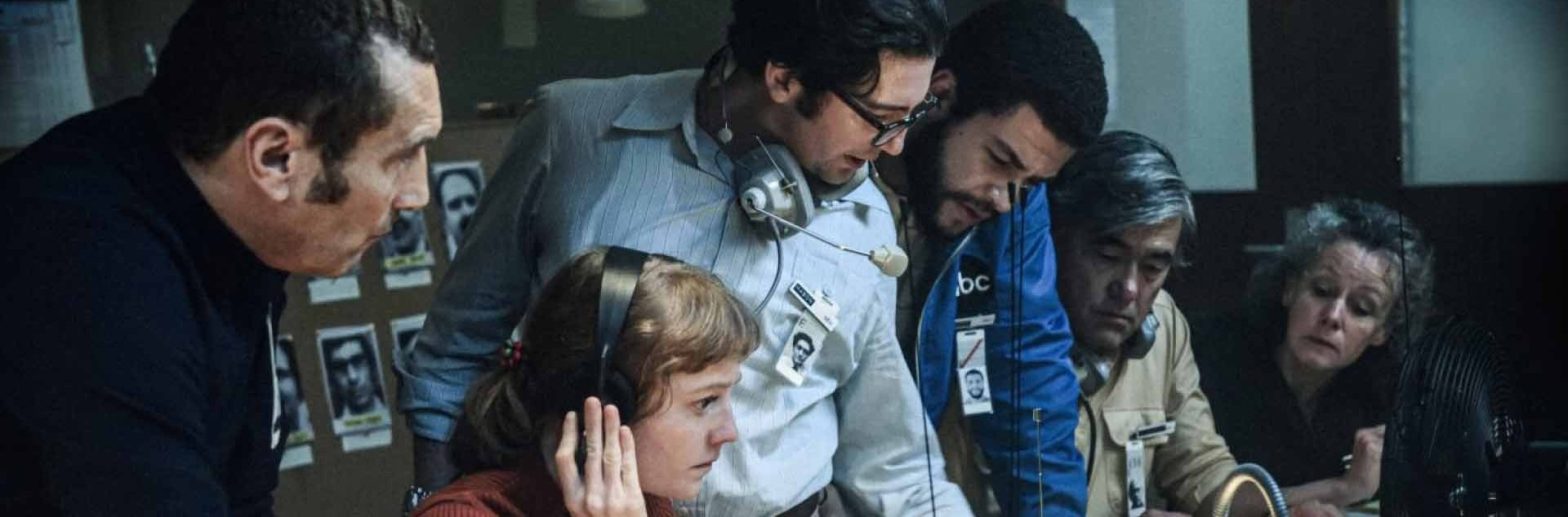
There are some who have referred to September 5 as ill-timed and a propaganda piece. Certainly, as the story leans into political angles, possibly making links to the modern day, it feels its most heavy-handed, and to some degree uncertain. Perhaps why much of the action is confined to the control room of ABC’s sports broadcasting team at the 1972 Munich Olympics. Getting ready for another day of covering boxing and volleyball the team, led by John Magaro’s Geoffrey Mason, find themselves putting aside the day’s competition when the Israeli team in the neighbouring Olympic Village, just 100 yards away from the studio, are taken hostage by a terrorist group.
Realising that they’re the only ones able to properly cover the unfolding crisis the sports team hastily put cameras in place and find themselves thinking on the spot as to how they can get across all information to their viewers, including arguing with CBS about satellite access. Yet, while there’s some tension and interest in the assembly of the crew and how they work to keep the broadcast going, with the US-based news team seeking control, the most suspense lies in the simple acts of directing the coverage in the control room. As Magaro sits and orders cuts, fades and previews between cameras and text on screen the suspense is at its greatest. I found myself caught up in the flow of the moment and the attempt to keep control in an unpredictable, and to some extent for the team out-of-depth, situation.
During such moments the film feels most direct and focused, elsewhere as various key figures congregate in corridors to discuss their plan and just what’s happening outside. As occasional disturbances rear their head into the building the feeling of uncertainty comes back into play. As the worry that the terrorists are seeing the broadcast and getting a step-ahead of German officials the police storm into the building. It’s a moment so brief it almost feels like the scene was half-cut with the remains accidentally left in the final film, the effect is strange and the moment overall instantly moved on from. Yet, as a whole the film doesn’t feel entirely limited by the angle that it takes in covering the events, largely because it wants to cover the sports team and their responses rather than the upfront hostage crisis – although in some respects a better job of covering the events is done here than in Kevin Macdonald’s (albeit Oscar-winning) surface-level One Day In September.
Even at 95-minutes September 5 sometimes feels as if it’s padding itself out. For the most part it generally works and moves things along, even if some of those points do feel a little bit underdone. The best elements are those focusing on the focus of the central broadcast team and their actions and decisions in creating what the viewers at home are seeing. What we’re seeing is meant to be an extraordinary piece of broadcasting where all involved in the transmission are highly commended, the filmic depiction of this is generally competently made. That’s certainly the defining word that came to mind, and continues to do so, after seeing the film – competent. A solid enough, if sometimes bumpy and uncertain-feeling, thriller that’s at its best when leaning into the TV crew and their coverage of the unfolding events.
Wanting to focus on the central broadcast team, September 5 is at its best, and most suspenseful, when showing them at work and covering the unfolding crisis on the spot, when leaning into heavy-handed politics or disturbances it feels uncertain and at times half-baked.
 Just A Little Bit Random