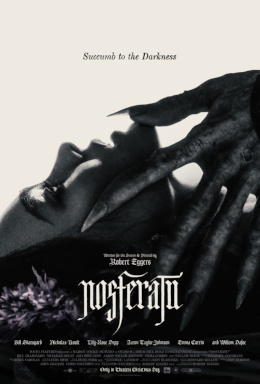
Cert – 15, Run-time – 2 hours 12 minutes, Director – Robert Eggers
Transylvanian vampire Count Orlok (Bill Skarsgård) spreads a plague throughout the German city of Wisborg in pursuit of a young, recently-married, woman (Lily-Rose Depp).
Over the last few years I’ve praised Robert Eggers for being a master of atmosphere. Whether isolating us on a cramped, delusion-inspiring rock or throwing us into the screaming rage of Viking revenge there’s always been an intense stylistic feeling to his films that draw you into the individual world. Not just from the aesthetic but also because of his directions and the ways in which each world is captured. Eggers passion for Nosferatu has been well-noted in the build-up to his take on the story and you can tell he’s thought a great deal about the style and look of his latest film.
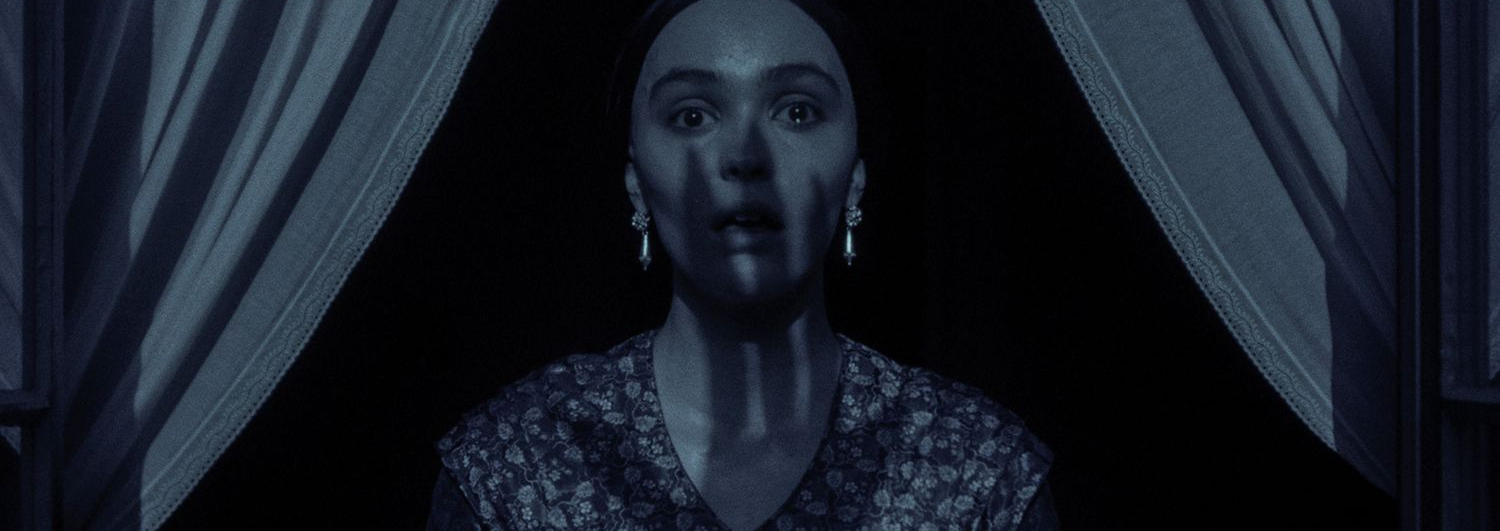
It’s perhaps why the atmosphere in this case largely seems to come from the visual side, the darkness and playing with shadows – we frequently see the clawed hand of the titular vampire flying over and consuming the German city of Wisborg as if to grab and clutch it – alongside the cold gothic structures and design. Eggers direction here still has flare and effect but it feels less intense amongst the slow burn nature of his take on the narrative, as Count Orlok (Bill Skarsgård) prepares to travel from Transylvania to Wisborg to claim the soul of young, recently married Ellen Hutter (Lily-Rose Depp). It’s Ellen’s husband, Thomas (Nicholas Hoult) who initially visits the Count to sell him a rundown castle in his home city and rushes home, unrecovered after experiencing the attacks and true nature of the man he has visited to conduct business with.
Once the monstrous figure of Count Orlok – largely veiled by darkness, but with a voice to emphasise his creepiness – arrives in Wisborg a plague begins to spread throughout the city. It’s here where multiple races to discover what’s happening, and how to stop it, truly kicks in. In the build-up the gothic narrative has already been well at play with some good effect, however the mass illness in the streets and hospitals brings in a race against time element for multiple characters. Each seemingly with a link to each other and yet on occasion playing out separately as if not communicating, or even aware, of each other – Ralph Inseon and Willem Dafoe, as a modern 19th Century doctor and a professor dealing with the occult respectively, react to the upfront city-wide cause, although having glimpsed the nightmare-like possessions undertaken by Ellen are observed by Thomas and friends Friedrich (Aaron Taylor-Johnson) and Anna (Emma Corrin).
The stalking, and bloody, threat at hand certainly lands an impact in the swift and upfront attacks. There’s a quick nature to these moments yet a sustained feeling to the impact which increases the looming fear and dread experienced by the characters as personal loss and torment begins to take its toll on them and their search. During such moments, particularly in the second half of the narrative, the film is at its best and picks up the pace. The slow burn nature works in part in the early stages but there are a number of scenes which feel as if they could have more effect if just a bit pacier, with the film as a whole feeling just a bit overlong at just under two-and-a-quarter hours.
Eggers’ Nosferatu certainly doesn’t feel style over substance, there’s a good deal of substance here which helps add to the overall gothic nature. I just sat there and wished a couple of times that that substance would happen just a bit quicker or feel that bit more intense in-between the darkest moments. As a whole, this is still another solid and occasionally eerie horror from Eggers, with a standout turn from Skarsgård; you can feel the bite but perhaps not the fangs.
While its slow-burn nature might get in the way of some of the darkness and intensity, during direct attacks and scenes of threat Nosferatu is at its best, with a great ensemble cast, and a standout turn from Bill Skarsgård thanks to his performance and makeup, just part of the excellent gothic visuals throughout.
 Just A Little Bit Random